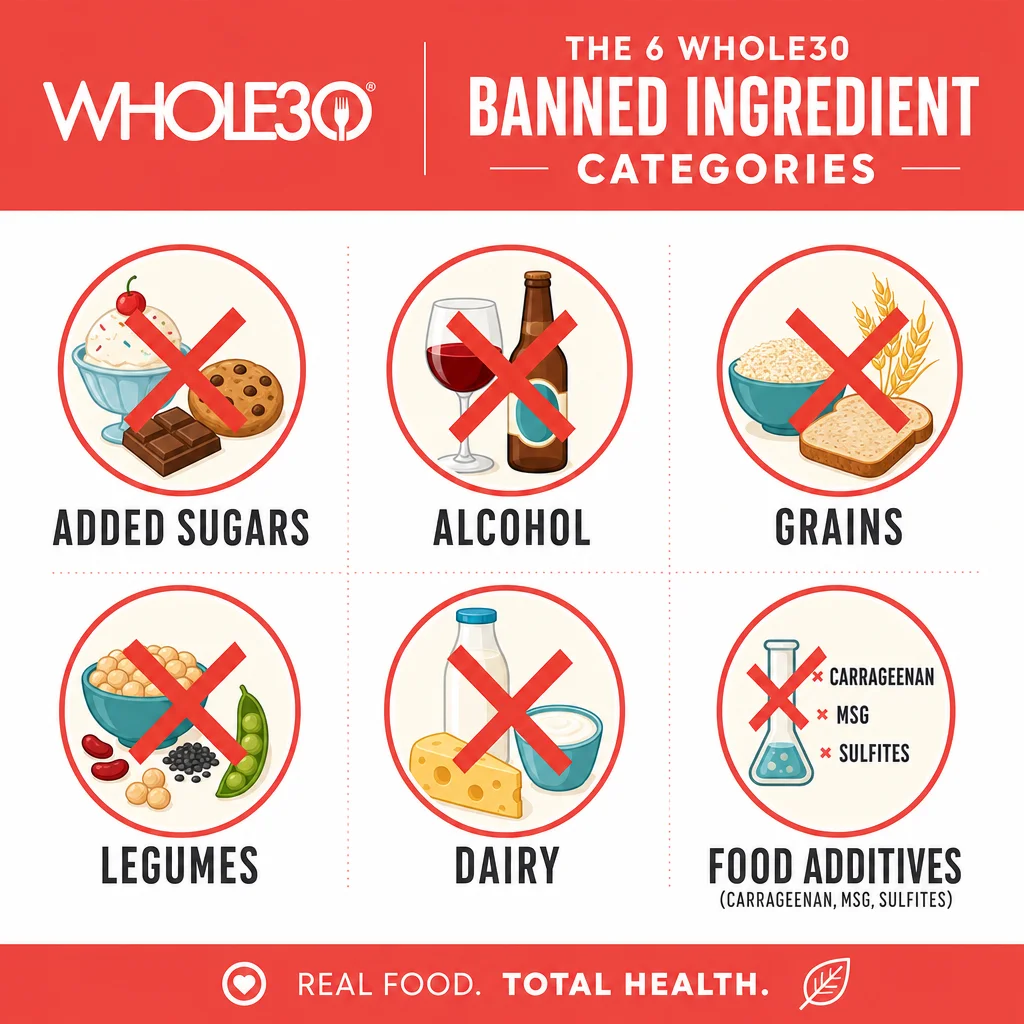
The difficulty with Whole30 is not understanding the six banned categories. The difficulty is recognizing them under their many disguised names in ingredient lists.
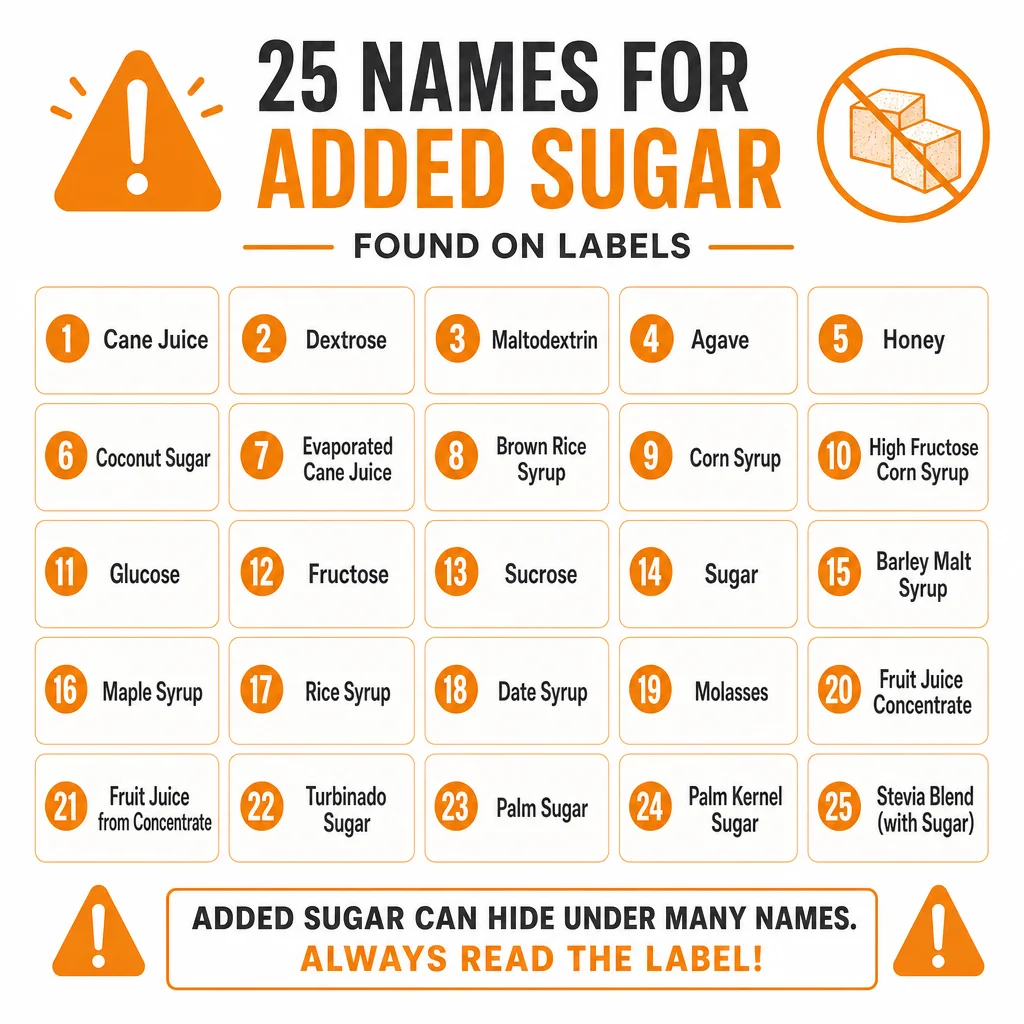
Added sugars have the most aliases of any banned category. The following terms all indicate added sugar and disqualify a Whole30 product: cane sugar, raw cane sugar, cane juice, evaporated cane juice, cane juice crystals, invert sugar, turbinado sugar, muscovado sugar, beet sugar, brown sugar, powdered sugar, confectioners' sugar, dextrose, fructose, glucose, sucrose, lactose (when added), maltose, galactose, high-fructose corn syrup, corn syrup, corn syrup solids, rice syrup, brown rice syrup, barley malt syrup, malt syrup, sorghum syrup, golden syrup, treacle, molasses, honey, maple syrup, agave, agave nectar, coconut sugar, coconut nectar, palm sugar, date sugar, date syrup, fruit juice concentrate, apple juice concentrate, grape juice concentrate, and any other "X juice concentrate." Stevia, erythritol, xylitol, sorbitol, and all other sugar alcohols are also banned. Monk fruit sweetener is banned.
A specific trap for Whole30 participants is the clean-label energy bar and snack market. Many products marketed as "paleo" or "natural" use dates, figs, raisins, or other dried fruits as binding agents, and the manufacturers frequently describe these as "naturally sweetened." On Whole30, using any sweetener, including whole dried fruit used primarily for sweetness, is not permitted. Larabars and similar date-based bars are non-compliant for this reason.
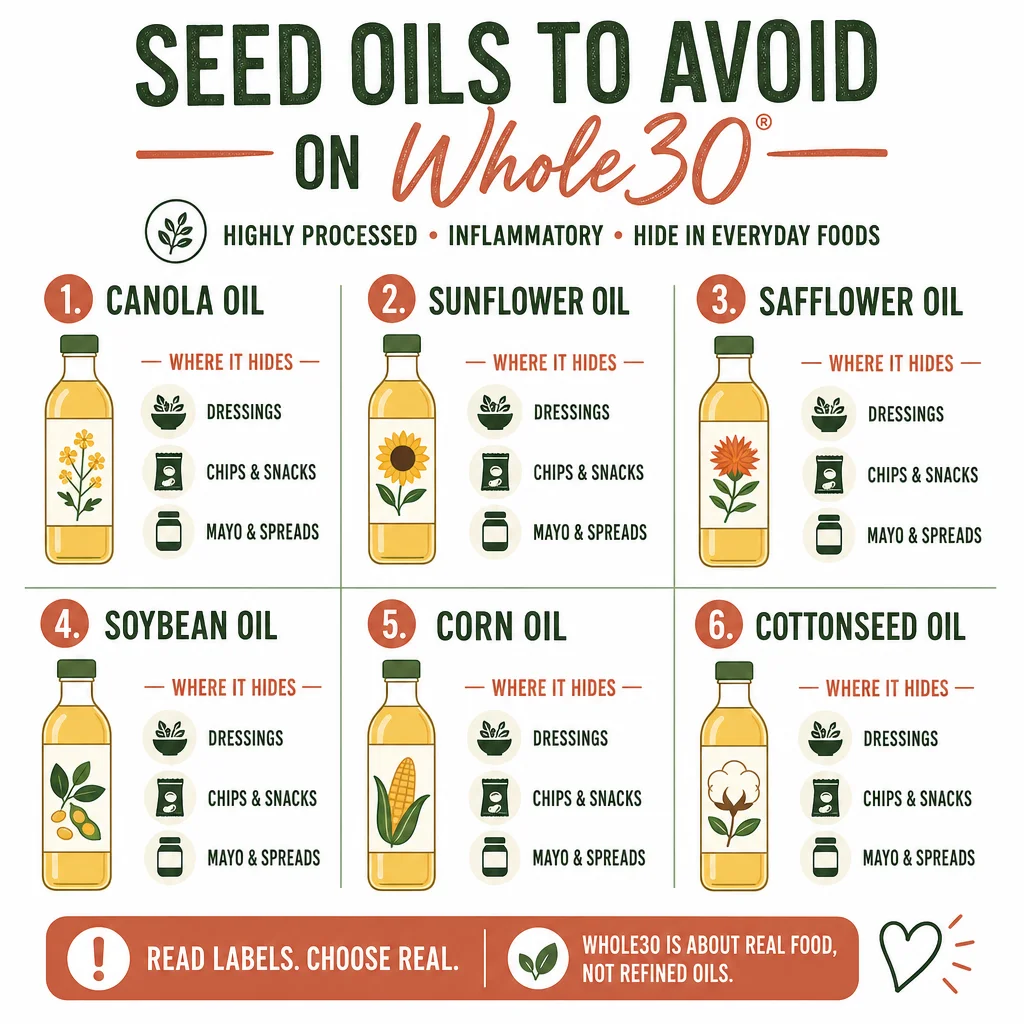
Seed oils and refined vegetable oils must be avoided, though the reasoning here is about the category of oil rather than a specific additive. Canola oil (also labeled as rapeseed oil in European products), sunflower oil, safflower oil, soybean oil, corn oil, cottonseed oil, grapeseed oil, and rice bran oil are all banned. These oils appear where they are least expected. Most commercial mayonnaise is made with soybean or canola oil. Canned fish packed in vegetable oil typically uses soybean oil. Deli turkey and roasted chicken products often contain sunflower oil as a moisture agent. Salad dressings almost universally use canola or soybean oil. Cooking sprays use canola or soybean oil. The compliant oils on Whole30 are olive oil, avocado oil, coconut oil, lard, tallow, duck fat, and other animal fats.
Carrageenan is a seaweed-derived thickening agent with a wide presence in plant-based products. In coconut milk, carrageenan prevents fat separation and creates a creamier texture, so conventional brands including several major supermarket labels add it. The same applies to almond milk, oat milk, cashew milk, hemp milk, and other nut and seed milks. Deli meats are another source: carrageenan is injected into some deli turkey, ham, and chicken products to improve moisture retention and sliceability. It also appears in some ready-to-drink protein shakes, nutritional supplements, and infant formula. When reading coconut milk labels, the only compliant options are those listing coconut and water, with nothing else.
Soy lecithin is a byproduct of soybean processing used as an emulsifier in an enormous range of packaged foods. Chocolate bars and chocolate chips almost universally contain soy lecithin. It appears in many nut butters to prevent oil separation, in salad dressings, in protein powders, in commercial ghee products, and in baking mixes. Sunflower lecithin is the compliant alternative and is increasingly common in products targeting clean-label consumers.
MSG and related glutamates appear under multiple names. Yeast extract is one of the most common, appearing in Worcestershire sauce, bouillon cubes, most canned soups, many savory snacks, and some condiments. Autolyzed yeast is a synonym for yeast extract. Hydrolyzed vegetable protein, hydrolyzed soy protein, and hydrolyzed corn protein contain free glutamates that the program treats as equivalent to MSG. Disodium guanylate and disodium inosinate are flavor enhancers that work synergistically with glutamates and are banned.
Sulfites appear as sodium sulfite, sodium bisulfite, sodium metabisulfite, potassium bisulfite, potassium metabisulfite, and sulfur dioxide. They are used as preservatives in dried fruit, wine, some deli meats, pickled products, bottled lemon juice, and some packaged salads. Dried apricots with their natural orange color typically contain sulfites; unsulfured dried apricots are brown and compliant.
Alcohol derivatives beyond obvious beverages include vanilla extract (which is alcohol-based), some vinegars (apple cider vinegar is compliant, but some flavored vinegars use alcohol), and cooking wines including "non-alcoholic" cooking wines which still contain fermented grain derivatives. Coconut aminos is the standard compliant alternative to soy sauce, but even coconut aminos should be checked for added sugar.
Grain derivatives hide behind unfamiliar names. Maltodextrin, while sometimes corn-derived, is primarily produced from grain starch and is banned regardless of source. Dextrin is similarly derived. Modified food starch without a specified source is presumed to contain gluten-containing grain starch. Caramel color in some formulations is derived from barley. Malt vinegar is barley-based and non-compliant. Brewer's yeast is a grain-adjacent fermentation byproduct and is banned.