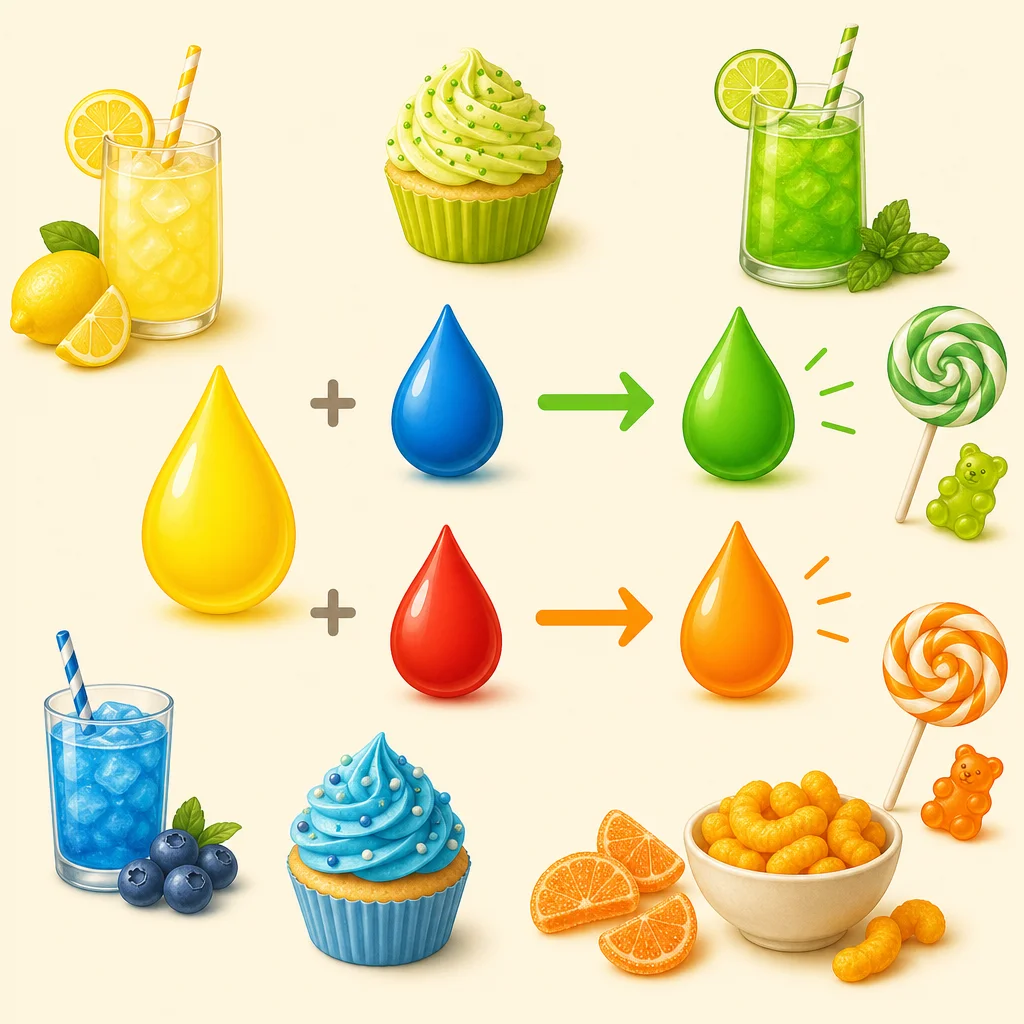
Yellow 5 is a synthetic color additive used to create or strengthen yellow shades. It can also be blended with other dyes to make orange, green, or brown colors, so the finished food does not have to look bright yellow.
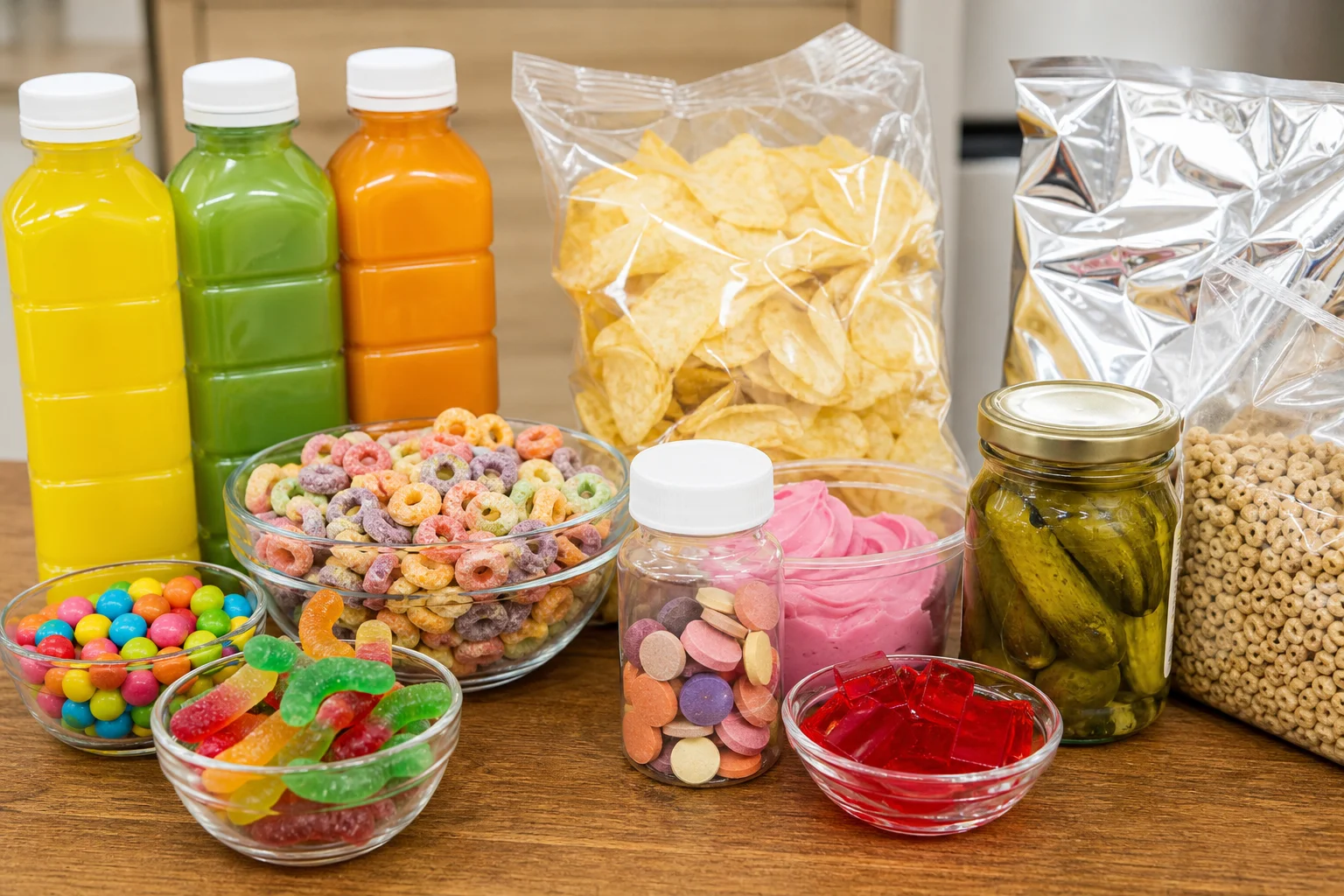
The highest-yield categories to check are colored drinks, candy, gelatin desserts, frostings, bakery fillings, cereals, snack seasonings, frozen treats, sauces, pickles, and selected vitamins or medicines. That is a shopping checklist, not a claim that every product in those aisles contains the dye.
This guide was checked against current U.S. and EU sources on August 15, 2026. Product recipes and policy commitments can change, so the current package remains the deciding product-level evidence.
Drinks and Powdered Mixes
Bright drinks are one of the fastest categories to check. Look at:
- lemon-lime, citrus, pineapple, mango, and tropical flavors;
- neon green or orange sports drinks;
- powdered drink packets;
- slush syrups and fountain-drink flavor bases;
- flavored waters with vivid color;
- freezer pops made from colored drink mixtures.
Check the prepared drink's ingredient list and, when available, the syrup or powder ingredients. Restaurant menus and dispenser labels often provide less detail than a retail package, so ask for the manufacturer's ingredient information if the answer matters to an allergy or clinician-directed restriction.
Do not assume the same flavor is identical in every country. Color rules, formulation choices, and label terminology differ by market.
Candy, Frosting, and Bakery Decorations
Yellow 5 may appear in products designed around strong, consistent color:
- gummy and hard candies;
- sour candy coatings;
- candy shells and decorative pieces;
- yellow, green, orange, or mixed-color frostings;
- sprinkles and decorating gels;
- boxed cake and dessert mixes;
- custard or lemon-style bakery fillings;
- packaged pastries with colored glaze.
Read component lists carefully. A cookie may have a simple base while its filling, icing, or candy pieces contain the dye. The relevant term can sit inside a long parenthetical list.
When comparing products, check the exact color variety. A multipack can contain several formulas, and the ingredient statement may list all colors used across the assortment.
Cereals, Chips, and Seasoned Snacks
Some breakfast cereals use color to make fruit-shaped pieces or a mixed-color appearance. Snack seasonings can use Yellow 5 to reinforce cheese, citrus, chili, or spicy visual cues.
High-yield checks include:
- brightly colored children's cereals;
- fruit-flavored cereal pieces;
- cheese-flavored chips and curls;
- spicy, chili, or citrus-seasoned snacks;
- colored crackers or snack mixes;
- instant foods with a brightly colored seasoning packet.
The dye may be declared in the seasoning's sub-ingredients rather than near the beginning of the main list. Search the entire panel for Yellow 5, not just the first few lines.
Frozen Treats and Desserts
Ice pops, shaved-ice syrups, gelatin desserts, and novelty frozen products often use strong colors to signal flavor. Ice cream and sherbet may also contain Yellow 5, particularly when a product needs a consistent yellow, green, or orange shade.
The regulation's explicit labeling language means a U.S. ice cream that contains FD&C Yellow No. 5 must name it. Still, flavors vary. Vanilla from one line may be dye-free while a pistachio, lemon, birthday-cake, or candy-mix flavor uses one or more certified colors.
Compare the exact package and flavor rather than applying one result to the whole brand.
Vitamins, Supplements, and Medicines
Yellow 5 is not limited to conventional food. The federal food rule covers dietary supplements, and certified colors can also appear in drug products under separate regulations.
For a chewable vitamin or supplement, read the Other ingredients section beneath Supplement Facts. For a medicine, check the package insert, inactive-ingredient list, or pharmacist's product information. Different strengths or manufacturers can use different coatings and colors even when the active ingredient is the same.
If you have had a suspected reaction, do not use a general food list to diagnose it. Bring the exact product and ingredient list to a qualified clinician or pharmacist.
Why EU Labels May Look Different
In the European Union, tartrazine is identified as E102. Regulation (EC) No 1333/2008 also requires an additional statement for certain colors, including E102, that they may have an adverse effect on activity and attention in children, subject to listed exceptions.
That statement is a regional labeling requirement. It does not mean a U.S. product must carry the same text, and it does not make every behavioral concern a confirmed reaction in every child.
Regulatory systems can evaluate the same additive and choose different labeling tools. When comparing products across markets, separate three questions:
- Is the color permitted?
- What name or code must appear?
- Is an additional statement required?
Regulators and researchers have reviewed tartrazine and synthetic food dyes for toxicology, intolerance, and possible neurobehavioral effects. The evidence is not well summarized by saying that every exposure is harmless or that one serving causes a predictable symptom.
Individual susceptibility, the mixture of colors, dose, study design, and the child's baseline behavior all affect interpretation. The practical shopping task is simpler than settling every scientific debate: identify the ingredient accurately, record the product and amount, and discuss repeat symptoms with a clinician.
Avoid treating a dye-free label as a complete nutrition verdict. A candy without Yellow 5 can still be high in added sugar, and a fortified product with a certified color can still provide nutrients. Ingredient preferences and nutrition goals should be evaluated separately.