Label Reading Guides

Gluten Free Snacks: Store-Bought Brands and Label Checks

Store-bought gluten free snacks by category, from chips and pretzels to crackers and bars, with what each brand says about testing and the label checks that catch hidden gluten.

Nov 26, 2026|9 min read
By Sanket Patel|Updated 2026-11-26|5 sources|Editorial standards
Gluten Free Snacks: Store-Bought Brands and Label Checks

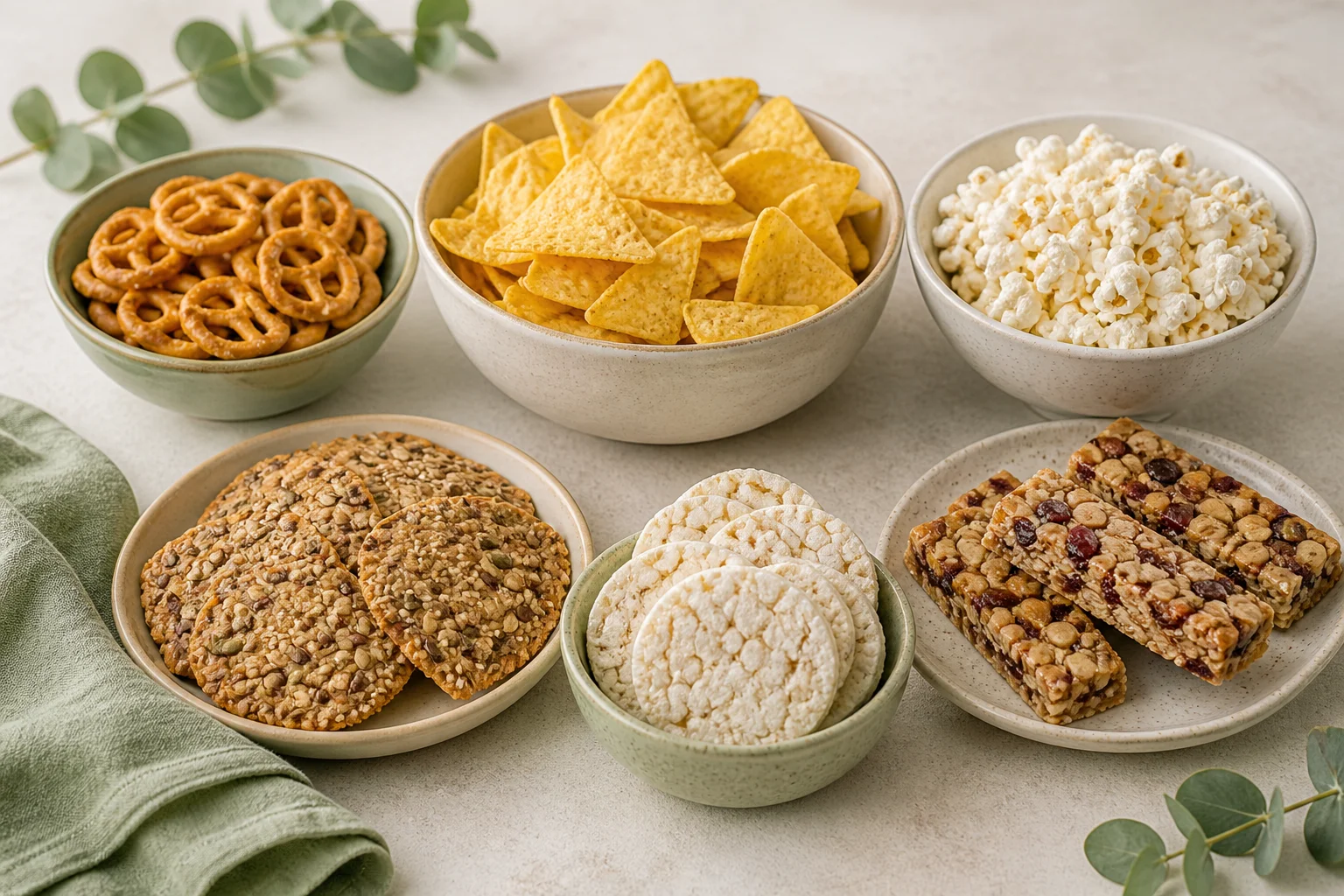
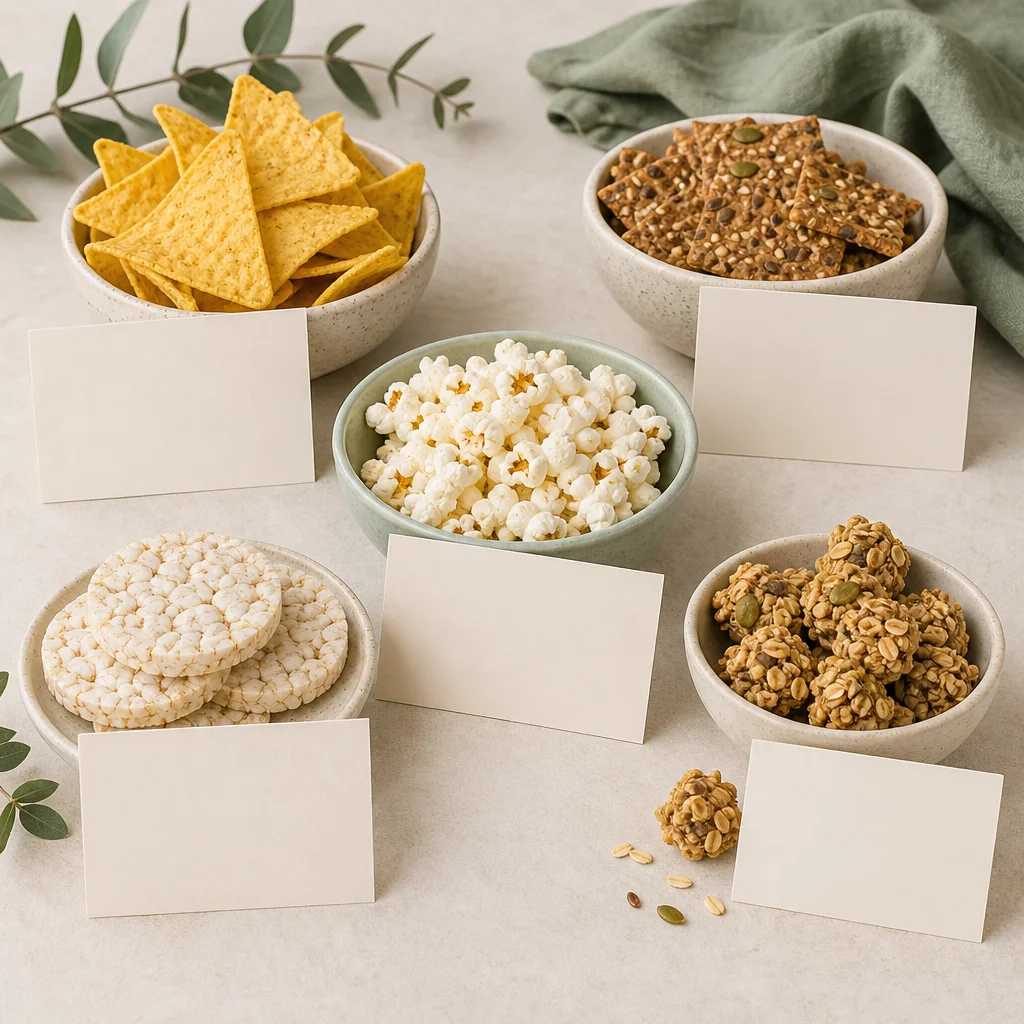
Plenty of store-bought snacks are gluten free: many corn tortilla chips, potato chips, popcorn, rice cakes, seed crackers, gluten-free pretzels and fruit and nut bars. The catch is that "made from corn" or "no wheat" is not the same as gluten free. Only products that carry a gluten-free claim have to meet the FDA's standard of less than 20 parts per million (ppm) of gluten, and a flavor that sits next to a labeled one on the shelf may never have been tested.

This guide groups gluten free snacks by type, names brands that publish clear gluten-free information, and ends with the label checks that catch the common surprises: malt, oats, soy sauce seasoning and wheat starch.

We checked the FDA's rules, each brand's own website and, for Siete, a dated product report from Gluten Free Watchdog on November 26, 2026. We did not taste-test products or run our own gluten tests. Recipes, facilities and flavors change, and a brand's gluten-free list usually applies only to the US market, so treat every product named here as a starting point and read the package in your hand.

What "gluten free" on a snack label actually means

What "gluten free" on a snack label actually means

Under the FDA's gluten-free labeling rule, a food labeled gluten-free must contain less than 20 ppm of gluten. It also cannot contain wheat, barley, rye or their crossbreeds as ingredients, or ingredients made from them that were not processed to remove gluten. The FDA treats "free of gluten," "without gluten" and "no gluten" as the same claim, so the same rules apply to all four phrases.

Three details matter in the snack aisle:

  • The claim is voluntary. A bag of plain potato chips may be gluten free without saying so. The absence of a claim means "check further," not "contains gluten."
  • Processed wheat starch is allowed. A gluten-free food can include wheat starch processed to remove gluten if the finished product stays under 20 ppm. When it does, the regulation requires a note that the wheat has been processed to meet FDA gluten-free requirements.
  • Other phrases are not regulated the same way. The BIDMC Celiac Center points out that wording such as "made with no gluten-containing ingredients" does not have to meet the gluten-free rule, so it does not promise the product was kept away from cross-contact.

Gluten-free vs. certified gluten-free

Certification is a separate, voluntary layer. The Gluten-Free Certification Organization sets a limit of 10 ppm or less for certified products (or lower where a country's law is stricter) and backs it with facility audits and a required testing program. A certified mark therefore adds independent checking on top of the FDA claim. A plain gluten-free claim still has to meet the federal standard, so for most shoppers both are useful signals. Our guide to certified gluten-free vs. gluten-free labels compares the programs in more detail.

Gluten free snacks by category

Gluten free snacks by category

Potato and tortilla chips

Chips made from potatoes or corn start out gluten free, which is why so many people assume every bag is safe. Seasonings are where gluten slips in: malt vinegar, malted barley flour, soy sauce made with wheat, and wheat-based fillers in flavor blends.

Frito-Lay publishes a list of US products it has validated through analytical testing as containing less than 20 ppm gluten. The list covers products from Lay's, Ruffles, Fritos, Tostitos, Doritos, Cheetos, Smartfood, Santitas and Baked lines. Two cautions come with it. The list names specific flavors, not whole brands, so a Doritos or Tostitos flavor that is not listed should not be assumed to qualify. And Frito-Lay notes that the information applies only to products made and sold in the US. The brand's own FAQ pages send shoppers back to the ingredient statement and label for each product.

For a dedicated gluten-free option, Siete's grain-free tortilla chips are made from cassava flour. Gluten Free Watchdog's product report on the Sea Salt flavor lists it as made in a dedicated gluten-free facility with the GFCO certified mark on the package. That report covers one flavor, so check the mark on other flavors.

Stackable crisps: the Pringles question

Pringles are the most common surprise. The Pringles FAQ says plainly that Pringles crisps are not gluten free. If you want the stackable format, look for a stacked crisp that carries a gluten-free claim on the can, and check each flavor separately.

Pretzels

Regular pretzels are made from wheat flour, so the only pretzels that fit are ones made specifically to be gluten free. Snyder's of Hanover sells a gluten-free line that includes sticks, rods, minis and snaps. Its gluten-free mini pretzels are built on cornstarch, potato starch and tapioca starch instead of wheat. Check flavored pretzel varieties on their own: a honey mustard seasoning or a dipping coating changes the ingredient list.

Crackers

Crackers are usually wheat-based, so this is a category where the gluten-free claim does most of the work.

  • Simple Mills says in its FAQ that all of its products are gluten free and that finished products are tested by a third-party lab. Its crackers, such as the Fine Ground Sea Salt Almond Flour Crackers, are marked Certified Gluten-Free. The same page notes the line also processes wheat, which is a good example of why a precautionary statement and a certified gluten-free claim can appear together: the certification covers the testing and controls behind that claim.
  • Mary's Gone Crackers says on its FAQ page that it runs its own dedicated gluten-free bakery and does not bring gluten-containing ingredients into the factory. Some flavors contain soy from gluten-free tamari and many contain sesame, which matters if you also avoid those allergens.

Rice crackers and seed crackers from other brands can also fit. Read for wheat flour, barley malt and soy sauce, which shows up in some Asian-style rice crackers.

Popcorn and rice cakes

Corn and rice are naturally gluten free, so plain popcorn and plain rice cakes are among the easiest snacks to fit into a gluten-free diet. Flavored versions need the same seasoning check as chips: caramel corn, kettle corn and savory rice cakes can carry malt, soy sauce or wheat-based ingredients. Frito-Lay's list includes some Smartfood popcorn flavors; for other brands, look for the gluten-free claim on the flavor you are buying.

Snack bars

Bars are where oats and crisp grains show up, so the label claim matters.

  • Larabar describes its Original Fruit & Nut bars as a gluten free blend of fruits, nuts and spices, and says on its gluten-free page that it periodically verifies its gluten-free offerings with gliadin testing. Not every Larabar product is listed as gluten free, so check the wrapper.
  • KIND says in its US FAQ that every product making a gluten-free claim is tested to meet FDA requirements. KIND's range includes granola and grain bars too, so the claim on the specific wrapper is what counts.

Oat-based bars deserve extra care. The Celiac Disease Foundation advises choosing only oats specifically labeled gluten-free, because regular oats are often contaminated with wheat, barley or rye in the field and during processing. It also notes that a small number of people with celiac disease react to oats themselves, so whether to include gluten-free oats is a decision to make with your doctor or dietitian. For how gluten-free oats are produced, see purity protocol vs. sorted oats.

Nuts, seeds, fruit and other easy picks

Plain nuts and seeds, plain fruit and plain cheese are gluten free by nature. Anything seasoned, marinated, coated or mixed is a label-check case: seasoned nuts can use soy sauce or wheat-based coatings, jerky marinades often contain soy sauce made with wheat, and flavored yogurts, fruit cups and dried fruit mixes can include granola, cookie pieces or other added ingredients. Plain nuts packed on shared lines may carry a precautionary statement, so look for a gluten-free claim if cross-contact matters to you.
Snacks that usually contain gluten

These are the categories to skip unless the specific package says gluten-free:

  • Regular pretzels, crackers, pita chips and bagel chips, which are made from wheat flour.
  • Pringles, which the brand says are not gluten free, and other stacked crisps that list wheat starch without a gluten-free claim.
  • Malt-flavored snacks, including salt and malt vinegar chips that use malt vinegar, and malted milk balls.
  • Granola, granola bars and cereal bars made with regular oats, wheat or barley malt.
  • Soy sauce-seasoned snacks such as teriyaki jerky, some rice crackers and some snack mixes, unless the soy sauce is labeled gluten-free.

A quick label check for gluten free snacks

For the full list of hidden gluten names, see our celiac label-reading checklist. In the snack aisle, this short order catches most problems:

  1. Look for a gluten-free claim or certified mark first. If it is there, the product has to meet the FDA's under 20 ppm standard. Still read the ingredient list for anything else you avoid.
  2. Read the ingredient list for wheat, barley and rye. That includes spelt, farro, semolina, triticale, malt, malt extract, malt flavoring and malt vinegar. Brewer's yeast is often a byproduct of beer brewing, so treat it as a question for the brand unless the product is labeled gluten-free. The Celiac Disease Foundation's guide to gluten sources lists the less obvious names.
  3. Do not rely on the Contains statement alone. Wheat must be declared as an allergen, but barley and rye are not major allergens, so a snack with barley malt can have no allergen statement at all.
  4. Treat oats as a gluten source unless they are labeled gluten-free.
  5. Check seasonings for soy sauce. Traditional soy sauce is brewed with wheat. Soy sauce passes the gluten check only when the soy sauce or the finished product is labeled gluten-free. Wheat allergy is a separate question: check for wheat itself.
  6. Read wheat starch carefully. In a product labeled gluten-free, look for the note that the wheat was processed to meet FDA requirements. Without a gluten-free claim, wheat starch has not been shown to meet the gluten-free standard, so treat it as unsuitable.
  7. Check the exact flavor and country. Brand gluten-free lists name specific flavors and usually apply to one market only.
  8. When in doubt, ask the brand. Shared lines, precautionary statements and recipe changes are things only the manufacturer can answer.

Make the snack aisle check faster

Gluten free snack shopping comes down to a few questions asked of every package: is there a gluten-free claim, is there wheat, barley, rye, malt or regular oats in the ingredient list, and does the seasoning use soy sauce. The hard part is asking them flavor by flavor in a crowded aisle.

IngrediCheck can help with the ingredient side of that check. Add gluten to your Food Notes, then scan a barcode or photograph the ingredient label. The app checks the available ingredient information against your notes and explains a Matched, Unmatched or Uncertain result in plain English, so names like malt flavoring are easier to catch. It cannot measure gluten, verify a 20 ppm threshold or see how a factory handles cross-contact, so keep the gluten-free claim, any certification and a final look at the package in your own hands.

Frequently Asked Questions

What store-bought snacks are gluten free?

Many corn tortilla chips, potato chips, plain popcorn, rice cakes, nuts, seed crackers, gluten-free pretzels and fruit and nut bars are gluten free, but only the specific products labeled gluten-free have to meet the FDA's under 20 ppm standard. Frito-Lay, Snyder's of Hanover, Simple Mills, Mary's Gone Crackers, Siete, Larabar and KIND all sell products with a gluten-free claim. Check the label on each flavor.

Are Pringles gluten free?

No. Pringles says on its own FAQ page that Pringles crisps are not gluten free, so treat every Pringles flavor as unsuitable for a gluten-free diet unless the can itself says otherwise.

Is a snack gluten free if it has no wheat in the Contains statement?

Not necessarily. Wheat is a major allergen that must be declared, but barley and rye are not, so malt flavoring, malt vinegar or barley flour can appear in the ingredient list with no allergen statement. Oats that are not labeled gluten-free are another common source of cross-contact.

What is the difference between gluten-free and certified gluten-free snacks?

Any FDA-regulated food labeled gluten-free must contain less than 20 ppm of gluten. Certification is a voluntary third-party program on top of that: GFCO, for example, requires 10 ppm or less, plus audits and ongoing testing. Both labels are useful; certification adds independent checking.

Are snacks made with wheat starch ever gluten free?

Yes, in the US a food labeled gluten-free may contain wheat starch that has been processed to remove gluten, as long as the finished food is under 20 ppm. The label must then say the wheat has been processed to meet FDA gluten-free requirements. Wheat starch in a product without a gluten-free claim should be treated as a gluten source.

Next Label Check

Follow the scanner, hub, and ingredient paths connected to this guide

Get the app for clearer label decisions.

Scan labels, see what fits your food notes, and read the why in plain English.

IngrediCheck app