Label Reading Guides

Gluten-Free Oats: Purity Protocol vs Sorted Oats Compared

Compare purity-protocol and mechanically or optically sorted gluten-free oats, including testing, certification, country rules, and avenin questions.

Aug 23, 2026|10 min read
By Sanket Patel|Updated 2026-08-23|7 sources|Editorial standards
Gluten-Free Oats: Purity Protocol vs Sorted Oats Compared

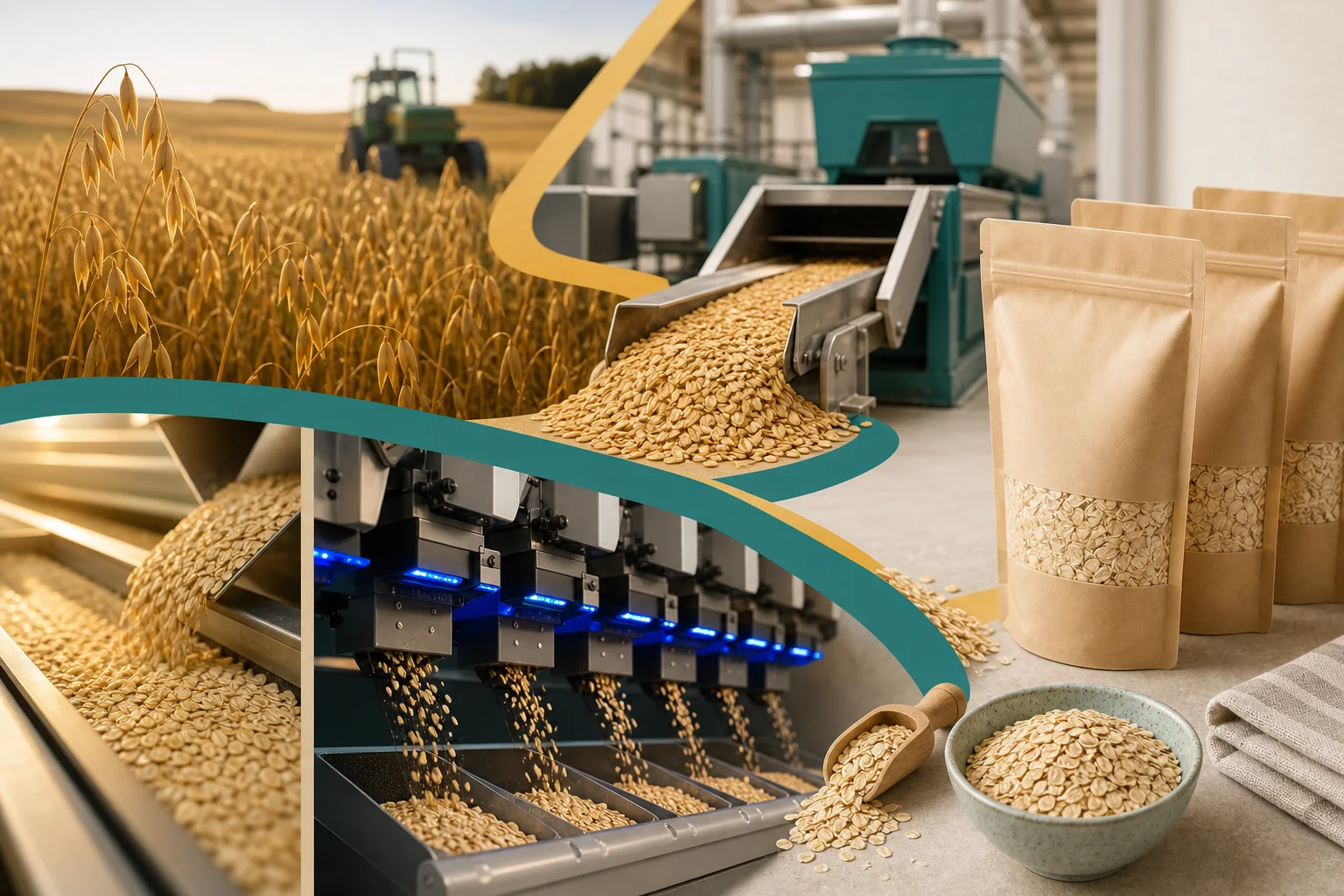
Oats create an unusual gluten-free problem. The oat plant does not contain wheat, barley, or rye gluten, yet ordinary oat supply chains can pick up those grains in fields, harvest equipment, trucks, elevators, mills, and packaging lines. Producers use two broad routes to control that risk: purity protocol and mechanical or optical sorting.

This comparison uses current regulator rules, peer-reviewed evidence, and the GFCO certification manual checked in August 2026. It compares production and verification, not brands. No route receives a “best” ranking because the evidence does not support a universal winner.
The Short Answer

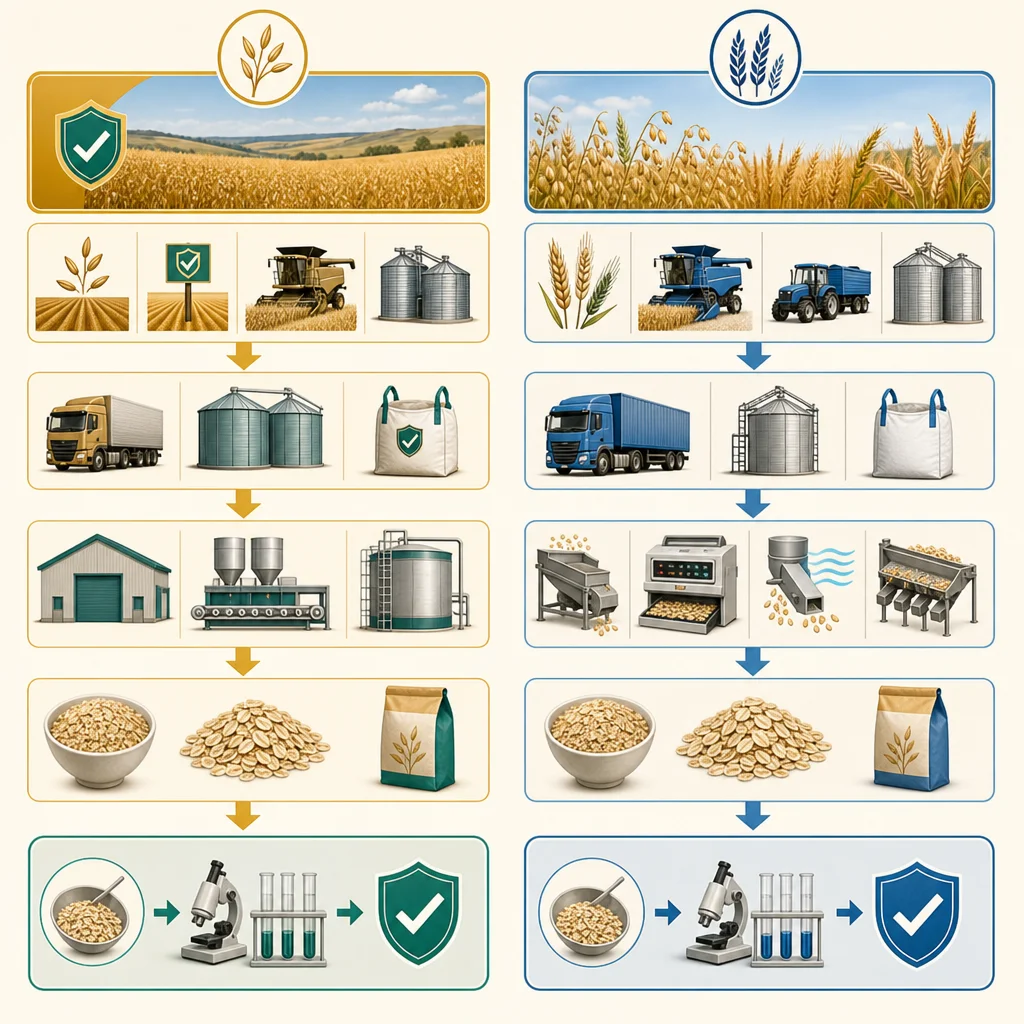
Purity protocol tries to prevent wheat, barley, and rye from entering the oat supply chain. It starts with controlled seed and fields, then adds crop rotation, field inspection, equipment cleaning or dedication, traceability, segregated transport, and milling controls.

Mechanical or optical sorting starts with oats that may contain foreign grain kernels and removes them during processing based on size, shape, density, color, or other detectable properties.

Both routes can include cleaning, sampling, gluten testing, and finished-product controls. Neither phrase is the U.S. legal definition of gluten-free. A process claim does not replace evidence that the finished food complies with the country-of-sale rules.

QuestionPurity protocolMechanical or optical sorting
Main control strategyPrevent contamination from seed through processingDetect and remove foreign grains after harvest
Where control beginsSeed selection and field historyProcessing intake and sorting line
Does it eliminate testing?NoNo
Does the phrase itself equal certification?NoNo
Can a package simply say gluten-free in the US if compliant?YesYes
Must Canada, EU, and UK oat-specific conditions still be met?YesYes

What Purity Protocol Includes

The published purity-protocol definition describes a farm-to-mill system developed by oat producers, processors, certifiers, and celiac stakeholders. Core controls include:

  • seed that meets purity requirements
  • crop-rotation rules for the field
  • field inspections for volunteer wheat, barley, and rye
  • harvest-equipment controls
  • segregated or appropriately controlled storage and transport
  • traceability through the supply chain
  • processing controls and representative testing

The logic is preventive. A foreign wheat kernel that never enters the oat lot does not have to be found and removed later.

The term is not a government-created certification. The published protocol also noted that, at the time of publication, there was no independent verification system solely for a supplier's purity-protocol claim. A manufacturer may pair purity-protocol sourcing with third-party gluten-free certification, but one phrase does not automatically prove the other.

How Sorted Oats Work

How Sorted Oats Work

Sorting takes a corrective approach. Grain-cleaning equipment can remove material by size, weight, shape, and density. Optical sorters add cameras and sensors that identify differences in color or other visual properties, then use air jets or mechanical diversion to remove suspected wheat, barley, or rye kernels.

The engineering challenge is not simply whether a sorter can identify a foreign kernel. Contamination may be uneven. One portion of a large lot can differ from another, and broken grain fragments or flour-like material can be harder to characterize than intact kernels.

Manufacturers therefore need a complete control plan. Sorting performance, line setup, maintenance, sampling locations, test methods, lot release rules, and finished-product verification all matter. “Optically sorted” is a process description, not a measured gluten result.

What United States Law Requires

Under 21 CFR 101.91, a food labeled gluten-free must contain less than 20 parts per million of gluten and meet the rule's ingredient conditions. Oats are permitted when the finished food complies.

FDA does not require purity protocol, mechanical sorting, optical sorting, or third-party certification. The agency focuses on the composition and ingredients of the food bearing the claim. When FDA relies on analysis, it uses a scientifically valid method that can reliably detect and quantify gluten at 20 ppm in the relevant food matrix.

That legal structure explains why two U.S. oat products can both say gluten-free while using different supply routes. The package claim states compliance with the federal standard. It does not disclose the farm system, sampling plan, certifier, or lot-level data unless the company provides that information separately.

The broader gluten-free shopping guide covers barley, rye, certification, and ordinary package checks. This article stays with the narrower production-route decision for oats.

Canada Adds an Oat-Specific Production Condition

Canadian rules recognize “gluten-free oats” when oats are specially produced and processed to avoid contamination, or specially processed to limit or reduce contamination, and contain no more than 20 ppm gluten from wheat, rye, barley, triticale, or their hybrids.

Health Canada's guidance also explains that references to oats on qualifying product labels must identify them as gluten-free oats. The wording can accommodate preventive production and processing-based reduction when all conditions are met. It does not create a legal endorsement of one marketing term over the other.

EU and UK Rules Also Address Oats Specifically

EU Regulation 828/2014 permits oats in foods presented as gluten-free only when they have been specially produced, prepared, and/or processed to avoid contamination by wheat, rye, barley, or their crossbred varieties. The oats themselves cannot contain more than 20 mg/kg gluten.

The United Kingdom's retained version uses the same special-production, preparation, or processing concept. UK allergen rules add another label detail: oats remain a named cereal containing gluten for allergen-information purposes, so oats must still be declared and emphasized even when specially produced gluten-free oats meet the compositional rule.

Country language matters. A broad statement that “sorted oats are legal everywhere” skips the oat-specific conditions and the evidence needed to show compliance.

Certification Is a Separate Evidence Layer

Third-party certification can add supplier approval, audits, ingredient risk ranking, sampling requirements, test-method controls, corrective action, and a threshold stricter than the country minimum.

The 2025.1 GFCO manual applies the country-of-sale threshold or 10 ppm, whichever is lower. It classifies oats among higher-risk ingredients and requires testing of every lot for risk-level 3 and 4 ingredients before use.

A GFCO mark therefore communicates that certification program's requirements. It does not, on its own, prove the oats use purity protocol. A plain U.S. gluten-free claim likewise does not imply GFCO's 10 ppm limit. Shoppers who care about both certification and production route should verify both rather than treating them as synonyms.

Why Sampling Matters So Much for Oats

Foreign grains are not always distributed evenly through a lot. A test portion can miss a contaminated pocket, while another portion from the same package or batch can detect it.

A retrospective study covering 213 individual packages of oat-containing food tested between 2011 and May 2023 found that 24 packages, about 11 percent, had quantifiable gluten at or above 5 ppm. Seven percent had at least one test portion at or above 20 ppm. The authors warned that subscriber-selected products, a changing product mix, and a tiny share of the market prevent route-wide or market-wide prevalence conclusions.

CFIA's 2022 to 2023 targeted survey of oat products tested 261 products with gluten-free claims. More than 93 percent had no detectable gluten; 18 had detectable results ranging from 6.6 to 240 ppm. A targeted survey is not a random sample of the whole market, and it did not identify the production route behind every result.

Together, these findings support a restrained conclusion: contamination can be heterogeneous, and process labels cannot replace representative sampling and finished-product verification.

Gluten Cross-Contact and Avenin Are Different Questions

Purity protocol and sorting address wheat, barley, and rye cross-contact. They do not remove avenin, the oat's own storage protein.

Systematic evidence is broadly reassuring that most people with celiac disease tolerate uncontaminated oats. A 2017 systematic review and meta-analysis found no clear overall worsening in symptoms, serology, or intestinal findings from adding uncontaminated oats, while noting limitations in the available studies.

A small subset can react to oats themselves. Researchers have identified avenin-reactive intestinal T cells and clinical oat intolerance in some patients with celiac disease. This establishes a biological exception but does not provide a simple population rate.

The label lesson is precise. A compliant gluten-free claim or below-threshold test addresses gluten cross-contact under the governing rule. It does not prove that a particular person tolerates avenin. Someone who has symptoms with verified uncontaminated oats should discuss that separate issue with their celiac care team.

How to Compare Oat Packages

How to Compare Oat Packages
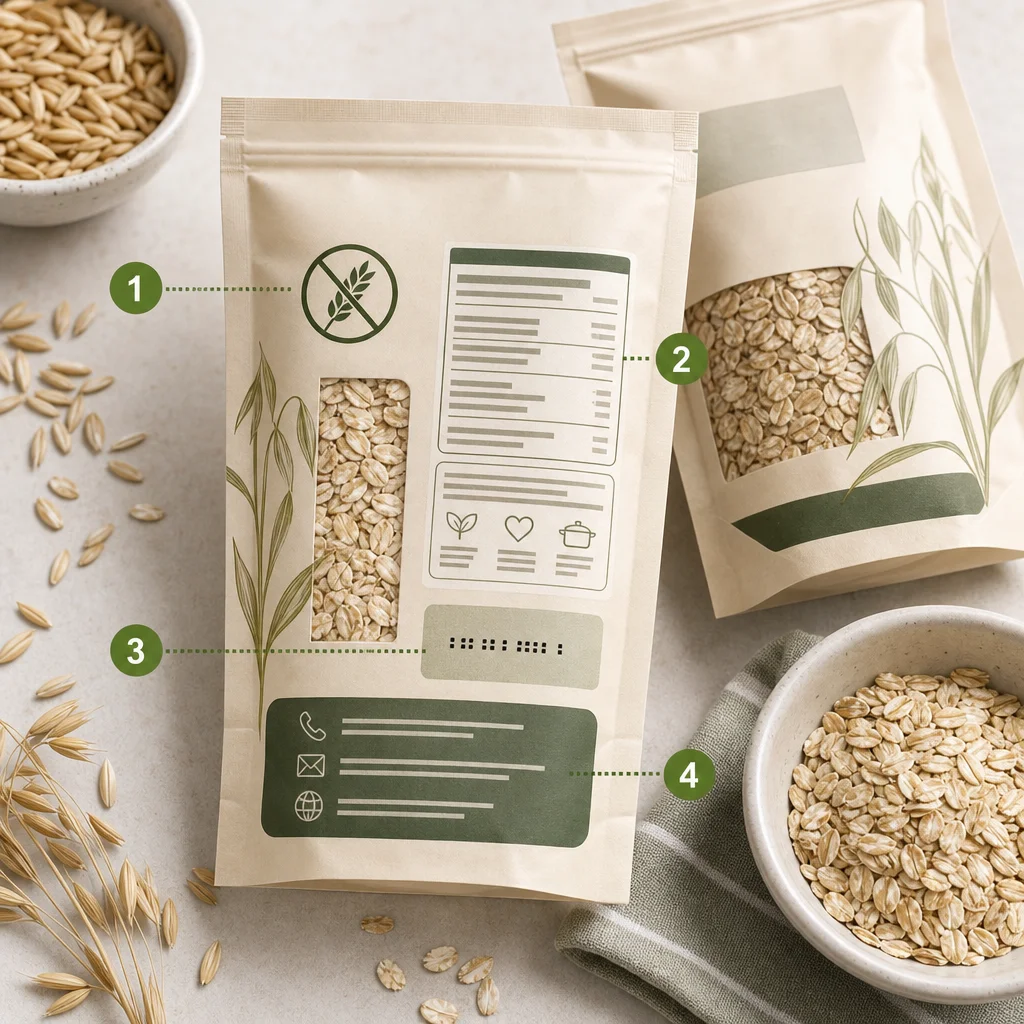
  1. Require a gluten-free claim for strict gluten avoidance. Plain oats or “100% oats” do not communicate cross-contact control.
  2. Identify the certification mark. Look up the certifier's current threshold, audit model, and testing requirements rather than assuming every logo means the same thing.
  3. Ask about the oat route when it matters. Check the manufacturer's FAQ or ask whether it uses purity protocol, sorting, or a combination.
  4. Separate route from verification. A preferred production method still needs representative sampling, validated testing, and finished-product compliance.
  5. Check the country of sale. Canada, the EU, and the UK include specific oat-production or processing conditions in addition to the gluten threshold.
  6. Keep the package and lot code after a concern. Those details help the manufacturer or regulator investigate a product-specific result.
  7. Treat oat symptoms as a separate clinical question. Verified gluten-free oats can still be unsuitable for a person who reacts to avenin.

Purity protocol and sorting are useful descriptions of how an oat supply chain manages risk, but the package decision still depends on current claims, certification, and verification. IngrediCheck can help identify gluten-free claims, oat ingredients, certification cues, and related label risks while you confirm the production details that matter to your household.

Frequently Asked Questions

What are purity-protocol oats?

Purity protocol is a preventive farm-to-mill production system using controlled seed, crop rotation, field inspection, harvest and transport controls, traceability, and equipment safeguards to limit wheat, barley, and rye contamination.

Are mechanically sorted oats legally gluten-free?

A production route is not the legal claim. In the US, a food can bear gluten-free when it meets FDA's ingredient conditions and contains less than 20 ppm gluten. Canada, the EU, and the UK add oat-specific production or processing conditions.

Does gluten-free certification prove that oats use purity protocol?

Not automatically. Certification communicates the certifier's testing and process requirements. It does not necessarily disclose whether oats came from purity protocol or sorting unless the program or manufacturer says so.

Can someone with celiac disease react to uncontaminated oats?

Most people with celiac disease tolerate uncontaminated oats, but a subset can react to oat avenin. Gluten testing addresses wheat, barley, and rye cross-contact, not individual avenin tolerance.

Next Label Check

Follow the scanner, hub, and ingredient paths connected to this guide

Get the app for clearer label decisions.

Scan labels, see what fits your food notes, and read the why in plain English.

IngrediCheck app