Ingredient naming is not identical across markets. The package’s country of sale matters.
United States
U.S. identity rules define food starch-modified and maltodextrin without making one botanical source part of the common name. A label that says “modified food starch” may therefore leave the source unstated unless another rule requires disclosure.
Wheat remains a major food allergen. When an intentionally added starch ingredient is derived from wheat and allergenic protein remains, the U.S. allergen-labeling statute applies unless a lawful exemption does. That disclosure question is different from whether the finished food qualifies for a gluten-free claim.
For celiac shopping, 21 CFR 101.91 is the more useful rule. A food bearing “gluten-free” must meet the rule’s composition requirements and contain less than 20 parts per million of gluten. Do not use the absence of wheat from a Contains statement as a substitute for that claim.
European Union
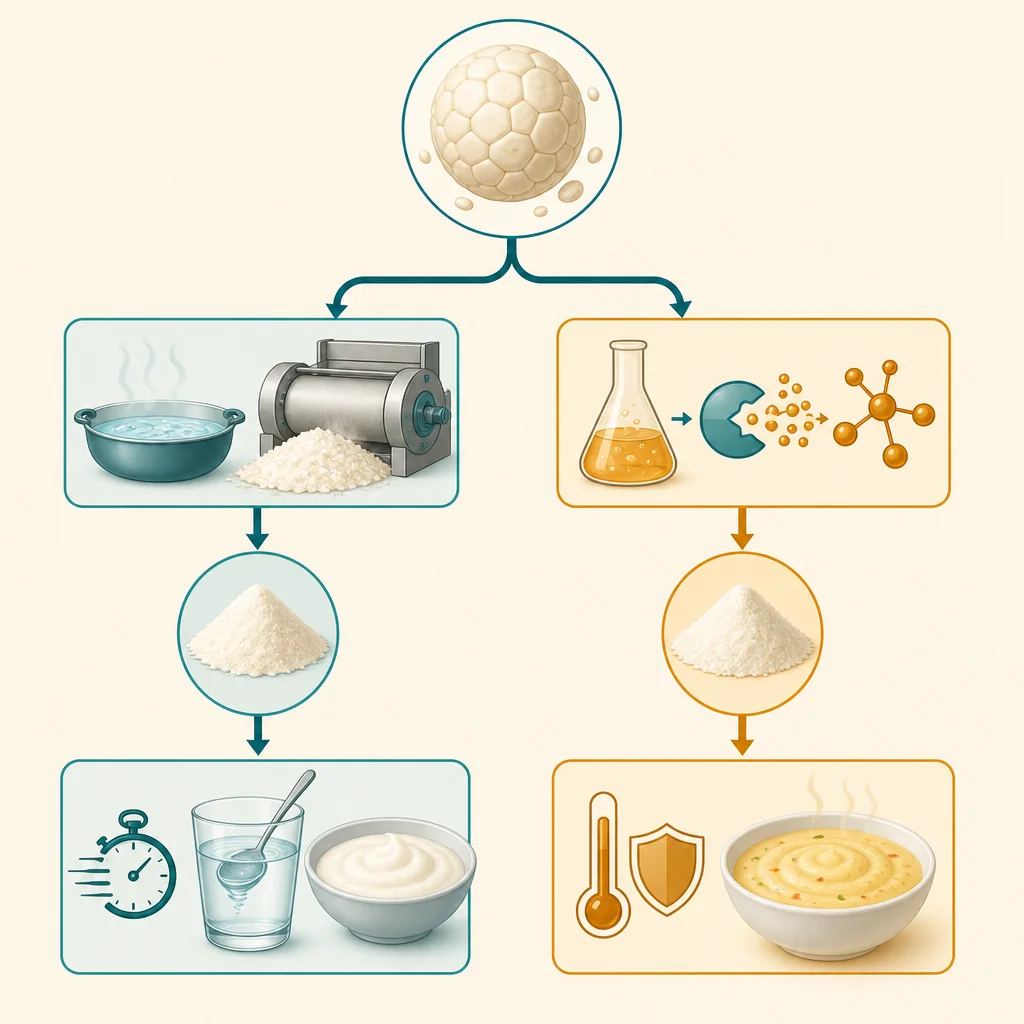
EU Regulation 1169/2011 allows certain physically or enzymatically modified starches to be designated as starch and chemically modified starch additives to be designated as modified starch without the specific name or E-number. Annex II also contains a specific exemption for qualifying wheat-based maltodextrins from mandatory wheat-allergen emphasis.
That exemption belongs to maltodextrin. It should not be casually extended to every wheat-derived starch. An EU gluten-free claim is a separate result-based statement governed by the 20 mg/kg limit.
Canada
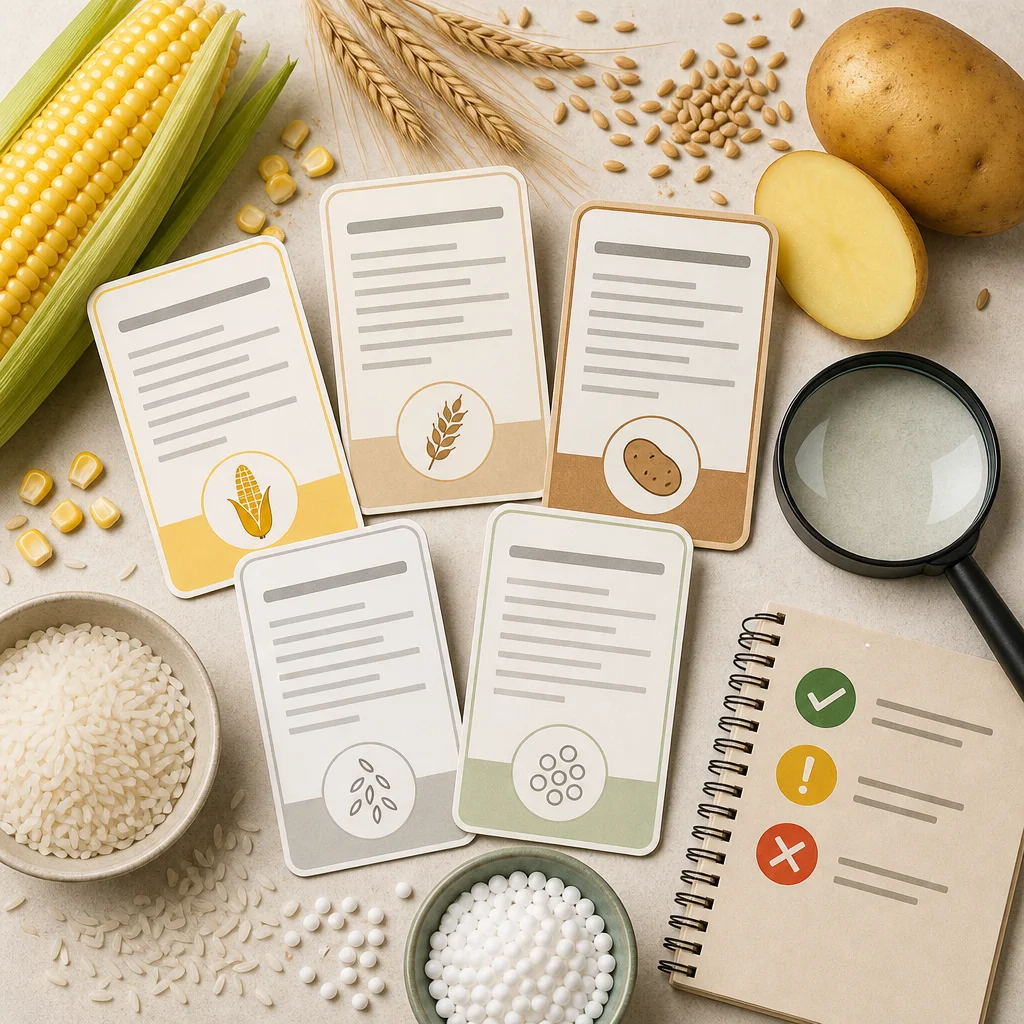
Canada can provide more source detail for starch itself. The CFIA common-name table requires the plant source in names such as corn starch or modified wheat starch. That makes a Canadian label more directly informative about the source of starch or modified starch.
The visible source still does not turn an ordinary ingredient name into a gluten-free certification. Maltodextrin also has its own common name, so shoppers should not assume its feedstock from the word alone.