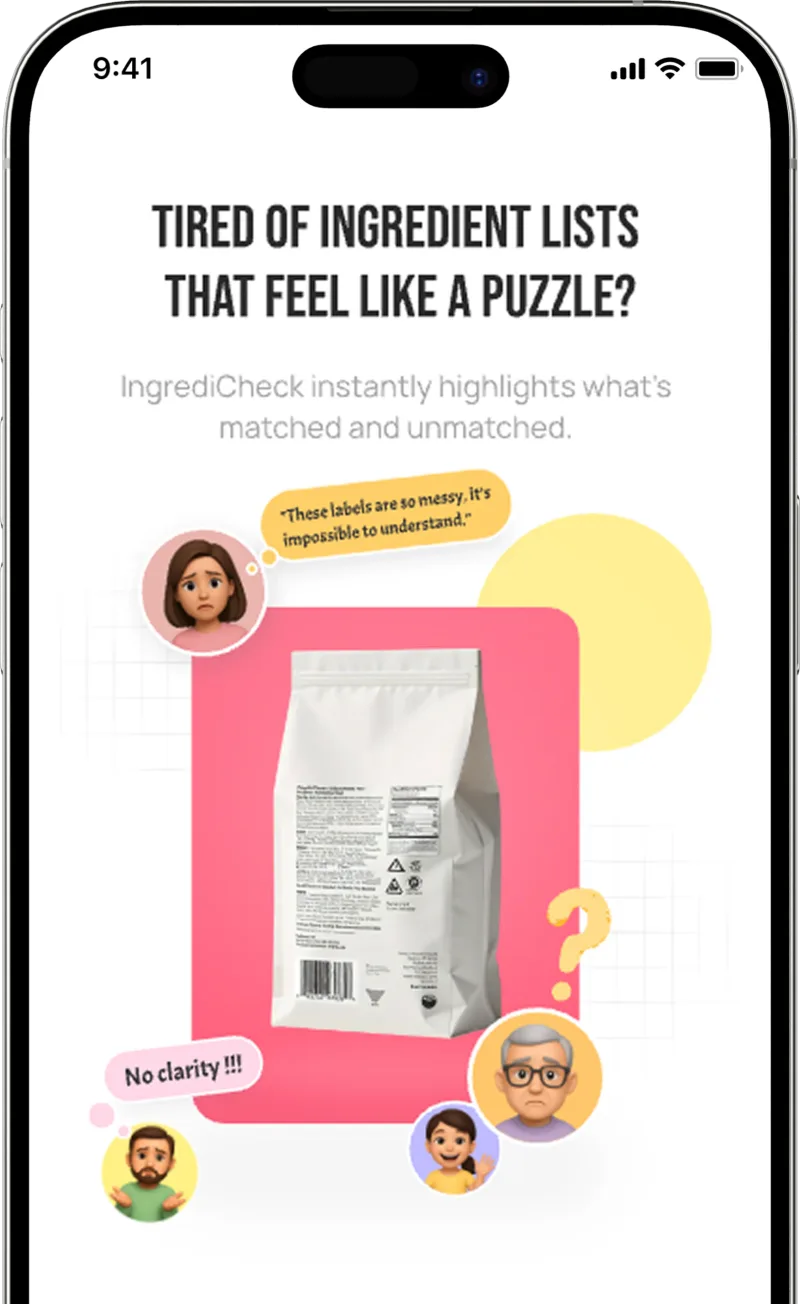
The complete package
Photograph the full ingredient panel, nested sub-ingredients, allergen statement, and nearby warning language. A missing fold, glare-covered line, or cropped precautionary statement can change what the analysis has available.
Shopping for packaged food abroad is harder when the ingredient panel uses an unfamiliar language and your household has several allergies, diets, or avoid rules. IngrediCheck helps you photograph the current label, review the information it can recognize, and compare that information with the Food Notes saved for each profile.
Quick answer
A travel food label checker helps you photograph a packaged-food ingredient panel and compare the available label information with saved Food Notes. IngrediCheck can recognize some non-English labels and explain suitability in English, but ingredient rendering varies, new analysis needs a connection, and every result still needs package verification.
What It Catches
Workflow
Read the label
Photograph the full ingredient panel, nested sub-ingredients, allergen statement, and nearby warning language. A missing fold, glare-covered line, or cropped precautionary statement can change what the analysis has available.
Compare available label information with the allergies, diets, preferences, and avoid rules saved for each traveler. Separate profiles keep one person's allergy rule from becoming a universal score for the whole family.
Review the ingredient or rule behind a Matched, Unmatched, or Uncertain result. Source-dependent additives, unfamiliar codes, incomplete photos, and warnings can require a glossary, manufacturer, certifier, or clinician-led next step.
Decision boundary
IngrediCheck can organize what a package declares, recognize some non-English labels, provide an English suitability explanation, and compare available information with saved Food Notes. It does not consistently translate every ingredient list into English, analyze new photos offline, detect undeclared cross-contact, verify private ingredient sources, replace certification, or guarantee that a food is safe.
Related Scanner Paths
Halal Ingredient Checker App
Review food labels for halal shopping rules, pork-derived ingredients, alcohol, gelatin, and source-dependent additives with IngrediCheck.
Kosher Ingredient Checker App
Review labels for kosher shopping rules, dairy or pareve clues, glycerin, gelatin, flavors, and certification signals with IngrediCheck.
Pescatarian Ingredient Checker App
Scan pescatarian labels for meat, gelatin, lard, animal broth, fish-derived ingredients, and saved household rules with IngrediCheck.
Lecithin
Lecithin is a broad label term for phospholipid-rich emulsifiers used in chocolate, baked goods, dressings, infant foods, and supplements. The source can be soy, sunflower, egg, or less commonly animal tissue.
MSG
MSG is a flavor enhancer used in savory packaged foods such as soups, noodles, snacks, and seasoning systems. It matters because it remains legally accepted by mainstream regulators while still carrying unusually strong cultural baggage in clean-label and retailer discussions.
Carrageenan
Carrageenan is a seaweed-derived thickener used in dairy alternatives, chocolate milk, deli meat, whipped toppings, and desserts. It is useful in manufacturing because it helps liquids stay smooth and suspended.
Calcium propionate
Calcium propionate is a mold-inhibiting preservative commonly used in bread, buns, tortillas, and other packaged baked goods. It matters because it sits at the center of a real shelf-life tradeoff between softer bread products and simpler ingredient decks.
Label Clues
emulsifier
Lecithin: what it does in food, current safety notes, diet compatibility, and shopper guidance from IngrediCheck.
additive
MSG: what it does in food, current safety notes, diet compatibility, and shopper guidance from IngrediCheck.
thickener
Carrageenan: what it does in food, current safety notes, diet compatibility, and shopper guidance from IngrediCheck.
preservative
Calcium propionate: what it does in food, current safety notes, diet compatibility, and shopper guidance from IngrediCheck.
Related Guides
Jul 27, 2026 | 11 min read
Compare Google Translate with a personalized ingredient checker for foreign food labels, including camera translation, saved Food Notes, uncertainty, and travel limits.
Jul 27, 2026 | 11 min read
Compare a food label translator or checker with an allergy translation card for supermarkets, restaurants, family profiles, connectivity, and emergency limits.
Jul 27, 2026 | 10 min read
Learn why readable words are not the same as a complete food-label decision, including missed sub-ingredients, aliases, warnings, additive codes, and uncertain sources.

Apr 21, 2026 | 8 min read
A practical guide to checking packaged foods against your own allergies, diets, and ingredient preferences, instead of relying on a generic food score.
May 11, 2026 | 10 min read
Compare Yuka, Fig, Spoonful, Spokin, and IngrediCheck for food-allergy shopping, including free and paid access, best-fit jobs, and clear practical limits.
FAQ
IngrediCheck can recognize some non-English labels and provide an English suitability explanation, but the displayed ingredient list may retain its original language or vary by label and platform. Do not expect a complete English translation for every package.
Photograph the complete ingredient panel, nested sub-ingredients, allergen statement, and nearby precautionary wording. Take a second image when the text wraps around a container, and avoid glare, folds, blur, and cropped lines.
No. New label-photo uploads, analysis, lookups, and syncing require a network connection. Previously loaded information may remain in the device cache, but that does not provide offline analysis for a new package.
No. Matched means the available declared information did not conflict with the saved Food Notes as analyzed. Labels, product records, translations, and analysis can be incomplete or wrong, and undeclared cross-contact cannot be detected.
No. IngrediCheck supports packaged-food label review. A translated allergy card helps communicate with restaurant staff, chefs, hotels, or vendors. Travelers with diagnosed allergies should also follow their emergency plan and clinician guidance.
Scan labels, see what fits your food notes, and read the why in plain English.