Label Reading Guides

What Food Label Translation Apps Miss: Allergens, Aliases, and May Contain Warnings

Learn why readable words are not the same as a complete food-label decision, including missed sub-ingredients, aliases, warnings, additive codes, and uncertain sources.

Jul 27, 2026|10 min read
By Sanket Patel|Updated 2026-07-27|8 sources|Editorial standards
What Food Label Translation Apps Miss: Allergens, Aliases, and May Contain Warnings

A food label translation app can turn unfamiliar words into readable text. That is valuable in a supermarket abroad, but it does not guarantee that every decision-relevant part of the package was photographed, recognized, translated, or interpreted correctly.

The gap is structural. Food labels contain direct ingredients, nested sub-ingredients, regulated allergen declarations, voluntary precautionary wording, additive codes, certification marks, and information that may not be legally required at all. A fluent sentence can still be an incomplete food decision.

For a personalized review of available label information, the travel food label checker can compare a package with saved Food Notes. It can recognize some non-English labels and explain suitability in English, but it does not promise complete English translation, universal language support, or proof that a food is safe.

Short Answer: Translation Reads Text, Not the Whole Risk Context

Translation apps are useful for understanding visible text. They can help find the ingredient heading, translate product directions, explain a front-of-pack claim, or identify a warning.

They can miss or leave unresolved:

  1. text outside the photograph
  2. sub-ingredients inside a compound ingredient
  3. aliases that do not resemble the everyday food name
  4. precautionary statements separated from the ingredient list
  5. E numbers or INS codes that require a lookup
  6. ingredients whose biological source is not declared
  7. allergens outside the destination's mandatory list
  8. cross-contact that is not declared on the package

That does not make translation unhelpful. It defines the correct job. Use translation to access language, then use label structure, reliable references, your saved rules, and package verification to make the shopping decision.

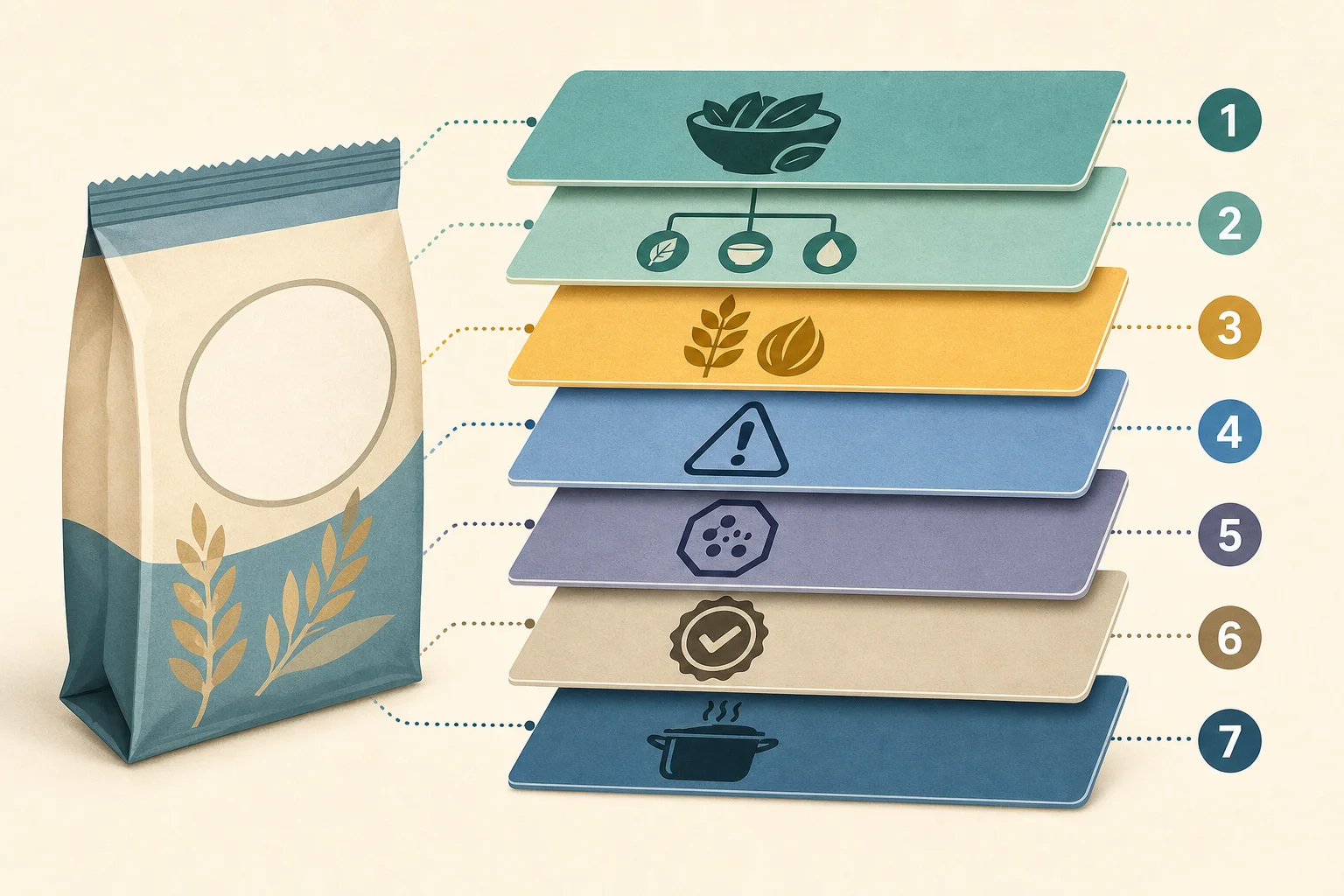
The Seven Label Layers a Translation Can Leave Behind

The Seven Label Layers a Translation Can Leave Behind

1. The panel that never entered the photo

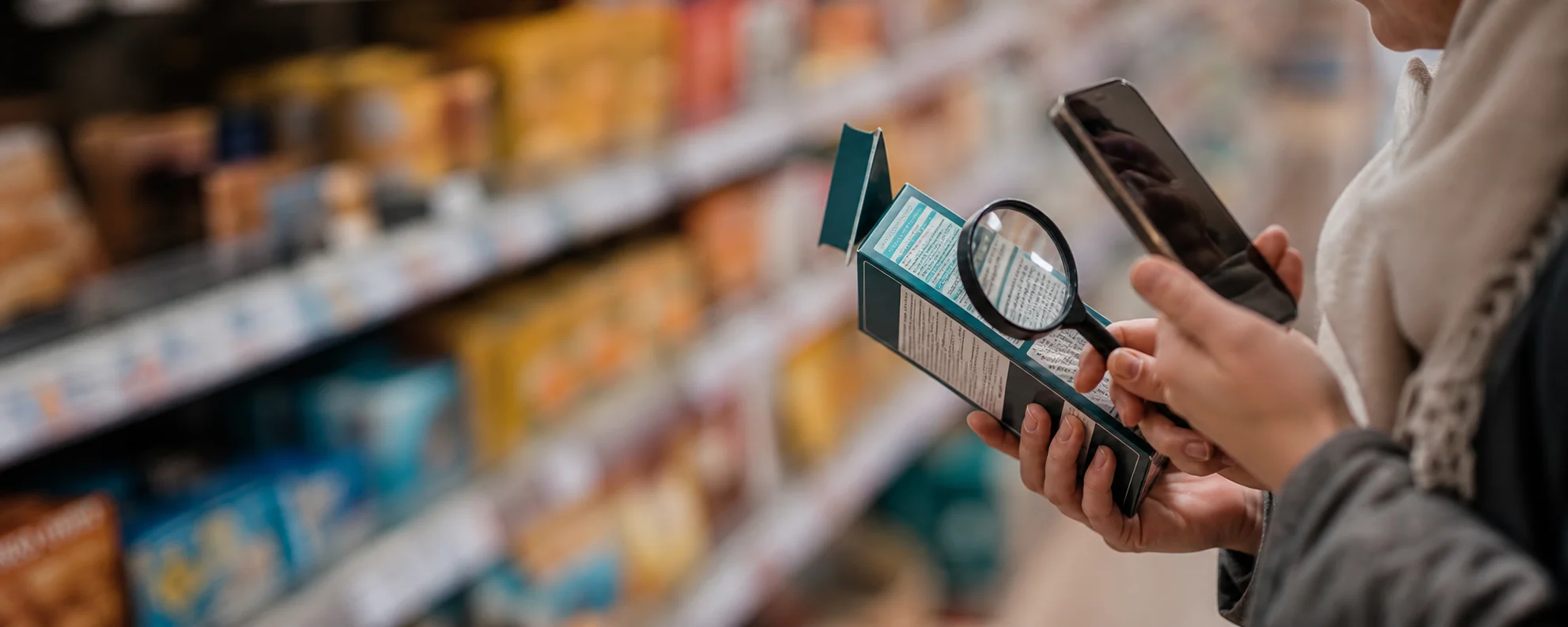
An app can only work with the image it receives. If the ingredient list wraps around a jar, continues under a flap, or has a separate allergen statement near the seal, a clean translation of the first panel remains incomplete.

This is a capture problem before it is a translation problem. Check the full package, then take overlapping photos that include the beginning and end of every relevant panel.

2. Sub-ingredients in smaller type

A label might list “seasoning,” followed by a nested list in parentheses. The smaller text can contain milk powder, wheat starch, sesame, soy, colors, flavor enhancers, or another ingredient central to your rules.

Sub-ingredients are vulnerable to:

  • a crop that ends before the closing parenthesis
  • blur in the smallest type
  • punctuation lost during recognition
  • a translation that flattens hierarchy into one sentence
  • a user selecting only the most readable line

Preserve parentheses, semicolons, and line breaks when comparing the output with the source image.

3. Allergen aliases

The ordinary food name may not be the term printed in the list. Whey points to milk. Tahini points to sesame. Albumin can point to egg. Malt often requires checking the grain source. A literal translation may be accurate while the meaning remains unfamiliar.

U.S. labeling rules help by requiring major allergen food sources to be declared in specified ways, but even the FDA's current allergen guidance notes that consumers may not recognize common or usual ingredient names. Other markets regulate different allergen sets.

Use the ingredient label-name glossary to investigate aliases. Do not assume that a translated scientific or technical term is irrelevant because it does not resemble the food you avoid.

4. “May contain” and other precautionary wording

Direct ingredients and precautionary statements answer different questions.

  • “Contains milk” identifies a declared major allergen source under the applicable labeling system.
  • “May contain milk” communicates possible unintended presence.
  • “Made in a facility that also handles milk” describes a production context.

The UK Food Standards Agency explains that precautionary allergen labeling is voluntary and should be used when a risk assessment identifies unavoidable cross-contamination risk. Translating the sentence does not calculate the risk for a particular person.

Apply the precautionary-label rule agreed with your clinician. A phone app should not silently reinterpret that plan or treat the absence of precautionary wording as proof that cross-contact is absent.

5. Additive codes

Many packages use E numbers, INS numbers, or local additive classes. A camera translator may leave “E322,” “INS 471,” or another code unchanged. That is not necessarily an error. Codes are identifiers, so the next step is a trustworthy lookup.

Use the E-number glossary to identify the additive. Then ask whether the code itself resolves your rule. Lecithin may have a declared allergen source in one product and a different source in another. Mono- and diglycerides can remain source-dependent. A code lookup identifies the substance class, not every private sourcing detail.

6. Source-dependent ingredients

Some ingredients can be produced from plant, animal, microbial, or synthetic inputs. The label may not specify the source because the law does not require that detail in the way your personal rule needs it.

Examples can include:

  • mono- and diglycerides
  • glycerin
  • stearates
  • enzymes
  • natural flavors
  • gelatin or processing aids in certain contexts

Translation can faithfully return the generic ingredient name and still leave the suitability question unanswered. When the biological source controls a vegetarian, vegan, halal, kosher, or other decision, look for recognized certification or contact the manufacturer.

7. What the package does not declare

No translation can reveal text that is not there.

A package cannot directly prove:

  • absence of undeclared cross-contact
  • the source of every processing aid
  • that a database record matches the current formulation
  • that a certification is current and applicable
  • that a food meets an individual medical threshold

This is the hard boundary between label reading and safety assurance. Better language access improves the evidence you can review. It does not remove the evidence that is unavailable.
Why Label Laws Change What You See

The European Union requires specified allergens to be emphasized in the ingredient list and requires mandatory information in a language easily understood by consumers in the market where the food is sold. The United States uses its own major-allergen framework and declaration methods. Other countries recognize different allergen groups or presentation rules.

An international review of food-allergy labeling laws found meaningful differences in recognized allergens and label presentation between jurisdictions. A translation app can translate what a country requires. It cannot make the destination's rules identical to the rules at home.

Before travel, check:

  • which allergens the destination mandates
  • whether allergens are emphasized or separated
  • how precautionary warnings are commonly presented
  • which additive-code system appears on labels
  • whether mandatory information must be in a specific local language

This preparation helps you recognize what should be present and, just as importantly, what may be absent.

A Better Workflow for Translated Food Labels

A Better Workflow for Translated Food Labels

Use this order:

  1. Inspect the current package. Confirm the exact product, flavor, size, and market.
  2. Capture every relevant panel. Include ingredients, sub-ingredients, allergens, precautionary statements, and certification marks.
  3. Translate in sections. Keep direct ingredients separate from warnings and claims.
  4. Preserve structure. Retain parentheses, punctuation, headings, and codes.
  5. Check aliases and codes. Use the appropriate glossary rather than guessing.
  6. Compare with personal rules. Apply the specific Food Notes for the traveler.
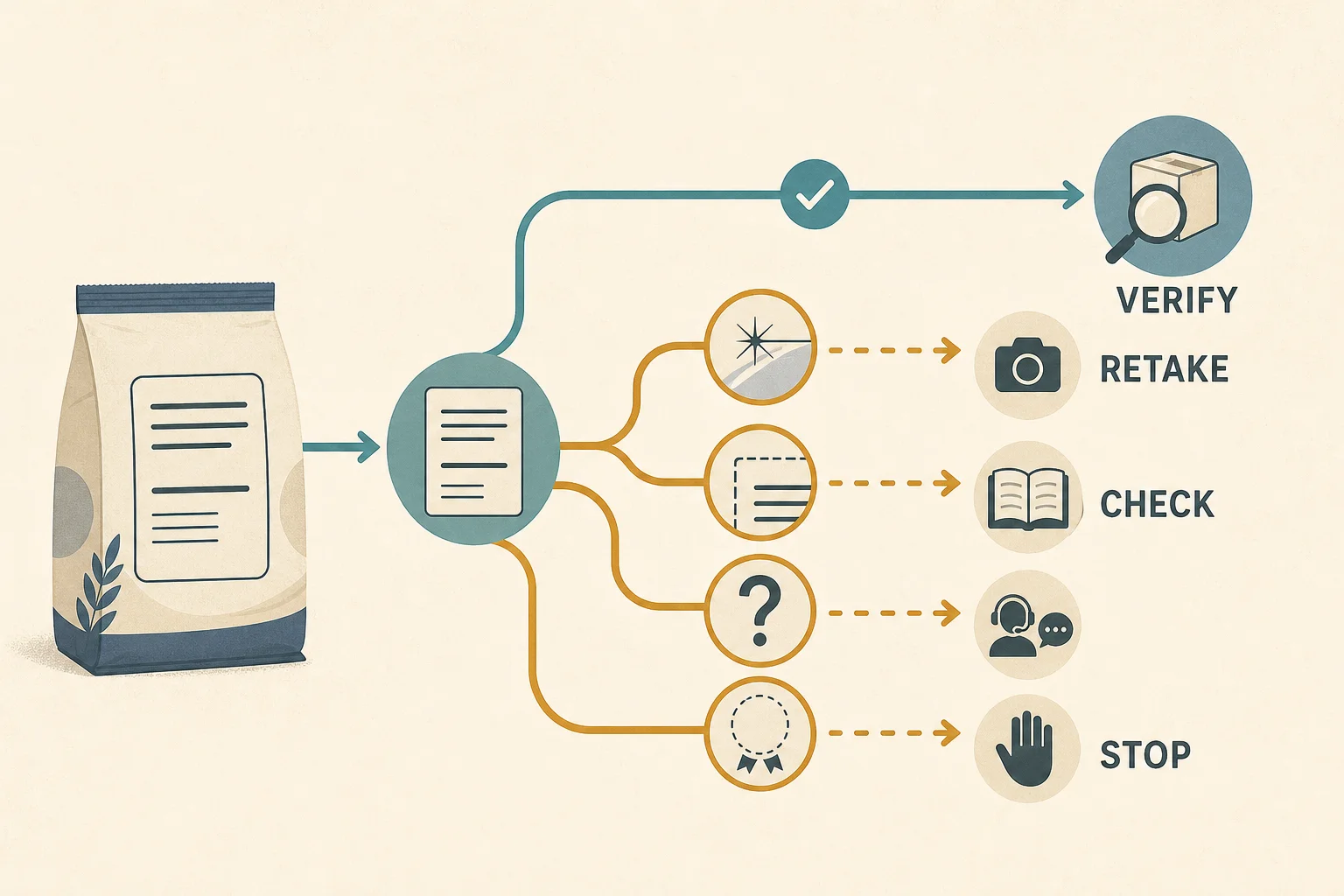
  7. Treat unresolved information as uncertain. Retake, research, contact the maker, or do not buy.
  8. Verify the package. Match every critical result back to the original label.

Google's own image-translation documentation warns that small, unclear, or stylized text may be less accurate. That warning applies directly to glossy wrappers, curved cans, condensed multilingual panels, and tiny precautionary statements.

When a critical line remains unclear, the correct outcome is not a best guess. It is a visible uncertainty with a next action.

When a Personalized Checker Adds a Different Layer

A translation tool answers a language question. A personalized ingredient checker can add a saved-rule question:

  • Does the available list conflict with this traveler's allergy notes?
  • Does an additive require source confirmation for this diet?
  • Did the visible warning trigger a manual-review rule?
  • Is the label incomplete enough that the result should remain uncertain?

IngrediCheck compares available package information with Food Notes and explains a Matched, Unmatched, or Uncertain result. It can organize several profiles without converting them into a single health grade.

The limitation remains essential. A Matched result means no conflict was found in the available analyzed information. It does not certify the product, prove absence of cross-contact, or guarantee a safe outcome.

A Pre-Purchase Failure Checklist

Pause the purchase when:

  • the image omits the end of the ingredient list
  • a warning is hidden by a sticker or fold
  • the translation drops parentheses or codes
  • the package uses an alias you cannot resolve
  • an ingredient source controls the decision but is not declared
  • the product record and physical package disagree
  • connectivity prevents a new analysis
  • a critical warning cannot be translated confidently

The goal is not to make every package buyable. It is to recognize when the available evidence is not enough.

Bottom Line

Food label translation apps make unfamiliar text accessible, but readable words are only one layer of the decision. Complete panels, nested ingredients, aliases, warnings, additive codes, legal differences, and undeclared information still need separate attention.

IngrediCheck can help organize the personalized part of that process by checking available label information against saved Food Notes and making uncertainty visible. Use that result with the original package, applicable certification, manufacturer information, and the allergy or dietary plan appropriate to you.

Frequently Asked Questions

Can a translation app identify every allergen on a food label?

No. It can translate visible text, but the photo may omit a panel, some allergens may use unfamiliar names, and local law may not require every allergen important to you to be emphasized.

Why are sub-ingredients easy to miss?

They often appear in smaller type inside parentheses after a compound ingredient such as seasoning, chocolate, sauce, or filling. Cropping or translating only the main line can remove that context.

What does may contain mean on a translated label?

It is precautionary wording about possible unintended presence, not a direct ingredient declaration. Its use and wording vary, so apply the rule from your allergy plan rather than treating translation as a risk assessment.

Will translation explain E numbers or INS numbers?

Usually the code remains a code. You still need a reliable lookup to identify the additive and may need manufacturer or certifier confirmation when its source is not declared.

What should I do when part of a label remains unclear?

Retake the complete panel, compare the translation with the source package, check another trusted reference, and treat critical missing or ambiguous information as uncertainty rather than a match.

Next Label Check

Follow the scanner, hub, and ingredient paths connected to this guide

Get the app for clearer label decisions.

Scan labels, see what fits your food notes, and read the why in plain English.

IngrediCheck app