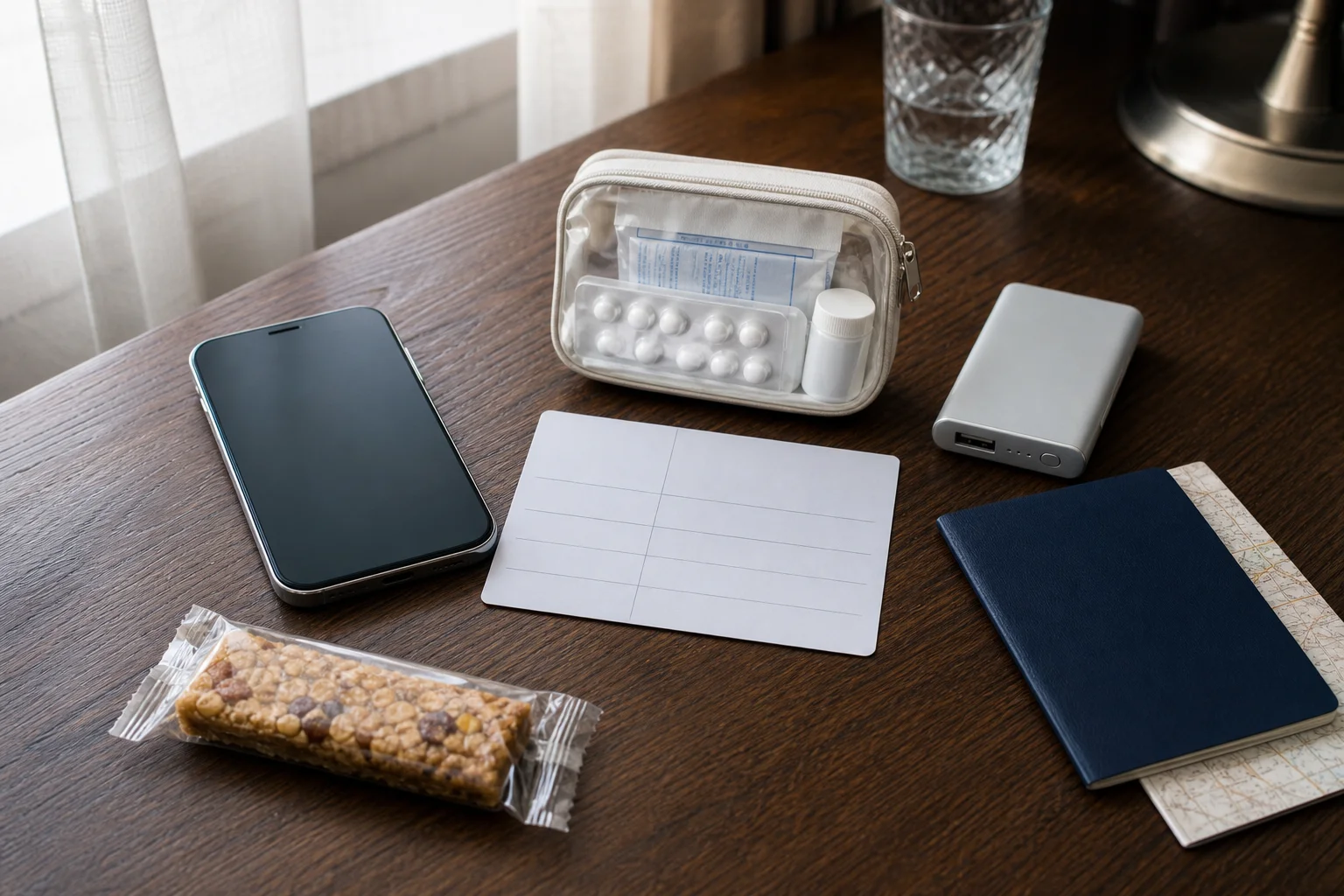
Food Label Translator vs Allergy Card: What to Pack

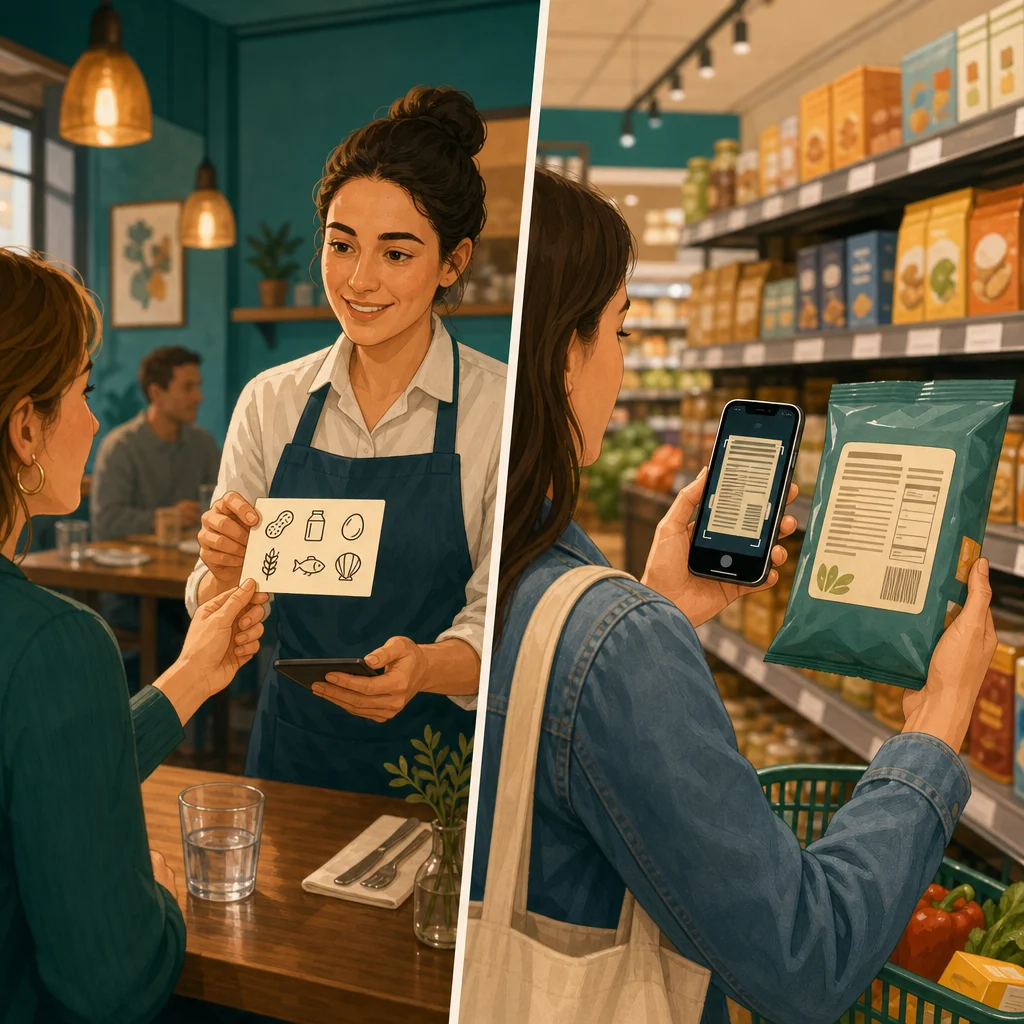
A food label translator and an allergy translation card belong in different moments of a trip. Use a card to communicate your allergy to a restaurant, hotel, or food vendor. Use a label translator or personalized ingredient checker to understand packaged food in a supermarket. For many travelers with food allergies, the right answer is to pack both.

Neither tool replaces an emergency action plan, prescribed medication, clinician guidance, or a direct conversation about food preparation. The distinction is simple: an allergy card helps another person understand you, while a label tool helps you examine a package.

If your immediate job is packaged-food shopping abroad, the travel food label checker is the commercial workflow. This guide remains an informational comparison for deciding what belongs in your travel kit.
Short Answer: Pack by Situation

Pack an allergy translation card for:

  • restaurants and cafes
  • hotels and catered meals
  • food stalls and vendors
  • conversations with chefs, managers, and serving staff
  • a clear local-language statement of the foods you must avoid

Use a food label translator or checker for:

  • packaged groceries
  • ingredient panels in an unfamiliar language
  • allergen and precautionary statements printed on a package
  • saved Food Notes across several family profiles
  • a visible Matched, Unmatched, or Uncertain explanation

This is not a ranking or a hands-on test. We reviewed official public-health, allergy-organization, regulatory, and product sources on July 27, 2026. The audience is travelers buying packaged food and eating away from home, particularly those managing diagnosed food allergies. We compared where each tool works, what input it needs, whether it supports several personal rules, its connectivity constraints, and what it cannot prove.

Allergy Card vs Label Tool at a Glance

Allergy Card vs Label Tool at a Glance
Travel decisionAllergy translation cardFood label translator or checker
Primary jobCommunicate a restriction to another personRead or review information printed on a package
Best settingRestaurant, hotel, vendor, catered mealSupermarket, convenience store, pharmacy food aisle
InputA prepared local-language messageLive camera, image, barcode, or ingredient-label photo
PersonalizationUsually one person and named allergens per cardCan apply several saved Food Notes or family profiles
ConnectivityPrinted cards work without a connectionNew image analysis or live lookup may require a connection
Main strengthClear repeatable communicationDetailed package-level review
Main limitCannot inspect the actual ingredients or kitchenCannot verify restaurant preparation or undeclared cross-contact
Emergency roleCan support communication but is not treatmentNo emergency treatment role

The editorial judgment is not that one tool wins. The better tool is the one built for the decision in front of you.

What an Allergy Translation Card Does Well

FARE describes a chef card as a way to communicate foods that must be avoided to a chef or restaurant manager. Allergy UK similarly positions translated cards for interactions with waiting staff, chefs, hotels, and food vendors. That human handoff is the card's core value.

A well-prepared card can reduce the chance that a critical allergen name is improvised under pressure. It can state:

  • the allergy in the local language
  • the food or foods that must be avoided
  • the need to prevent contamination or shared-utensil exposure
  • an instruction to speak with the chef or manager
  • an emergency message, depending on the card design

Printed cards also work when a battery is flat or the network is unavailable. They can be handed to the person preparing the food, which keeps the message closer to the kitchen than a spoken phrase at a busy counter.

The card still begins a conversation rather than ending one. Restaurant staff may need to check a recipe, packaged component, fryer, cutting board, sauce, garnish, or substitution. The Food Standards Agency's guidance for non-prepacked foods emphasizes accurate allergen information and encourages a conversation with customers about their requirements. A card makes that conversation clearer. It does not verify the answer.

What a Food Label Tool Does Well

A packaged food presents a different evidence source: the physical label. A camera translator can make unfamiliar words readable. A personalized checker can then compare available label information with the Food Notes a traveler saved.

The food ingredient checker supports barcode and ingredient-label photo inputs, separate family profiles, and Matched, Unmatched, or Uncertain results. The useful travel job is not a universal health score. It is a repeatable check against the household's own rules.

For example, one parent could save a peanut and sesame rule for a child, a vegetarian rule with source-dependent additives flagged for another family member, and a low-sodium preference for themselves. A package can then be reviewed against those profiles separately.

The limits matter. A label tool sees only the information available to it. It cannot detect undeclared cross-contact, inspect a factory, confirm a restaurant's preparation controls, or prove that the current product is safe. With IngrediCheck, new label-photo uploads and analysis require a network connection. Some non-English labels can be recognized, and the suitability explanation is in English, but the displayed ingredient list may retain the source language.

Why a Card Is Not a Package Scanner

An allergy card may list the local word for milk, egg, peanut, sesame, wheat, or another allergen. That can help you visually recognize a direct declaration. It does not review the package as a complete document.

A packaged label may include:

  • the full ingredient list
  • nested sub-ingredients
  • a separate allergen statement
  • precautionary wording
  • additive codes
  • certification marks
  • a product claim that needs comparison with the fine print

The regulatory pattern can also differ from home. EU rules require specified allergens to be emphasized in the ingredient list for prepacked foods. Other markets use their own allergen lists, declaration terms, formatting, or enforcement practices. A card prepared around one allergen does not explain all of those structures.

Use the card as a communication artifact. Use the physical package as the evidence source for a packaged-food decision.

Why a Label App Is Not a Restaurant Safety System

Restaurant meals are not sealed packages with a fixed ingredient panel in your hand. Even when a menu lists allergens, the actual decision may depend on:

  • recipe changes
  • a sauce or garnish
  • shared fryers
  • shared utensils and surfaces
  • staff understanding
  • substitutions made that day
  • a packaged component used in the kitchen

A label app cannot observe those conditions. Photographing a menu or scanning one packaged ingredient would cover only part of the meal.

The American College of Allergy, Asthma and Immunology advises travelers to talk with their allergist before departure and bring translated allergy information for a restaurant chef when traveling somewhere non-English speaking. That guidance supports a layered plan: prepare the communication, ask current questions, and keep the person's clinical plan available.

The Emergency Plan Is a Third Tool

An allergy card and a label checker are both prevention aids. An emergency action plan covers what to do if prevention fails.

FARE's emergency care plan contains the person's allergens, symptoms, treatment instructions, emergency contacts, and physician signature. CDC travel guidance recommends translated allergy cards and copies of the emergency response plan. For people at risk of anaphylaxis, the travel kit also needs the medication and preparation recommended by their clinician.

The American Academy of Allergy, Asthma & Immunology states that people with food allergies are typically advised to carry epinephrine at all times. A phone battery, translation result, or product verdict does not change that medical plan.

Keep the roles separate:

  • allergy card: communicate before food is prepared
  • label tool: review packaged-food information before buying
  • emergency plan and medication: respond according to clinical instructions

A Travel Toolkit That Covers Both Settings

A Travel Toolkit That Covers Both Settings

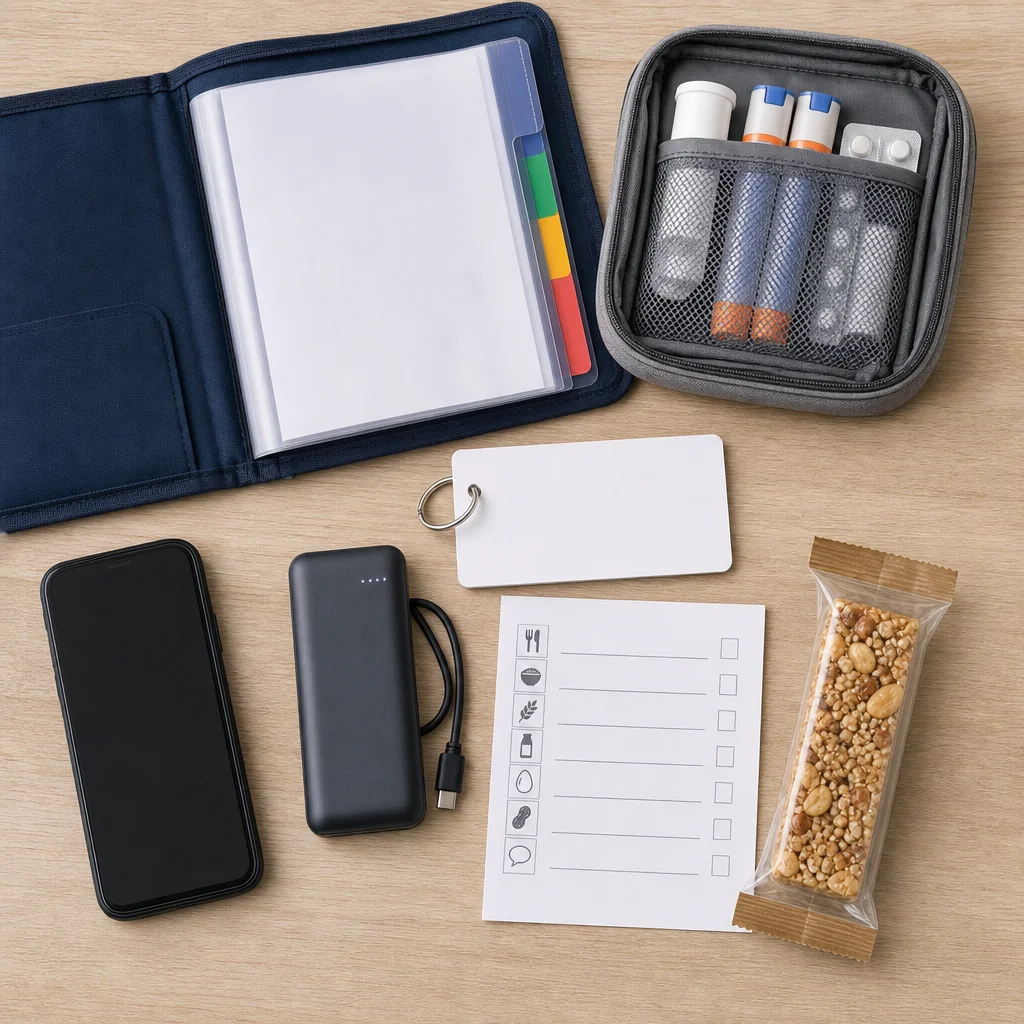
Before departure, prepare a small system instead of relying on one app:

  1. Confirm the clinical plan. Ask the relevant clinician about medication, backup supplies, documentation, and destination-specific concerns.
  2. Prepare translated cards. Use the language and dialect appropriate to the destination, and include every critical allergen.
  3. Save Food Notes. Write the exact allergies, diets, and avoid rules you want applied to packaged foods.
  4. Carry power and paper. A charger or battery pack helps, but printed cards and an accessible emergency plan should not depend on the phone.
  5. Research local labeling rules. Learn which allergens receive mandatory declarations and how precautionary statements are commonly presented.
  6. Define the uncertainty rule. If the package is incomplete, the staff cannot answer, or the connection fails, know in advance when to choose another food.

This preparation reduces decision pressure. The goal is not to make every food workable. It is to make the evidence threshold clear before hunger, crowds, or a language barrier makes the choice harder.

How to Use Both Tools During a Trip

In a supermarket

  1. Inspect the current package on every side.
  2. Photograph the complete ingredient and warning panels.
  3. Translate unfamiliar context if needed.
  4. Compare the available label information with saved Food Notes.
  5. Review the reason for any conflict or uncertainty.
  6. Verify the physical label and applicable certification.

In a restaurant

  1. Present the translated card before ordering.
  2. Ask to speak with the person who can confirm ingredients and preparation.
  3. Ask about sauces, garnishes, shared equipment, and substitutions.
  4. Decline the meal if the staff cannot provide enough information.
  5. Keep medication and the emergency plan accessible.

At a hotel breakfast or food stall

First identify the food type. A sealed packaged item can support a label workflow. An unpackaged pastry, buffet dish, or vendor-prepared meal requires communication about ingredients and preparation. A scanner cannot turn unpackaged food into a complete label.

Common Packing Mistakes

Packing only a phone

A phone can lose power, data access, or camera usability. Keep critical communication and emergency information available another way.

Packing a generic card

"I have a food allergy" may not name the actual allergen, derivatives, or contamination concern. Use a card specific enough for the person and destination.

Readable text can still be incomplete. A direct translation does not establish cross-contact controls or resolve an unknown additive source.

Treating "Matched" as a guarantee

A matched result means the available declared information did not conflict with the saved rule as analyzed. It does not prove the absence of undeclared ingredients, contamination, reformulation, or database error.

Forgetting that familiar products can change by country

The same brand can use different recipes, suppliers, allergen statements, or package formats in different markets. Check the package in your hand.

Bottom Line

An allergy translation card is best for communicating with people who prepare or serve unpackaged food. A food label translator or personalized checker is best for examining a packaged product. An emergency plan and prescribed medication cover a third job that neither tool can perform.

Pack around those roles. Use the card in the restaurant, use the package workflow in the supermarket, and stop when the available evidence is not enough. IngrediCheck supports the packaged-food part by comparing available label information with saved Food Notes while keeping conflicts and uncertainty visible.

Frequently Asked Questions

Do I need an allergy translation card if I have a food label app?

Usually, because the tools solve different jobs. A card communicates an allergy to restaurant staff or a food vendor. A label app helps review packaged-food information. Neither replaces an emergency plan or direct questions.

Can an allergy card help with packaged food labels?

A card can show the local-language name of an allergen, which may help you recognize a term. It does not capture a full ingredient panel, compare several family profiles, or interpret every alias and precautionary statement.

Can a food label translator replace a restaurant conversation?

No. A packaged-food label tool cannot verify a restaurant recipe, shared equipment, staff training, substitution, or preparation method. Use a translated card and a direct conversation with restaurant staff.

What should a traveler with a severe allergy carry?

Follow the plan created with a qualified clinician. Public-health guidance commonly recommends translated allergy information, an emergency action plan, prescribed medication including epinephrine when applicable, and knowledge of local emergency services.

Does IngrediCheck guarantee that foreign packaged food is safe?

No. IngrediCheck is a shopping aid that compares available label information with saved Food Notes. It cannot detect undeclared cross-contact, certify a product, or guarantee safety, and new label-photo analysis requires a network connection.

Next Label Check

Follow the scanner, hub, and ingredient paths connected to this guide

Get the app for clearer label decisions.

Scan labels, see what fits your food notes, and read the why in plain English.

IngrediCheck app
