How many ingredients have entered the food supply this way? No one knows precisely, because the pathway is secret by design.
A March 2026 investigation by the Environmental Working Group identified at least 111 food chemicals that companies had self-affirmed as GRAS without notifying the FDA. Of those, 49 were found in thousands of products listed in the USDA's Branded Foods Database, a public database of commercial food products and their ingredients. None of the 111 chemicals had gone through any form of public government safety review before entering the food supply.
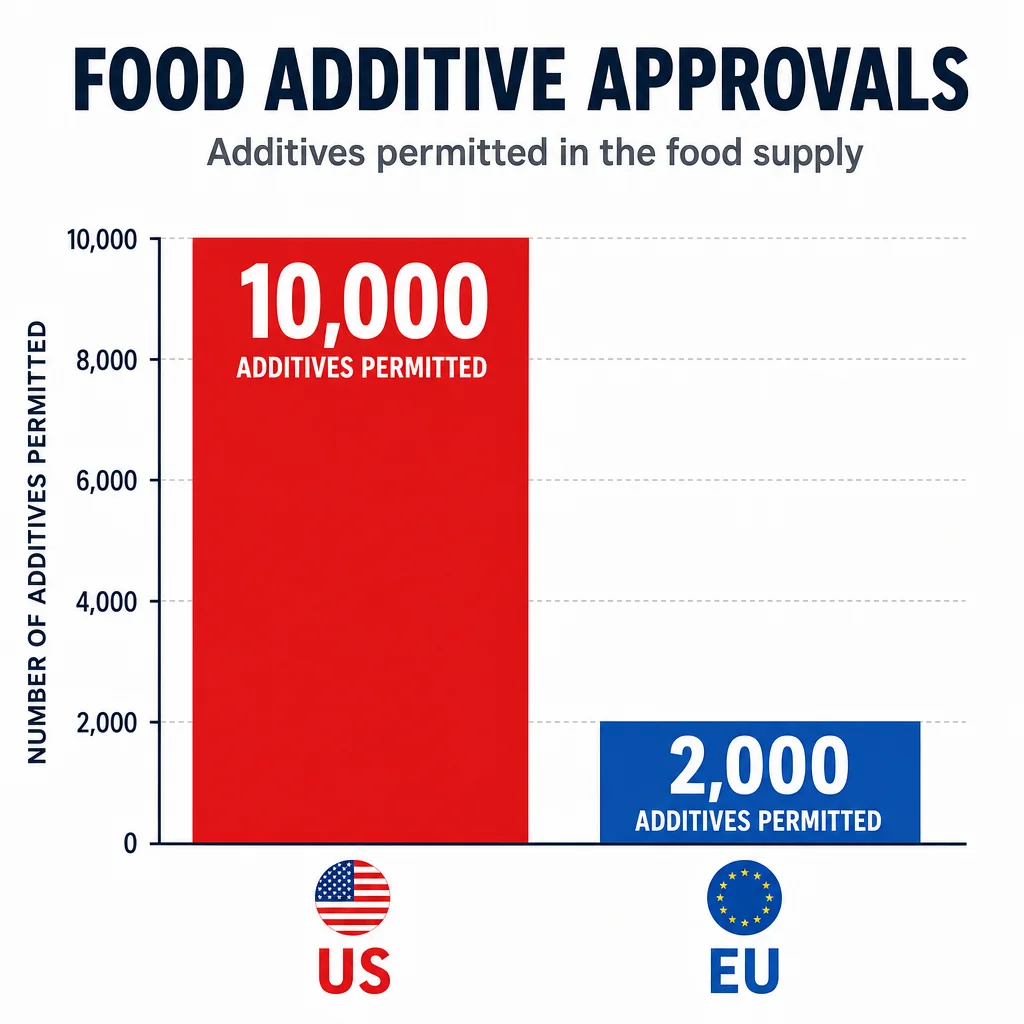
The broader estimate is starker. The Natural Resources Defense Council has reported that more than 1,000 additives in the US food supply have never received a formal FDA review of any kind. They entered the food supply through self-affirmation and stayed.
When Self-Affirmation Goes Wrong
The GRAS pathway's critics point to several cases where self-affirmation produced outcomes that later required regulatory correction.
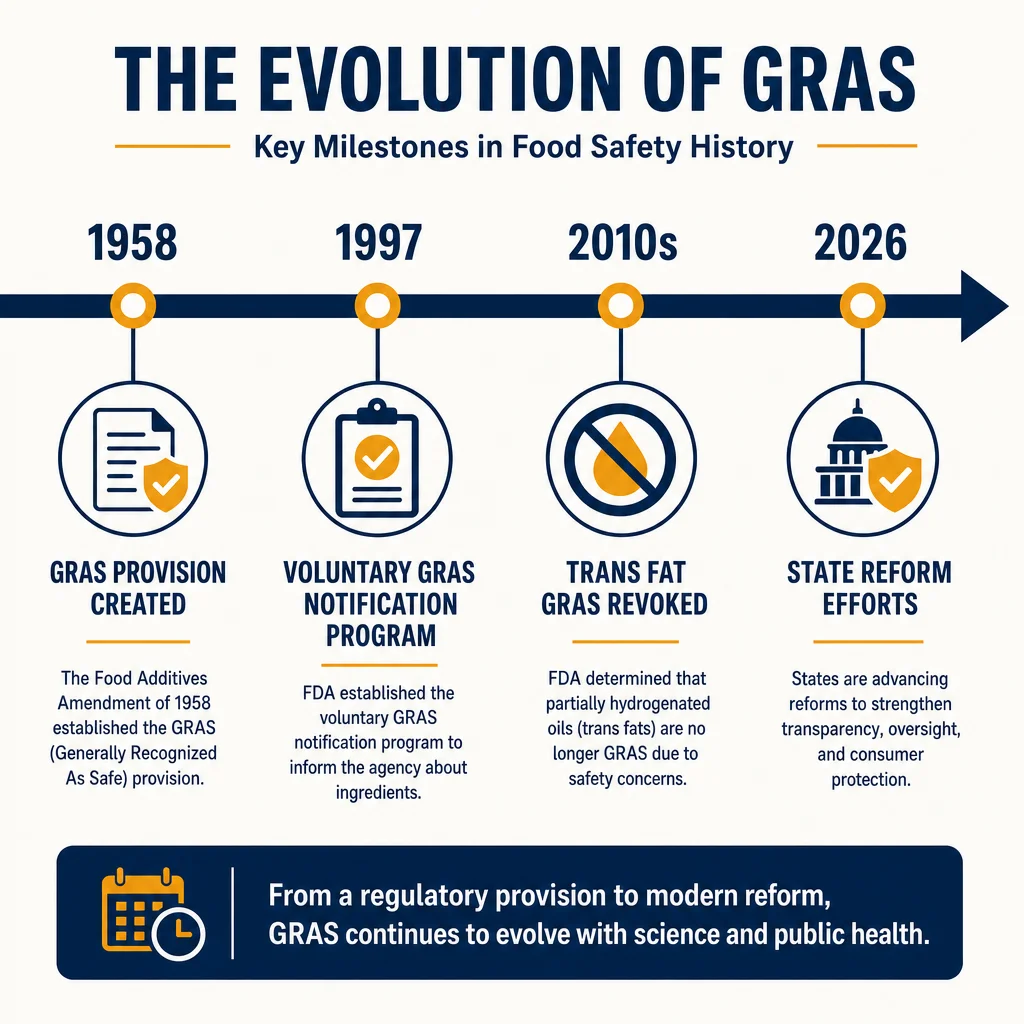
Partially hydrogenated oils. Trans fats were considered GRAS for decades. Companies self-affirmed their use in margarines, crackers, baked goods, and fried foods. Research connecting trans fats to cardiovascular disease accumulated slowly, and the FDA did not revoke GRAS status for partially hydrogenated oils until 2018, well after their health risks were well established. The delay cost years of public health exposure to a known harm.
BHA (butylated hydroxyanisole). This preservative appears in cereals, cured meats, snack foods, and baked goods under GRAS status. The National Toxicology Program classified it as a probable human carcinogen decades ago. The European Union restricts it in foods. The FDA ordered a new safety reassessment in February 2026, decades after independent researchers flagged concerns.
Four Loko and caffeinated alcohol. Caffeine is a legitimate GRAS substance for use in colas and certain beverages. In the mid-2000s, alcoholic beverage brands self-affirmed that caffeine was also GRAS for use in highly alcoholic energy drinks. The FDA eventually determined these self-affirmations were illegal, citing evidence of serious injury and death linked to the combination. But by then, the products had been on the market for years.
Tara flour. In 2022, the FDA challenged a self-affirmed GRAS determination for tara flour, a legume-based ingredient that had entered the food supply without agency review. The FDA concluded the ingredient had not been adequately studied for safety.
Each of these cases followed the same pattern: a company or industry made a private safety determination, the ingredient entered the market, problems emerged later, and a correction took years.