Strictly Avoid
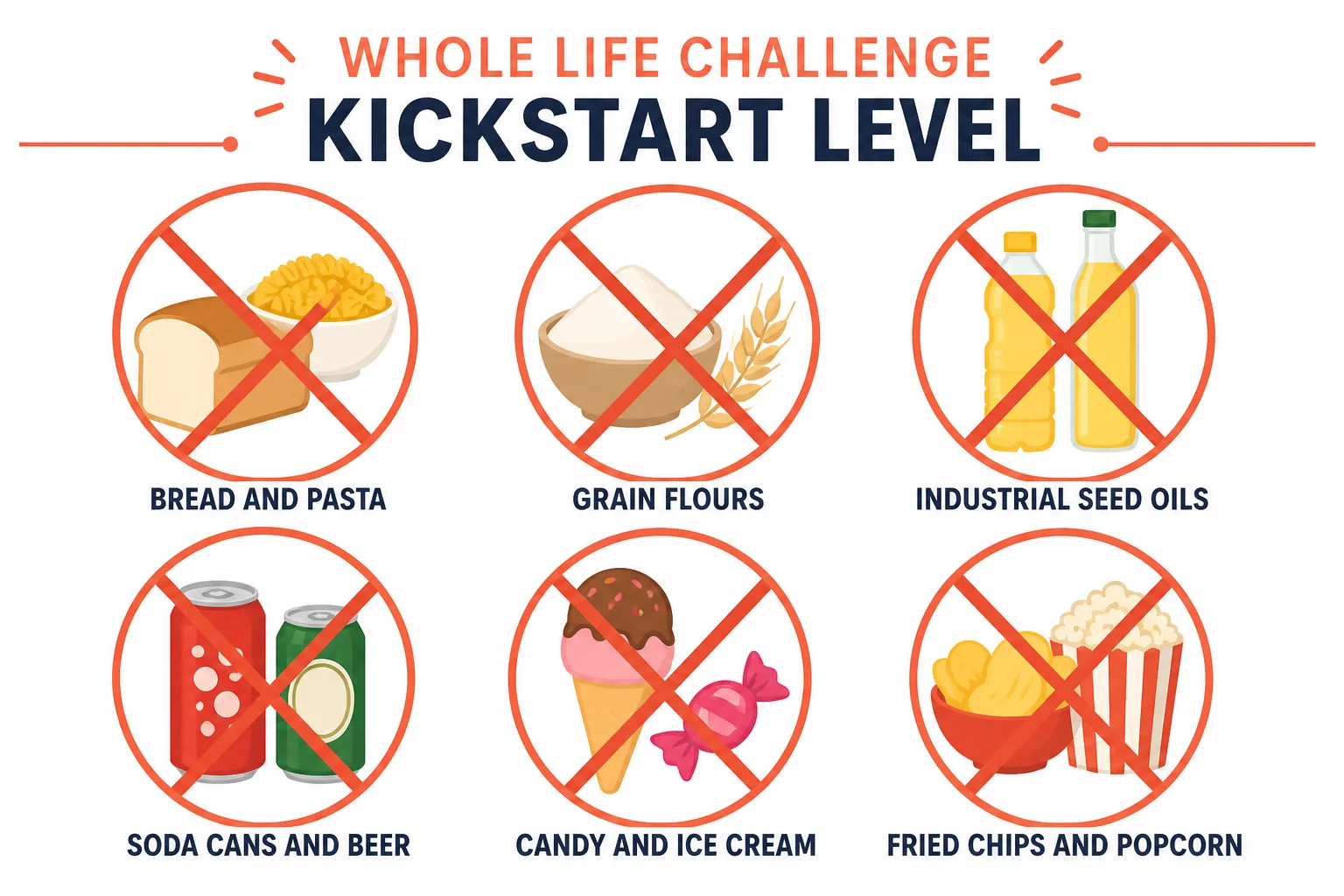
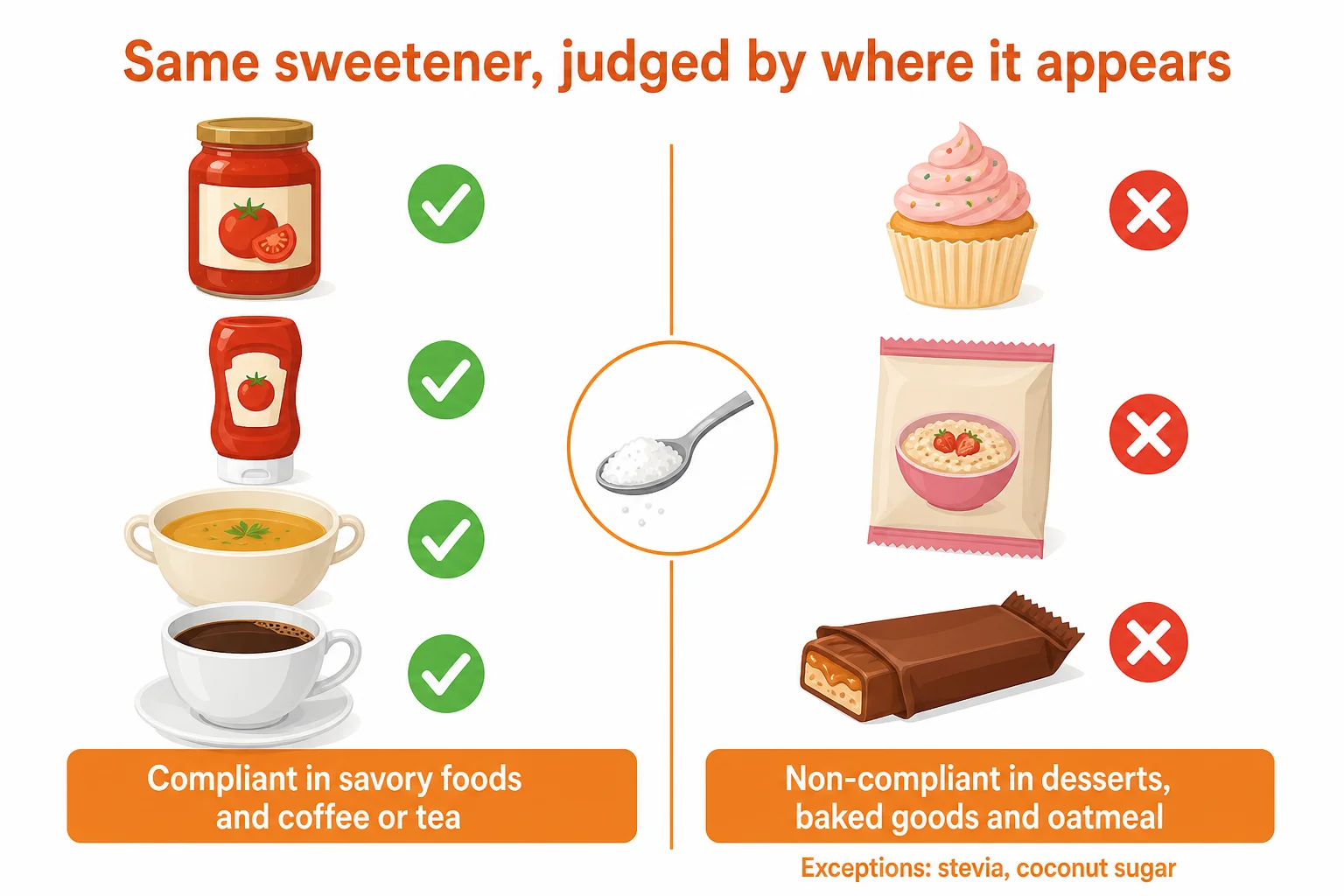
Any product containing the following is non-compliant under Whole Life Challenge Kickstart: wheat flour in any form (whole wheat flour, enriched flour, bleached flour, all-purpose flour, semolina, durum, spelt, kamut), any other grain flour (rice flour, corn flour, quinoa flour, oat flour), bread, bagels, muffins, and Ezekiel bread, pasta or noodles of any kind including rice, quinoa, and bean pasta, flour tortillas, breakfast cereal other than plain oatmeal, cornmeal and polenta, barley and pearled barley, couscous, farro, wheat berries, and potato starch. Also non-compliant are industrial vegetable and seed oils (soybean oil, corn oil, peanut oil, sunflower oil, safflower oil, grapeseed oil, canola oil, cottonseed oil), "vegetable oil" blends built from those oils, and any hydrogenated or partially hydrogenated oil or shortening. Only those industrial oils are banned, and other nut and seed oils such as flaxseed oil are compliant. Beer, soda (regular and diet), ice cream, candy, dessert, and fried chips of any kind (including vegetable chips), fried white-potato french fries, and popcorn are non-compliant. Sugar or any sweetener (cane sugar, brown sugar, dextrose, glucose syrup, corn syrup, honey, maple syrup, agave, fruit juice concentrate) used as an ingredient in candy, dessert, baked goods, pastry, or sweetened oatmeal is non-compliant unless the sweetener is stevia or coconut sugar or nectar, and monk fruit is not exempt in these products. Dried fruit with added sugar is non-compliant.
Generally Safe
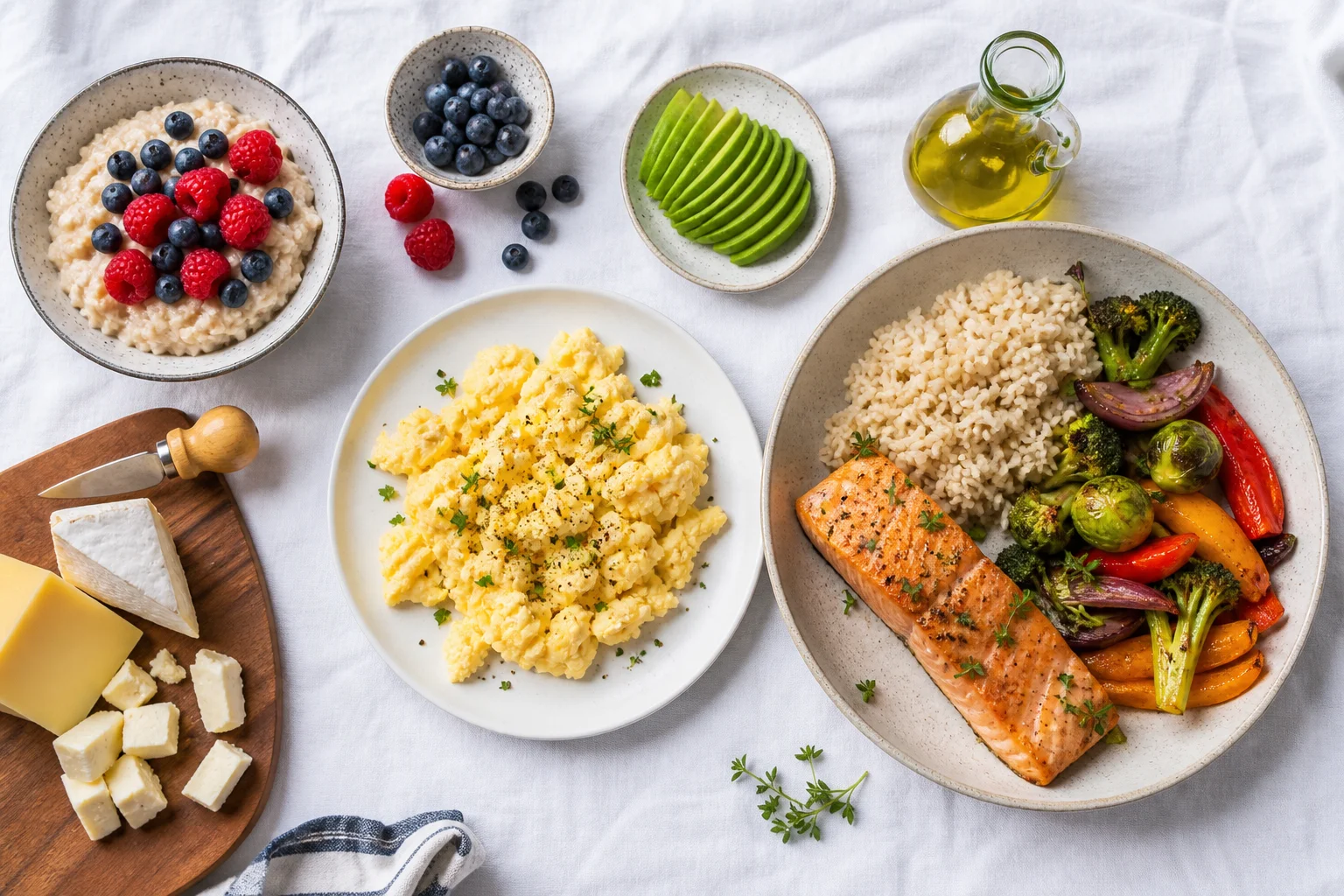
Whole and minimally processed foods are compliant: fresh and frozen meat, poultry, fish, seafood, and eggs (including bacon, pork, and, in moderation, deli and processed meats); all vegetables, plus corn, white potatoes, yams, yuca, taro, beans, lentils, chickpeas, and soy foods such as tofu, tempeh, miso, and edamame (moderation); all fresh, frozen, and unsweetened dried fruit; all nuts, seeds, peanuts, and nut and seed butters; almond flour, coconut flour, and other nut, seed, and coconut flours; oats, oatmeal, rice, quinoa, buckwheat, amaranth, and corn tortillas; butter, ghee, olive oil, coconut oil, avocado oil, flaxseed oil, other nut and seed oils that are not the industrial seed oils listed under Strictly Avoid, tallow, and duck fat; every dairy product except ice cream, including milk, cream, cheese, yogurt, kefir, cottage cheese, sour cream, buttermilk, and whey protein; water, coffee, tea, coconut water, kombucha, and juice; and wine or spirits at one per day. Sugar and sweeteners are compliant in savory recipes and pantry items such as broth, ketchup, sauces, and prepared soup, and to sweeten coffee or tea, and stevia, honey, maple syrup, monk fruit, coconut sugar, allulose, gum, and mints are compliant outside desserts. The following additives and thickeners are compliant: arrowroot, tapioca starch, guar gum, xanthan gum, natural and artificial flavors and colors, nitrates and nitrites, benzoates, and MSG. Sweet potato fries (baked or fried), baked white potato fries, and baked chips are compliant in moderation.
Ignore on Labels
Several front-of-pack claims do not decide Kickstart compliance and should be treated as marketing: "gluten-free" (gluten-free bread, pasta, and crackers are still bread, pasta, and crackers, and often use rice, corn, or potato starch), "grain-free" (still check for potato starch, dessert sweeteners, and seed oils), "whole grain" and "multigrain" (bread and pasta stay non-compliant), "made with real fruit," "natural," "organic," "non-GMO," "no artificial colors," "no artificial flavors," "no preservatives," and "MSG-free" (colors, flavors, and MSG are allowed by this level), "dairy-free," "vegan," "plant-based," "keto-friendly," "paleo-friendly," "lightly sweetened," and "no added sugar" (a product can still contain a seed oil, grain flour, or fried-snack form that the level bans).
Scanning Checklist
- Identify the product type first. Bread, bagels, muffins, pasta, flour tortillas, breakfast cereal other than oatmeal, soda, beer, ice cream, candy, dessert, fried chips, and popcorn are non-compliant by type, whatever the ingredient list says.
- Scan for grain flours and starches. Wheat flour and its forms (enriched, bleached, whole wheat, semolina, durum, spelt, kamut), rice flour, corn flour, quinoa flour, oat flour, barley, farro, couscous, wheat berries, cornmeal, polenta, and potato starch are non-compliant. Tapioca starch, arrowroot, and nut, seed, and coconut flours are compliant.
- Read the oils by name. In the US every fat or oil is named individually, or a blend of vegetable oils is followed by the name of each oil, and an oil that may be present can appear after "contains one or more of the following." In the EU, "vegetable oils" must be followed immediately by each specific origin. Soybean, corn, peanut, sunflower, safflower, grapeseed, canola, and cottonseed oil are non-compliant, while other nut and seed oils are compliant.
- Look for hydrogenation. The US FDA determined that partially hydrogenated oils are not generally recognized as safe, and the EU caps industrially produced trans fat at 2 grams per 100 grams of fat, so these oils are now rare. Any oil labelled hydrogenated, partially hydrogenated, or partly hydrogenated is non-compliant, and so is shortening made from one.
- Judge sweeteners by product type. A US Nutrition Facts panel shows an added sugars line, while an EU panel shows total sugars only, so read the ingredient list either way. In a dessert, baked good, pastry, or sweetened oatmeal, any sweetener other than stevia or coconut sugar or nectar is non-compliant, monk fruit included. In sauces, broth, ketchup, soup, and coffee or tea, sweeteners are compliant.
- Send unclear items to manual review. If a product type or ingredient is not named on the list, such as palm oil or a modified starch with an unstated source, do not guess.
Because Kickstart bans food types more than individual ingredients, a scanner has to weigh what a product is as well as what is in it. IngrediCheck reads the ingredient list against the shopper's saved profile and flags the grain flours, seed oils, hydrogenated oils, and dessert sweeteners covered in this guide, and it can check several dietary profiles at once. For help spotting sweeteners under unfamiliar names, see the guide to the hidden names for sugar.