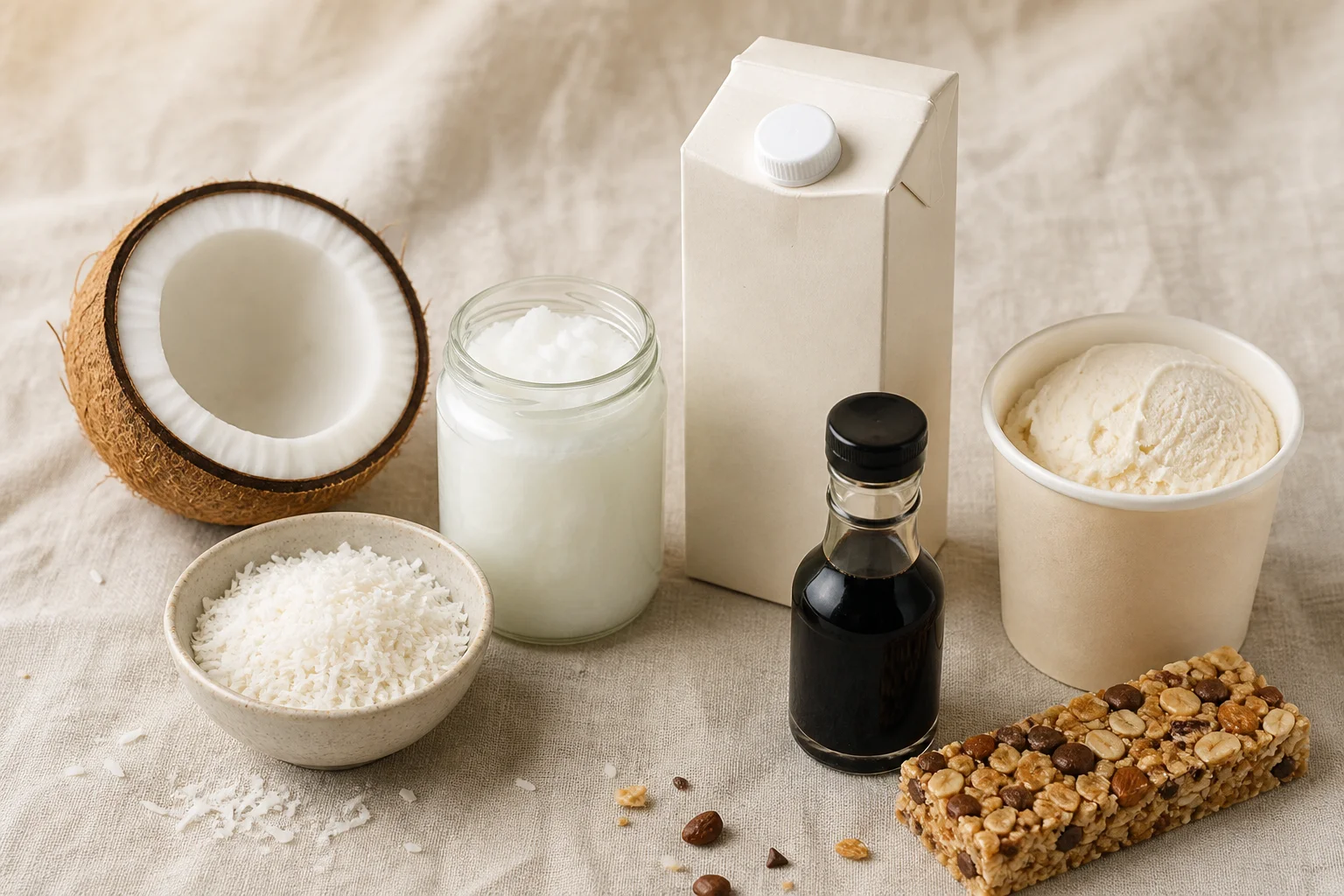
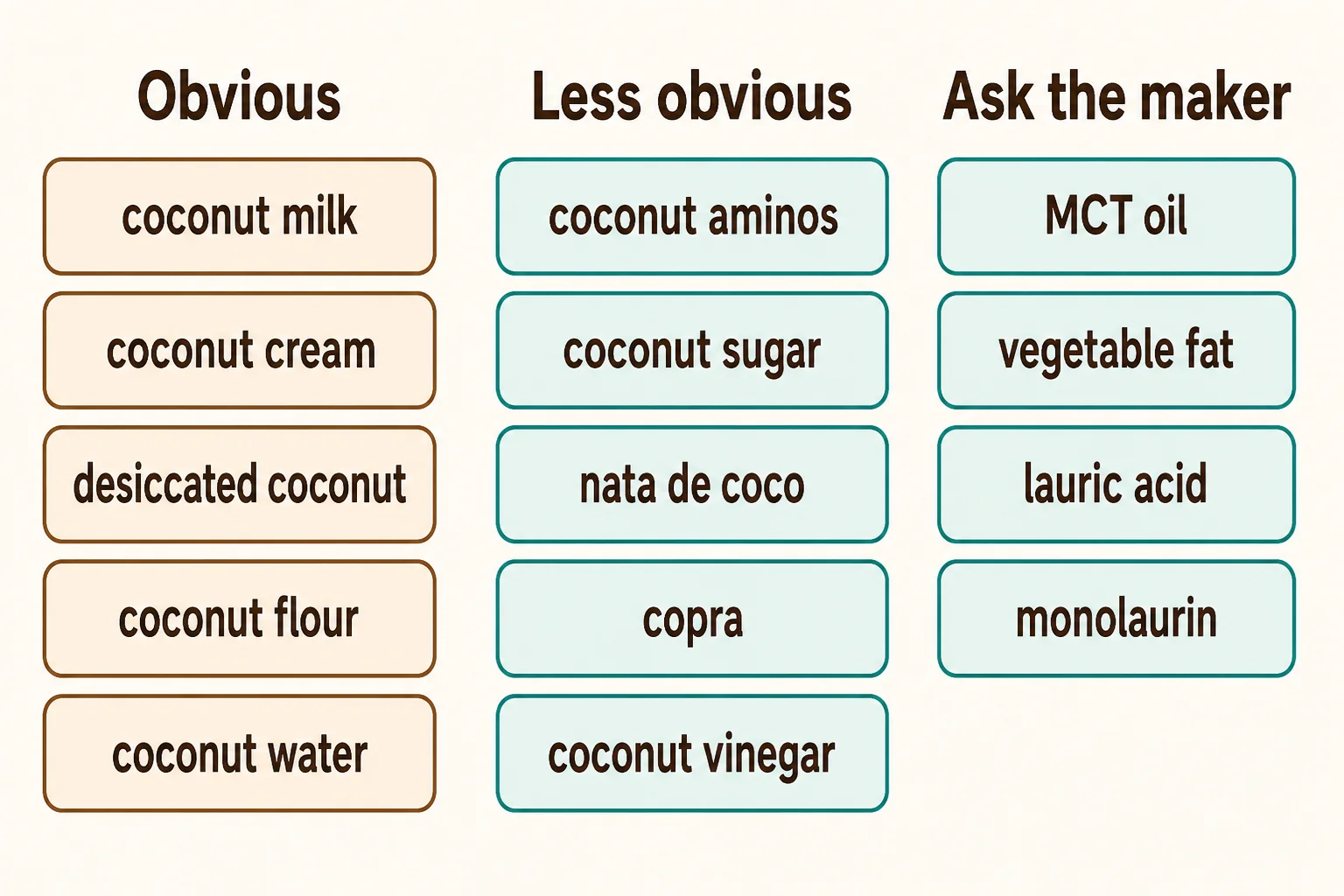
Anaphylaxis UK lists baking, ice cream, breakfast cereals, confectionery, coconut-flavored spirits, and some fruit juices as common sources, and notes that coconut oil has been used as a frying oil for crisps. The categories below are where coconut appears most often today. Recipes change, so always read the current label.
Dairy-Free and Vegan Products
The plant-based boom made coconut one of the most common dairy replacements. Check:
- non-dairy creamers and coffee whiteners
- vegan cheese, which is very often built on coconut oil
- dairy-free ice cream and frozen desserts
- plant-based yogurt
- whipped toppings and non-dairy whipped cream
- vegan butter and margarine blends
- dairy-free chocolate
A product labeled "nut-free" can still contain coconut, because many manufacturers follow the current FDA list when they make that claim.
Health, Keto, and Paleo Foods
Coconut flour, coconut oil, MCT powder, and coconut sugar are staples of low-carb and grain-free products. Look closely at:
- keto and paleo baking mixes, breads, and wraps
- protein bars and energy bites
- "bulletproof" coffee products and MCT creamers
- granola, trail mix, and breakfast cereals
- soy-free sauces made with coconut aminos
Cuisines That Use Coconut Heavily
Coconut milk and coconut oil are central to much of South and Southeast Asian cooking. Curry pastes and simmer sauces, Thai and Malaysian curries, South Indian and Sri Lankan dishes, Filipino desserts, and many Caribbean and Pacific dishes commonly contain it. Jarred sauces and ready meals in these styles deserve a full ingredient check.
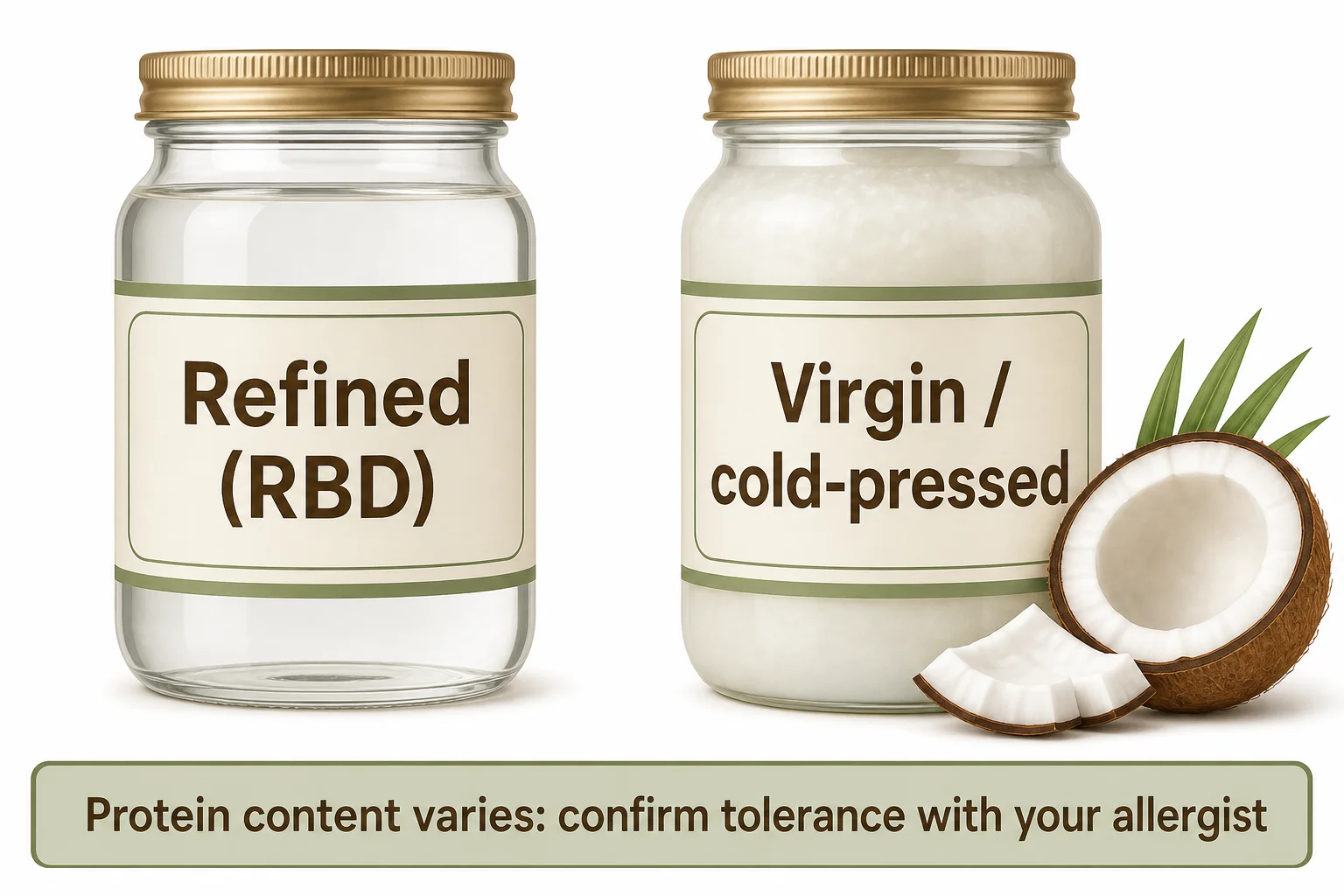
Many infant formulas use coconut oil, or "modified coconut oil," as a fat source. Softgel supplements, MCT capsules, and some vitamin gummies may also contain coconut-derived oils.
Skin Care and Household Products
Coconut-derived surfactants are everywhere in shampoo, soap, and cleansers. Cocamidopropyl betaine is derived from coconut oil, and cocamide DEA can rarely cause allergic contact dermatitis, especially on the hands. These skin reactions are usually a delayed contact allergy, often driven by manufacturing impurities, and are a different condition from IgE-mediated coconut food allergy. Coconut oil applied to the skin matters more for food allergy: in a chart review of 275 children, those who used coconut-based skin products were about twice as likely to be truly allergic rather than merely sensitized.