Label Reading Guides

Food Certifications Guide: Kosher, Vegan, Organic and More

A practical reference to food certification marks, from kosher and vegan to organic, gluten-free, ethical sourcing, animal welfare, and seafood. Learn their scope and limits.

Oct 13, 2026|26 min read
By Sanket Patel|Updated 2026-10-13|3 sources|Editorial standards
Food Certifications Guide: Kosher, Vegan, Organic and More

Quick answer: A food certification mark verifies compliance with a particular standard, not that a product is universally healthy, ethical, or suitable for every diet. Kosher and halal address religious requirements. Vegan and vegetarian marks address animal-derived materials. Gluten-free marks address gluten controls. Organic, welfare, sourcing, and origin schemes ask different questions. Always identify the certifier and the exact scope.

Consider a chocolate bar marked organic, kosher dairy, and Fairtrade. Those marks can all be genuine while the bar still contains milk, has substantial added sugar, and is unsuitable for someone with a milk allergy. The marks are not contradictory. They describe different properties.

This reference covers major schemes with publicly available regulator or scheme-owner information, checked on October 13, 2026. It is a global starting point, not an exhaustive list of every national or local certifier. Programs are grouped by what they verify, not ranked as “best.” Requirements, licences, and artwork can change; the current official standard and product listing take precedence.

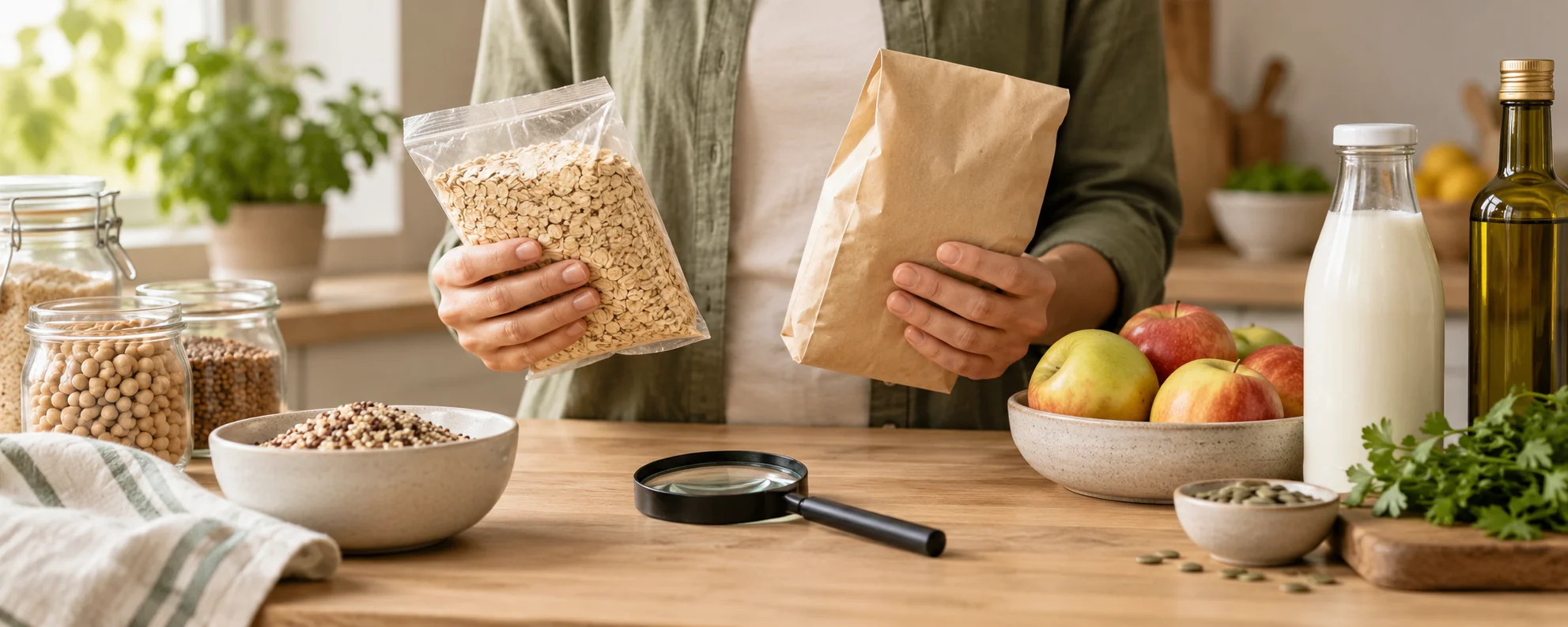
The logo galleries use authentic identification artwork, not evidence that IngrediCheck or any pictured food is certified. The cover photograph is illustrative and contains no certification marks. A company's logo is not substituted for a product-certification mark. Historical designs, official example formats, and legal disclosure symbols are identified separately from current certification marks.

These three things are easy to confuse:

  1. Certification or verification: an identified scheme assesses compliance against its rules and authorizes a mark. Depending on the scheme, evidence may include documents, ingredient traceability, inspection, testing, or ongoing audits. Not every scheme tests every batch.
  2. A regulated claim or disclosure: the law defines a term or requires information. A plain “gluten-free” claim on an FDA-regulated food has legal requirements even without private certification. A bioengineered-food disclosure conveys information rather than awarding quality certification.
  3. An ordinary marketing claim: a leaf, green packaging, “clean,” or “natural” is not proof of independent certification. Some claims have category-specific rules, but the artwork alone identifies no standard or auditor.

Also separate product certification from facility certification. A certified ingredient does not automatically certify the finished snack. A factory's food-safety certificate does not make every product vegan or gluten-free. A company's sustainability membership is not a product licence.

Your questionRelevant evidenceWhat not to infer
Does this meet my religious food rules?A recognized kosher or halal certifier, qualifiers, current listingVegan, gluten-free, or allergy-safe
Were animal-derived materials excluded?Vegan or vegetarian standard, including processing aidsNo milk/egg cross-contact, organic, or low sugar
Is gluten controlled?Legal gluten-free claim and/or named gluten-free certificationWheat-allergy suitability in every case
How was it grown or raised?Organic, welfare, or regenerative standard and scopeNo residues, no pathogens, or superior nutrition
What sourcing practices are supported?Fairtrade, Rainforest Alliance, seafood or palm-oil schemeEvery ingredient is physically traceable or certified
Does its origin or recipe match a protected specification?A geographical indication or traditional-speciality schemeVegan, organic, or suitable for allergies

Kosher certification: read the symbol and its qualifier

OU Kosher, unqualified mark
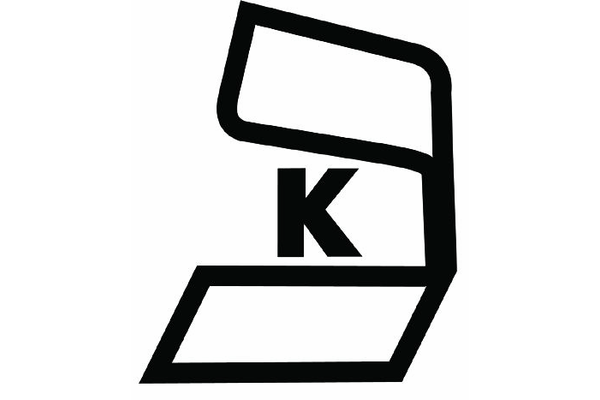
STAR-K Kosher
STAR-K Kosher
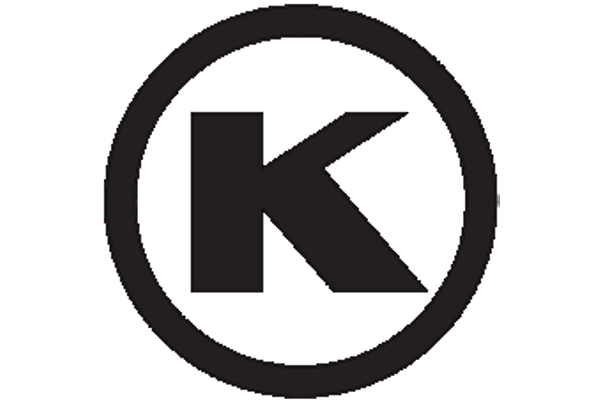
OK Kosher, unqualified mark
KOF-K Kosher
KOF-K Kosher

Identification examples from OU's official symbol explanation, STAR-K, and OK's official symbol guide. The KOF-K example is reproduced from the Wikimedia Commons identification file. These are separate certifiers. The illustrated OU and OK marks have no dairy, meat, or Passover qualifier.

Kosher certification assesses ingredients, processing, equipment, and other requirements under Jewish dietary law. Recognizable agencies include OU, OK, STAR-K, and KOF-K. They are separate certifiers; their symbols and qualifications should not be treated as interchangeable shorthand.

The OU symbol guide explains the distinctions particularly clearly:

OU designationWhat it tells youCommon misunderstanding
OU without a dairy/meat qualifierPareve classification under OU rulesPareve does not mean vegan
OU-DDairy ingredients or dairy-equipment statusThe D does not always establish an intentionally added milk ingredient
OU-Meat or OU-GlattKosher meat status with the applicable designationKosher does not mean vegetarian
OU-FishFish-related designationAbsence of an F is not an allergy-screening method
OU-PKosher for PassoverP does not mean pareve

Pareve foods can include permitted fish, eggs, or honey. Passover certification has additional requirements and is not a substitute for gluten-free certification; some Passover foods contain wheat. Religious classification also does not replace legally required allergen information.

Recognition matters. If you follow particular rabbinic standards, check whether the agency and designation are accepted by your community. Use the agency's current product search and alerts, not a social-media image of the mark. Our kosher pareve versus vegan comparison explores the dietary overlap without collapsing these two standards.

Halal certification: the agency matters more than a generic word

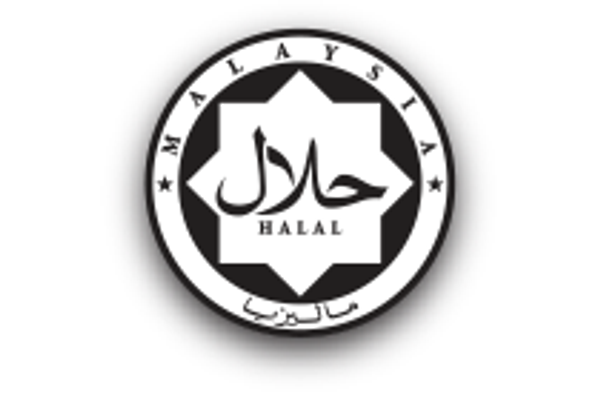
Malaysia Halal, JAKIM system
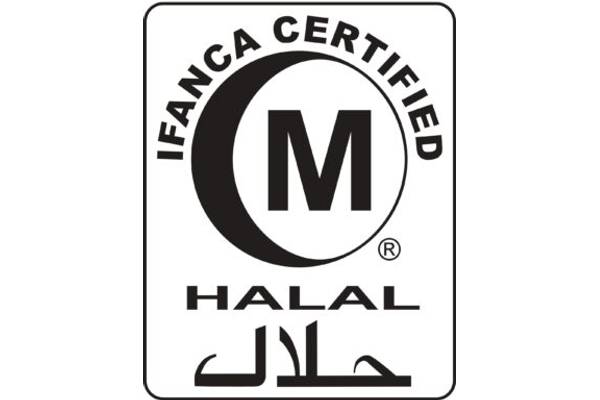
IFANCA Certified Halal, Crescent-M
Halal Indonesia, official example format

Distinct marks from the Malaysian halal portal, IFANCA, and BPJPH. The Indonesian illustration is an official label-format example, including a registration-number placeholder; that placeholder is not a valid certificate number. Agency branding is not substituted for a halal product mark.

Halal certification evaluates compliance with the certifier's Islamic dietary requirements. It can cover animal species, slaughter, animal-derived ingredients, processing aids, handling, and other production conditions. It is relevant to confectionery, dairy, flavors, supplements, and processed foods, not only meat.

IFANCA identifies its Crescent-M mark and provides a certified-products directory. Malaysia's JAKIM halal portal and Indonesia's BPJPH are important national reference points. A foreign certifier's recognition can matter for a particular market. Do not assume a logo accepted in one country satisfies every country's import or certification requirements.

A vegan ingredient list is not itself halal certification. Nor is kosher certification a blanket substitute for halal approval. Alcohol-related rules, source materials, slaughter requirements, and recognition arrangements need their own evaluation. Check the current certificate, covered products, expiry, and recognition rather than guessing from a crescent illustration.

For ingredient-level follow-up, use the halal label-reading guide and the halal ingredient checker. Label review cannot issue religious certification.

Vegan certification: animal ingredients and processing aids

V-Label Vegan
V-Label Vegan
Vegetarian Society Vegan Approved
FSSAI Vegan logo, India endorsement system
The Vegan Society, current Vegan Trademark
Certified Vegan, Vegan Action

Identification sources: V-Label press materials, the Vegetarian Society trademarks page, the FSSAI vegan-food gazette, and The Vegan Society's current-design announcement. The Certified Vegan illustration is sourced from the GoVisually artwork library; the certification program is operated by Vegan Action. Future provisions in the FSSAI gazette should not be treated as already effective. None of these illustrations endorses IngrediCheck.

Three useful programs to recognize are:

  • The Vegan Society Vegan Trademark: its current identity uses connected V/tick shapes, replacing the historical sunflower design. Its standards address animal ingredients and derivatives, animal testing within the stated scope, and measures to minimize cross-contamination. Verify certification status rather than deciding authenticity from a design change alone.
  • Vegan Action Certified Vegan: the heart-and-V mark. Its certification policies cover animal ingredients, by-products, processing, and animal testing. Approval relates to the approved products, not everything sold by the company.
  • V-Label Vegan: the mark must say vegan, not merely show a V. Its criteria cover ingredients, carriers, enzymes, processing aids, and relevant production stages.

This matters for ingredients whose source cannot be determined from their name, including some emulsifiers, flavorings, enzymes, and vitamin D3. A credible certification may document information unavailable on the retail ingredient panel.

Vegan certification is not an allergen certification. The Vegan Society's published certification standards expressly allow appropriate “may contain” warnings. Shared production and unintended traces are handled under the specific program's rules. Never convert “vegan” into “guaranteed milk-free” for an allergic child.

Vegan programs also differ on biotechnology and GMO-related criteria. Do not infer identical rules from similar packaging. Our existing ingredient-source articles cover those questions in more detail; this guide is about recognizing and verifying the scheme.

Vegetarian certification: check whether eggs and dairy are permitted

V-Label Vegetarian
V-Label Vegetarian
Vegetarian Society Vegetarian Approved
Vegetarian Society Plant-Based Approved

The word “vegetarian” changes the scope; it is not the vegan label. The Vegetarian Society's three separate trademarks include Vegetarian Approved, Vegan Approved, and Plant-Based Approved. Check the program named on the mark instead of treating all three as identical.

V-Label Vegetarian excludes meat, fish, animal rennet, and specified slaughter-derived materials while allowing categories such as milk, eggs, and honey under its criteria. That is different from its vegan designation.

The Vegetarian Society's trademark criteria separately describe vegetarian, vegan, and plant-based marks. Its vegetarian criteria include requirements for free-range eggs. That illustrates why “vegetarian certified” is not one universal specification.
In India, the regulated vegetarian/non-vegetarian packaging symbols are a separate labeling system, not proof of registration with V-Label or a private international certifier. FSSAI's vegan-food program has its own logo-endorsement process. Neither an ordinary vegetarian symbol nor a vegan mark establishes Jain, kosher, halal, or allergen-free suitability.

Gluten-free certification: name the program and threshold

AOECS Crossed Grain
AOECS Crossed Grain
GFCO logo transition, historical left and updated right
NSF Certified Gluten-Free

The registered Crossed Grain mark comes from AOECS's certification explanation. The separate GFCO comparison shows its historical mark on the left and updated mark on the right. The NSF example is reproduced from Figure 1 of its official protocol. That 2019 artwork source should not be mistaken for confirmation that the protocol is the latest standard. A logo transition is not proof that every older package is counterfeit; verify the product and current listing.

Start with the FDA gluten-free labeling framework. A voluntary gluten-free claim on FDA-regulated food must meet the rule, including a gluten level below 20 parts per million and applicable ingredient conditions. That is not the same as mandatory third-party certification.

Program or frameworkWhat to checkImportant limit
GFCO, operated by Gluten Intolerance GroupCurrent certified product, mark, applicable standardCurrent conditions use 10 ppm or the lower country-of-sale threshold
AOECS Crossed Grain TrademarkLicensed mark and product/licence identifierA controlled European licensing scheme; a generic crossed-out wheat drawing is not the same thing
NSF gluten-free certificationThe specific gluten-free certificate, not any NSF markNSF's program aligns with the FDA framework and includes verification controls
Plain legally compliant gluten-free claimCountry-specific legal definition and full labelA legal claim can be meaningful without a private seal

AOECS licenses the Crossed Grain symbol through its program and member societies. GFCO's country-of-sale provision is significant: Australia and New Zealand impose different rules, including treatment of oats. A familiar logo does not erase local law.

Certification can provide added manufacturing-control evidence. It does not mean every package was individually laboratory-tested, nor that food without a seal is automatically unsafe. Gluten-free also does not necessarily mean appropriate for wheat allergy, because those are different criteria. For a more detailed celiac-shopping comparison, see our certified gluten-free versus gluten-free guide.

Organic certification: agricultural rules, not a nutrition score

EU Organic
EU Organic
Canada Organic
Canada Organic
Japan Organic JAS
Japan Organic JAS
PGS-India Organic, certified status
Jaivik Bharat, India organic identity mark
Soil Association Organic
USDA Organic
USDA Organic
India Organic and Jaivik Bharat, combined artwork

These are distinct regional or certifier marks, not a single interchangeable certification. Official identification sources: EU organic, Canada Organic, Organic JAS, PGS-India, Jaivik Bharat, Soil Association, USDA Organic, and APEDA's combined India Organic/Jaivik Bharat artwork. The blue PGS mark denotes certified organic status; it is not the green in-conversion mark.

Organic standards regulate production and handling practices. They restrict specified inputs and methods and establish certification and traceability requirements. They do not mean “no substances ever used,” “no detectable pesticide residues,” “no pathogens,” or “nutritionally superior in every respect.” Organic meat is not vegetarian; organic wheat is not gluten-free.

USDA Organic: four labeling categories

The USDA labeling rules distinguish:

WordingOrganic content, excluding salt and waterUSDA seal?
100 percent organic100% organic ingredientsPermitted when requirements are met
OrganicAt least 95%, with restrictions on the remainderPermitted when requirements are met
Made with organic specified ingredientsAt least 70%, with further constraintsNot permitted
Below 70% organic contentIndividual organic ingredients may be identified as allowedNot permitted

“Made with organic oats” does not mean the finished bar is USDA Organic. Check the certifying agent and the certified operation's scope. Some small operations are exempt from certification but must meet applicable organic requirements and cannot simply use the seal.

EU, Canada, India, Japan, and UK schemes

  • EU organic leaf: the European Commission says the logo identifies products certified by an authorized control body, with at least 95% organic ingredients and further conditions. Look for the control-body code and agricultural-origin information alongside the mark. It is compulsory for relevant prepacked organic foods produced and sold in the EU, with exceptions and optional uses specified by the rules.
  • Canada Organic / Biologique Canada: the CFIA permits the logo on qualifying certified products with at least 95% organic content. Applicable trade and labeling rules, including equivalency arrangements, matter for imported products.
  • India Organic / NPOP, PGS-India, and Jaivik Bharat: FSSAI's consumer guidance explains the two organic systems and their identifiers. NPOP is not the same institutional system as participatory PGS-India. Jaivik Bharat is the common organic identity mark; check the underlying system and certifier or group details, rather than treating the FSSAI licence number alone as organic certification.
  • Japan Organic JAS: MAFF describes certification by accredited bodies and use of the Organic JAS logo by certified operators. A translated “organic” claim on an import is not a substitute for satisfying the applicable Japanese requirements.
  • Soil Association Organic: a UK certifier with published organic standards. Its mark identifies a specific certification organization, not an additional universal guarantee covering every dietary restriction.

Organic equivalency is a regulatory relationship with conditions, not a promise that every country's standard is identical. For a cross-border purchase, verify the scheme accepted in the country where the food is being sold.

Non-GMO verification and bioengineered disclosure are different

USDA Bioengineered disclosure, not certification
Non-GMO Project Verified

The official USDA disclosure symbol is included for contrast with the Non-GMO Project Verified mark. The USDA symbol is a disclosure, not a certification seal or a danger warning.

Non-GMO Project Verified is a private verification program against a published standard. Its familiar butterfly mark concerns GMO avoidance through program requirements, including risk-based sourcing and testing. It is not organic certification, a gluten-free mark, or a nutritional rating. “Verified” should not be rewritten as “zero possibility of any trace.”

USDA Organic prohibits excluded methods such as genetic engineering under its organic rules. That does not make the two schemes identical: organic covers a wider set of agricultural practices, while private non-GMO verification has its own assessment structure.

The U.S. Bioengineered disclosure is a mandatory disclosure framework, not a product-quality certification. Its scope and exemptions mean that absence of the symbol is not equivalent to independent non-GMO verification. The mark also should not be interpreted as a danger warning.

Low-FODMAP certification: serving size is part of the evidence

Monash University Low FODMAP Certified
FODMAP Friendly Approved Food Product

Separate marks from Monash's official certification program and FODMAP Friendly. Neither mark authorizes an unlimited portion.

Monash University Low FODMAP certification and FODMAP Friendly are separate programs. Monash describes independent laboratory testing of certified products. FODMAP Friendly describes its testing and licensing process, including the proposed serving size and laboratory assessment.

The important shopper question is not just whether the badge appears. It is which product and serving size were assessed. Eating several servings or combining foods changes exposure. A low-FODMAP product can contain wheat or milk ingredients and is not automatically gluten-free, lactose-free in every context, or appropriate for a wheat or milk allergy.

Use the program's current product information. Our low-FODMAP checker helps review ingredient clues, but cannot replace laboratory measurements or the certified serving-size information.

Nutrition and sports certifications: narrower than “healthy”

NSF Certified for Sport
Informed Sport
Informed Sport
American Heart Association Heart-Check Certified

Marks from NSF's sport program, Informed Sport, and the American Heart Association. Heart-Check addresses nutritional criteria, not prohibited substances in sports supplements. NSF Certified for Sport is not NSF gluten-free certification.

American Heart Association Heart-Check evaluates foods against category-specific nutrition requirements and relevant health-claim rules. Read the Nutrition Facts and serving size as well. A heart-related mark does not establish suitability for every medical diet or allergen restriction.

NSF Certified for Sport covers supplement and relevant product quality and banned-substance risk within its program scope. It differs from NSF gluten-free certification and from a facility-only GMP certificate. Match the specific certificate to the actual concern.

Informed Sport says it tests every certified supplement batch for banned substances before release. Verify the product and batch in the official directory. This is not a guarantee of performance benefits or a treatment claim, and it is not interchangeable with vegan, organic, or food-allergy certification.

Fair trade and responsible sourcing: read the ingredient claim

FAIRTRADE, Fairtrade International system
Fair Trade Certified, Fair Trade USA
Rainforest Alliance, sustainable agriculture
Rainforest Alliance, regenerative agriculture

FAIRTRADE artwork is credited to Fairtrade America. Fair Trade USA is a separate scheme. The two Rainforest Alliance seals identify its Sustainable Agriculture and Regenerative Agriculture programs; neither is an organic or vegan mark.

These schemes address production and supply-chain practices. They do not independently establish nutrition quality, organic status, or dietary suitability. Certification describes compliance with a standard, not a guarantee that every social or environmental problem has been eliminated.

Fairtrade International and Fair Trade USA

FAIRTRADE, associated with Fairtrade International, covers social, economic, and environmental requirements. Its label explanation distinguishes the black FAIRTRADE mark, arrow qualifiers, and named sourced-ingredient marks. A cocoa-specific mark on a biscuit is not proof that every ingredient is Fairtrade certified.
Fair Trade Certified, operated by Fair Trade USA, is a distinct program with its own standards and certification explanation. Its standards and premium/community-development arrangements should not be assumed identical to Fairtrade International's commodity-specific rules. Neither seal automatically means organic or vegan.
The phrase “fair trade” without a named certifier needs more scrutiny. It may describe a company's policy rather than certification of that particular product.

Rainforest Alliance

The Rainforest Alliance explanation describes agricultural standards covering environmental management, forests, livelihoods, and human rights. On a multi-ingredient product, identify the ingredient to which the seal or claim applies. Do not read a frog on a chocolate bar as proof that its dairy or every other ingredient is covered.

The organization now distinguishes Sustainable Agriculture and Regenerative Agriculture seals. Check which program the mark denotes. Neither should be translated into “pesticide-free,” “organic,” or “healthier.”

Mass balance: a crucial qualification

Some responsible-sourcing programs permit mass balance for particular commodities. Under the applicable scheme, certified and conventional material may be mixed while purchases and sales are accounted for in certified-equivalent volumes.

That can support certified production without proving that the physical cocoa or sugar in your individual package came exclusively from certified farms. It is a sourcing-accounting model, not necessarily deception. Read the scheme's claim policy and the package wording instead of assuming full physical segregation.

Palm oil: RSPO certification is not “palm-oil-free”

RSPO Certified Sustainable Palm Oil

The RSPO trademark from its official media centre. The precise package claim and supply-chain model still matter.

The Roundtable on Sustainable Palm Oil, or RSPO, has different supply-chain models:

RSPO modelWhat it tracksShopper interpretation
Identity PreservedCertified physical oil from an identifiable certified sourceStrong source-specific separation
SegregatedPhysical oil from certified sources, which can be mixed togetherCertified sources, not necessarily one farm
Mass BalanceCertified and conventional oil with controlled volume accountingNot an exclusively segregated certified physical ingredient
Credits / Book and ClaimCredits supporting certified productionDoes not establish that certified physical oil is in this package

Consult the trademark and claims rules for the precise wording. A palm-oil-free claim and an RSPO claim are almost opposite questions: one asks whether palm oil is present, the other concerns how relevant production or sourcing is supported. RSPO does not certify gluten-free, vegan, or organic suitability.

Seafood: wild-capture and farmed certifications are different

Best Aquaculture Practices, parent mark
MSC, wild-capture seafood
ASC, current aquaculture label

Distinct examples from BAP's official downloads, MSC's label explanation, and ASC's current label information. No BAP star rating is assigned to a product in this illustration.

Three prominent schemes cover different seafood production and supply-chain questions:

SchemeCore scopeWhat the logo does not establish
MSC, Marine Stewardship CouncilWild-capture fisheries assessed against environmental criteria, with Chain of Custody requirementsLow mercury, no allergens, or aquaculture certification
ASC, Aquaculture Stewardship CouncilFarmed seafood environmental/social standards and supply-chain requirementsWild-capture status or a contaminant test of each fish
BAP, Best Aquaculture PracticesAquaculture standards and certified supply-chain stagesA star-based taste or nutritional rating

MSC's blue-label explanation and Chain of Custody standard help distinguish fishery assessment from traceability through businesses handling the seafood.

ASC's label information describes a label transition, so appearances can change over time. An older appearance alone is not enough to declare a package fraudulent; match the product and licence to the current scheme information.

BAP's logo guide explains the stars: they communicate coverage of stages such as the processing plant, farm, hatchery, and feed mill. Four stars cover all four stages. Lower-star combinations are not equivalent to that complete coverage.

If your concern is mercury, species, serving frequency, and regulator guidance still matter. If your concern is fish or shellfish allergy, these environmental and production marks do not remove the allergen.

Animal-welfare certification: read the species and level

Certified Humane Raised and Handled
G.A.P. Animal Welfare Certified, generic mark
Animal Welfare Approved by A Greener World

Authentic examples from Certified Humane, Global Animal Partnership, and A Greener World. The generic G.A.P. artwork does not assign a Step level.

Welfare programs assess how animals are raised and handled. They are not vegan schemes, and certification does not mean no slaughter takes place.

  • Certified Humane Raised & Handled: Humane Farm Animal Care publishes species-specific standards. The base mark should not automatically be interpreted as pasture-raised, organic, or grass-fed; additional claims have their own requirements.
  • Certified Animal Welfare Approved by A Greener World: the program FAQ describes independent farm-based certification and audits. Pasture/range-based systems are central, but AGW's separate Grassfed, Non-GMO, and Regenerative programs should not be silently folded into the AWA mark.
  • G.A.P. Animal Welfare Certified: Global Animal Partnership has species-specific, tiered standards. The displayed step or level matters. A basic level is not the highest level and should not be described as automatically pasture-raised. G.A.P. is not GLOBALG.A.P., a different agricultural assurance organization.

“Cage-free,” “free-range,” and “pasture-raised” are not synonyms, and requirements can depend on animal species and jurisdiction. A rule for laying hens cannot simply be applied to broiler chickens or cattle. A welfare seal also does not establish that a meat product is kosher or halal.

Regenerative and biodynamic certification: demand a named standard

Demeter Certified Biodynamic
Regenerative Organic Certified

Separate marks from Demeter's official labelling resources and Regenerative Organic Certified. They refer to different standards, not two names for the same program.

Regenerative Organic Certified, or ROC, builds on organic certification or an approved equivalent and adds soil-health, animal-welfare, and farmer/worker-fairness requirements. The ROC framework and certification process define Bronze, Silver, and Gold levels and the applicable scope.

That is more specific than an unqualified word “regenerative.” Do not assume every regenerative claim includes independent certification, organic status, the same acreage coverage, or evidence that the resulting food is more nutritious. A named regenerative program needs its own standard review.

Demeter Certified Biodynamic is a different system. Its farm and processing standards address biodynamic practices and product processing. A certified farm, a certified ingredient, and a certified finished product are distinct scopes. An ordinary product containing one biodynamic ingredient is not automatically Demeter-certified.

These marks can be relevant to farming preferences. They do not prove a food can treat a disease, eliminate pathogens, or meet unrelated vegan or allergen requirements.

Origin and tradition: PDO, PGI, and TSG

Protected Designation of Origin, PDO
Protected Geographical Indication, PGI
Traditional Speciality Guaranteed, TSG

Official English-language examples from the European Commission's quality-schemes explanation. Other authorized language versions exist.

The EU's geographical-indication and quality schemes protect names and specifications:

SchemeMeaningWhat is being protected
PDO, Protected Designation of OriginStrong link to a defined geographical areaFor agricultural foods, production, processing, and preparation in that area under the specification
PGI, Protected Geographical IndicationAn attributable quality, reputation, or characteristic linked to originAt least one relevant production stage in the area
TSG, Traditional Speciality GuaranteedTraditional composition or production methodA specified tradition, not necessarily geographical origin

Use the official registers to verify the protected name and specification. These are origin/authenticity systems, not gluten-free or organic certification. A protected cheese recipe may require animal rennet; geographical protection is not vegetarian approval.

A national quality logo or flag can have a different purpose. Check the exact scheme rather than projecting PDO-style rules onto every “product of” statement.

Food-safety audits: valuable, but not dietary approval

FSSC 22000, management-system certification
SQF Food Safety, official guidance example
BRCGS Food Safety Certified, site certification

Program marks from FSSC, SQF's official logo guidance, and the BRCGS certified-site guidelines. SQF's illustration includes its color-specification annotations. These are site or management-system schemes, not certified nutritional or dietary suitability of a food.

Manufacturers and retailers also use business-facing certification. BRCGS Food Safety, SQF Food Safety, and FSSC 22000 concern manufacturing sites or food-safety management systems. They are not interchangeable with the product marks discussed above.

  • BRCGS certification and current brand guidance concerns site food-safety, quality, legality, and operational controls. BRCGS's separate gluten-free or plant-based programs have different scopes.
  • SQF provides food-sector certification. Its Food Safety logo rules prohibit product-packaging display of that logo or implied product food-safety certification. The separately governed Quality Shield is not the same mark.
  • FSSC 22000 combines ISO 22000 with sector prerequisite programs and additional scheme requirements. It certifies a food-safety management system, not a food's vegetarian, kosher, or allergy status.

The same caution applies to a GMP certificate, HACCP statement, or ISO 22000 certificate: identify the facility, activities, standard, issuer, and validity. These frameworks do not have one universal consumer food-certification logo; the issuing body and its actual certificate matter. An ISO organization logo is not an ISO-certified food seal. “FDA registered” is not an FDA certification of a finished food. System certification is evidence of assessed controls, not a warranty against every recall or proof that every batch was tested for every hazard.

What this directory deliberately does not call certification

Nutrition scores, mandatory warning symbols, inspection stamps, company pledges, and many front-of-pack claims serve different jobs. They may still be useful or legally meaningful, but should not be presented as equivalent to independent product certification.

Treat claims such as natural, clean label, keto-friendly, paleo, grass-fed, no added hormones, carbon neutral, plastic neutral, and cruelty-free as starting points for questions. Some have defined regulations or specific private certification schemes; others are unverified brand statements. Without naming the applicable program, there is no single standard to describe. “Cruelty-free” can concern testing and is not automatically equivalent to vegan ingredients.

The practical test is simple: can you identify the owner, find its current public standard, determine what object was assessed, and verify the product or certificate? If not, avoid treating the badge as stronger evidence than it actually provides.

How to verify a mark before buying

  1. Name the owner. Search the exact symbol, wording, and certifier. A generic checkmark or leaf is insufficient.
  2. Match the product. Check country, flavor, size, formulation, and covered facility where relevant. One certified SKU does not certify the whole brand.
  3. Read qualifiers. Dairy, Passover, vegetarian, ingredient-specific sourcing, tier, and serving size can change the meaning substantially.
  4. Check status. Use the scheme's official directory, certification alerts, and certificate validity. A package photo or expired certificate is not current proof.
  5. Look beyond the badge. Read ingredients, allergen declarations, advisory statements, Nutrition Facts, origin information, and recall notices.
  6. Resolve conflicts. If a vegan mark appears alongside an intentionally added milk ingredient, or a certification number cannot be matched, contact the owner or manufacturer before relying on it. A missing directory result can warrant investigation rather than prove fraud automatically.

For multiple needs, evidence must stack. Someone who needs halal, gluten-free, and milk-allergy precautions should verify all three independently. One attractive symbol cannot do all those jobs.

Logo images, ownership, and editorial scope

Most reproduced marks are sourced from their owners or the official regulator. The KOF-K and Certified Vegan illustrations use the named third-party identification sources linked beside their galleries. None is an AI-generated replica. Galleries preserve proportions and colors and label each mark independently. Trademark ownership remains with the relevant organizations. Product-licensing rules should not be confused with a claim that IngrediCheck holds certification or that any pictured food is certified.

Seeing a mark in an educational reference does not give you a licence to put it on food packaging or claim certification. Owners have their own artwork and media-use policies, including USDA's media guidance, the GFCO manual, and The Vegan Society's current trademark policy. Do not recolor a mark, move it onto an unapproved product package, or use it to imply endorsement of IngrediCheck.

IngrediCheck helps you review a food's ingredient label against saved dietary rules and preferences, including the combination of restrictions that matters to your household. Use it alongside the current certification and full package label. It cannot authenticate a certification licence, measure gluten or FODMAP levels, certify religious compliance, or guarantee absence of cross-contact.

Frequently Asked Questions

Does kosher certification mean a food is vegan?

No. Kosher certification evaluates Jewish dietary requirements. Kosher foods may contain meat, dairy, fish, eggs, or honey. Even pareve foods can contain permitted fish, eggs, or honey. Vegan certification evaluates a different set of requirements.

Is certified vegan food automatically safe for milk or egg allergy?

No. Vegan certification is not an allergen-free guarantee. Some programs permit shared facilities and appropriate may-contain warnings. Check the ingredient and allergen statements and contact the manufacturer when necessary.

What does an organic seal prove?

An organic seal identifies compliance with the relevant agricultural and handling standard. It does not independently establish that a food is gluten-free, vegan, free of all pesticide residues, or nutritionally preferable.

How can I verify a food certification logo?

Identify the scheme owner, read the qualifier and any licence number, and search the official product or operator directory. Match the precise product, country, flavour, facility and current certification scope rather than relying on a brand-wide claim.

Next Label Check

Follow the scanner, hub, and ingredient paths connected to this guide

Get the app for clearer label decisions.

Scan labels, see what fits your food notes, and read the why in plain English.

IngrediCheck app