Dietary Guides

Ovo Vegetarian Diet Guide: Hidden Dairy Names When Eggs Are Still on the Menu

Ovo vegetarians eat eggs but exclude every form of dairy, which makes casein, whey, ghee, and the 'non-dairy' labeling loophole the real label-reading challenge, not meat.

Jun 22, 2026|13 min read
By Sanket Patel|Updated 2026-06-22|5 sources|Editorial standards
Ovo Vegetarian Diet Guide: Hidden Dairy Names When Eggs Are Still on the Menu

What Ovo Vegetarianism Actually Requires

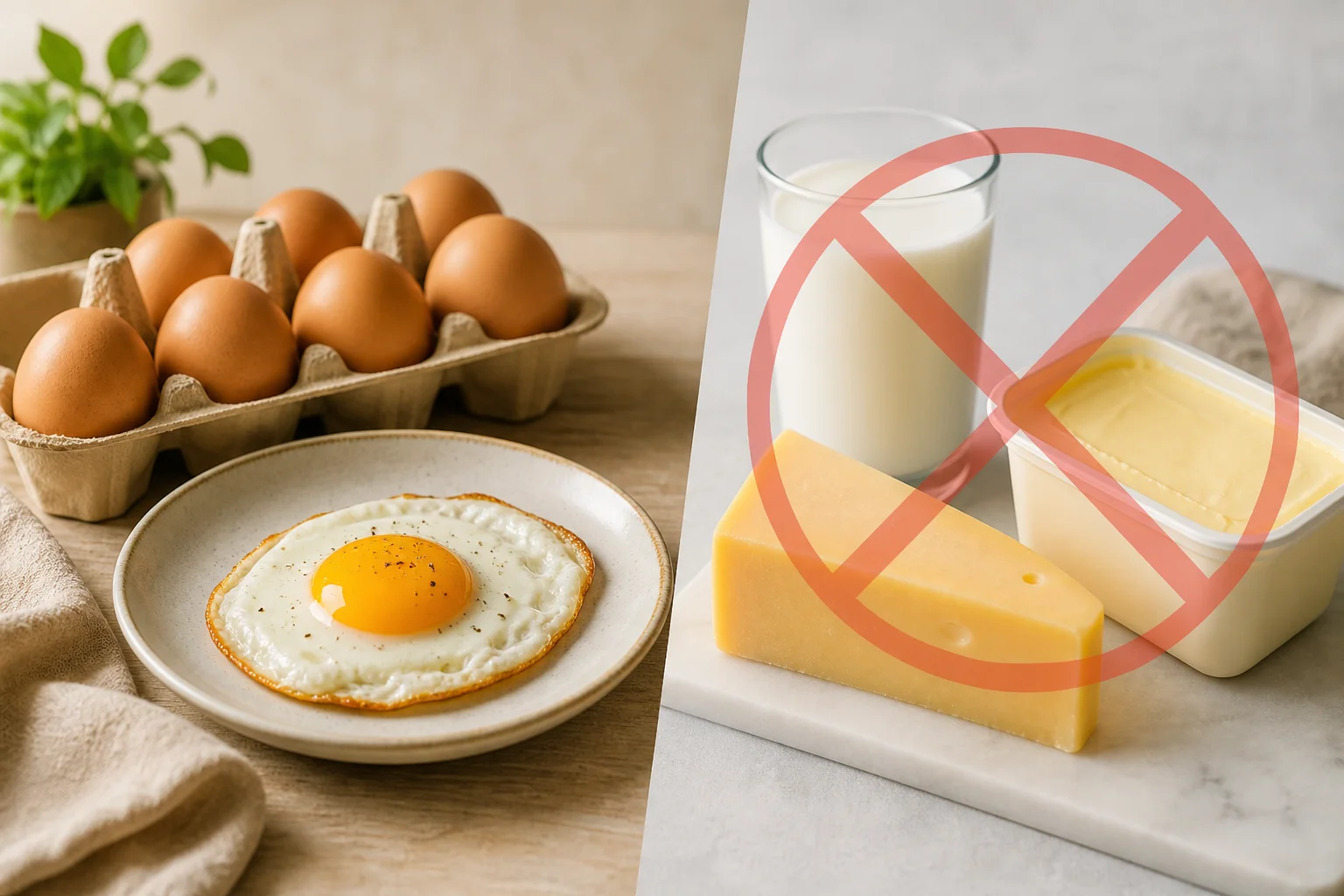
Ovo vegetarianism sits in an unusual spot on the vegetarian spectrum. It excludes meat, poultry, and fish, the same baseline as every other vegetarian diet, but also excludes dairy in every form: milk, cheese, yogurt, butter, cream, ghee. What it keeps is eggs: whole eggs, egg whites, and egg-based ingredients like mayonnaise and egg noodles are all permitted.

That combination makes ovo vegetarianism the mirror image of lacto vegetarianism, which keeps dairy and drops eggs. Ovo vegetarianism is a recognized but less common branch of the vegetarian family; most Western vegetarians default to lacto-ovo or lacto-only patterns, so ovo-only shoppers are working against labels and recipes that were not built with them in mind.

People land on this diet for a few distinct reasons. Some are ethically vegetarian and also lactose intolerant, so dairy is off the table for digestive reasons on top of any ethical stance. Others object to industrial dairy farming, calf separation and the culling of male dairy calves, while treating egg production from higher-welfare sources as more acceptable. Some are transitioning from lacto-ovo vegetarianism toward veganism and drop dairy first, keeping eggs as an interim step. It also shows up in East Asian dietary contexts where dairy has never been central to the food supply and lactose malabsorption is common, while eggs remain a standard protein source.

Whatever the reason, the practical challenge is the same: identifying every ingredient that traces back to milk, since those ingredients show up in far more places than a glass of milk or a slice of cheese.
Eggs Are Fine, Dairy Is the Line

Eggs Are Fine, Dairy Is the Line

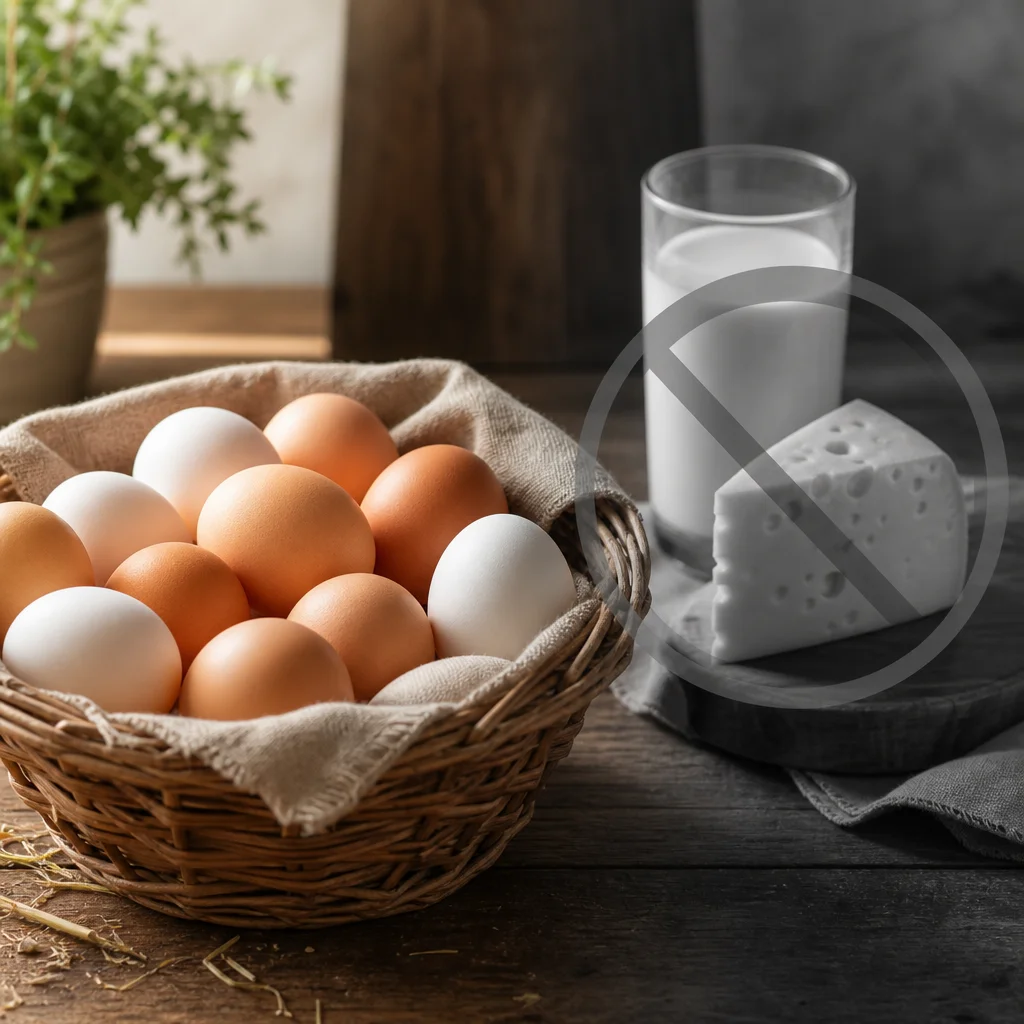
Because ovo vegetarianism gets confused with veganism more often than any other vegetarian variant, it's worth saying plainly: eggs are entirely acceptable on this diet. Whole eggs, fried eggs, boiled eggs, egg whites, egg yolks, and egg-based products including mayonnaise, egg noodles, meringue, and most commercial baked goods that use egg as a binder are all fine. Egg white protein powders, egg-based fining agents, and lecithin derived from egg yolk are acceptable too.

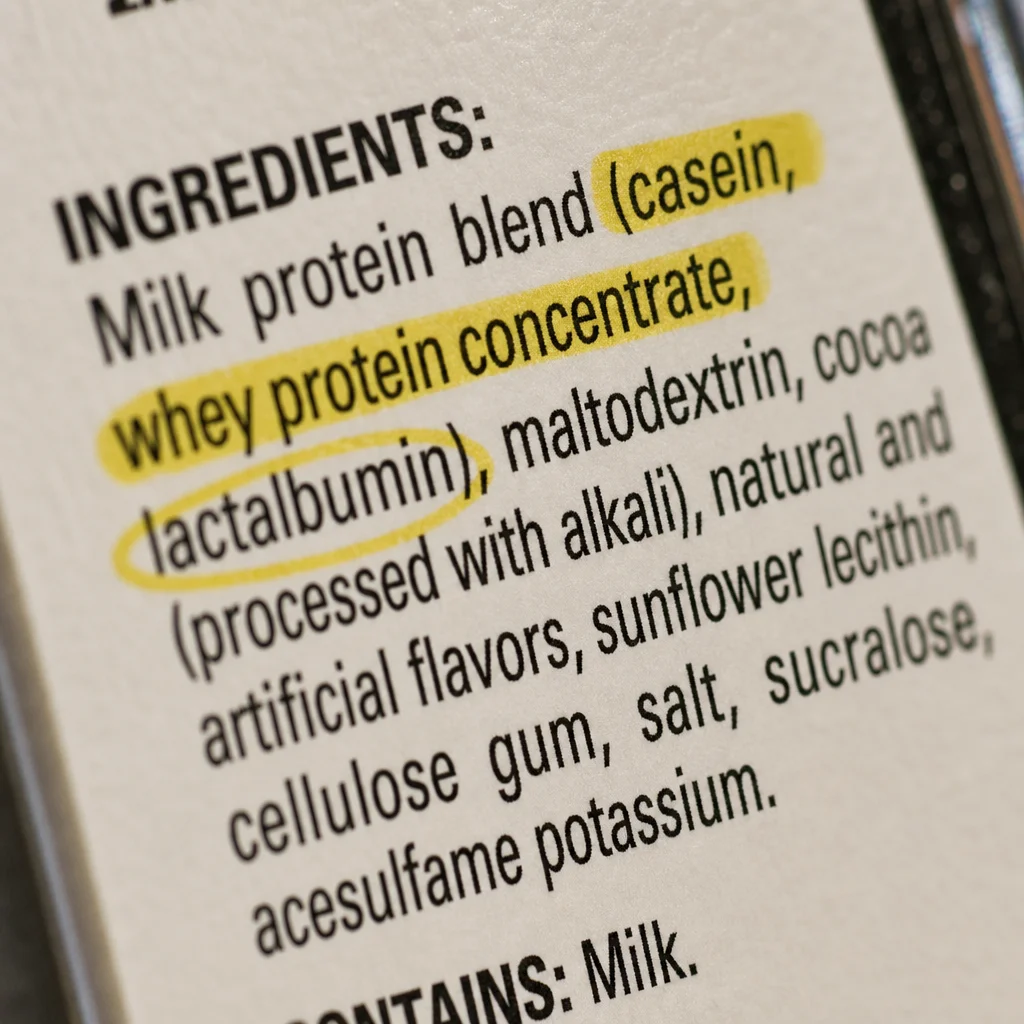
What does not belong on the plate is anything derived from milk, of any species, in any form. That includes obvious items like cheese, yogurt, butter, and cream, but also a long tail of processed dairy derivatives with no visual connection to a cow. This is where most ovo vegetarians get tripped up: nobody accidentally eats a slice of cheddar, but people do accidentally eat sodium caseinate in a "non-dairy" creamer, or whey protein concentrate in a protein bar, or ghee listed as "clarified butter" in a curry paste.

Hidden Dairy Ingredient Names and Aliases to Watch For

Milk protein and milk sugar appear on labels under dozens of names, many of which do not contain the word "milk," "dairy," or "cheese" at all.

Casein and its salts are the primary milk protein and the most common hidden source: casein, sodium caseinate, calcium caseinate, potassium caseinate, casein hydrolysate, micellar casein, and rennet casein. These appear in non-dairy creamers, protein bars, binders in some processed meats, imitation cheeses, and whipped toppings.

Whey and its derivatives are the second major milk protein family: whey, whey protein concentrate, whey protein isolate, whey protein hydrolysate, sweet whey, acid whey, and whey powder. Whey shows up constantly in protein powders, energy bars, crackers, and instant soup mixes, often as a texture or protein booster with no obvious connection to milk on the front of the package.

Lactose and related sugars, including lactose monohydrate, lactulose, and lactitol, are used as a filler and bulking agent in medications, powdered seasoning blends, and processed snack foods well beyond anything that tastes like dairy.

Lactalbumin and lactoglobulin are whey-derived proteins that appear under their own scientific names in supplements and some infant formulas, easy to read past since neither contains the word "milk" or "whey."

Butterfat and butter derivatives, including butter oil, anhydrous milk fat, and milk fat globule membrane, appear in margarine blends, flavored popcorn, and pastry. Ghee, clarified butter with the milk solids removed, is still a dairy product, common in South Asian cooking and packaged curry pastes marketed on "buttery" flavor without listing butter directly.

Milk solids and powders, including nonfat dry milk, dry whole milk, skim milk powder, and dairy product solids, are common fortification ingredients in bread, cereal, chocolate, and instant products.

Curds, buttermilk, sour cream, crème fraîche, and half-and-half are unambiguously dairy but sometimes appear as a minor ingredient in a sauce or dressing where a shopper isn't expecting it, and cheese powder or cheese culture shows up in snack seasonings, crackers, and chips well beyond the cheese aisle itself.

Cheese deserves its own note. Some vegetarians track whether a cheese uses animal rennet versus microbial rennet, since that distinction matters for people avoiding animal-derived enzymes. For ovo vegetarians it's irrelevant: cheese is a dairy product regardless of what coagulated the milk, so the simplest rule is to skip it entirely rather than evaluate its rennet source.

Where Hidden Dairy Shows Up Unexpectedly

Where Hidden Dairy Shows Up Unexpectedly

Bread and baked goods frequently use whey powder or milk solids for browning and texture, even in products that look plain and unbuttered. Protein bars, shakes, and sports nutrition products rely heavily on whey protein isolate or concentrate, often alongside casein for a slow-digesting blend. Non-dairy creamers and whipped toppings are one of the most commonly mislabeled categories, covered below. Processed meat substitutes, including plant-based deli slices and veggie burgers, sometimes use caseinate as a binder, so "plant-based" is not automatically dairy-free. Dark chocolate marketed as dairy-free is a recurring source of undeclared milk, the FDA has run repeated surveys of it for exactly this reason. Ranch and Caesar-style dressings and flavored snack chips often carry buttermilk or cheese powder as a flavor base, and medications sometimes use lactose as a tablet filler that gets far less scrutiny than a food label.

The "Non-Dairy" Labeling Loophole

The "Non-Dairy" Labeling Loophole

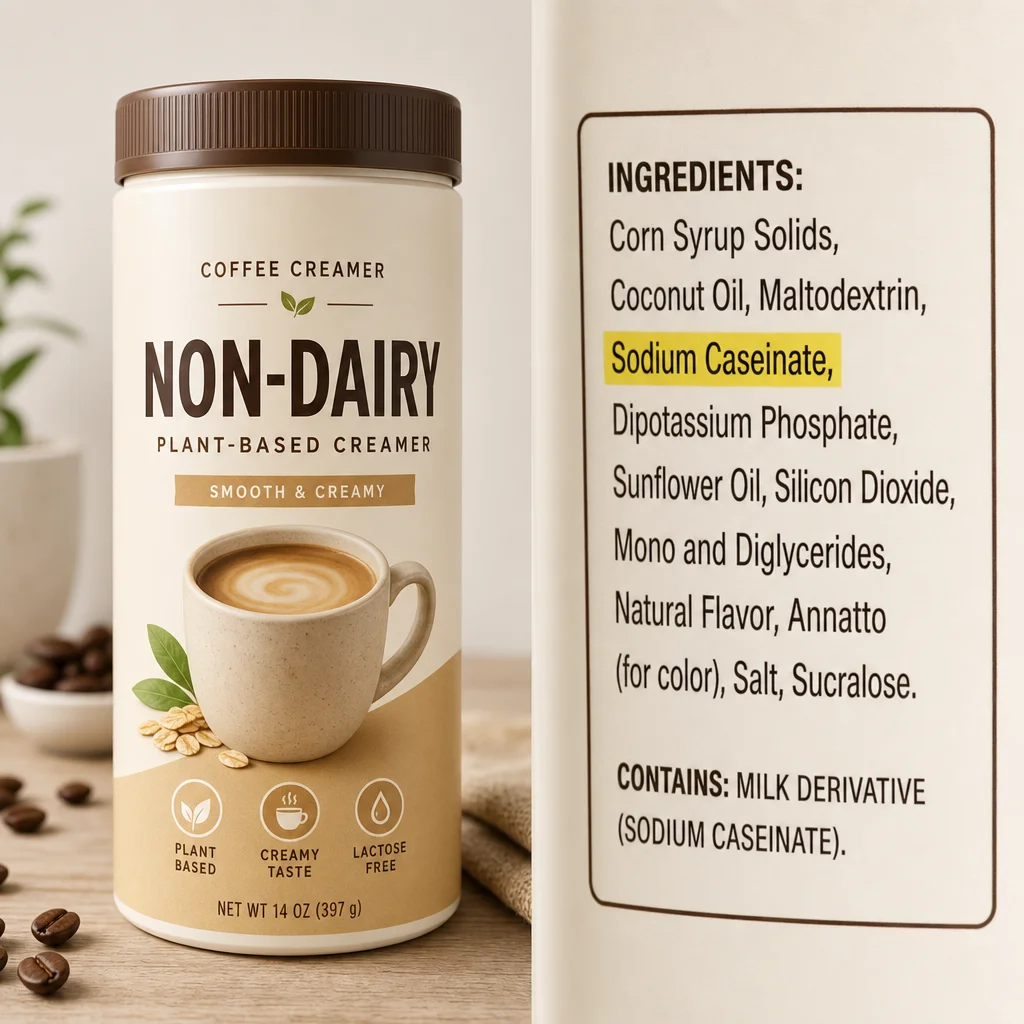
This is the single biggest point of confusion for anyone avoiding dairy in the United States. A product can legally carry the words "non-dairy" on the front of the package and still contain a milk-derived protein.

The rule that allows this is specific and old. Under 21 CFR 101.4(d), when a food labeled "nondairy" contains a caseinate ingredient, the manufacturer only has to add a parenthetical note identifying the source, for example "sodium caseinate (a milk derivative)," rather than drop the "non-dairy" claim. The logic traces back to a decades-old distinction between milk fat, which "non-dairy" was originally meant to signal the absence of, and milk protein, treated as a separate question. The result: a coffee creamer or whipped topping can be "non-dairy" on the front and contain a milk protein in the ingredients.

Truth in Advertising's investigation into non-dairy creamers found this exact pattern across multiple retail brands: "non-dairy" on the front label, milk listed in the ingredients on the back, with at least one consumer reporting a reaction after trusting the front-label claim. The lesson: "non-dairy" is a term about fat content and marketing convention, not a guarantee of being dairy-free. The ingredient list, not the front-of-pack claim, is the reliable source of truth.

Regulatory Context: FALCPA, the EU Allergen List, and What They Actually Cover

In the United States, milk is one of the nine major food allergens under the Food Allergen Labeling and Consumer Protection Act of 2004 (FALCPA). Any FDA-regulated food containing a milk-derived ingredient must declare it, either by naming milk in parentheses after the ingredient (for example "whey (milk)") or through a separate "Contains: Milk" statement adjacent to the ingredient list. FDA guidance confirms both formats are equally compliant, and its most recent edition, issued in January 2025, reaffirms milk's status as a major allergen requiring disclosure.

A "Contains: Milk" statement is one of the few label features that reliably flags dairy regardless of which derivative is used, but it's a summary, not an exhaustive list, so a shopper still needs to scan the full ingredient list to catch a term like "lactalbumin" that might not otherwise stand out.

In the European Union, milk is one of the 14 major allergens that must be declared under Regulation (EU) No 1169/2011, alongside eggs and gluten-containing cereals. The EU system requires milk-derived ingredients to be emphasized within the ingredient list itself, typically through bold or a contrasting typeface, rather than relying only on a summary statement, arguably clearer for scanning since the allergen is flagged at the exact point it appears.

Neither system closes the "non-dairy" labeling gap above, and neither distinguishes a genuinely dairy-free product from one that merely excludes milk fat. Both were built to protect people with a diagnosed allergy, a narrower problem than voluntary dairy avoidance, so anyone avoiding dairy for ethical or intolerance reasons still needs to read past the allergen summary to the full ingredient list.

Distinguishing Ovo Vegetarian From Lacto and Lacto-Ovo Vegetarian

A lacto vegetarian eats dairy but not eggs, the reverse of ovo vegetarianism. A lacto-ovo vegetarian, the most common form of vegetarianism in Western countries, eats both dairy and eggs and avoids only meat, poultry, and fish. An ovo vegetarian eats eggs but not dairy.

This matters at the store because a product labeled simply "vegetarian" gives no signal about which pattern it fits. A vegetarian soup made with a butter or cream base suits lacto and lacto-ovo vegetarians but not ovo vegetarians; a vegetarian dessert thickened with egg but containing no dairy works the other way around. The "vegetarian" claim tells you meat is absent, nothing more. Readers who keep dairy but exclude eggs, or who are fine with both, should check the lacto and lacto-ovo guides linked below instead.

A Practical Label-Reading Strategy

Ovo vegetarian label reading means treating any milk-derived ingredient as off-limits while accepting all egg-derived ingredients without hesitation. The following applies fully on its own, without needing anything else from this guide.

In the United States, milk is one of the FDA's major food allergens under the Food Allergen Labeling and Consumer Protection Act (FALCPA), so a compliant label must either name milk in parentheses after an ingredient (for example "whey (milk)") or carry a "Contains: Milk" statement adjacent to the ingredient list. In the European Union, milk is one of 14 allergens under EU Regulation 1169/2011 and must be emphasized in bold, italic, or a contrasting typeface within the ingredient list itself. Neither rule closes the "non-dairy" loophole: US regulation permits a product labeled "non-dairy" to contain a caseinate ingredient as long as the source is noted in a parenthetical like "(a milk derivative)," so the word "non-dairy" never guarantees an absence of milk protein.

Strictly avoid, these are all milk-derived:

  • Milk, whole milk, skim milk, nonfat milk, low-fat milk, powdered milk, dry milk, milk solids
  • Casein, sodium caseinate, calcium caseinate, potassium caseinate, casein hydrolysate, micellar casein, rennet casein
  • Whey, whey protein, whey protein concentrate, whey protein isolate, whey protein hydrolysate, sweet whey, acid whey, whey powder
  • Lactose, lactose monohydrate, lactulose, lactitol
  • Lactalbumin, lactalbumin phosphate, lactoglobulin
  • Butter, butter oil, butterfat, anhydrous milk fat, milk fat globule membrane
  • Ghee (clarified butter, still fully dairy)
  • Cream, half-and-half, sour cream, crème fraîche
  • Buttermilk, buttermilk powder, cultured milk
  • Curds, cottage cheese, cream cheese, cheese, cheese powder, cheese culture
  • Yogurt, yogurt powder
  • Condensed milk, evaporated milk, malted milk
  • Hydrolyzed milk protein, hydrolyzed casein, hydrolyzed whey, milk protein concentrate, milk protein isolate

Fine to eat, egg-derived ingredients are fully acceptable:

  • Whole eggs, egg whites, egg yolks, dried egg, egg powder
  • Mayonnaise, aioli, egg-based salad dressings
  • Egg noodles, fresh pasta made with egg
  • Albumin (egg white protein), used as a binder, foaming agent, or fining agent
  • Egg lecithin
  • Meringue, custard made only with eggs and no dairy (check carefully, many custards add cream or milk)

Read carefully, source is not always obvious:

  • "Natural flavors": can legally include dairy-derived flavor compounds without saying so directly
  • "Non-dairy": does not guarantee an absence of milk protein in the US; casein and caseinates are legally permitted under this label
  • "Lactose-free": indicates lactose has been removed or broken down but casein and whey protein are typically still present
  • "Cultured" ingredients on a label with no other dairy context: verify whether the culture medium was milk-based

Scanning checklist:

  1. Start with the allergen statement. In the US, look for "Contains: Milk" immediately after the ingredient list. In the EU, look for "milk" or a milk-derived term emphasized in bold or a different typeface within the ingredients themselves.
  2. Read the full ingredient list even if the allergen statement says nothing, some milk derivatives in low concentrations may not trigger a "Contains" declaration.
  3. Treat "non-dairy" and "lactose-free" claims as marketing language, not proof of being dairy-free, and check for casein, caseinate, or whey specifically.
  4. Skip cheese and cheese-containing products by default rather than trying to determine the rennet source, since the milk itself is the disqualifying ingredient regardless of how it was coagulated.
  5. Check protein bars, shakes, and supplements for whey or casein as the primary protein source, this is one of the highest-risk categories for accidental dairy.
  6. Verify dark chocolate specifically, even when marketed as dairy-free, given the FDA's repeated findings of undeclared milk in this category.
  7. Confirm that eggs and egg derivatives (albumin, egg lecithin, mayonnaise) are not mistakenly flagged as a concern, they are fully compatible with this diet.

IngrediCheck scans ingredient lists for this scattered terminology, flagging casein, caseinate, whey in all its forms, lactalbumin, ghee, and other dairy derivatives that a "non-dairy" or "vegetarian" claim does nothing to rule out.

Ovo vegetarianism asks for more label discipline than it first appears to need. Eggs are the easy part, plainly on a label or not at all. Dairy is the hard part, hiding behind casein, caseinate, whey, lactalbumin, ghee, and a "non-dairy" claim that FDA regulation permits to coexist with a milk-derived protein. IngrediCheck reads past the marketing claim on the front of the package to the actual ingredient list, flagging dairy derivatives by name so an ovo vegetarian shopper can trust an egg-containing product without second-guessing whether it's quietly also a dairy product.

Next Label Check

Follow the scanner, hub, and ingredient paths connected to this guide

Get the app for clearer label decisions.

Scan labels, see what fits your food notes, and read the why in plain English.

IngrediCheck app