Gelatin
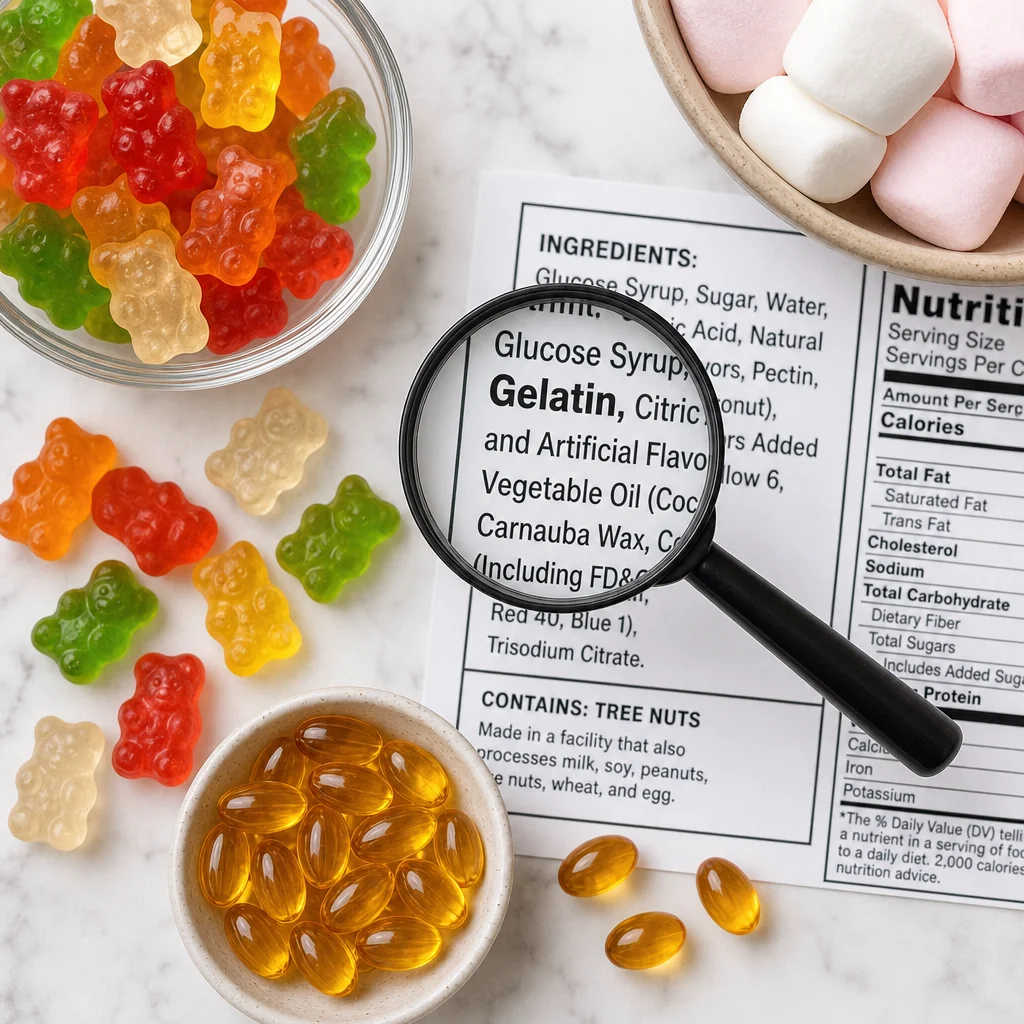
Gelatin is collagen extracted from animal skin, bone, and connective tissue, most commonly from cattle or pigs, though fish gelatin exists as a distinct product. A Scientific Reports study on gelatin authentication notes that bovine and porcine sources dominate commercial gelatin production, with fish gelatin used as an alternative largely for religious and health reasons. The word "gelatin" alone tells you nothing about which of these it is.
Gelatin turns up in marshmallows, gummy candy, fruit snacks, Jell-O and similar dessert mixes, some yogurts and cream cheeses, panna cotta, cold-cut glazes, and both hard-shell and soft-gel capsules for vitamins and medications. A vitamin bottle is easy to overlook since it doesn't read as a food product, but the capsule shell is often the same pork or beef gelatin used in candy.
Lard and Tallow
Lard is rendered pork fat, and tallow is rendered beef fat. Both show up under those names, or occasionally as "animal shortening," in flour tortillas, pie and pastry crusts, some crackers, tamale masa, and canned or restaurant-prepared refried beans. A plain bag of dried beans is fine; the seasoned, ready-to-eat version frequently is not. Suet, the raw kidney fat of beef or mutton, shows up in traditional British pastry and pudding recipes.
Pork-Derived Rennet
Cheese is coagulated with rennet, and the traditional version is an enzyme from the stomach lining of a slaughtered calf, lamb, or kid goat, none of which are poultry. Labels often say only "enzymes," with no indication of source. Microbial rennet and fermentation-produced chymosin are the non-animal alternatives, and a cheese specifying "microbial enzymes" or "vegetable rennet" is safer than one listing "enzymes" alone.
Bacon Fat and Pork Flavoring
Bacon bits, bacon-flavored seasoning blends, and many "smoky" or "loaded" snack flavors rely on pork-derived bacon fat or flavor compounds even when the product's name has nothing to do with pork. Some bacon bits are soy-based imitations, but plenty labeled "real bacon" are exactly that.
Beef Bouillon and Beef Stock Bases
Beef bouillon cubes, beef stock concentrate, and beef extract work as flavor-depth boosters in soups, gravies, sauces, and seasoning blends well beyond anything marketed as a beef product. French onion soup mixes, some barbecue sauces, and many Asian-style condiments lean on a beef stock base even when the label emphasizes other flavors entirely.
L-Cysteine: A Poultry-Derived Exception Worth Knowing
L-cysteine (E920) is a dough conditioner used in commercial bread, bagels, and pastry. Most commercially produced L-cysteine comes from duck or chicken feathers, occasionally from human hair, with synthetic versions also on the market. Unlike the ingredients above, feather-derived L-cysteine is genuinely fine for a pollotarian, since feathers come from poultry, not livestock. This is worth flagging because it's commonly listed as a "hidden animal ingredient" in vegetarian and vegan guides, and a pollotarian reading one of those lists could mistakenly cross it off when it isn't a violation of their diet.