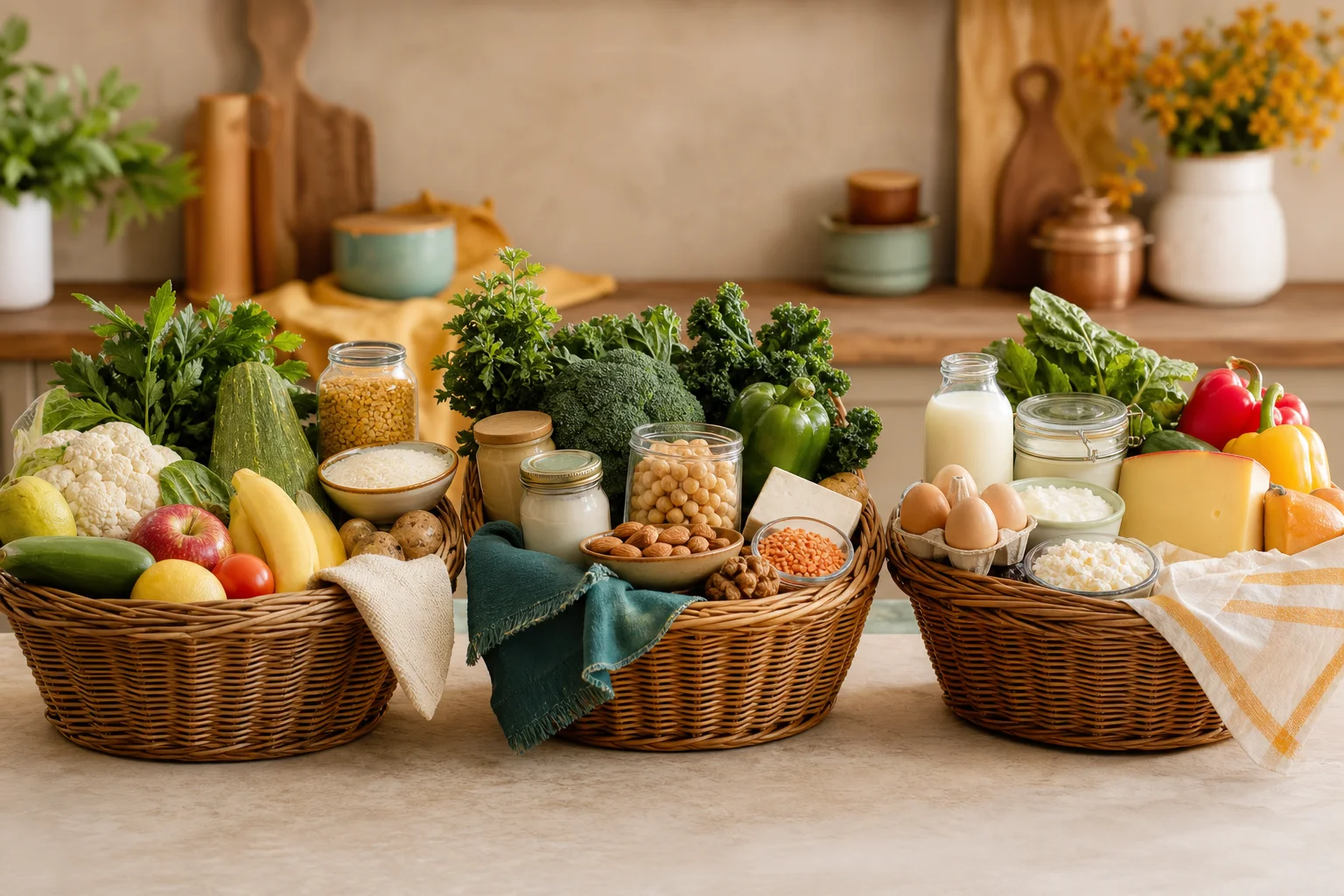
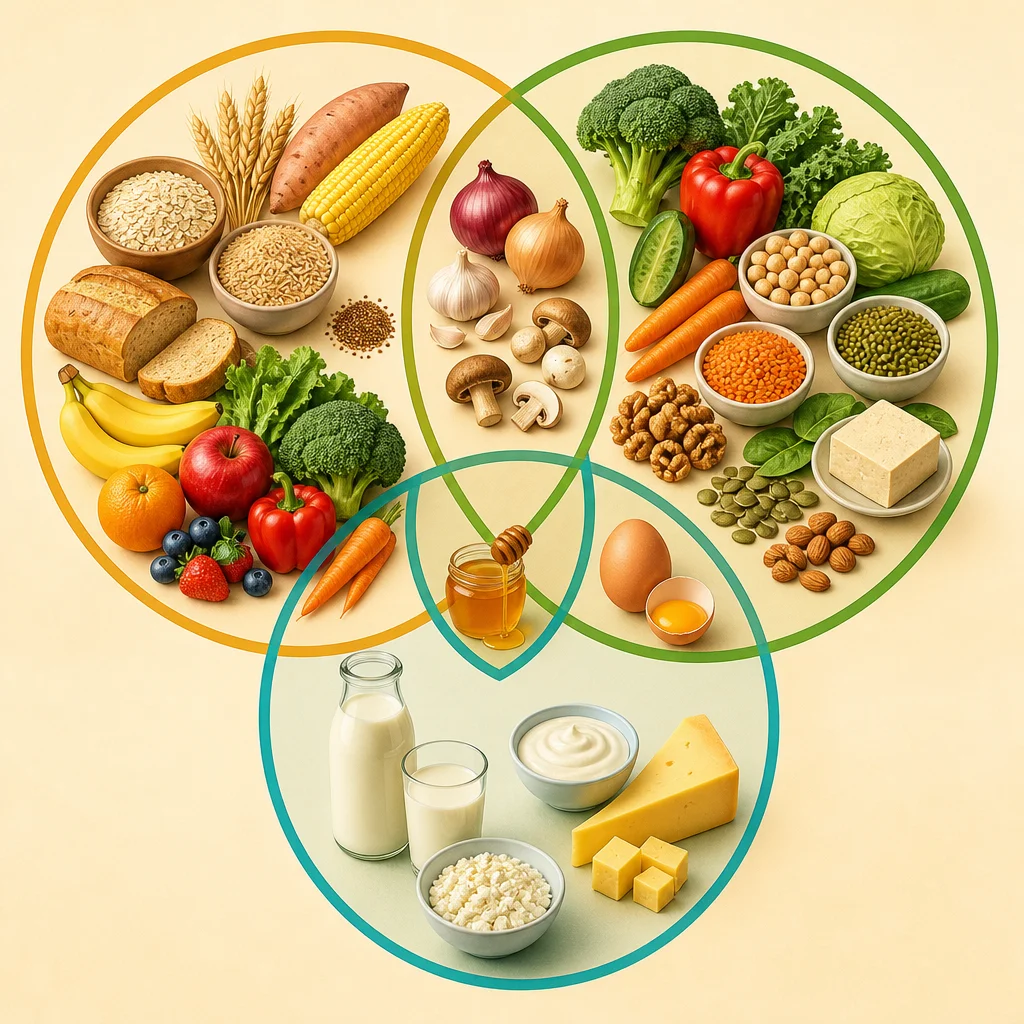
Quick answer: Vegetarian eating excludes meat, poultry, and fish but may include dairy and eggs. Vegan eating excludes animal-derived foods and ingredients. Sattvic eating is a traditional food framework concerned with qualities such as freshness, simplicity, and mental clarity, so it may include dairy while excluding onion, garlic, alcohol, caffeine, stale food, and heavily processed products. A food can fit one of these patterns without fitting the other two.
These labels often sit together on menus and grocery shelves because all three can emphasize grains, legumes, fruit, vegetables, nuts, and seeds. That shared center hides the important part: they answer different questions.
- Vegetarian: Does this contain meat, poultry, fish, or slaughter-derived ingredients?
- Vegan: Does this use any animal-derived ingredient or production input covered by the standard?
- Sattvic: Does this fit a particular traditional practice around ingredients, stimulation, freshness, preparation, and restraint?
This comparison was checked against current regulatory, certification, religious-text, and institutional sources on August 21, 2026. It uses a strict modern household convention that commonly excludes onion and garlic for the Sattvic column. The cited Bhagavad Gita verses describe qualities such as wholesome, pungent, and stale food but do not name onion or garlic. Individual religious, ethical, and household practice can differ.
What Vegetarian Means on a Food Label
In ordinary use, vegetarian means no meat, poultry, fish, or ingredients made from slaughtered animals. Dairy and eggs can still be present. That is why cheese, egg pasta, mayonnaise, milk chocolate, and yogurt can all be vegetarian without being vegan.
The difficult ingredients are the ones that make a meat-free product less obviously vegetarian:
- gelatin in gummies, desserts, capsules, and marshmallows
- animal rennet in cheese
- lard or tallow in bakery products and frying fats
- meat stock in soup, seasoning, and rice mixes
- isinglass or gelatin used to clarify some beverages
- carmine or cochineal color made from insects
- shellac on confectionery or polished produce
- L-cysteine when its source is not disclosed
The UK Food Standards Agency explains that vegetarian and vegan terms should not mislead consumers, but the ingredient list and certification still carry more detail than an informal menu icon.
For a complete ingredient inventory, use the Vegetarian Diet Guide. The dedicated vegetarian ingredient checker owns the product-checking workflow.
What Vegan Adds to the Rule
Vegan standards go beyond avoiding meat. The Vegan Society definition frames veganism around avoiding animal exploitation as far as possible and practicable. On a food label, that normally means excluding dairy, eggs, honey, gelatin, shellac, carmine, animal-derived vitamin sources, and animal processing aids covered by the certification program.
This is why an apparently plant-forward vegetarian product can fail a vegan check:
- cheese may use dairy plus animal rennet
- bread may contain milk, egg, honey, mono- and diglycerides, or source-dependent L-cysteine
- candy may use confectioner's glaze, gelatin, beeswax, or carmine
- wine and beer may use animal fining agents without listing them like ordinary ingredients
- fortified cereal may use lanolin-derived vitamin D3
- flavor systems and enzymes may not reveal their source on the package
Vegan does not automatically mean sattvic. A vegan product can contain onion, garlic, coffee, alcohol, fermented ingredients, strong spices, artificial additives, or a long list of highly processed components. Those may be acceptable under a vegan standard while falling outside a strict sattvic practice.
The Vegan Diet Guide covers the full ambiguous-ingredient problem. The vegan ingredient checker is the product-focused route for evaluating a current label.
What Makes Sattvic Different
Sattvic is not simply another word for vegetarian. It comes from a traditional framework that classifies foods by qualities and their perceived effects on body and mind. The familiar baseline favors fresh, simple, mild foods and commonly avoids meat, fish, eggs, alcohol, intoxicants, stale food, and foods considered overly stimulating or dulling.
Some influential sattvic traditions allow milk, yogurt, paneer, butter, and ghee. That immediately separates those practices from veganism. At the same time, many strict modern institutional or household lists exclude onion and garlic, which ordinary vegetarian and vegan standards allow. Those ingredient lists should be attributed to the tradition using them rather than presented as one universal Hindu rule.
Packaged foods introduce several additional questions:
- Was the product made recently, and how heavily was it processed?
- Does a seasoning blend contain onion or garlic powder?
- Does
spices, flavoring, or natural flavor hide an ingredient the household excludes? - Does the product contain alcohol-based flavor extracts?
- Are coffee, tea, cocoa, or other stimulants acceptable in this practice?
- Are preservatives, artificial colors, or intense flavor enhancers outside the chosen rule?
- Does the household accept commercial dairy and fermented food?
There is no single government-defined sattvic logo equivalent to a regulated allergen declaration. FSSAI's vegetarian symbol can help identify the absence of non-vegetarian ingredients under its rule, and India's separate vegan-food regulation provides a stronger vegan signal. Neither symbol proves that a food meets every sattvic rule.
The Sattvic Diet Guide remains the deep reference. The sattvic food checker provides the product workflow.
Five Foods That Expose the Difference
Paneer with onion-free seasoning
This can be sattvic in a dairy-accepting tradition and vegetarian. It is not vegan because paneer is made from milk.
Vegan garlic bread
It can be fully vegan and vegetarian. It may not be sattvic because strict practice excludes garlic and may also question heavily processed bread additives.
Egg pasta with tomato sauce
It can be lacto-ovo vegetarian. It is not vegan because of egg, and it is usually not strict sattvic if the sauce contains onion or garlic.
Plain fruit, rice, and lentils
This simple combination can fit all three patterns when preparation and seasonings also match the household's rules.
Certified vegan coffee drink
Vegan certification can settle animal-source questions for the covered product. It does not make coffee sattvic for a practice that excludes stimulants.
The Practical Difference
Vegetarian, vegan, and sattvic eating share plenty of foods, but overlap is not equivalence. Vegetarian answers a meat and animal-derivative question. Vegan applies a broader animal-use boundary. Sattvic adds a traditional judgment about food quality, stimulation, freshness, and preparation.
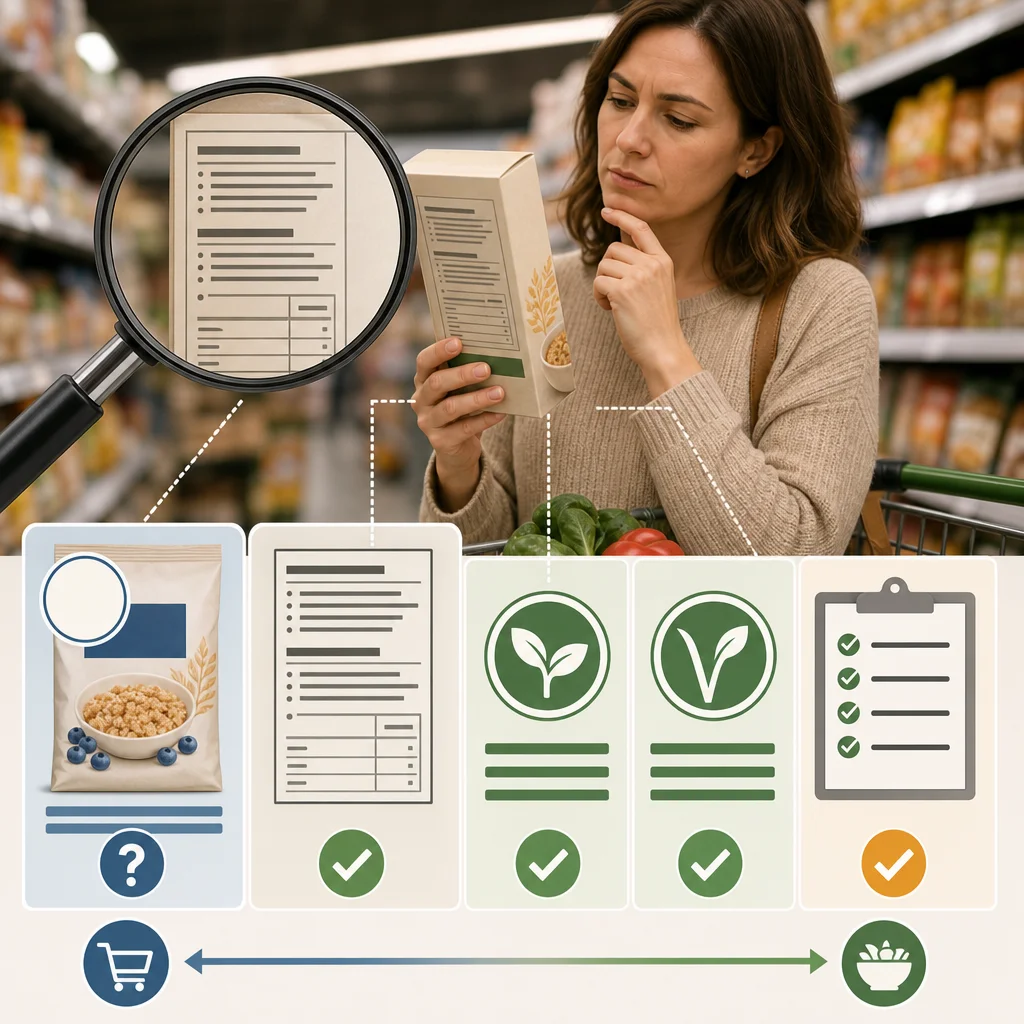
IngrediCheck helps you compare a packaged-food label with the sattvic, vegan, and vegetarian rules saved for your household, surface direct conflicts and ambiguous ingredients, and identify the questions that still require certification or manufacturer confirmation.