Label Reading Guides

Pollotarian vs Pollo-Pescatarian vs Pescatarian Explained

Pollotarian, pollo-pescatarian, and pescatarian diets all reduce red meat, but they make different decisions about poultry, fish, shellfish, broths, fats, and hidden meat ingredients.

Aug 21, 2026|8 min read
By Sanket Patel|Updated 2026-08-21|6 sources|Editorial standards
Pollotarian vs Pollo-Pescatarian vs Pescatarian Explained

Quick answer: For this comparison, a pollotarian includes poultry but excludes seafood and mammalian meat. A pollo-pescatarian includes poultry plus fish and shellfish while excluding mammalian meat. A pescatarian includes fish and shellfish but excludes poultry and mammalian meat. Eggs and dairy are separate choices in all three patterns, and packaged foods can contain broths, fats, gelatin, and flavor systems that blur the boundary.

The names are similar because each describes a reduced-meat pattern rather than a regulated food-label claim. There is no universal government definition for pollotarian or pollo-pescatarian, and nutrition studies do not always use the same frequency cutoffs when they group semi-vegetarians and fish eaters.

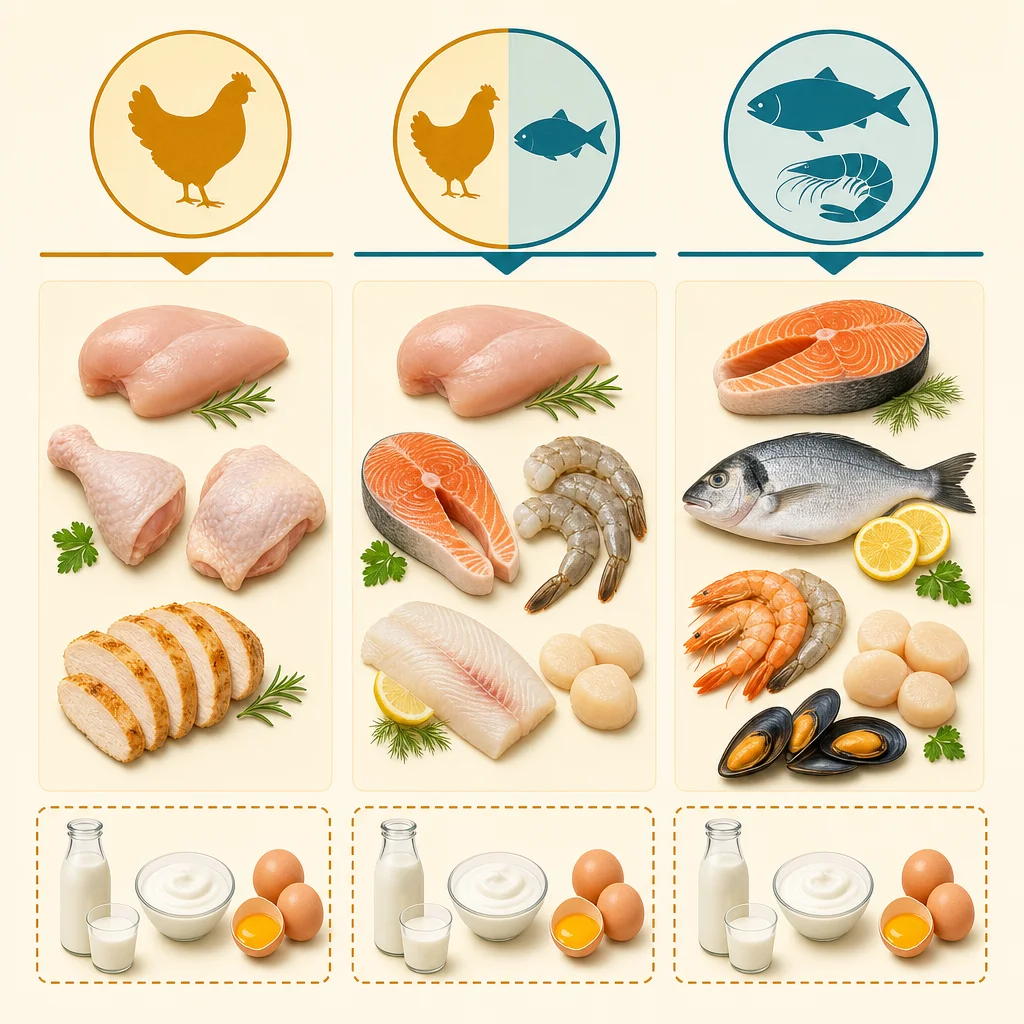
For this comparison, checked August 21, 2026, the terms use a practical grocery-shopping convention:

  • Pollotarian: poultry in, seafood and mammalian meat out
  • Pollo-pescatarian: poultry and seafood in, red meat out
  • Pescatarian: seafood in, poultry and red meat out

If a person uses the words differently, their stated rule wins. A profile is more reliable than assuming the label.
The Difference in One Table

The Difference in One Table
Food categoryPollotarianPollo-pescatarianPescatarian
Chicken, turkey, duckIncludedIncludedExcluded
FishExcluded under this article's conventionIncludedIncluded
Crustaceans and mollusksExcluded under this article's conventionIncludedIncluded
Beef, pork, lamb, goat, venisonExcludedExcludedExcluded
EggsPersonal choicePersonal choicePersonal choice
DairyPersonal choicePersonal choicePersonal choice
Poultry broth and poultry fatUsually includedIncludedExcluded
Fish sauce, anchovy, oyster sauceExcluded under this article's conventionIncludedIncluded
Beef broth, lard, tallow, pork gelatinExcludedExcludedExcluded
Animal rennet and carmineDepends on the person's broader ruleDepends on the person's broader ruleCommonly excluded by stricter pescatarian practice, but definitions vary

The rows for eggs, dairy, rennet, and insect-derived color matter because these diets primarily name which animal flesh is eaten. They do not automatically settle every animal-derived ingredient.

There is also no legally standardized certification mark for these three diet names. The table uses food-category inclusion as its primary criterion because that is the most reproducible comparison for shoppers. It does not assign a required eating frequency, nutritional target, or ethical motivation. Studies sometimes group occasional meat eaters under labels such as semi-vegetarian, and those research categories should not be copied onto a person's grocery profile without checking what the study actually counted.

What Pollotarian Means

A pollotarian, under the convention used here, chooses poultry such as chicken, turkey, or duck while avoiding seafood and mammalian meat such as beef, pork, lamb, and goat. Some people use the word more loosely and include seafood, which is why the article states its operational definition instead of claiming a legal standard.

That ambiguity is why the word alone is not enough for restaurant or package decisions. Ask two questions:

  1. Does this person follow the seafood-excluding convention used here?
  2. Do they avoid red-meat derivatives such as lard, beef stock, pork gelatin, and tallow?

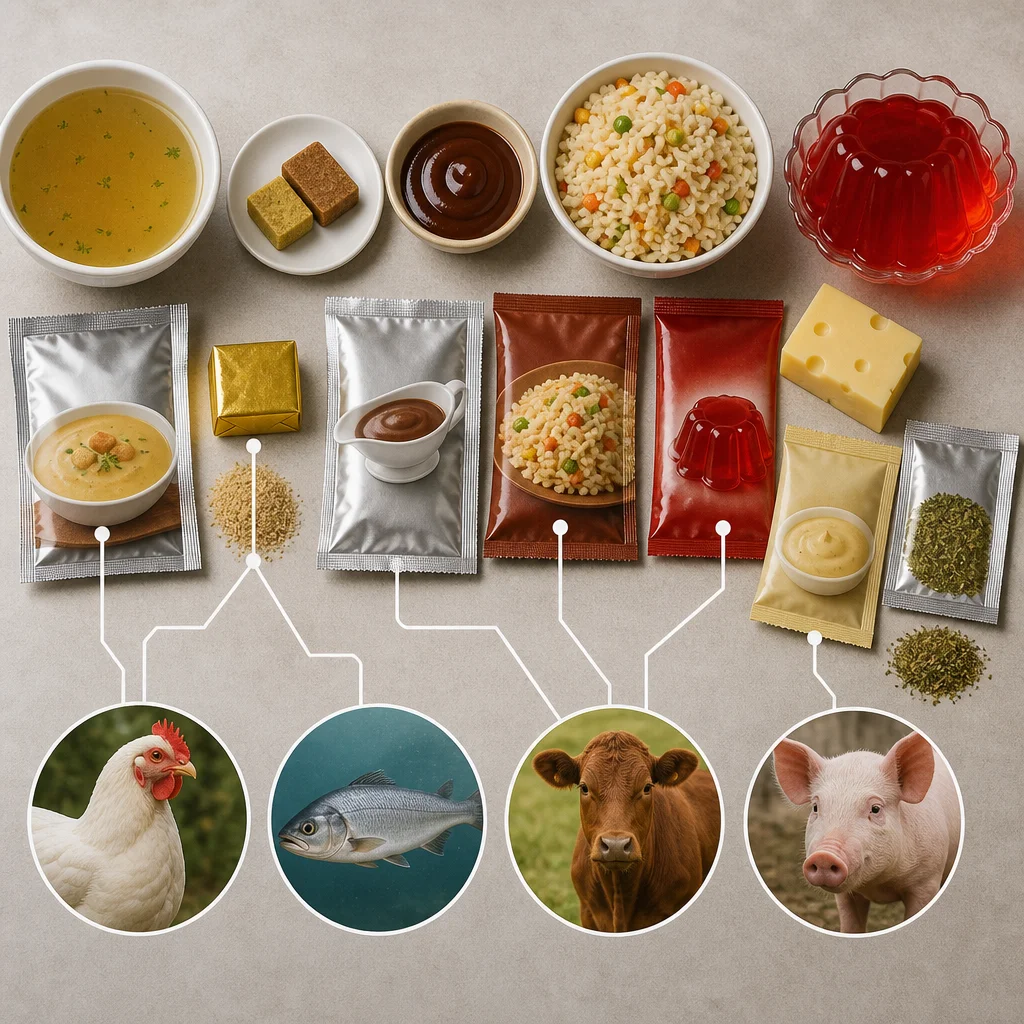
The second question is where labels become useful. A chicken soup can contain beef stock. A poultry sausage casing can be made from pork. A seasoned rice packet can use meat flavor, rendered animal fat, or gelatinized stock without putting red meat on the front of the package.

The Pollotarian Diet Guide remains the detailed reference for those hidden ingredients.

What Pollo-Pescatarian Means

Pollo-pescatarian is the broadest of the three patterns in this comparison. It keeps poultry, fish, and shellfish while removing red meat.

That makes the obvious plate easier to classify. Chicken, turkey, salmon, tuna, shrimp, and crab fit. Beef, pork, lamb, and venison do not.

Packaged foods still need review because the excluded animal can appear as a secondary ingredient:

  • beef or pork stock in poultry soup
  • lard in refried beans, pastry, or tortillas
  • tallow in shortening or fried food
  • pork gelatin in dessert, yogurt, gummy vitamins, or capsules
  • bacon flavor or meat extract in seasoning
  • mammal-derived mono- and diglycerides or stearates when the source is undisclosed
  • sausage casings made from an excluded animal

The Pollo-Pescatarian Diet Guide covers those red-meat derivatives in greater depth.

What Pescatarian Means

A pescatarian eats fish and seafood but does not eat poultry or red meat. In practice, that means chicken broth is not pescatarian even if the finished product contains no visible chicken pieces. The same applies to turkey fat, beef stock, pork gelatin, and lard.

Seafood ingredients that can fit a pescatarian rule include:

  • fish and fish stock
  • anchovy paste
  • fish sauce
  • shrimp, crab, lobster, and krill
  • clams, mussels, oysters, scallops, squid, and octopus
  • oyster sauce when the rest of the formulation also fits
  • fish-derived omega-3 ingredients

Pescatarian does not mean shellfish-allergy-safe, low-mercury, kosher, halal, or vegetarian under every certification program. Those are separate questions.

The Pescatarian Diet Guide owns the complete hidden-meat reference. The pescatarian ingredient checker owns the packaged-food checking workflow.

Why Front-of-Pack Language Creates Mistakes

Why Front-of-Pack Language Creates Mistakes

Marketing language tends to describe the hero ingredient, not every ingredient.

Made with chicken

This tells you chicken is present. It does not prove beef stock, pork casing, gelatin, or mammal fat is absent.

Seafood flavor

The name may fit a pescatarian pattern, but the full seasoning can still contain chicken powder, meat extract, dairy, or source-dependent additives.

No red meat

This is helpful only if the brand defines the claim and the ingredient list supports it. It may not address gelatin, lard, tallow, processing aids, or shared cooking oil.

Vegetarian flavor

Flavor names and ingredient composition are not always the same thing. Read the ingredient statement rather than interpreting the flavor name as a dietary certification.

Plant-based

This term can describe positioning rather than a complete exclusion rule. Check for milk, egg, animal flavoring, broth, and fats.

The Hidden Ingredients That Matter Most

All three patterns exclude red meat, so start with mammal-derived ingredients:

  • beef, pork, lamb, goat, venison, and their stocks
  • lard, tallow, suet, dripping, and animal shortening
  • pork or beef gelatin
  • meat extract, beef flavor, pork flavor, and bacon flavor
  • mammal sausage casings
  • animal rennet if the household excludes slaughter-derived ingredients
  • source-dependent glycerin, stearates, fatty acids, and emulsifiers

Pescatarians then need a second poultry screen:

  • chicken, turkey, duck, goose, and game birds
  • chicken or turkey stock, broth, fat, powder, and flavor
  • poultry gelatin and poultry sausage casings
  • eggs only if the person's profile excludes them separately

Pollotarians need an explicit seafood rule before a confident scan; this article's convention excludes it. Pollo-pescatarians do not exclude seafood for the diet itself, but allergy, mercury, religious, and sustainability rules can still apply.

A Reliable Grocery Workflow

Use the same order every time:

  1. Name the actual pattern. Do not collapse all three into mostly vegetarian.
  2. Record poultry and seafood separately. A yes-or-no meat field cannot represent these diets accurately.
  3. Check visible animal foods. Look for chicken, turkey, fish, shellfish, beef, pork, lamb, and game.
  4. Check broths and fats. Stock, bouillon, lard, tallow, poultry fat, fish sauce, and oyster sauce change many apparently simple products.
  5. Review derivatives. Gelatin, casing, rennet, animal flavor, and source-dependent additives may need confirmation.
  6. Apply other rules independently. Allergies, religion, mercury avoidance, dairy, eggs, and sustainability are not implied by the diet name.

This workflow is more accurate than asking whether a product is pescatarian-friendly without defining the profile.

Which Pattern Fits Which Goal?

Choose based on the foods included, not on which label sounds most restrictive.

  • Choose pollotarian under this convention when poultry is the included animal flesh and seafood plus mammalian meat are excluded.
  • Choose pollo-pescatarian when both poultry and seafood are included but red meat is excluded.
  • Choose pescatarian when seafood is included but poultry and red meat are excluded.

None of these choices automatically controls portion size, nutrition quality, environmental impact, allergies, or religious compliance. A pattern describes a boundary. The complete diet still depends on what foods fill the space inside it.

If a restaurant or brand uses one of these names, ask for its written definition before treating the claim as evidence. A menu may classify fish sauce, chicken stock, or gelatin differently from the convention used here. The ingredient list and the eater's saved poultry, seafood, and red-meat choices should overrule a broad category label.

Define the Rule Before You Scan

Pollotarian, pollo-pescatarian, and pescatarian are useful labels only when the poultry and seafood boundaries are explicit. Once those are recorded separately, the package becomes much easier to evaluate.

IngrediCheck helps you check one ingredient list against a saved pescatarian or vegetarian profile, flag excluded broths, fats, gelatin, poultry, meat, and ambiguous additives, and keep separate dietary and allergy decisions from being compressed into one vague label.

Next Label Check

Follow the scanner, hub, and ingredient paths connected to this guide

Get the app for clearer label decisions.

Scan labels, see what fits your food notes, and read the why in plain English.

IngrediCheck app