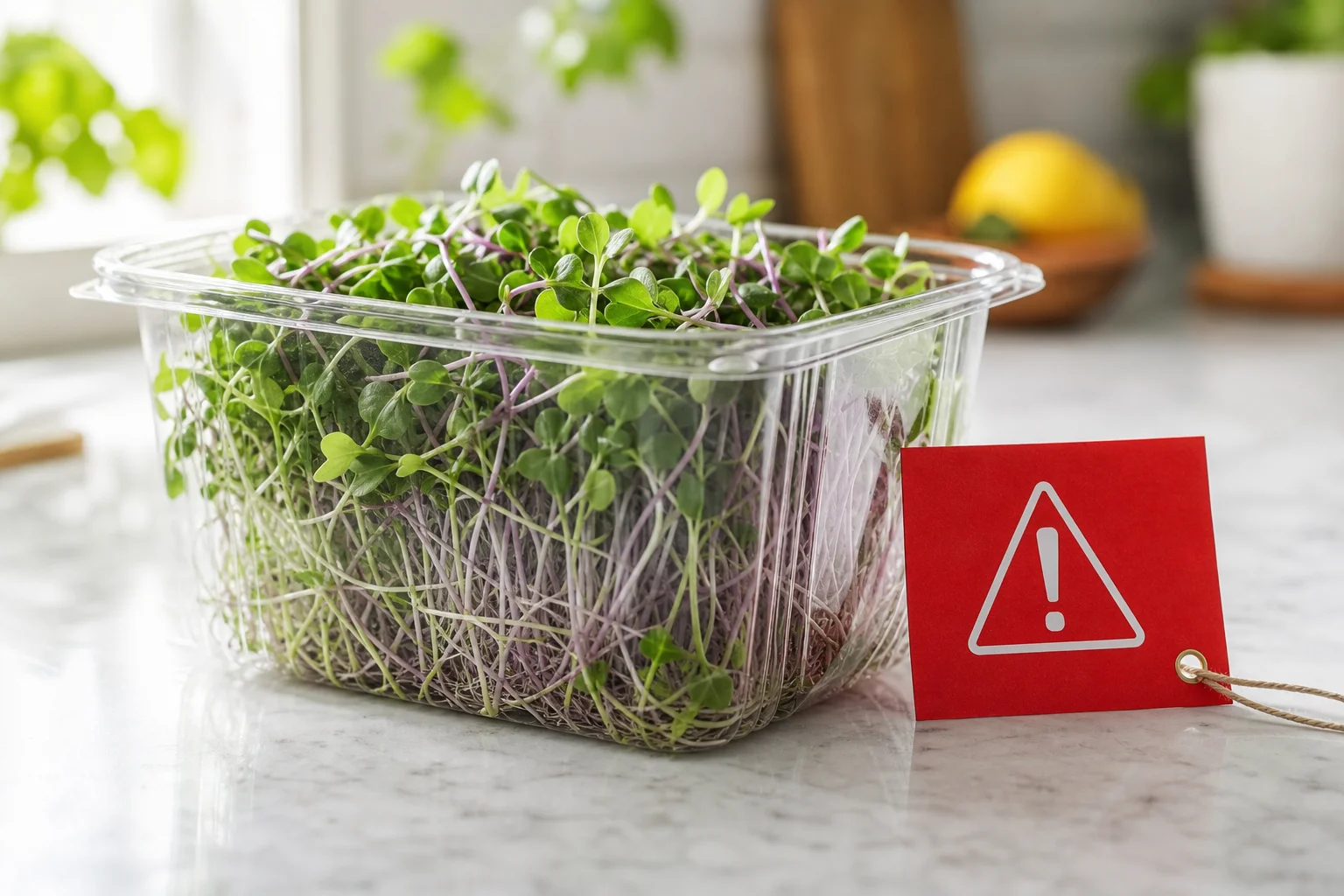
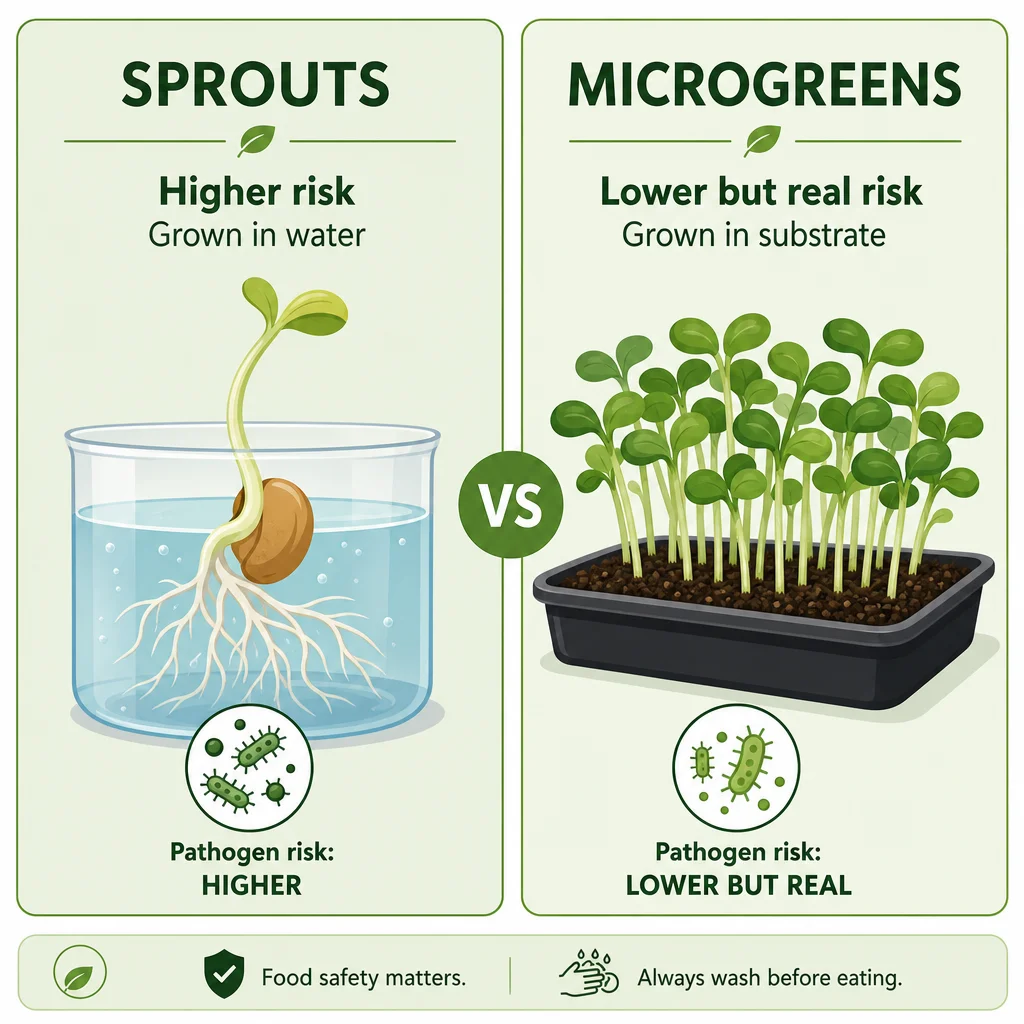
Microgreens are often discussed alongside sprouts, but the two categories carry different risk profiles.
Sprouts are harvested at the earliest stage of germination, roots intact, and grown entirely in water. The FDA has long identified sprouts as one of the highest-risk fresh produce categories. The soaking environment creates nearly ideal conditions for bacterial growth. Microgreens are different: they grow in soil or a substrate, are harvested later when the first true leaves appear, and receive some light exposure that can reduce surface bacterial loads.
That distinction matters. Microgreens carry lower inherent risk than sprouts. But lower is not the same as low.
As Penn State Extension explains, "Bacteria thrive in moist, warm environments, and these same conditions promote microgreen growth." The 7-to-14-day growing window that gives microgreens their nutritional density takes place under conditions that are simultaneously hospitable to E. coli, Salmonella, and Listeria.
Where Bacteria Enter the System
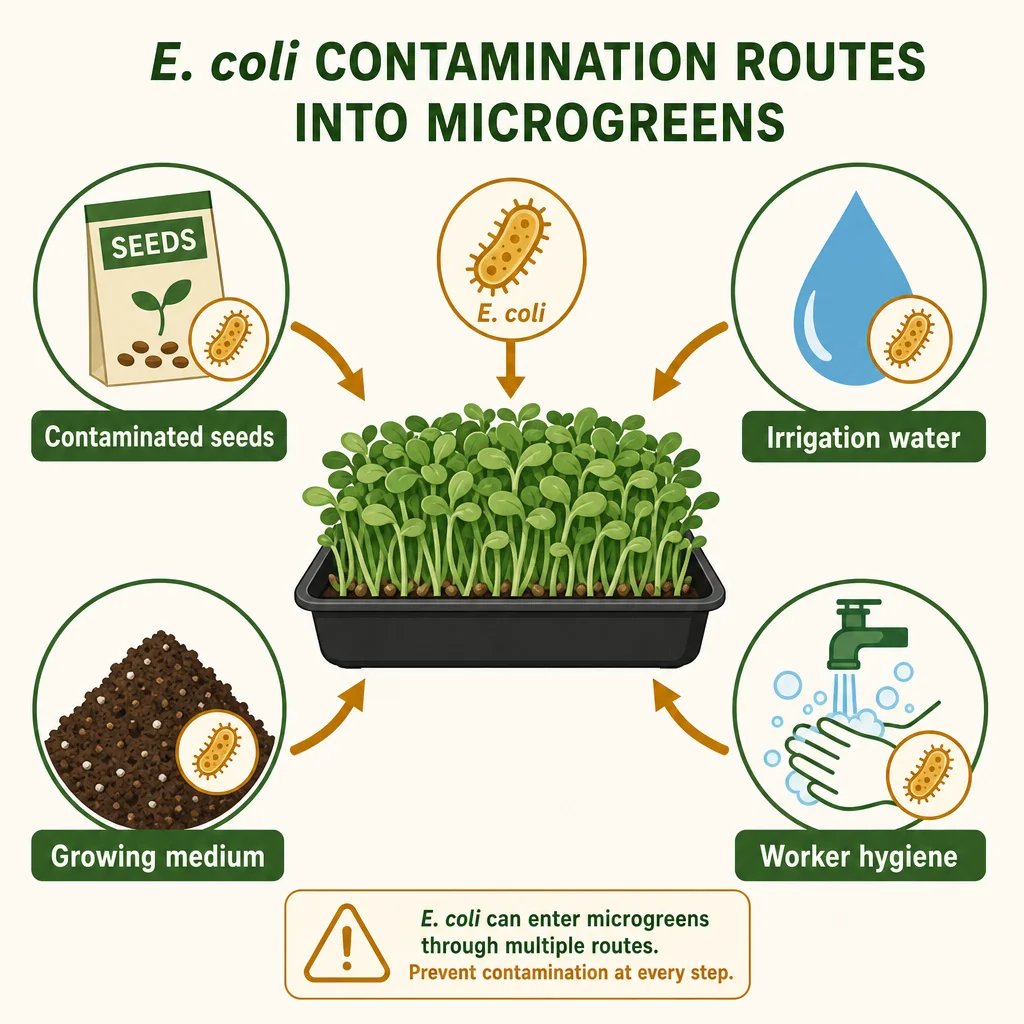
The Government of Ontario's food safety guidance for sprouts and microgreens identifies seeds as the most common contamination source. Seeds can carry pathogens picked up during field production or storage. If an antimicrobial seed treatment is not applied before germination begins, a single contaminated lot can seed millions of microgreens plants with E. coli or Salmonella. The pathogen multiplies as the plant grows.
Other entry points include:
- Irrigation water: Municipal water supplies are generally considered safe, but producers using private wells must test regularly. Water must be free of E. coli at every stage, from seed soaking to post-harvest washing.
- Growing medium: Soil, compost, and peat-based substrates can introduce pathogens if the growing medium was not pasteurized before use.
- Worker hygiene: Hand contamination is a real pathway. Food Safety Modernization Act protocols require handwashing, exclusion of sick workers, and controlled movement between outdoor and indoor production areas.
- Equipment and surfaces: Research has shown Salmonella surviving on dry stainless steel for four or more days. In a production environment, contaminated surfaces become ongoing sources.
A 2025 peer-reviewed review in a food science journal examined dozens of microgreens and sprout outbreaks and reached a consistent conclusion: when a seed lot is contaminated, that contamination tends to survive through to the finished product.