Ingredient Deep Dives

Natural Food Dyes: What Replaces Red 40 and Synthetic Colors

A shopper's guide to natural food dyes: what counts as natural in the US and EU, the main options by color with label names and E-numbers, new FDA approvals, tradeoffs, and diet notes.

Nov 18, 2026|13 min read
By Sanket Patel|Updated 2026-11-21|8 sources|Editorial standards
Natural Food Dyes: What Replaces Red 40 and Synthetic Colors

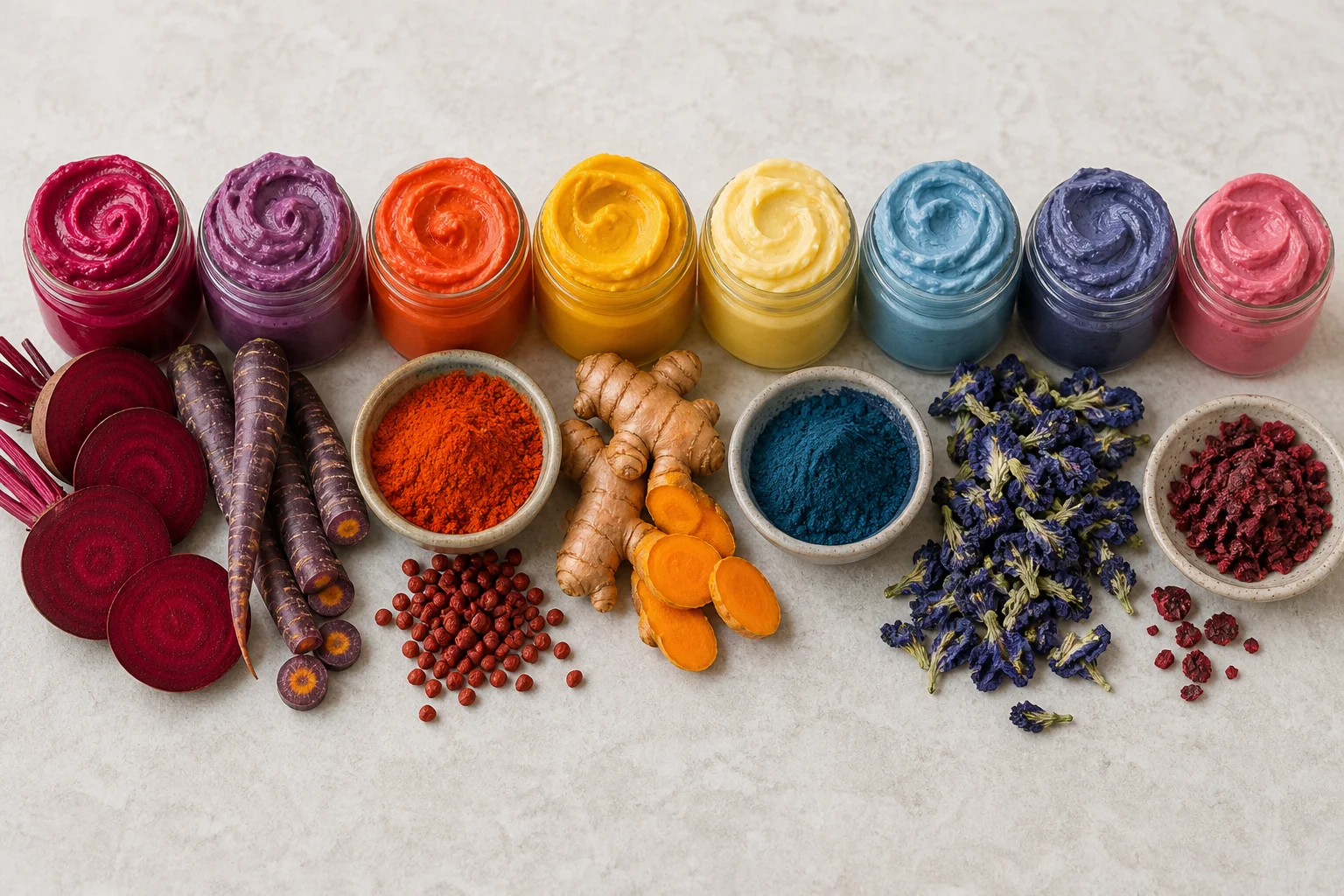
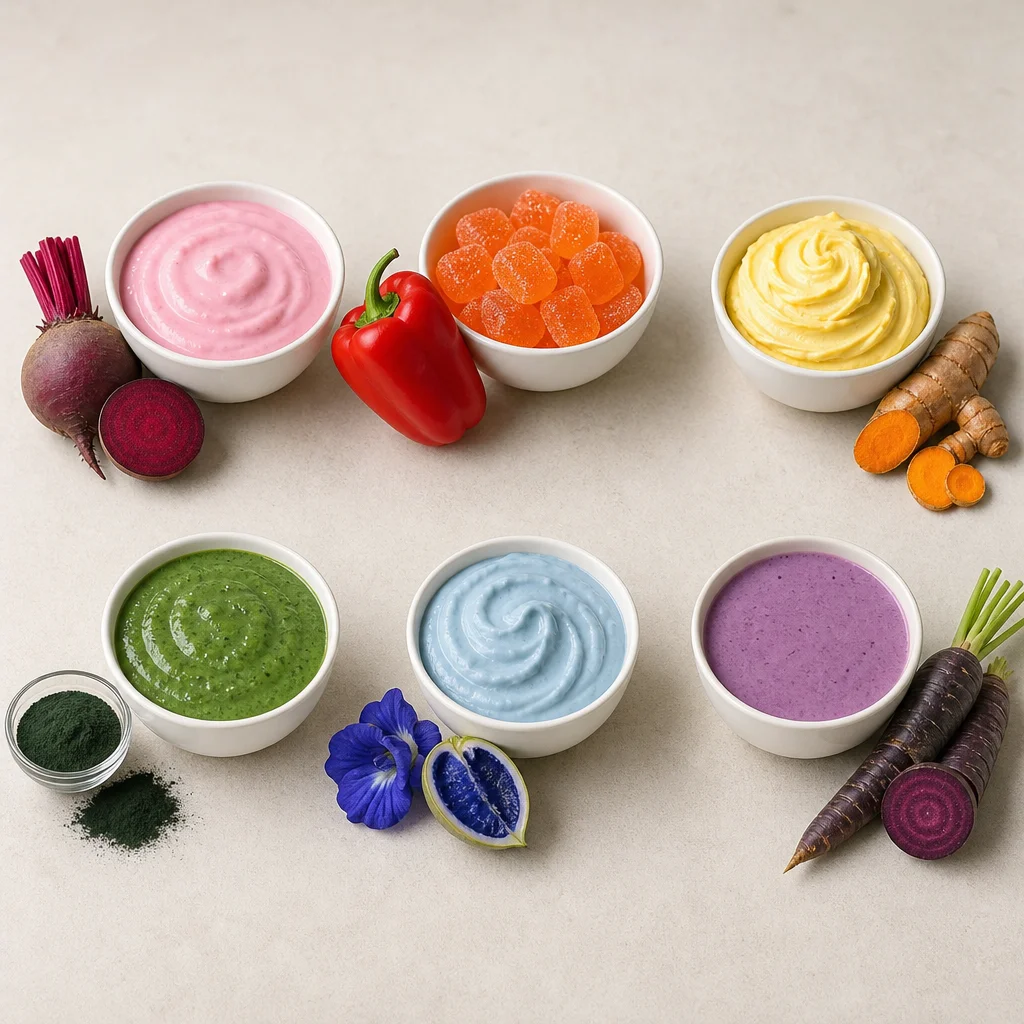
Quick answer: Natural food dyes are colors made from plants, algae, insects, or minerals instead of petroleum: beet juice, paprika extract, annatto, turmeric, spirulina extract, butterfly pea flower extract, carmine, and a handful of newer blues. In the US they belong to a legal category called "color additives exempt from certification," while the EU gives almost every approved color an E-number whatever its source. They are what food companies are using to replace Red 40, Yellow 5, Blue 1, and the other synthetic dyes being phased out.

Interest in these ingredients jumped after the federal government asked the food industry to drop petroleum-based dyes. For the policy timeline, see our FDA food dye phase-out tracker. For the synthetic dyes themselves, start with our Red 40 explainer. This article is about the replacements: what they are made from, what they are called on a label, what they do well and badly, and who should look twice at them.

What Counts as a "Natural" Color in the US vs the EU

United States: certified vs exempt from certification

The FDA sorts color additives into two groups. Certified colors are synthetic dyes such as FD&C Red No. 40, and every batch is checked by the agency before sale. Colors exempt from certification "generally include dyes and pigments derived from natural sources such as vegetables, minerals, or animals," and they are listed in 21 CFR Part 73.

Here is the catch: "natural" is not a legal category for colors. Part 73 is simply the list of approved colors that skip batch certification, and a few of them are not plant extracts at all. Calcium phosphate is defined in the regulation as a "synthetically prepared powder." Beta-carotene can be made synthetically. The newly approved beetroot red is produced by fermentation with a genetically engineered yeast rather than squeezed from beets.

Every Part 73 color also still needs FDA approval for specific uses. Gardenia blue, for example, is allowed in sports drinks, teas, fruit drinks, and candy, not in everything.

European Union: E-numbers for nearly every color

In the EU, colors are food additives under Regulation (EC) No 1333/2008, and each authorized color carries an E-number whether it comes from a beet or a lab. EFSA notes that a color must appear on the label by name or E-number. Curcumin is E100, beetroot red E162, anthocyanins E163, and so on. You can look any of them up in the EU additives database.

The exception is what Europe calls colouring foods: concentrates of fruits, vegetables, or algae that are not selectively extracted for their pigment. These count as ordinary food ingredients, so they have no E-number. Spirulina extract is usually handled this way in the EU, which is why a European candy colored with spirulina may list it as a concentrate rather than a numbered additive.

The two systems also disagree on some specific colors. Vegetable carbon (E153) is permitted in the EU but has never been authorized for food in the US. Titanium dioxide works the other way: it was removed from EU foods but is still allowed in the US, as our titanium dioxide guide explains. Several new US blues, including gardenia blue and galdieria extract blue, have no EU E-number at all.

Natural Food Dyes by Color: Sources, Label Names and E-Numbers

Natural Food Dyes by Color: Sources, Label Names and E-Numbers
ColorOptionSourceCommon US label namesEU number
Red, pinkBeet colorsRed beetsbeet juice, beet powder, vegetable juice (color)E162 (beetroot red)
Red, purpleAnthocyaninsPurple carrot, red cabbage, grape skins, berriesfruit juice, vegetable juice, grape skin extractE163
RedCarmine, cochineal extractCochineal insectscarmine, cochineal extractE120
Orange-redPaprika extractCapsicum pepperspaprika, paprika extract, paprika oleoresinE160c
Yellow-orangeAnnattoAnnatto (achiote) seedsannatto, annatto extractE160b
Yellow-orangeBeta-caroteneAlgae, fungi, plants, or syntheticbeta-caroteneE160a
YellowTurmericTurmeric rootturmeric, turmeric oleoresin, "spice and coloring"E100 (curcumin)
Blue, greenSpirulina extractSpirulina (Arthrospira)spirulina extractNone (colouring food)
Blue, purpleButterfly pea flower extractClitoria ternatea flowersbutterfly pea flower extractNone
BlueGardenia (genipin) blueGardenia fruit plus soy proteingardenia blueNone
BlueGaldieria extract blueGaldieria sulphuraria red algaegaldieria extract blueNone
WhiteCalcium phosphateMineral, synthetically preparedcalcium phosphateNot an EU color (E341 has other uses)
BrownCaramel colorHeated sugarscaramel colorE150a, E150b, E150c, E150d
BlackVegetable carbonCharred plant materialNot permitted in US foodsE153

Reds and pinks

Beet juice and dehydrated beet powder have been permitted for decades. They give a bright pink-red but fade with heat, so they suit yogurt, drinks, and frostings better than baked goods. Anthocyanins from purple carrot, red cabbage, and grape skins are red in acidic foods and drift toward purple and blue as acidity drops.

Carmine is the performance benchmark for natural red because it holds up to baking and long shelf lives, but it comes from insects. Our carmine guide lists real products that use it.

Oranges and yellows

This is the easiest part of the spectrum to replace. Paprika extract, annatto, and beta-carotene cover yellow to red-orange, and we compare them side by side in annatto vs paprika extract vs beta-carotene. Turmeric gives a vivid lemon yellow but is sensitive to light. Under 21 CFR 101.22, paprika and turmeric may be declared as "spice and coloring" unless they are listed by name, which can make them easy to miss.

Blues: the hardest color to replace

Natural blue has always been the bottleneck. Spirulina extract owes its color to phycocyanin, a protein that a review in PMC found is most stable around pH 5.5 to 6.0 and below about 45°C, and that turns greenish in acidic conditions. That is a poor match for tart sodas and baked cereal.

Butterfly pea flower extract is anthocyanin-based, so its shade shifts with acidity. The FDA describes it as giving "bright blues, intense purple, and natural greens." Gardenia blue holds up well to light and pH changes but is sensitive to heat above about 80°C, according to a review of natural and synthetic blue dyes. Galdieria extract blue is phycocyanin from a red alga that lives in hot, acidic springs, and a 2021 study found it kept its color better than spirulina phycocyanin when heated.

Food scientists told FoodNavigator that blue remains the toughest synthetic dye to replace, with natural sources tending toward softer aqua or teal shades. Green inherits the problem because it is usually blue plus yellow. Sodium copper chlorophyllin, a green made from chlorophyll, is approved in the US only for citrus-based dry beverage mixes.

Whites, browns and blacks

Calcium phosphate, approved in 2025, is a white option for ready-to-eat chicken products, white candy melts, doughnut sugar, and sugar for coated candies. Caramel color supplies most of the brown in colas, sauces, and baked goods. Vegetable carbon gives the jet black seen in European charcoal buns and ice cream, but it is not an approved food color in the US.
The FDA's New Natural Color Approvals, 2025 to 2026

The FDA has moved faster on natural colors since the phase-out began, though not every approval has stuck.

  • May 9, 2025: The FDA approved three colors: galdieria extract blue (new), calcium phosphate (new), and expanded uses of butterfly pea flower extract to cover cereals, crackers, snack mixes, pretzels, and several types of chips.
  • July 14, 2025: The FDA approved gardenia (genipin) blue for sports drinks, flavored water, fruit drinks and ades, ready-to-drink teas, and hard and soft candy.
  • February 5, 2026: The FDA announced approval of beetroot red and expanded use of spirulina extract in foods generally, bringing its count of new color options to six.
  • March 20, 2026: Both February orders were delayed indefinitely after objections were filed, including one from GMO/Toxin Free USA over beetroot red's genetically engineered production yeast. The FDA's color additives page says the delay does not change its safety determination, but the new uses cannot take effect until it resolves the objections. Spirulina extract's earlier approvals, which cover candy, gum, many beverages, and several other categories, are unaffected.
  • August 2026: Petitions for a safflower yellow, wider uses of gardenia blue, and changes to carrot oil production were filed for review.
  • November 9, 2026: The FDA revoked authorizations for three solvents (methylene chloride, ethylene dichloride, and trichloroethylene) in making annatto extract, paprika oleoresin, and turmeric oleoresin, effective January 11, 2027. Industry had already stopped using them, so products should not change, but it is a useful reminder that many "natural" colors are concentrated extracts made with processing steps.

Tradeoffs: Why Natural Colors Are Harder to Use

Stability. Natural pigments react to heat, light, oxygen, and acidity in ways synthetic dyes mostly do not. Beet red browns in the oven, turmeric fades in clear packaging, and anthocyanins change shade with pH. A color that works in a refrigerated yogurt may fail in a shelf-stable sports drink.

Dose and cost. Natural colors are less concentrated, so recipes need more of them. A July 2026 roadmap from the National Confectioners Association and RTI International, reported by Food Dive, found reformulation often costs $50,000 to $500,000 per product to validate stability, run taste tests, and complete regulatory reviews.

Supply. Many sources are niche crops grown in a few countries. The same report estimated the US relies on imports for 98.2% of its annatto and 99.1% of its butterfly pea, according to FoodNavigator.

Shade. The neon blues and fire-engine reds of classic candy are the hardest to copy. Some brands now accept softer shades, and some have launched uncolored versions of familiar snacks instead.

Diet and Allergy Notes

  • Vegan and vegetarian: Carmine is the main non-vegan natural color. Watch for carmine, cochineal extract, carminic acid, and E120. Our vegan ingredient checker flags these automatically.
  • Carmine allergy: Reactions are uncommon but can be severe, including anaphylaxis. Since January 5, 2011, the FDA has required carmine and cochineal extract to be named on all food labels, including butter, cheese, and ice cream.
  • Annatto: A published case report described anaphylaxis after eating cereal colored with annatto, likely from residual seed proteins. A review of food additive allergy notes that allergic reactions to food colorings are rare and mostly involve natural colors such as carmine, annatto, and saffron.
  • Soy: Gardenia blue is made by reacting gardenia fruit extract with soy protein hydrolysate. In its approval order, the FDA said the color requires soy allergen labeling unless an exemption is granted, and an exemption petition was still under review.
  • Nightshades: Paprika extract and paprika oleoresin come from peppers, which matters for anyone avoiding nightshades.
  • Caramel color and 4-MEI: Caramel color comes in four classes. Classes III and IV form 4-methylimidazole (4-MEI) during manufacture. The FDA says it has no reason to believe 4-MEI poses immediate or short-term risks at expected levels and is not recommending diet changes, but California added 4-MEI to its Proposition 65 list in 2011 based on mouse cancer studies. US labels just say "caramel color," so you cannot tell the class. EU labels can, because each class has its own number, E150a through E150d.

"Colored With Fruit and Vegetable Juice": What That Label Means

"Colored With Fruit and Vegetable Juice": What That Label Means

Fruit juice and vegetable juice are approved color additives in their own right, and vegetable juice may be used in foods generally. Under 21 CFR 101.22(k), a color exempt from certification can be declared in several ways:

  • By the general terms "color added," "artificial color added," or "artificial color"
  • By a phrase built on the color's regulatory name, such as "colored with vegetable juice," "vegetable juice color," or "annatto color"
  • Many labels go further and name the source, such as beet or purple carrot juice "for color"

Two rules make these easier to decode. Certified synthetic dyes must always be named, such as Red 40 or Blue 1 Lake. Carmine must also be named. So if a label says only "color added" or "vegetable juice (color)" and lists no FD&C dye, the color is an exempt color and not carmine. Butter, cheese, and ice cream are the exception, since added color there may not need to be listed at all (carmine still does).

What the juice phrase does not tell you is which fruit or vegetable was used. The FDA also changed its approach in February 2026 so products colored only with exempt colors can say "no artificial colors," which we unpack in the new meaning of "no artificial colors".

Natural Food Dye Label Checklist

  1. Look for named synthetic dyes first. Red 40, Yellow 5, Yellow 6, Blue 1, Blue 2, Green 3, Red 3, and their "Lake" forms are certified colors, whatever the front of the package says.
  2. Scan for carmine, cochineal extract, carminic acid, or E120 if you are vegan, vegetarian, or allergic.
  3. Decode E-numbers on imported foods. Natural-source colors include E100, E120, E140, E141, E150a to E150d, E160a to E160d, E162, and E163. Synthetic ones include E102, E110, E129, and E133, the EU numbers for Yellow 5, Yellow 6, Red 40, and Blue 1. E153 (vegetable carbon) should not appear on foods sold in the US.
  4. Read "spice and coloring" as a possible paprika or turmeric. This matters for nightshade avoiders.
  5. Treat "caramel color" as unknown class. If 4-MEI concerns you, look for products without it or ask the manufacturer.
  6. Flag gardenia blue for soy allergy, and annatto or carmine if you have reacted to colorings before.
  7. Do not assume "artificial color" means synthetic. Under FDA rules it can describe natural-source colors too, so look for a named FD&C dye to be sure.
  8. Recheck labels during reformulation. Brands are switching colors product by product, and two flavors of the same snack can use different colorings.

Natural food dyes are not one ingredient but dozens, each with its own source, label name, and diet implications. IngrediCheck reads the ingredient list for you, recognizing carmine, annatto, paprika extract, gardenia blue, caramel color, and their E-numbers, and flags the ones that conflict with your vegan, allergy, or other dietary preferences so you can choose with confidence.

Frequently Asked Questions

What are natural food dyes?

Natural food dyes are colors made from plants, algae, insects, or minerals rather than petroleum, such as beet juice, paprika extract, annatto, turmeric, spirulina extract, butterfly pea flower extract, and carmine. In the US they are regulated as color additives exempt from certification under 21 CFR Part 73, and each one still needs FDA approval for the foods it is used in.

What natural dyes replace Red 40?

Common replacements include beet juice or beet powder, anthocyanin-rich fruit and vegetable juices such as purple carrot or red cabbage, paprika extract for orange-red shades, and carmine. Carmine is the most heat-stable natural red but comes from insects, so it is not vegan. No single natural color matches Red 40 in every product.

Is carmine a natural food dye?

Yes. Carmine and cochineal extract are made from cochineal insects, so they are natural in origin but not vegan or vegetarian. Since January 2011 the FDA has required them to be named on food labels as carmine or cochineal extract. In the EU they appear as E120.

Which natural blue food colors has the FDA approved?

The FDA has approved spirulina extract, butterfly pea flower extract, jagua (genipin-glycine) blue, galdieria extract blue, and gardenia (genipin) blue, each for specific food categories. Galdieria extract blue and gardenia blue were approved in 2025. A February 2026 order expanding spirulina extract to foods generally was put on hold in March 2026 after objections.

Are natural food dyes safer than synthetic dyes?

Natural food dyes still go through FDA safety review for each use, but natural origin does not make an ingredient risk-free. Carmine and annatto have documented allergic reactions, gardenia blue is made with soy protein, and some caramel colors contain 4-MEI. The best approach is to match the specific color on the label to your own diet and allergy needs.

Next Label Check

Follow the scanner, hub, and ingredient paths connected to this guide

Get the app for clearer label decisions.

Scan labels, see what fits your food notes, and read the why in plain English.

IngrediCheck app