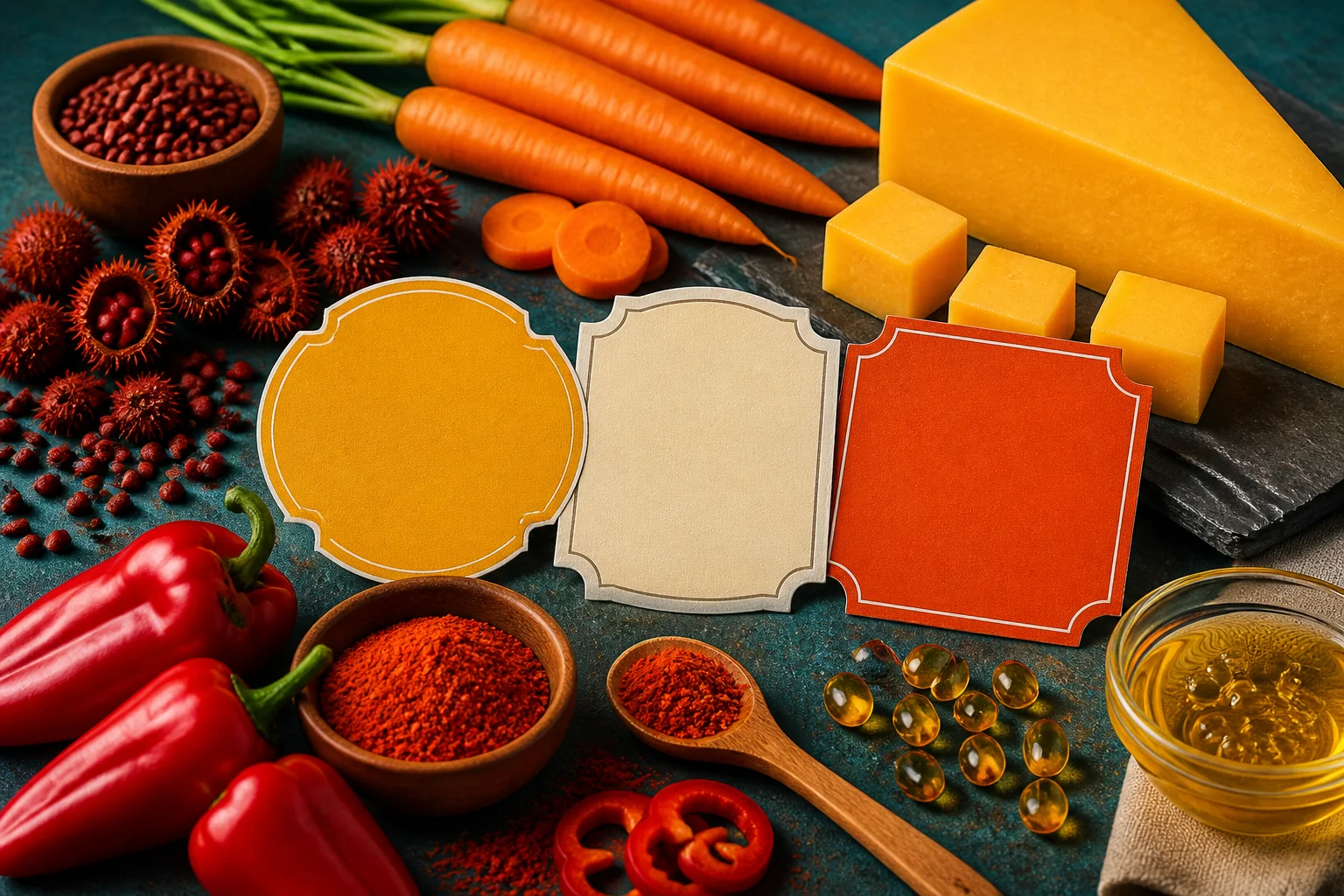
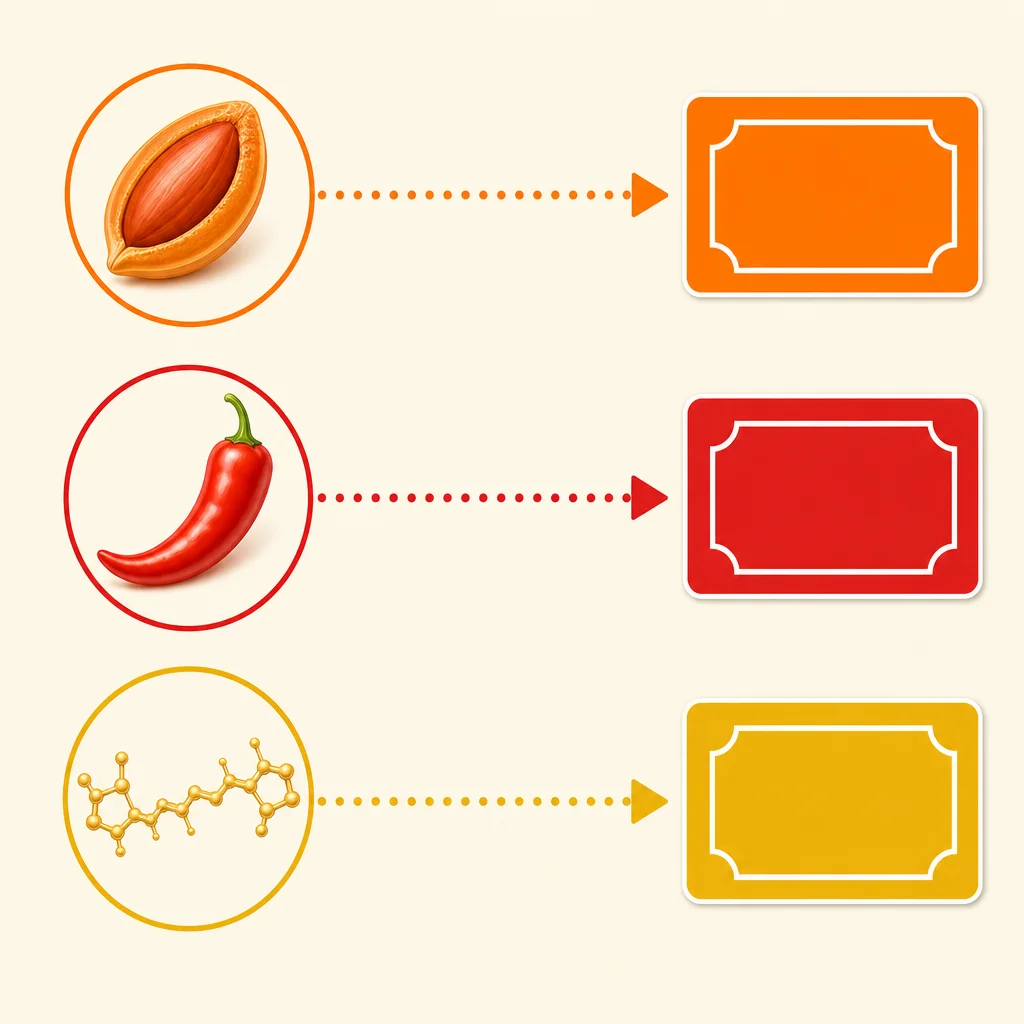
Annatto, paprika extract, and beta-carotene can all create yellow, orange, or reddish tones, but they are different color ingredients. Annatto comes from pigments in annatto seeds. Paprika extract comes from Capsicum annuum peppers. Beta-carotene is one defined carotenoid that may be sourced naturally or produced synthetically.
The three often appear in cheese, snacks, margarine, sauces, baked foods, and plant-based products when manufacturers want warm color without an FD&C dye. Color similarity does not prove identical source, processing, flavor, allergen relevance, or regulatory code.
This comparison is for shoppers choosing between two current labels, not a ranking of which pigment is “best.” The method is limited to official identity rules, additive specifications, source clues, and declaration language checked on August 26, 2026. It does not infer an individual reaction from the color name.
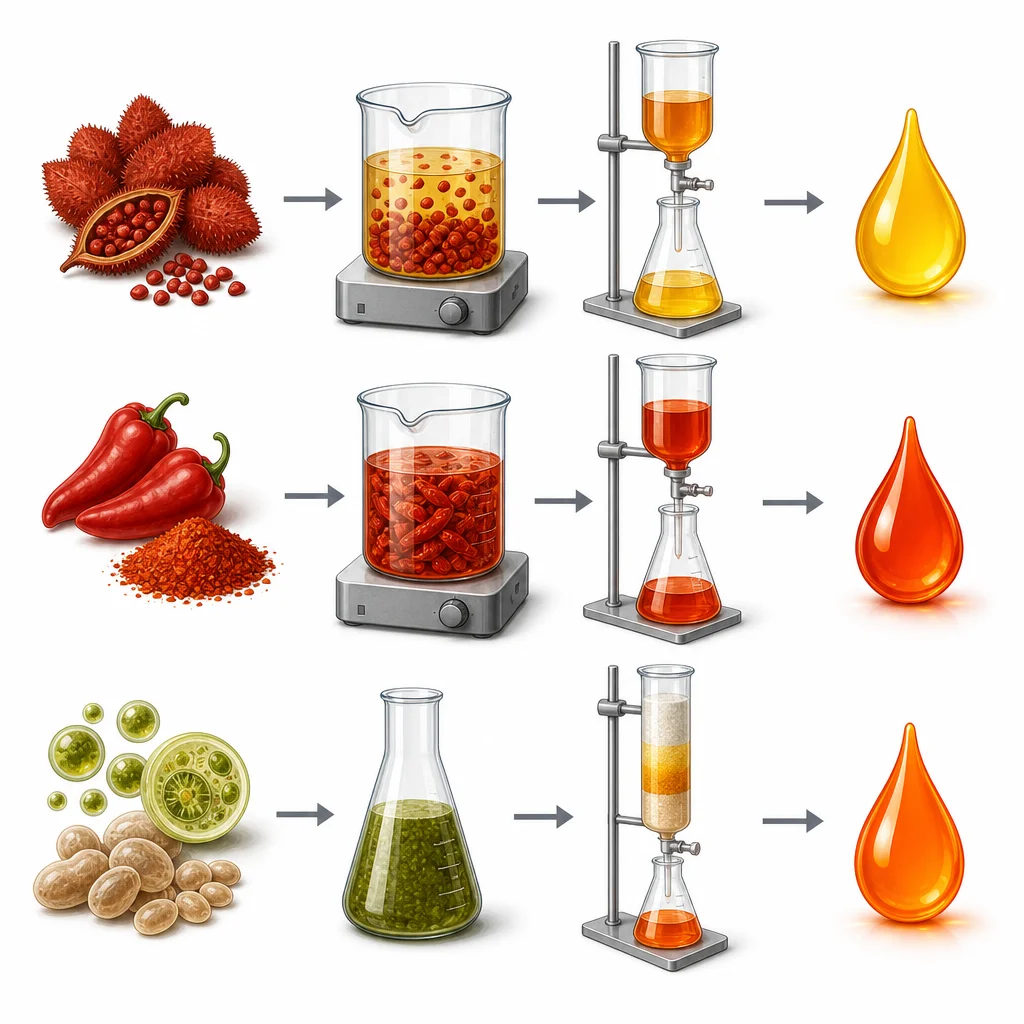
Annatto comes from Bixa orellana, a tropical plant whose seeds carry the carotenoid pigments bixin and norbixin. Different extraction and conversion methods produce preparations suited to oil-based or water-based foods.
U.S. 21 CFR 73.30 identifies annatto extract as a color obtained from annatto seeds using listed extraction approaches. It permits use in foods generally under good manufacturing practice, subject to standards of identity that may limit added color.
That plant source makes annatto categorically different from carmine. Carmine and cochineal extract are derived from insects, while annatto is seed-derived. A yellow-orange product may use either annatto alone or a blend with another color, so the complete list still matters. The carmine guide owns the insect-source and carmine safety questions.
Annatto is common in orange cheese, butter-like spreads, snack coatings, custards, sauces, and baked products. Its presence does not prove that a food is dairy-free, vegan, organic, or free of synthetic additives. It answers one question: an annatto color preparation was used.
Beta-Carotene: One Molecule, More Than One Source
Beta-carotene is a carotenoid found naturally in many plants and microorganisms. It can color foods yellow to orange and also has provitamin A activity, but the reason it appears in a recipe may be color, nutrient fortification, or both.
U.S. 21 CFR 73.95 expressly covers beta-carotene prepared synthetically or obtained from natural sources. That sentence blocks a common label shortcut: beta-carotene does not always mean carrot extract.
Natural commercial beta-carotene can be recovered from plant material, algae, or microbial processes. Synthetic beta-carotene reaches the same named compound through a controlled chemical route. A finished label normally identifies beta-carotene, not the factory pathway.
If source matters for a certification, dietary practice, or allergy concern, look for voluntary wording such as beta-carotene from algae, a certification standard, or a manufacturer specification. Do not infer the source from package color, product category, or a front claim such as naturally colored.
“Exempt from Certification” Does Not Mean Unregulated
The FDA groups annatto, paprika, paprika oleoresin, and beta-carotene in 21 CFR Part 73, which lists color additives exempt from batch certification. This phrase is easy to misread.
Exempt from certification does not mean:
- exempt from premarket authorization
- exempt from identity and purity specifications
- automatically safe in every amount or every food
- invisible on the ingredient list
- proven natural under every marketing standard
It means FDA does not require each manufactured batch to go through the certification system used for certifiable colors such as FD&C Yellow 5 or Red 40. The FDA consumer page explains that all approved color additives remain subject to their listing conditions.
The practical contrast is regulatory, not moral. A Part 73 color is not automatically healthier than a certified color, and a certified color is not automatically contaminated because certification is required. Each has an authorized identity, uses, restrictions, and specifications.
Color preparations can also contain permitted diluents or carriers. Oil-soluble and water-dispersible versions may need different formulations, even when the primary color name is unchanged. A shopper who needs to avoid a carrier should read any parenthetical components and ask about the exact preparation rather than assuming that all annatto, paprika extract, or beta-carotene products share one recipe.
How EU Labels Differ
EU labels place these colors within the E160 carotenoid family:
- E160a for carotenes, including beta-carotene forms covered by the specifications
- E160b for annatto extract forms
- E160c for paprika extract or capsanthin/capsorubin preparations
Regulation 231/2012 provides additive specifications, while Regulation 1333/2008 controls authorized uses and conditions by food category. EFSA has separately evaluated annatto extracts, paprika extract, and beta-carotenes.
An E-number is a regulatory identifier, not proof of a single agricultural source. Suffixes and specifications can distinguish preparations within a family. When a dietary decision depends on the exact form, record the full name and code rather than stopping at E160.
Nor does EU authorization make a U.S. package an EU product. A manufacturer can use related color preparations in both markets while adjusting names, permitted food categories, concentrations, and supporting ingredients. Compare the package sold in your country with the regulation that applies there.