Label Reading Guides

Yeast Extract vs Autolyzed Yeast vs MSG: Label Terms Compared

Compare yeast extract, autolyzed yeast, and monosodium glutamate by source, production, function, and the exact words that appear on packaged-food labels.

Jul 28, 2026|9 min read
By Sanket Patel|Updated 2026-08-26|6 sources|Editorial standards
Yeast Extract vs Autolyzed Yeast vs MSG: Label Terms Compared

Yeast extract, autolyzed yeast, and MSG are not three names for one ingredient. MSG is a defined glutamate salt. Autolyzed yeast describes yeast broken down largely by its own enzymes. Yeast extract is the soluble, concentrated material recovered from disrupted yeast cells. All three can strengthen savory taste, but their identities and label names remain separate.

That distinction matters when a package says no MSG, when a shopper tracks savory flavor enhancers, or when a recipe uses several umami ingredients together. The ingredient list can tell you which named materials were added. It usually cannot disclose the exact amount of free glutamate contributed by each one.
The Fast Comparison

Label termBasic identityTypical production clueWhat the label proves
Yeast extractSoluble components recovered from disrupted yeast cellsCells are ruptured, then soluble material is separated and concentratedYeast-derived extract was added
Autolyzed yeast or autolyzed yeast extractYeast material broken down through enzymes naturally present in the cellsHeat or salt can trigger self-digestion before separation or dryingAn autolyzed yeast ingredient was added
Monosodium glutamate, MSG, or E621Sodium salt of glutamic acidCommercial MSG is commonly produced by fermentation, then purified and crystallizedAdded MSG was used

The strongest shopping rule is simple: read each term literally. Do not rename yeast extract as MSG, and do not treat the absence of monosodium glutamate as proof that a food contains no free glutamate.

What Yeast Extract Means

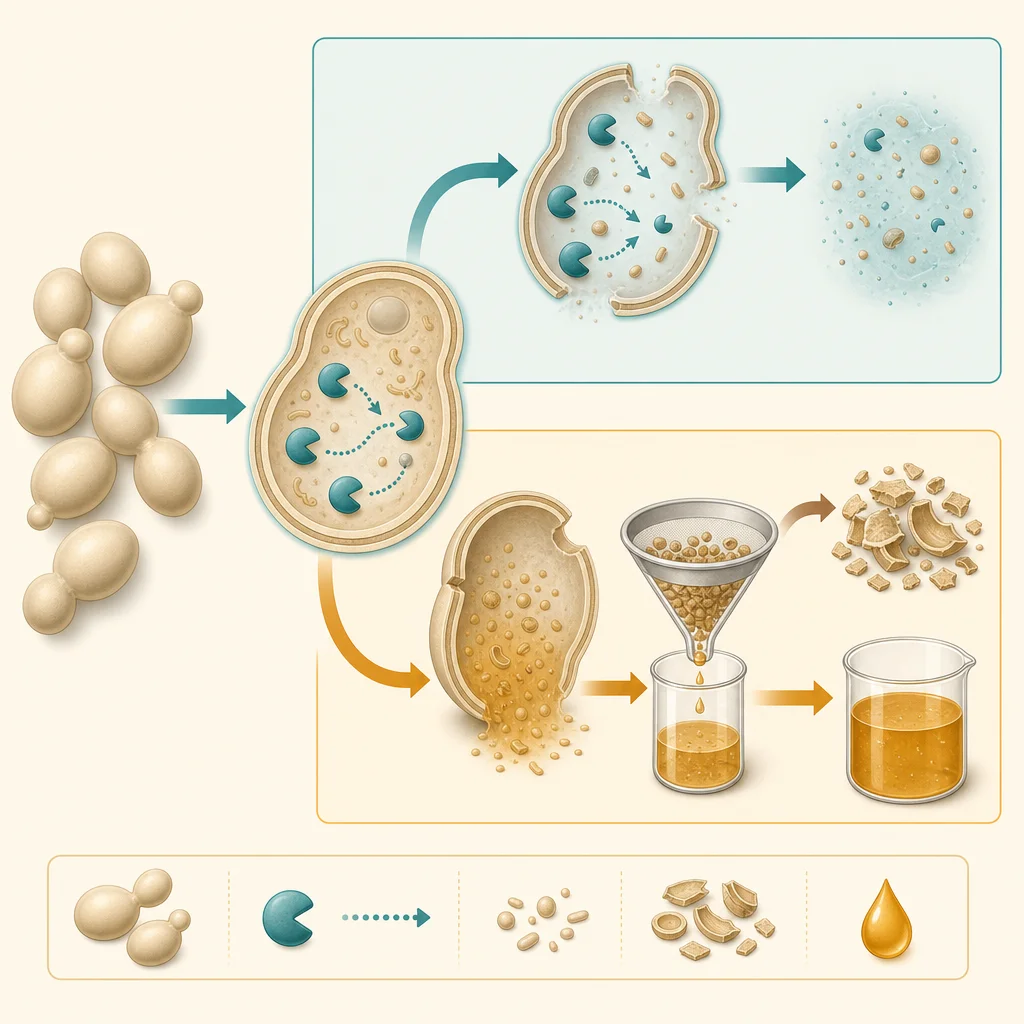
U.S. 21 CFR 184.1983 defines baker's yeast extract as the concentrated soluble material from mechanically ruptured cells of selected Saccharomyces cerevisiae. The extract may be sold as a concentrate or dried ingredient.

That definition points to a mixture, not one purified molecule. Yeast cells contain proteins, amino acids, peptides, carbohydrates, minerals, and other soluble components. When the cells are opened and the insoluble walls are removed, the recovered fraction carries a complex savory profile.

Manufacturers use yeast extract in soups, bouillon, gravy, seasoning blends, plant-based meats, snack coatings, sauces, and prepared meals. Its purpose may be flavor, body, salt reduction support, or a combination of those functions. The package rarely tells you which purpose dominated.

Yeast extract also does not identify every production detail. The name alone does not reveal the yeast strain, growth medium, enzyme treatment, free-glutamate concentration, carrier, or whether the final ingredient is a paste or powder. Those details require a supplier specification or manufacturer answer.

What Autolyzed Yeast Means

What Autolyzed Yeast Means

Autolysis means that enzymes already inside the yeast cells help break down the cell's proteins and other structures. The process releases peptides and amino acids while the cell wall loses integrity. The result can be used as whole autolyzed yeast, or the soluble portion can be separated and sold as autolyzed yeast extract.

This is why the labels overlap without being perfect synonyms. Autolyzed yeast highlights the breakdown process and may include more whole-cell material. Yeast extract highlights the recovered soluble fraction. A supplier can make yeast extract through autolysis, mechanical rupture followed by enzymes, or another controlled process that fits the applicable identity and labeling rules.

FDA's protein-hydrolysate naming rule in 21 CFR 102.22 gives autolyzed yeast extract as an acceptable specific name. The same rule rejects vague names such as hydrolyzed protein when they fail to identify the source. Specific source language helps a shopper distinguish yeast, soy, wheat, and milk-derived hydrolysates.

What MSG Means

Monosodium glutamate is the sodium salt of glutamic acid. The FDA's MSG explainer says modern commercial MSG is commonly produced by fermenting carbohydrate sources such as starch, sugar beets, sugar cane, or molasses. The glutamate is then recovered and crystallized as a defined ingredient.

That production route does not turn MSG into yeast extract. Fermentation describes how a material is made, while identity describes what the finished ingredient is. Vinegar, yogurt, MSG, and many vitamins can all involve fermentation without becoming interchangeable.

When MSG is added to a food in the United States, FDA requires the label to name monosodium glutamate. It cannot be hidden under spices and flavoring. E-number markets may show monosodium glutamate, MSG, or E621, depending on local rules and label format.

MSG contributes free glutamate directly. Yeast extract and autolyzed yeast can also contribute free glutamate alongside many other compounds. Chemically, free glutamate from these sources reaches the same glutamate ion in food. Ingredient identity is still different, and a precise label guide should preserve that distinction.

Does Yeast Extract Mean “Hidden MSG”?

Calling yeast extract hidden MSG compresses two true facts into a false equivalence:

  1. Yeast extract can naturally contain free glutamate.
  2. Added MSG is a specifically regulated ingredient name.

Both facts can matter to a shopper, but they answer different questions. A package listing yeast extract without monosodium glutamate does not list added MSG. It may still provide glutamate and savory intensity. Someone who has chosen to track all concentrated glutamate sources can flag both, while someone avoiding only added MSG can keep the categories separate.

FDA also says foods containing naturally glutamate-rich ingredients such as yeast extract, autolyzed yeast, hydrolyzed yeast, protein isolate, and hydrolyzed vegetable protein should not claim No MSG or No added MSG. That claim guidance is broader than the ingredient-declaration question. It is designed to prevent a front label from creating an impression contradicted by the formula.

The article on the MSG-free scanner workflow explains how to save a personal rule that distinguishes monosodium glutamate found from yeast extract found, review if you track adjacent savory ingredients.

U.S., EU, and Canadian Labels

U.S., EU, and Canadian Labels

United States

U.S. labels generally declare ingredients by common or usual name. Added MSG appears as monosodium glutamate. Yeast extract and autolyzed yeast appear under their own suitable names. 21 CFR 101.22 also allows certain flavoring declarations, but a defined ingredient cannot be relabeled generically when a specific declaration is required.

European Union

EU Regulation 1169/2011 governs ingredient lists, while Regulation 1334/2008 defines flavorings and flavoring preparations. A yeast preparation used chiefly for flavor may fall within that system, while E621 is an authorized flavor enhancer under the separate additive framework. The exact declaration depends on the ingredient's function and legal category in the food.

The EU's additive code is useful but not a universal translation system. E621 identifies monosodium glutamate. It does not identify yeast extract, autolyzed yeast, disodium inosinate, or disodium guanylate. The guide to E627, E631, and E635 covers those separate nucleotide enhancers.

Canada

Canadian labels also require ingredients and components under market-specific rules. The CFIA ingredient-list guidance explains how components may appear in parentheses or be integrated into the finished-food list. Check the Canadian package rather than importing assumptions from a U.S. label with similar branding.

What the Ingredient List Cannot Tell You

Even a fully compliant label usually does not reveal:

  • grams of free glutamate from each ingredient
  • the percentage of yeast extract in a serving
  • the yeast growth medium
  • the exact autolysis or enzyme process
  • whether savory nucleotides were present inside a compound seasoning unless disclosure rules require them
  • whether the product fits an individual's symptom threshold or dietary philosophy

Ingredient order gives relative weight before any permitted low-level ordering exception. It is not a laboratory result. A term near the end of the list may still have a strong flavor effect because flavor ingredients work at low levels.

A Practical Label-Reading Workflow

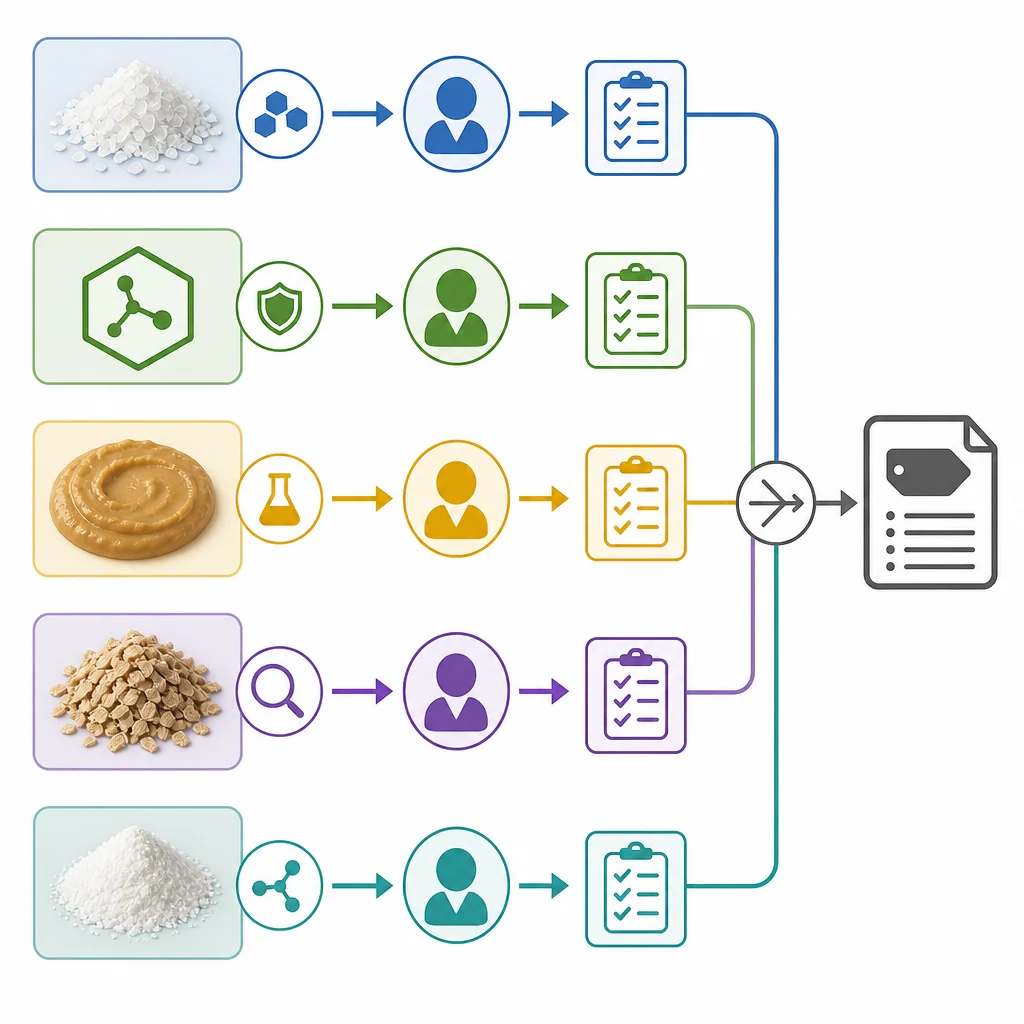
  1. Find the exact term. Record whether the label says monosodium glutamate, MSG, E621, yeast extract, autolyzed yeast, autolyzed yeast extract, or hydrolyzed protein.
  2. Keep identities separate. Do not convert every glutamate-containing ingredient into MSG.
  3. Expand compound seasonings. Read components inside parentheses after seasoning, bouillon, flavor blend, or soup base.
  4. Check adjacent enhancers. E627, E631, E635, disodium inosinate, and disodium guanylate are separate ingredients that may appear with MSG or yeast extract.
  5. Define your own rule. Decide whether you track only added MSG, every concentrated glutamate source, sodium, a dietary program, or a documented reaction.
  6. Treat front-label claims cautiously. Compare no MSG language with the full ingredient list.
  7. Ask when the missing fact decides the purchase. A manufacturer may be able to provide source, carrier, or process information that the retail label does not show.

Yeast extract, autolyzed yeast, and MSG can all support savory flavor without becoming the same ingredient. IngrediCheck helps flag each exact label term against the rules you save, so a scan can distinguish added MSG from yeast-derived ingredients and show where the package still leaves a question.

Frequently Asked Questions

Is yeast extract the same as MSG?

No. Monosodium glutamate is the sodium salt of glutamic acid and must be declared as monosodium glutamate when added in the United States. Yeast extract is a mixture made from soluble yeast-cell components. It can naturally contain free glutamate, but it is not the same ingredient.

Are yeast extract and autolyzed yeast the same thing?

They overlap, but the words emphasize different facts. Autolysis uses enzymes already present in yeast cells to break down cell material. Yeast extract is the soluble fraction recovered from disrupted yeast cells and may be produced through autolysis or other physical and enzymatic processing.

Does yeast extract mean a food contains hidden MSG?

That wording is misleading. Yeast extract can contribute naturally occurring free glutamate, while added MSG is a separately named ingredient. A label with yeast extract but no monosodium glutamate does not list added MSG, although a shopper may choose to track both under a personal rule.

Can a package say no MSG when it contains yeast extract?

FDA says foods containing ingredients that naturally provide free glutamate, including yeast extract and autolyzed yeast, cannot truthfully claim No MSG or No added MSG. Enforcement depends on the full claim and product facts, so read the ingredient list rather than relying on the front label alone.

Get the app for clearer label decisions.

Scan labels, see what fits your food notes, and read the why in plain English.

IngrediCheck app