Label Reading Guides

Compound Ingredients and Sub-Ingredients on Food Labels

Learn how sauces, fillings, seasonings, and other compound ingredients are broken into sub-ingredients, plus the exceptions and allergen checks that matter.

Jul 25, 2026|9 min read
By Sanket Patel|Updated 2026-07-25|5 sources|Editorial standards
Compound Ingredients and Sub-Ingredients on Food Labels

A compound ingredient is an ingredient that has its own recipe. A frozen meal may contain a sauce made from oil, vinegar, sugar, mustard, and spices. A cereal bar may contain chocolate chips made from sugar, cocoa, cocoa butter, and lecithin. Those inner components are the sub-ingredients.

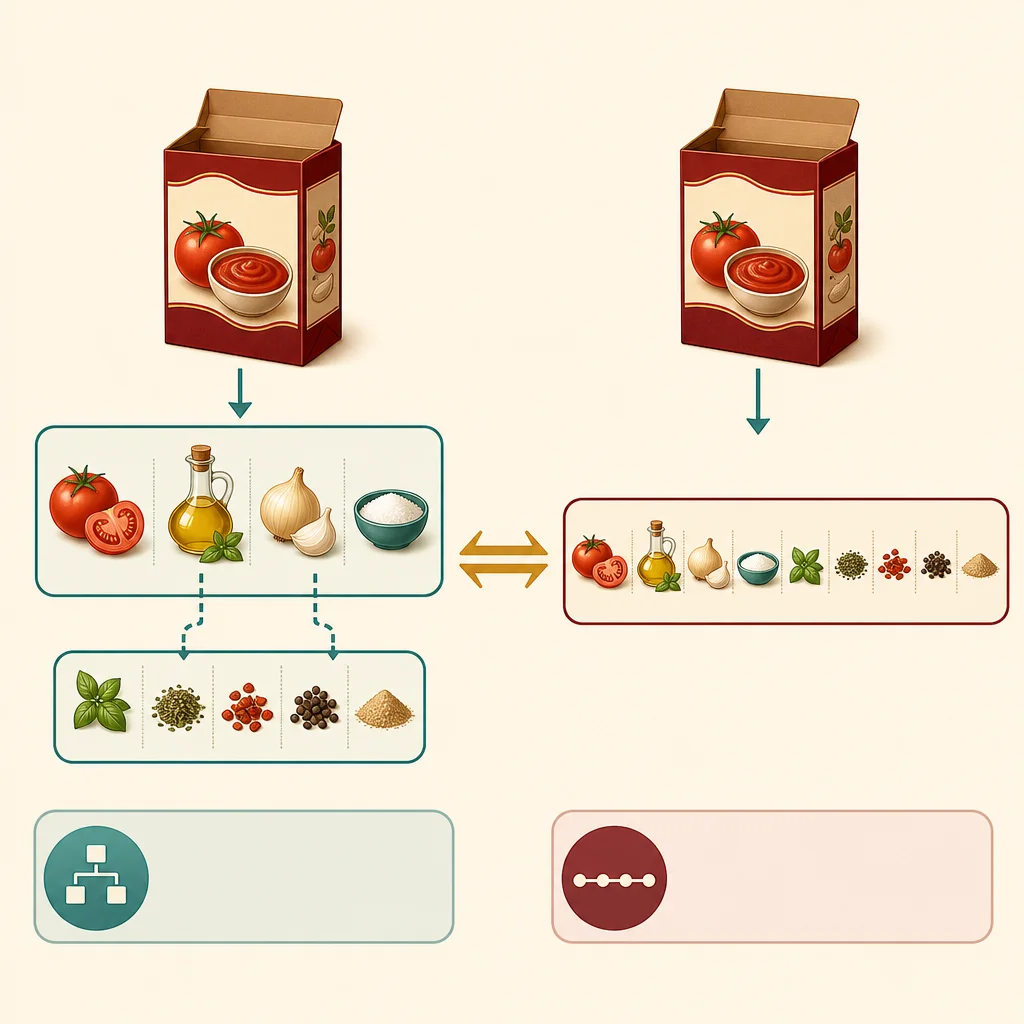
On a U.S. label, the manufacturer can usually name the compound ingredient and put its components in parentheses, or list the components separately in the main ingredient list. Both approaches can be lawful. The practical skill is learning to follow the nesting so that an ingredient inside a sauce, filling, coating, or seasoning is not overlooked.
The Short Answer

Think of the ingredient list as a recipe with smaller recipes inside it.

Ingredients: pasta, tomato sauce (tomatoes, olive oil, garlic, basil), cheese filling (ricotta cheese [milk, cultures, salt], spinach, egg), salt.

The main ingredients are pasta, tomato sauce, cheese filling, and salt. The items in parentheses or brackets explain what the sauce and filling contain. Milk and egg may sit one or two levels inside the structure, but they are still intentionally present in the finished food.

Label structureWhat it tells youWhat to inspect next
sauce (tomatoes, oil, garlic)Sauce is a compound ingredient; parentheses show componentsRead every component before moving on
cheese [milk, cultures, salt]Brackets separate a second nesting levelTrack ingredients across every level
Components dispersed in main listThe compound name may be omitted while its ingredients remainDo not expect a visible heading for every inner recipe
spices or natural flavorA permitted collective name may cover multiple substancesApply allergen rules and ask the manufacturer if source matters

Two U.S. Ways to Declare a Compound Ingredient

Two U.S. Ways to Declare a Compound Ingredient

21 CFR 101.4(b)(2) gives U.S. manufacturers two basic approaches.

1. Name it, then show its components

The label can state the established common or usual name of the compound ingredient and immediately follow it with a parenthetical list of its ingredients in descending order within that compound.

An example might read:

cookie pieces (wheat flour, sugar, palm oil, cocoa, salt)

This format helps you see the inner product as a unit. The order inside the parentheses describes the cookie-piece formula, not the finished food's overall formula.

2. Disperse the components into the main list

The manufacturer can instead declare each component in its appropriate position in the finished food's ingredient list without retaining the compound ingredient's name. A small amount of sugar from a sauce may be grouped with sugar coming from another part of the recipe.

That means two products with similar formulas can look structurally different. One may say barbecue sauce (tomato paste, vinegar, sugar...); another may place tomato paste, vinegar, and sugar in the main sequence. The formatting alone does not prove that one product is more processed or more transparent.

How Descending Order Works Inside the Nest

The main ingredient list follows the finished food's formulation order. A parenthetical component list follows the composition of the compound ingredient.

Suppose a pizza lists cheese sauce (milk, cheese, modified starch, salt). Milk is first inside the sauce because it contributes the greatest weight to that sauce when made. That does not necessarily mean milk outweighs every ingredient listed later in the pizza's main list. You are looking at two different levels of the recipe.

This is also why you cannot flatten a nested label into exact percentages. Parentheses reveal identity and relative order within a component. They do not disclose how much sauce was used or the precise amount of milk in the finished pizza.

The separate 2%-or-less ingredient-list guide explains what happens when low-percentage ingredients are moved into a qualifying group. That ordering issue is related, but distinct from compound-ingredient nesting.

Where Shoppers Commonly Encounter Sub-Ingredients

Compound ingredients are common anywhere one prepared food becomes part of another:

  • sauces, dressings, gravies, marinades, and glazes
  • spice mixes, seasoning packets, soup bases, and bouillon
  • chocolate chips, candy pieces, cookie crumbs, and cereal inclusions
  • jam, fruit preparation, cream, and bakery fillings
  • breading, batter, crumbs, and crunchy coatings
  • cheese blends, processed cheese, and cheese sauce
  • plant-based meat or dairy alternatives used inside a meal
  • vitamin, mineral, enzyme, or premix preparations

A familiar name is not enough evidence. Pesto can contain milk or tree nuts. Worcestershire-style sauce may contain fish. A seasoning can include sesame, wheat, milk powder, or another carrier. A chocolate piece may use soy or milk even when the surrounding snack does not.

Allergens Still Count When They Are Sub-Ingredients

Compound structure does not cancel allergen disclosure. In the United States, the source of a major food allergen must be declared in the ingredient list or in a properly placed Contains statement, subject to the law's definitions and exemptions.

For example, whey must identify milk as its source if the name does not already make that source clear. A tree nut must be identified by the type of nut. An allergen inside a sauce or flavor cannot be ignored simply because the compound ingredient contributes a small share of the food.

Still, the fastest safe habit is not to rely only on bold type or a Contains line. Read:

  1. the main ingredient names
  2. every parenthetical and bracketed component
  3. the Contains statement, if present
  4. any precautionary statement such as "may contain"

The FDA notes that precautionary statements are voluntary and should not replace good manufacturing practices. They also describe potential unintended cross-contact, not ingredients deliberately used in the recipe.

If your household manages a diagnosed allergy, the food allergy ingredient checker can help flag terms across the nested list. It cannot verify cross-contact or replace the package, manufacturer, or clinical plan.

Why "Spices" and "Flavoring" Can Still Look Vague

Some ingredient categories have separate naming permissions. U.S. rules can allow collective terms such as spices, natural flavor, or artificial flavor instead of naming every constituent. Certain incidental additives and processing aids can also be exempt when they meet the rule's conditions.

Those are category and exemption questions, not proof that the company ignored compound-ingredient rules. Major-allergen disclosure still operates alongside them. The existing guide to natural flavors on food labels covers source ambiguity without turning every seasoning blend into an undeclared-ingredient claim.

When a collective term blocks a strict religious, vegan, or ingredient-source decision, ask a precise manufacturer question. "Does the natural flavor contain any animal-derived carrier or processing material?" is more useful than asking whether the product is generally healthy.

EU Labels Use a Similar Nested Idea

EU Regulation 1169/2011 defines a compound ingredient as one that is itself the product of more than one ingredient. The compound ingredient can appear under its own designation based on its overall weight and be followed immediately by a list of its ingredients.

The EU also provides specific cases where the component list is not required, including some standardized compound ingredients below a stated share and certain compounds for which an ingredient list is not otherwise required. Those exceptions do not broadly erase Annex II allergen declarations. An allergen that must be emphasized remains a separate check.

EU labels can therefore look familiar to U.S. shoppers while applying different detailed exceptions and emphasis rules. Read according to the market on the package, not according to formatting memory.

Canada Calls Them Components

Canada Calls Them Components

Canadian guidance commonly uses component for an ingredient within another ingredient. The CFIA ingredient and component guidance explains component declarations and exemptions under the Food and Drug Regulations.

Canada has detailed rules for which preparations can omit some components and which ingredients must still be declared. Priority-allergen, gluten-source, and added-sulphite obligations can override a component exemption. This is another reason imported formulas may show different nesting without having different underlying recipes.

A Practical Nested-Label Checklist

  1. Mark the opening and closing punctuation. Parentheses and brackets show where an inner recipe begins and ends.
  2. Read every level. Do not jump from the compound name to the next main ingredient.
  3. Track the rule that matters. For an allergy, follow allergen sources; for vegan or religious rules, inspect ambiguous flavors and carriers.
  4. Do not compare positions across levels. First inside a sauce does not mean first in the finished product.
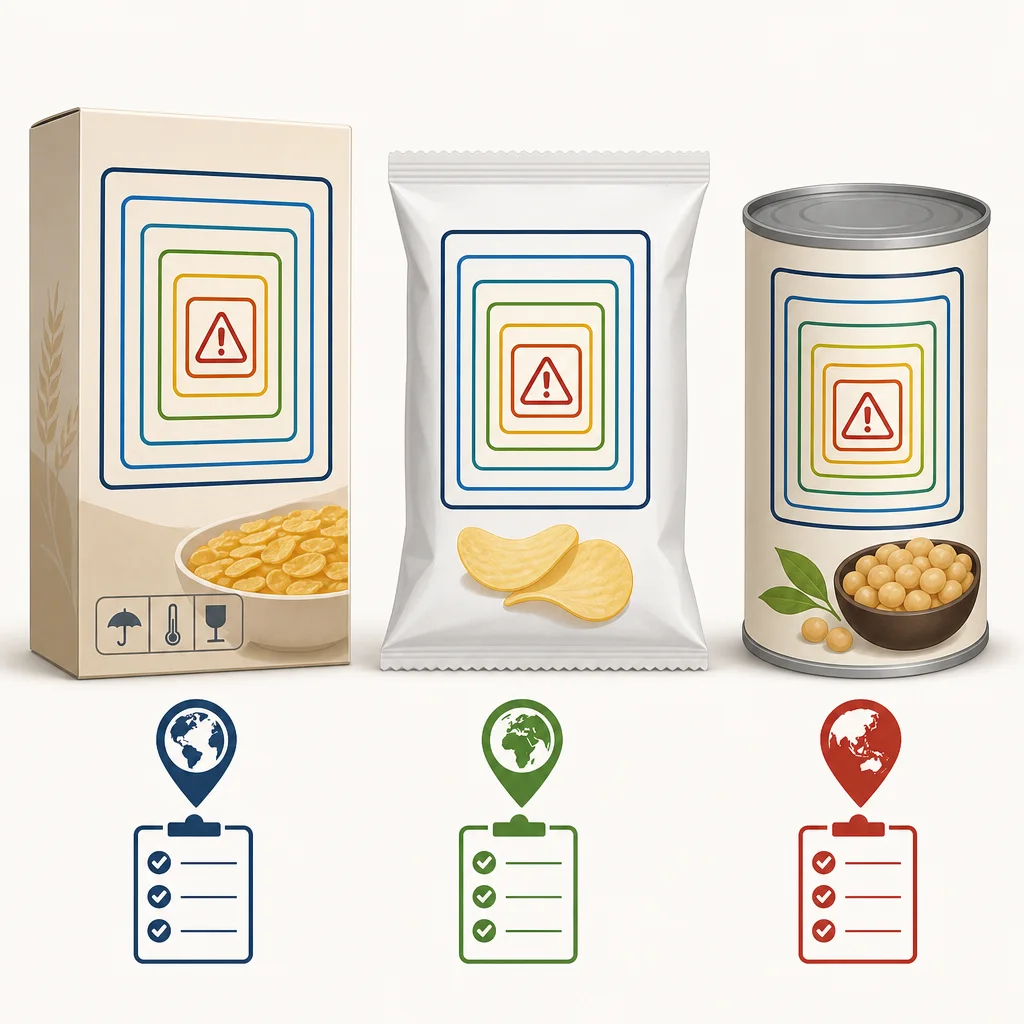
  5. Check the country of sale. Component exemptions and allergen presentation differ.
  6. Separate intentional ingredients from cross-contact. The ingredient list and precautionary statements answer different questions.
  7. Ask a targeted question when a category name is decisive. Record the product, market, lot, and exact ambiguous term.

For the rest of the package, including Nutrition Facts and front-of-package claims, continue with the five-minute food-label guide. The key lesson here is smaller: sauces, fillings, seasonings, and inclusions are recipes too, so read inside them before deciding.

Compound ingredients are not hidden recipes once you recognize the structure. Follow every set of parentheses, keep ordering levels separate, and use allergen or source rules that match the decision you are making.

Frequently Asked Questions

What is a compound ingredient on a food label?

A compound ingredient is itself made from two or more ingredients. Examples include mayonnaise, chocolate chips, a cookie piece, sauce, filling, or seasoning blend used inside another packaged food.

Do sub-ingredients have to appear in parentheses?

In the United States, a manufacturer can name the compound ingredient and list its components in parentheses, or can list those components in the overall ingredient list without retaining the compound name. Other countries have their own presentation rules and exceptions.

Can an allergen be hidden inside a compound ingredient?

An allergen can originate in a sub-ingredient, but applicable allergen-disclosure rules still apply. Read both parenthetical components and any Contains statement instead of checking only the main ingredient names.

Does a seasoning blend disclose every spice?

Not always by individual spice name. Some rules permit collective names such as spices or flavoring. Major allergens and specifically regulated ingredients still have separate disclosure requirements.

Next Label Check

Follow the scanner, hub, and ingredient paths connected to this guide

Get the app for clearer label decisions.

Scan labels, see what fits your food notes, and read the why in plain English.

IngrediCheck app