Label Reading Guides

Nisin vs Natamycin: Preservatives in Cheese and Bakery Foods

Compare nisin and natamycin by antimicrobial target, U.S., EU, and Canadian permissions, E-number, food use, and ingredient-label wording.

Jul 30, 2026|9 min read
By Sanket Patel|Updated 2026-08-28|9 sources|Editorial standards
Nisin vs Natamycin: Preservatives in Cheese and Bakery Foods

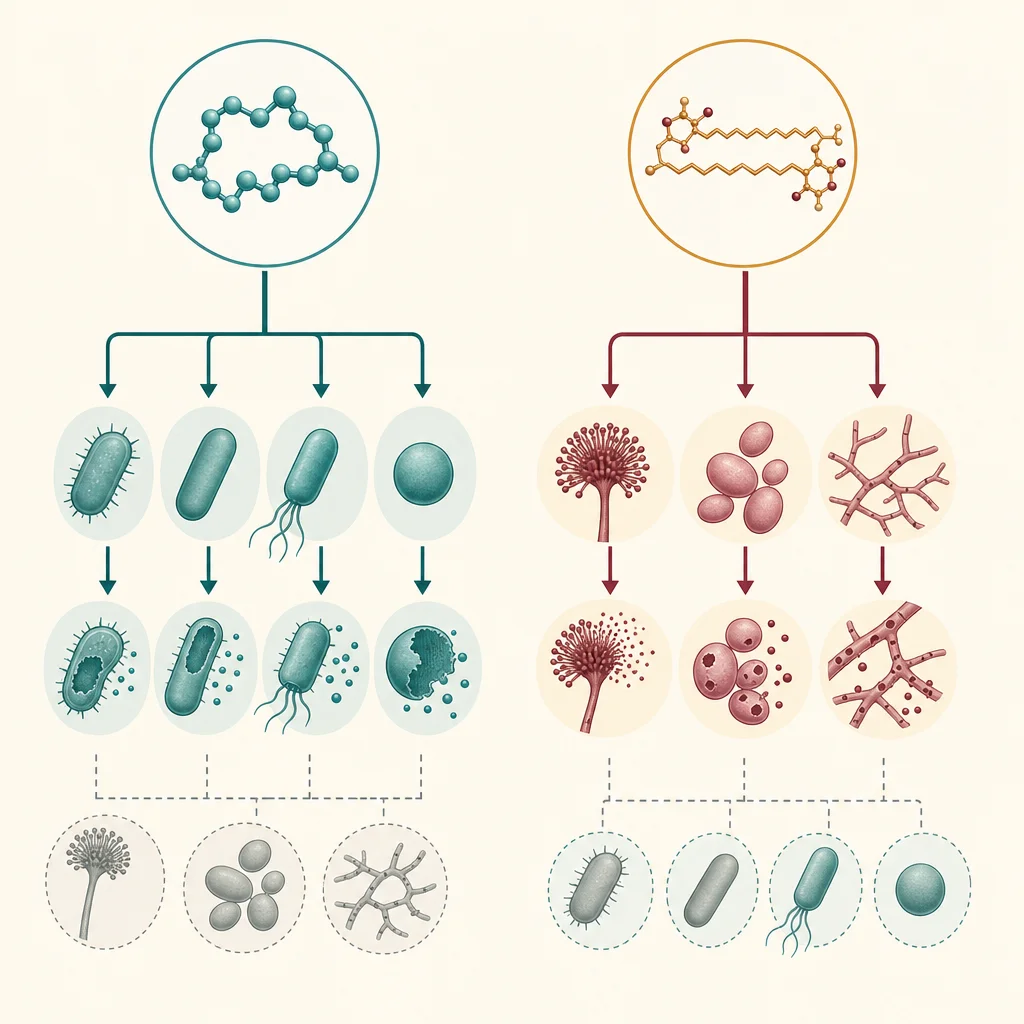
Nisin and natamycin are different preservatives with different microbial targets. Nisin is used chiefly against susceptible bacteria. Natamycin is an antimycotic used against molds and yeasts. In EU terminology, nisin is E234 and natamycin is E235.

Both appear in discussions of cheese and shelf life, which makes them easy to merge into one idea. Their permissions are actually tied to specific foods, amounts, and markets. Natamycin can be limited to surface treatment in one system, while nisin can be mixed into specified products under another. Bakery use also cannot be assumed from a preservative's general reputation.

E234 and E235 at a Glance

FeatureNisinNatamycin
Main antimicrobial roleAntibacterial preservativeAntimycotic against molds and yeasts
EU codeE234E235
JECFA numberINS 234 for nisin AINS 235
U.S. use in cited ruleSpecified pasteurized cheese spreads and process-cheese spreadsApplied on cheese as an antimycotic
EU patternSeveral defined dairy, egg, and pudding categories at specified levelsExternal treatment of defined uncut cheeses and dried cured sausages
Label cluePreservative name or permitted code, depending on marketPreservative name or permitted code, sometimes connected with surface treatment

Neither column means “kills every microbe.” A preservative works within a hurdle system that can also include acidity, heat, salt, water activity, refrigeration, packaging, sanitation, and time.

Nisin Is Primarily an Antibacterial Preservative

Nisin is a peptide antimicrobial produced by fermentation. Its best-described food-preservation role is activity against susceptible bacteria. The cited U.S. permission is more specific still: it names a particular bacterial hazard and particular cheese-spread products.

That narrow permission does not make nisin a universal bacterial kill step. A nisin declaration establishes the additive identity, not control of every bacterium or replacement of the complete safety process designed for that food.

The U.S. nisin-preparation rule is narrow. It permits the preparation as an antimicrobial in specified pasteurized cheese spreads and process-cheese spreads to inhibit Clostridium botulinum spore outgrowth and toxin formation. Good manufacturing practice limits the quantity to that which delivers no more than 250 parts per million of nisin in the finished food.

That provision should not be rewritten as “nisin is approved in all U.S. cheese,” much less all U.S. food. The named product and purpose are part of the permission.

Natamycin Is an Antimycotic

Natamycin Is an Antimycotic

Natamycin, also called pimaricin in some references, is a polyene macrolide antimycotic. Its food role focuses on molds and yeasts rather than the bacterial target profile associated with nisin.

The U.S. rule permits natamycin to be applied on cheese as an antimycotic at no more than 20 milligrams per kilogram, equivalent to 20 parts per million, in the finished product. The wording matters: it identifies a cheese application and an antimycotic purpose.

Natamycin is often discussed as a surface treatment because several authorizations define it that way. Whether a particular product uses a spray, dip, coating, wrapper treatment, or another authorized method requires product evidence. The ingredient name alone does not reveal the application method or depth.

The EU Draws a Particularly Clear Surface Boundary for Natamycin

Current EU permissions list natamycin for external treatment of uncut hard, semi-hard, and semi-soft cheese and dried cured sausages. The listed condition is 1 milligram per square decimeter of surface, with no natamycin present at a depth of 5 millimeters.

That is different from a general whole-food concentration limit. It combines:

  • a defined food category
  • an external-treatment condition
  • a surface-area maximum
  • a depth restriction

A package containing sliced cheese cannot automatically inherit the permission for external treatment of an uncut cheese. The exact product and applicable entry have to match.

EU nisin entries follow another pattern. Current listed uses include defined levels in clotted cream, mascarpone, ripened cheese, processed cheese, certain cheese products, pasteurized liquid egg, and specified puddings. A note also recognizes that nisin may occur naturally in some cheeses through fermentation.

Natural occurrence is not the same as deliberate additive use, and neither fact makes a broad safety ranking. It is simply another reason the name, function, and authorization need context.

Canada Shows Why Country Assumptions Fail

Canada Shows Why Country Assumptions Fail

Canada's permitted-preservatives list includes food-specific uses for both additives, but its set is not identical to the U.S. or EU set.

Natamycin entries include cheese-surface uses and defined amounts in products such as certain cream-cheese products, ranch dips or dressings, grated or shredded cheese, and unstandardized processed-cheese products.

Nisin entries cover a wider collection of defined foods, including certain egg and baking mixes, fruit beverages, egg-white wraps, plant-protein egg analogues, specified ready-to-eat meat, poultry, smoked-fish and sausage products, refrigerated cooked potato products, low-acid sauces, and unstandardized processed cheese.

This does not mean every Canadian product in those categories contains the preservative. It means the legal list provides conditions when a manufacturer chooses to use it.

What About Bread and Other Bakery Foods?

Nisin and natamycin appear in global bakery-preservation discussions because bacterial spoilage, yeast, and mold can all affect baked products. That industry context is not enough to prove authorization or presence in a specific retail product.

Before concluding that a bread, tortilla, cake, or filling can contain one of them, check:

  1. the country where the food is sold
  2. the precise bakery or ingredient category in the current additive list
  3. whether the additive treats the finished food, its surface, or an upstream ingredient
  4. the maximum level and any carry-over rule
  5. the ingredient-declaration requirements

This is especially important in the United States, where the cited direct permissions do not create a broad natamycin authorization for bakery foods or a broad nisin authorization for all foods.

How the Names Appear on Labels

U.S. chemical-preservative labeling generally uses the common or usual name and a description of function, such as preservative, to retard spoilage, or mold inhibitor, unless an exemption applies. U.S. labels do not normally rely on E-numbers alone.

EU additive declarations generally pair a functional category with the specific name or E-number. Depending on the product and rule, examples can take the form preservative: nisin, preservative: E234, preservative: natamycin, or preservative: E235.

Canada requires an acceptable common name. CFIA guidance says an INS or E-number alone is not acceptable, although it can appear as supplementary information.

For screening, useful terms therefore include:

  • nisin, nisin A, E234, INS 234
  • natamycin, pimaricin, E235, INS 235
  • surrounding function words such as preservative, antimycotic, or mold inhibitor

Do not assume every synonym is interchangeable in every specification. Nisin A is the form addressed by the cited current JECFA evaluation.

ADI Is Not a Per-Food Use Limit

JECFA's acceptable daily intake is a body-weight-based safety assessment value across dietary exposure. It is not the same as the legal maximum for one cheese, sauce, or beverage.

The current JECFA records give an ADI of 0 to 2 milligrams per kilogram of body weight for nisin A and 0 to 0.3 milligrams per kilogram of body weight for natamycin. The 2024 evaluations also addressed antimicrobial-resistance and gut-microbiome questions within the available evidence.

A shopper should not compare those numbers directly with a package concentration without an exposure calculation. Product authorization, use level, serving size, consumption pattern, and body weight answer different parts of the question.

These Preservatives Do Not Determine Dairy-Allergy Status

Nisin and natamycin are often encountered in cheese contexts, but the preservative name itself does not classify a finished food as dairy-free or milk-allergy-safe. Cheese, milk solids, whey, casein, and other milk ingredients remain separate checks.

Conversely, finding one preservative in a non-dairy product does not make it a milk ingredient. For the allergy decision, use the full ingredient list, the required allergen declaration, precautionary wording, and manufacturer cross-contact controls. The milk-allergy label guide owns that separate question.

A Practical Comparison Checklist

  1. Identify the target. Nisin points mainly to bacterial control; natamycin points to mold and yeast control.
  2. Match name and code. Keep E234 and E235 separate.
  3. Check the exact food. Cheese spread, ripened cheese, sausage, egg product, beverage, and bakery food can have different permissions.
  4. Look for surface conditions. Natamycin rules may specify external application and depth.
  5. Use the correct country list. Never transfer one market's authorization to another.
  6. Read the rest of the label. Preservative identity does not answer allergen, nutrition, or dietary-preference questions.

The broader Preservatives topic guide groups antimicrobial families without turning this comparison into an all-preservatives verdict. The Food Additives hub adds code and function context.

Nisin and natamycin belong in separate screening rules because their targets, permissions, food contexts, and codes differ. IngrediCheck can detect E234, E235, and their common names, then help shoppers connect each match to the correct market and product evidence.

Frequently Asked Questions

Are nisin and natamycin the same preservative?

No. Nisin is used chiefly as an antibacterial preservative, while natamycin is an antimycotic aimed at molds and yeasts. They have different identities, targets, codes, and food-specific permissions.

What are E234 and E235?

E234 identifies nisin and E235 identifies natamycin in the EU additive-label system. JECFA uses INS 234 and INS 235. The code identifies the additive but does not show the amount, food permission, or treatment method.

Is natamycin only used on the surface of cheese?

Not everywhere. The cited U.S. rule permits natamycin on cheese as an antimycotic, while current EU permissions restrict it to external treatment of specified uncut cheeses and dried cured sausages. Canada lists additional food-specific uses. Always check the market.

Does nisin or natamycin make a food dairy-free?

No. The preservative name does not determine the finished food's dairy or allergen status. Check milk ingredients, allergen declarations, cross-contact information, and the complete product specification separately.

Get the app for clearer label decisions.

Scan labels, see what fits your food notes, and read the why in plain English.

IngrediCheck app