Ingredient Deep Dives

Cultured Wheat Flour: Preservative, Gluten Source, or Both?

Learn why cultured wheat flour appears in bread, what culturing changes, and why its preservative function does not automatically remove wheat or gluten.

Jul 25, 2026|9 min read
By Sanket Patel|Updated 2026-07-25|9 sources|Editorial standards
Cultured Wheat Flour: Preservative, Gluten Source, or Both?

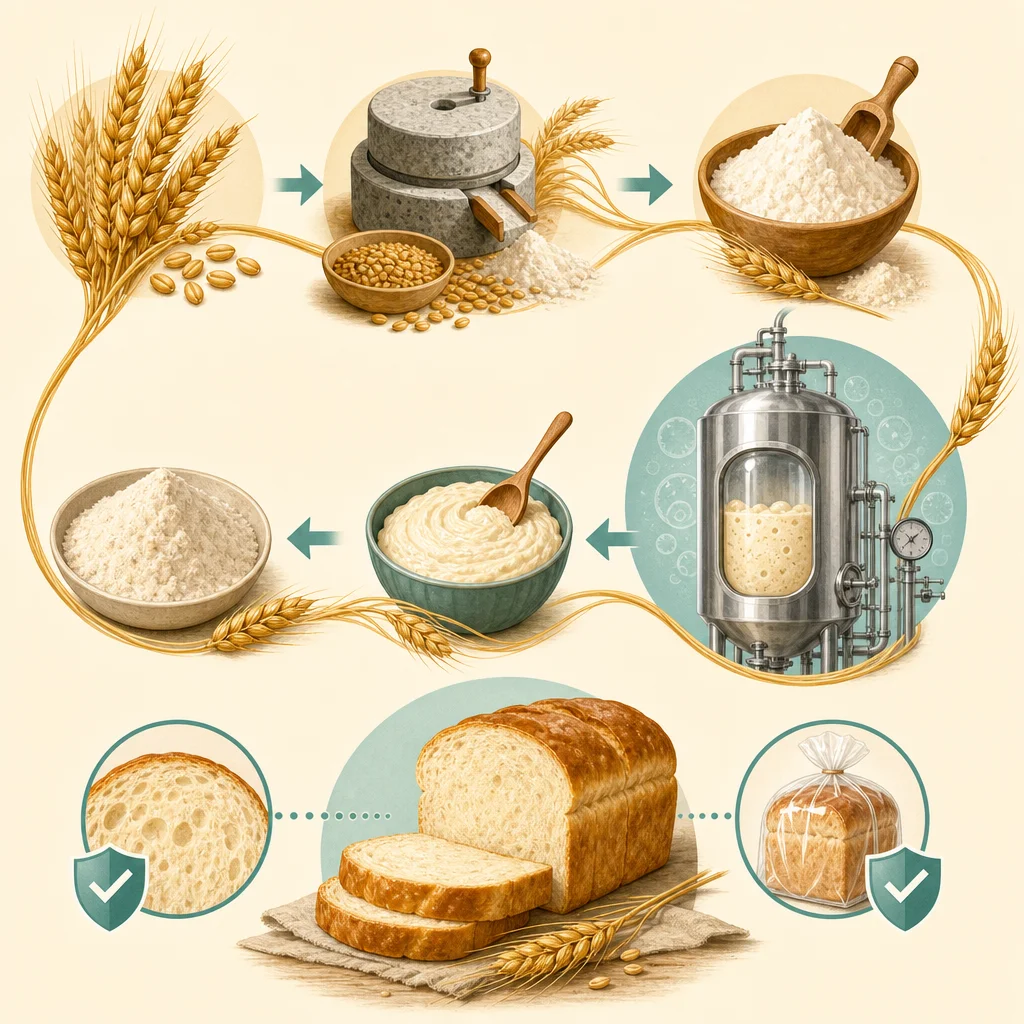
Cultured wheat flour can be both a wheat-derived ingredient and a shelf-life tool. Food cultures ferment a wheat-flour substrate and create acids or other metabolites that can help inhibit mold in bread, tortillas, and similar foods. That functional role does not make the wheat source disappear.

For wheat allergy or celiac shopping, the safest starting point is to treat cultured wheat flour as wheat-derived. The word cultured does not prove that allergenic wheat protein or gluten was removed. A compliant gluten-free claim is a separate finished-food statement that must meet the rules in the market where the package is sold.

What the Label Name Actually Tells You

The name contains three useful clues:

  • wheat identifies the source grain
  • flour identifies the substrate as a milled wheat ingredient rather than a generic purified acid
  • cultured indicates that microorganisms were used in producing the ingredient

It does not identify the microbial strain, fermentation time, organic-acid profile, residual protein, gluten concentration, supplier, or exact purpose in that recipe.

Commercial cultured-flour systems are not one universal standardized formula. FDA GRAS Notice 378 records one notifier's cultured wheat and other substrates, fermented with specified bacteria, for antimicrobial use in food. FDA's no-questions response concerns that notifier's GRAS conclusion; it is not approval of every cultured-wheat product or label.

A published U.S. patent on cultured wheat-flour systems also describes microbial production of propionic acid and use of the cultured material to inhibit mold in bread. That is useful process evidence, not a legal identity standard for every product bearing the name.

Label factReasonable conclusionWhat it does not prove
cultured wheat flourThe ingredient is wheat-flour-based and fermentedGluten was removed or the food is safe for wheat allergy
Appears in bread or tortillasIt may support mold control, freshness, flavor, or dough performanceIt is the only preservation method used
Contains: WheatWheat allergen disclosure appliesThe product contains a particular amount of gluten
Regulated gluten-free claimThe finished food must meet that market's gluten-free ruleThe ingredient is ordinary untreated cultured flour or safe for wheat allergy

Why Bakers Use It

Why Bakers Use It

Bread is vulnerable to mold during storage. Conventional formulas can use preservatives such as calcium propionate or propionic acid. A cultured wheat-flour ingredient can deliver fermentation-derived acids and other compounds through a flour-based preparation, supporting mold inhibition while fitting a label style that emphasizes familiar-sounding ingredients.

That does not make the ingredient preservative-free. Label language and technical function are different questions. An ingredient can perform preservation while the front of the package uses wording such as no artificial preservatives or made with cultured wheat flour, provided the claims meet applicable rules.

Nor does a familiar-sounding name settle whether the food is minimally processed. Culturing is a manufacturing step selected for a technical result. Shoppers can prefer that approach, but the ingredient list alone does not compare its effectiveness, nutrition, or processing intensity with a loaf preserved another way.

The function can also be broader than preservation. Depending on the preparation and recipe, cultured flour may affect acidity, flavor, dough behavior, or freshness. Its position in the ingredient list does not reveal which function mattered most. A peer-reviewed biscuit study found organic acids and antibacterial effects in its tested fermented wheat flour, but one preparation cannot define every commercial product.

U.S. 21 CFR 101.22(j) requires a chemical preservative to be named along with a description of its function. Whether a particular cultured-flour preparation is legally treated as a conventional ingredient or chemical preservative depends on its composition, use, and function. The name alone does not settle that classification.
Culturing Is Not the Same as Removing Gluten

Fermentation can alter food proteins. That broad fact is sometimes stretched into an unsafe shortcut: "fermented wheat is gluten-free." The label term does not support that conclusion.

Ordinary sourdough bread is still wheat bread. Fermentation time, selected microbes, enzymes, recipe conditions, and testing all affect how much gluten remains. Culturing a flour ingredient for preservation is not automatically a validated gluten-removal process.

Under 21 CFR 101.91, a U.S. food labeled gluten-free must meet defined ingredient conditions and contain less than 20 parts per million of gluten. A wheat-derived ingredient that has not been processed to remove gluten is incompatible with the claim. If a wheat-derived ingredient has been processed to remove gluten, the finished food still has to meet the threshold and the rule's labeling conditions.

The practical distinction is:

  • cultured describes a production step
  • processed to remove gluten is a specific regulatory condition
  • gluten-free is a regulated claim about the finished food

One phrase cannot be substituted for another.

Testing also belongs to the finished product and its controls. A supplier specification for one cultured flour cannot establish the gluten concentration of every bread that uses a similarly named ingredient, and package wording cannot substitute for representative testing where the rule requires compliance.

Wheat Allergy Is a Separate Question from Celiac Disease

Wheat allergy concerns immune reactions to wheat proteins. Celiac disease concerns an immune response to gluten from wheat, barley, rye, and related grains. A shopper may avoid the same ingredient for different reasons, but the evidence and clinical plan are not identical.

U.S. law names wheat as a major food allergen. In cultured wheat flour, the source is already stated in the ingredient name. A separate Contains statement may repeat wheat, but its absence does not turn the ingredient into non-wheat.

A gluten-free claim also does not automatically mean wheat-allergy safe. The U.S. rule permits certain wheat-derived ingredients processed to remove gluten when all conditions are met, while wheat-allergen disclosure can still apply. Someone with wheat allergy should follow their allergist's plan rather than treating a gluten-free logo as a universal wheat-free guarantee.

Use the established wheat allergy label guide for the broader allergy question and the celiac label-reading checklist for gluten sources beyond this one ingredient.

The EU and Canada Keep Allergen and Gluten Claims Separate Too

EU Regulation 1169/2011 requires wheat and other listed gluten-containing cereals to be declared and emphasized, subject to specific named exemptions. Cultured wheat flour is not created as a general exemption merely because it has been fermented.

Regulation (EU) No 828/2014 separately governs gluten-free and very low gluten statements. Gluten-free food as sold to the final consumer cannot contain more than 20 mg/kg gluten. That is a finished-food concentration rule, not an inference from the cultured ingredient name.

Canada likewise requires disclosure of prescribed allergens and gluten sources and regulates gluten-free claims. The CFIA allergen and gluten guidance is the correct reference for a Canadian package.

In every market, check the actual package rather than assuming that a U.S., EU, or Canadian product with a similar name uses the same formula.

Cultured Wheat Flour Is Not Every Cultured Ingredient

Labels may also show:

  • cultured dextrose
  • cultured sugar
  • cultured corn sugar
  • cultured rice flour
  • fermented wheat flour
  • sourdough culture or starter
  • cultured wheat flour blend

These names should not be collapsed into one ingredient. The named substrate matters for allergy and source-based rules. Cultured dextrose is not automatically wheat-derived, while cultured wheat flour explicitly is. A blend may include cultured flour plus another flour, acid, or carrier that should be read through any parentheses.

Likewise, fermented wheat flour may be close in purpose but does not reveal an identical supplier process. If the source or residual protein changes a high-stakes decision, ask the manufacturer about the exact ingredient in that product and market.

Where It Commonly Appears

Where It Commonly Appears

Cultured wheat flour is most plausible in foods where manufacturers want mold control or freshness support while preserving a bakery-style ingredient list:

  • packaged sandwich bread and rolls
  • tortillas, wraps, flatbreads, and pitas
  • bagels, English muffins, and buns
  • pizza crusts and refrigerated dough
  • cakes, muffins, and other shelf-stable baked goods
  • bakery inclusions or premixes used inside another food

It can appear near the end because a small amount performs a technical function. Position does not make the wheat source irrelevant. The separate guide to ingredients present at 2% or less explains why low placement does not equal allergen safety.

A Practical Cultured-Flour Checklist

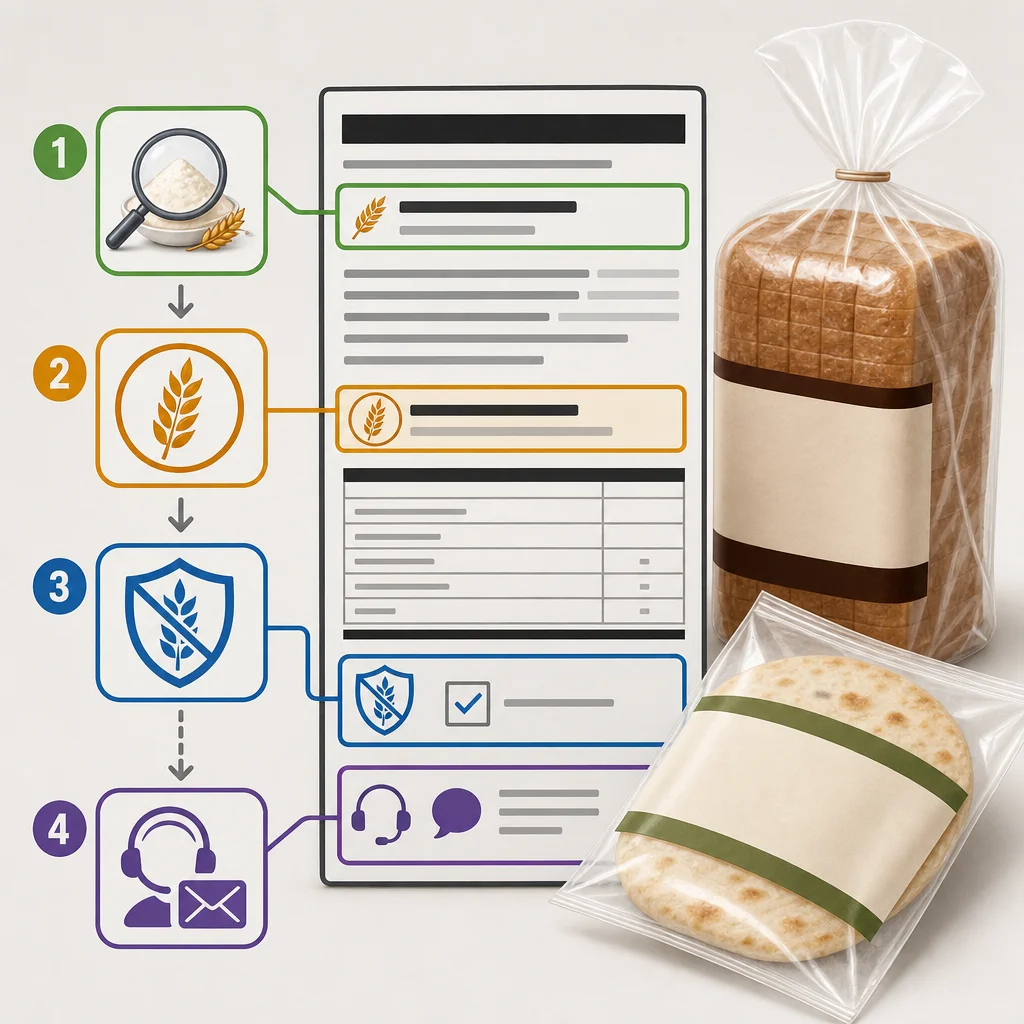
  1. Read the full name. Cultured wheat flour is wheat-derived; do not shorten it mentally to cultured flour.
  2. Separate function from source. Preservation or freshness support does not remove wheat identity.
  3. Do not infer gluten removal. Cultured is not a regulated synonym for processed to remove gluten.
  4. Check the correct finished-food claim. For celiac shopping, look for a compliant gluten-free statement and market-specific evidence.
  5. Keep wheat allergy separate. Follow required wheat disclosure and the individual's clinical plan.
  6. Expand blends and compound ingredients. Read parenthetical components of a cultured-flour blend or bakery premix.
  7. Ask for current specifications when necessary. Confirm substrate, gluten controls, and the exact product lot if the label leaves a decisive gap.

The IngrediCheck gluten-free scanner can help flag cultured wheat flour and related wheat terms against saved rules. It does not certify gluten concentration, verify supplier fermentation, or replace a regulated claim.

Cultured wheat flour can help preserve a food and still remain relevant to wheat and gluten decisions. Treat the name as evidence of source and fermentation, then use the package's allergen disclosure, regulated gluten-free claim, and manufacturer controls for the questions it cannot answer.

Frequently Asked Questions

What is cultured wheat flour?

Cultured wheat flour is a wheat-flour-based fermented ingredient. Commercial versions can carry fermentation products such as organic acids and are used in baked foods for functions that can include mold inhibition and shelf-life support. The name is not one universal formula.

Is cultured wheat flour a preservative?

It can perform a preservative function in bread, tortillas, and other bakery foods by supplying fermentation-derived acids or metabolites that inhibit mold. Exact composition and function depend on the supplier and recipe.

Is cultured wheat flour gluten-free?

Do not assume so. Cultured wheat flour is wheat-derived, and the word cultured does not prove that gluten was removed. A regulated gluten-free claim is a separate finished-food statement with its own ingredient and testing requirements.

Is cultured wheat flour the same as cultured dextrose?

No. The source named on the label matters. Cultured wheat flour begins with wheat flour, while cultured dextrose or cultured sugar describes a different fermentation substrate and must be evaluated under its own ingredient and allergen facts.

Next Label Check

Follow the scanner, hub, and ingredient paths connected to this guide

Get the app for clearer label decisions.

Scan labels, see what fits your food notes, and read the why in plain English.

IngrediCheck app