Food Policy Watch

Product of USA Meat Labels: What the 2026 Rule Means

The USDA's 2026 compliance date changed what voluntary Product of USA claims mean on meat, poultry, and egg products. Learn the origin test and its limits.

Aug 14, 2026|8 min read
By Sanket Patel|Updated 2026-08-14|3 sources|Editorial standards
Product of USA Meat Labels: What the 2026 Rule Means

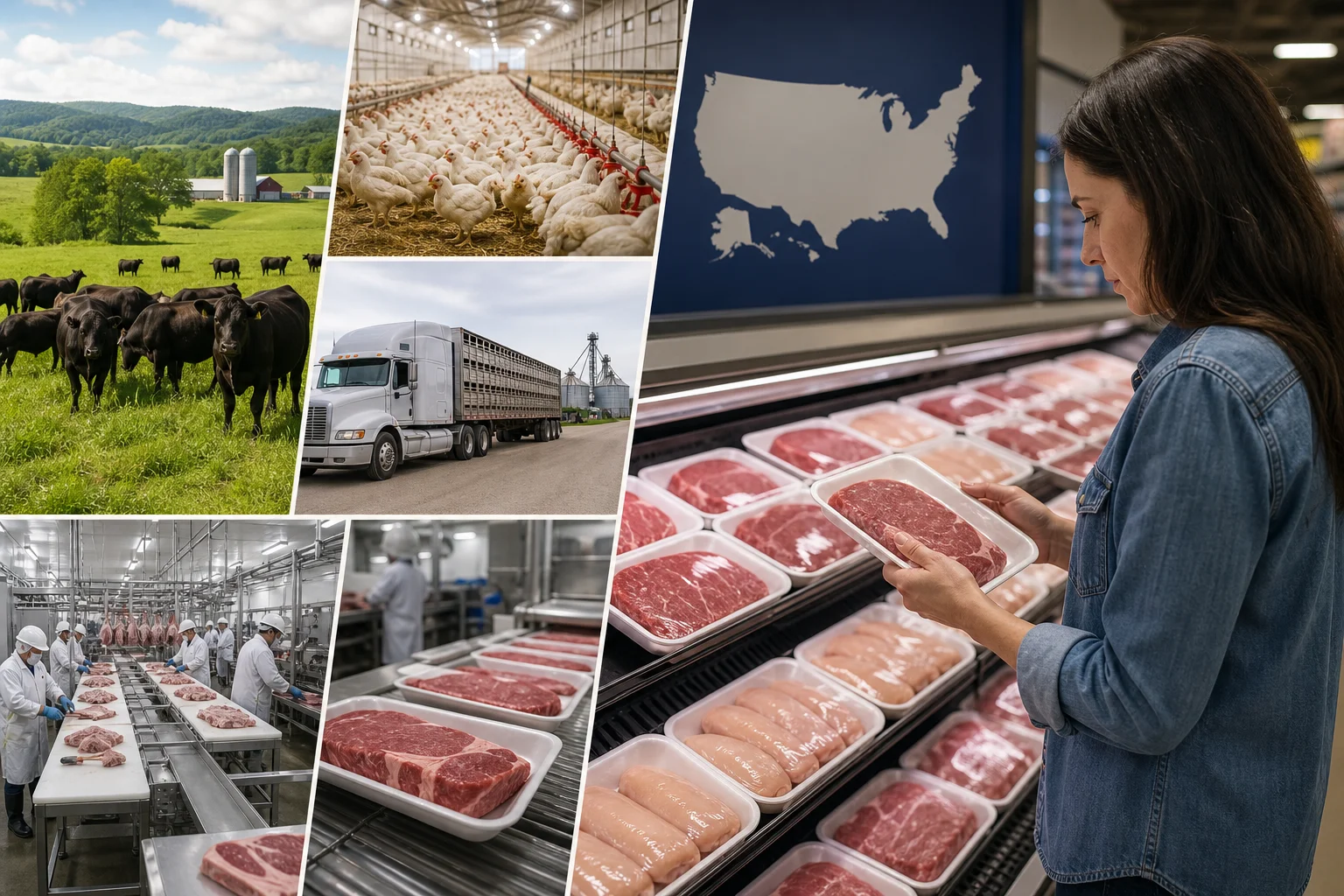
Product of USA has long looked more precise than it was. Before the current USDA rule, imported livestock or imported meat could sometimes be associated with a U.S.-origin claim after processing in the United States. Consumer research found that many shoppers read the claim more broadly, as if it described the animal's entire path.

The Food Safety and Inspection Service changed that standard. As of January 1, 2026, establishments choosing to use Product of USA, Made in the USA, or a covered U.S.-origin variation on FSIS-regulated products must meet the new criteria.

The claim remains voluntary. A package without it is not automatically imported, inferior, or noncompliant. A package with it is making an origin statement, not a promise about safety, animal welfare, grade, or organic production.
The Short Answer

Package situationWhat the 2026 rule means
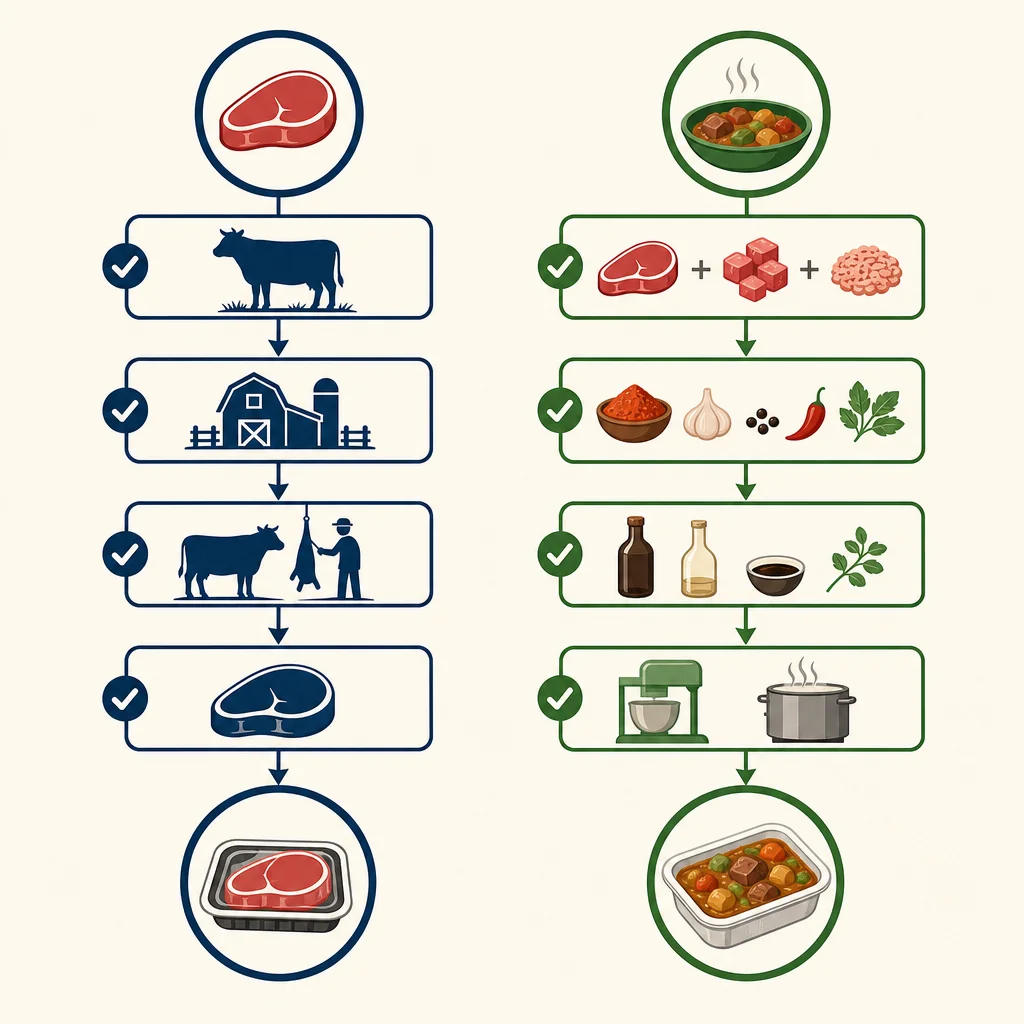
Single-ingredient FSIS product says Product of USA or Made in the USAThe product must come from animals born, raised, slaughtered, and processed in the United States
Multi-ingredient FSIS product makes the claimAll FSIS-regulated components must meet the U.S.-origin criteria, with separate conditions for other ingredients and limited exceptions
Package makes no U.S.-origin claimThe rule does not require the company to add one
Package says only Processed in the USA or another qualified claimRead the exact words. A narrower statement must identify the processing step or portion it actually describes

The exact wording matters. Product of USA is broader than a truthful claim about one defined processing step. The same market-specific reading habit is central to our guide on reading food labels abroad.

Why USDA Changed the Standard

FSIS published the final rule in March 2024. The agency said the previous policy could allow the voluntary claims on products from animals that were born, raised, and slaughtered abroad but underwent processing in the United States.

That gap made the claim hard to reconcile with ordinary consumer expectations. The new rule ties an unqualified U.S.-origin statement to the production steps shoppers generally assume it covers.

The rule took effect in May 2024 and allowed industry time to revise labels, records, and supply chains. January 1, 2026 was the mandatory compliance date for establishments that continue to make the covered voluntary claims.

The Single-Ingredient Test

The Single-Ingredient Test

For a single-ingredient meat, poultry, or egg product under FSIS jurisdiction, Product of USA and Made in the USA require a U.S. chain from animal origin through processing.

The animal must be:

  • born in the United States
  • raised in the United States
  • slaughtered in the United States
  • processed in the United States

This is stricter than saying the package was cut, ground, repacked, or otherwise handled domestically. A steak from imported cattle does not become a qualifying unqualified U.S.-origin product merely because the final cutting or packaging occurred in a U.S. plant.

The rule also applies to voluntarily inspected eligible products in its defined scope. It should not be generalized to every food overseen by the FDA or to non-food goods using separate origin standards.

Multi-Ingredient Products Use a Different Test

A frozen meal, sausage, breaded poultry product, or prepared egg product can combine FSIS-regulated components with ingredients overseen under other frameworks. The rule therefore needs more than a single-animal test.

For an unqualified U.S.-origin claim on a multi-ingredient product, every FSIS-regulated component must meet the applicable domestic-origin conditions. The rule also addresses other ingredients and recognizes limited exceptions, including spices and flavorings.

That exception should not be restated as β€œall non-meat ingredients can be imported.” The formula, component category, and exact claim matter. The establishment is responsible for supporting the claim with records.

Consumers usually cannot verify the full origin dossier from the ingredient list. The purpose of the claim is to summarize that supported origin conclusion on the package.

Qualified Claims Can Be Narrower

The rule does not prohibit every statement about U.S. activity when the full Product of USA test is not met. A company can use a truthful, non-misleading qualified claim that describes the relevant step, provided it complies with the rule.

Examples could identify that a product was sliced and packaged in the United States or name another specific preparation step. The exact phrase tells you what is being claimed. It should not be mentally upgraded into a statement about birth, raising, slaughter, and every ingredient.

This makes the reading rule straightforward:

  • unqualified Product of USA describes the broader origin test
  • qualified wording describes only the named step or component
  • no claim leaves origin unanswered by this voluntary framework

What Product of USA Does Not Prove

What Product of USA Does Not Prove

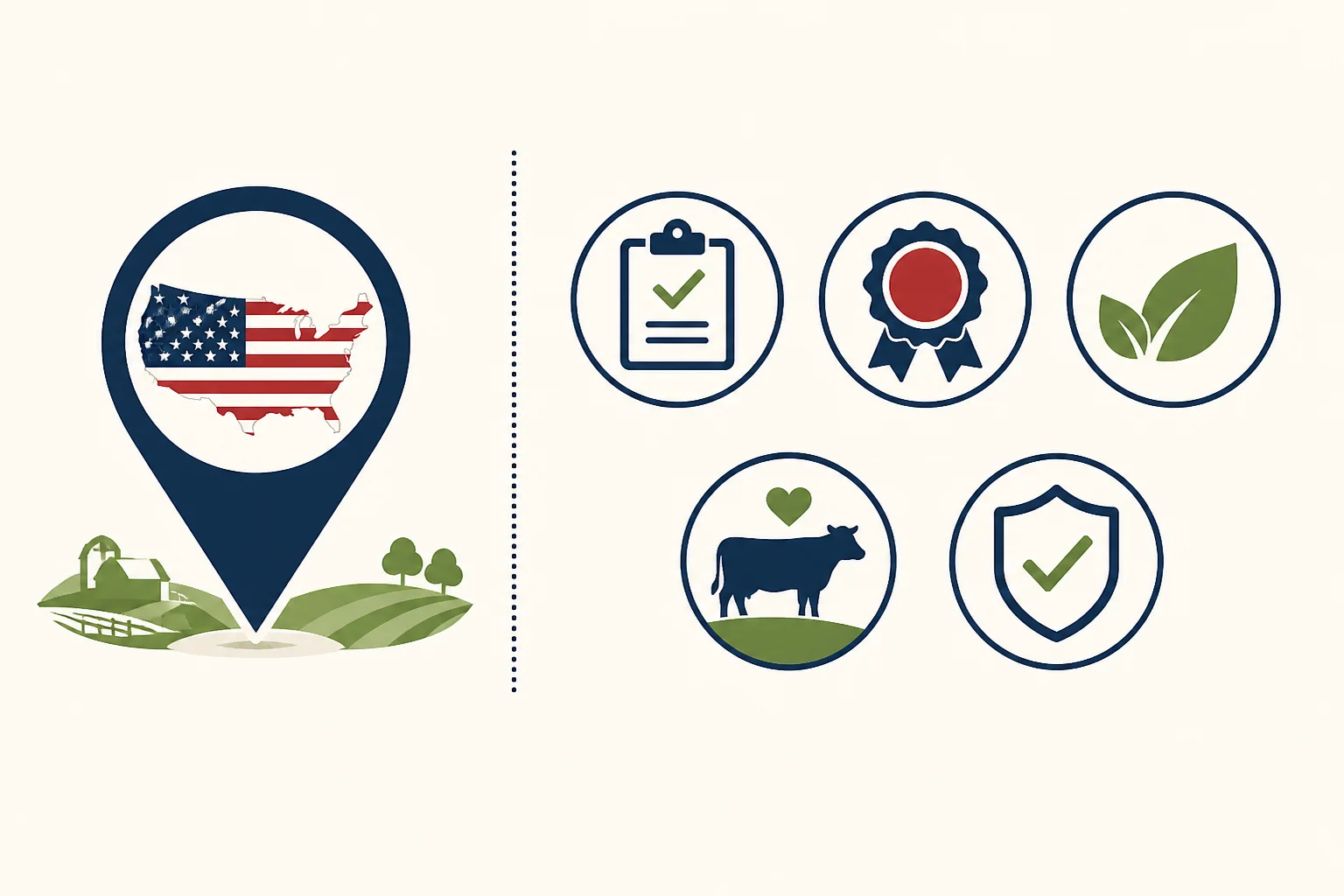
It is not the USDA inspection mark

FSIS inspection addresses regulatory oversight and establishment identification. A U.S.-origin claim answers a different question. Imported product can be legally sold after meeting applicable import and inspection requirements without becoming Product of USA under the new claim standard.

It is not a grade

USDA grade terms describe quality characteristics under separate programs. Origin does not tell you the grade, marbling, tenderness, or eating quality.

It is not an animal-welfare certification

The claim does not establish pasture access, stocking density, transport conditions, antibiotic practices, or a particular welfare standard.

It is not an organic claim

Organic production has its own requirements and certification. Domestic origin alone does not establish organic status.

It is not a safety ranking

Country of origin does not replace handling, storage, recall checks, cooking guidance, or regulatory compliance. A domestic product can be recalled, and a legally imported product can be safe and compliant.

Records Sit Behind the Claim

FSIS requires establishments using these voluntary claims to maintain documentation supporting them. Supply-chain records are important because the finished package cannot show every farm, animal movement, slaughter record, formulation detail, and processing step.

The agency's updated label-approval guidance helps firms understand the records and claim formats. A shopper does not need to audit those files at the store, but knowing that the claim must be substantiated explains why a vague marketing impression is not enough.

If a specific product's origin is especially important to you, contact the manufacturer and ask for the scope of the claim. This is more reliable than inferring an animal's history from a flag graphic, brand name, or U.S. establishment number.

What About Imported Meat Processed in the United States?

Imported meat can be legally processed, inspected, and sold in the United States. Under the new voluntary-claim standard, domestic processing alone does not support an unqualified Product of USA claim for a single-ingredient product when the animal was born, raised, or slaughtered abroad.

A truthful qualified statement can describe the U.S. work that actually occurred. This distinction preserves room for accurate manufacturing information without letting a final packaging step stand in for the animal's full origin.

It also keeps two questions separate. Import eligibility asks whether the product entered and moved through the regulated system lawfully. The voluntary origin claim asks whether the package can represent the product as U.S.-origin under the new test. A shopper should not treat the absence of the claim as evidence that the product bypassed inspection.

Restaurant Menus and Online Product Pages

The retail package rule does not guarantee that every menu, delivery listing, or marketplace image reproduces the claim accurately. Online photos can show old artwork, and a restaurant description may use marketing language outside the exact package context. When origin drives the purchase, check the current product label or ask the seller to identify the claim and the product lot rather than relying on a thumbnail.

A Six-Step Package Check

  1. Read the exact origin phrase. Distinguish Product of USA from a narrower statement about processing or packaging.
  2. Identify the product type. A single cut and a multi-ingredient prepared food follow different claim tests.
  3. Keep the claim voluntary. Missing wording does not prove foreign origin.
  4. Separate origin from other marks. Inspection, grade, organic certification, and animal-welfare programs answer different questions.
  5. Check the ingredient list for dietary needs. U.S. origin does not establish allergen, halal, kosher, vegetarian, or additive suitability.
  6. Ask for details when they matter. Manufacturer records, not package imagery, support the claim.

The 2026 rule makes an unqualified U.S.-origin claim more literal, but it does not turn it into a universal product grade. IngrediCheck can help review the ingredient and dietary evidence on a meat or prepared-food label, while the Product of USA wording and the manufacturer's supporting records answer the separate origin question.

Next Label Check

Follow the scanner, hub, and ingredient paths connected to this guide

Get the app for clearer label decisions.

Scan labels, see what fits your food notes, and read the why in plain English.

IngrediCheck app