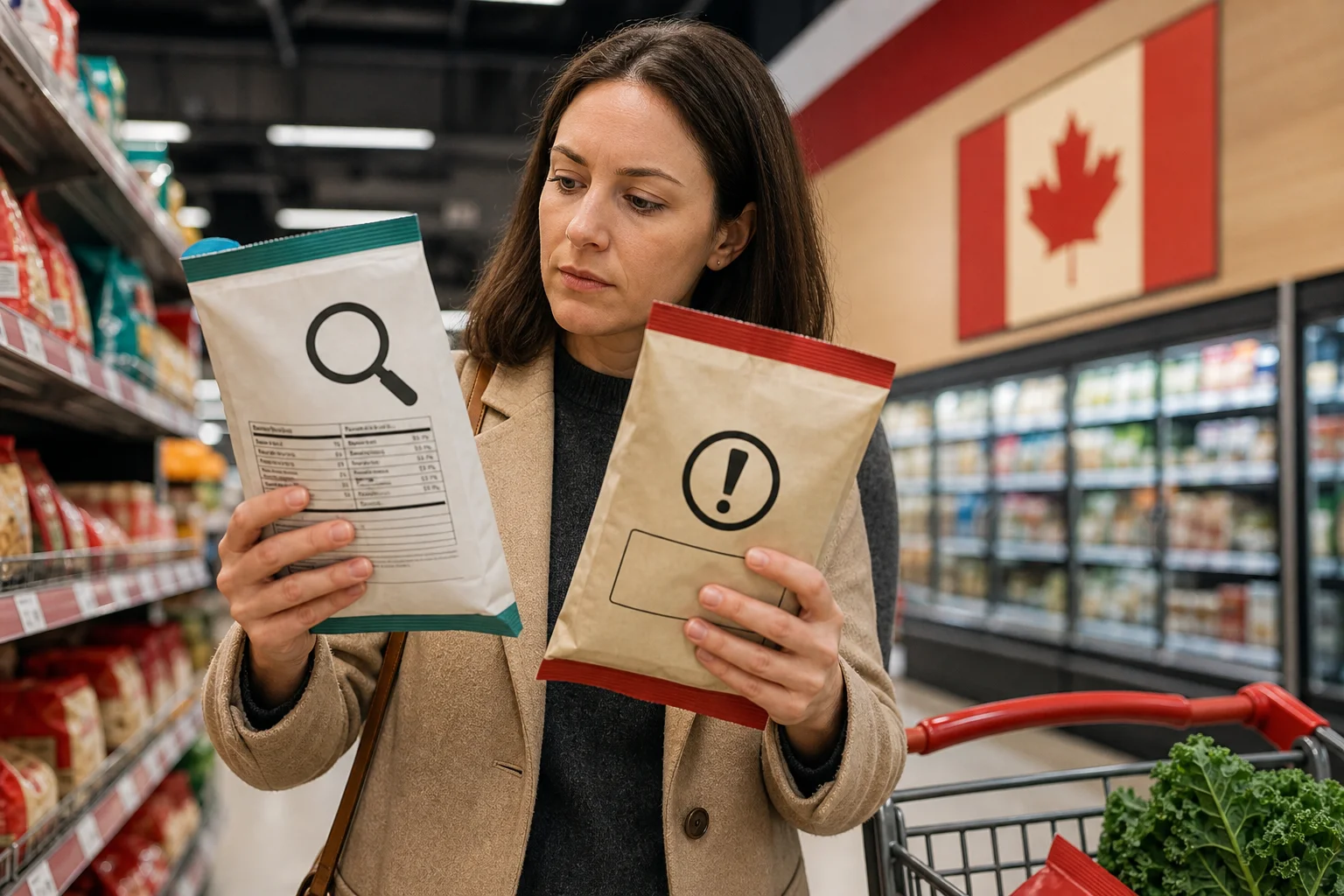
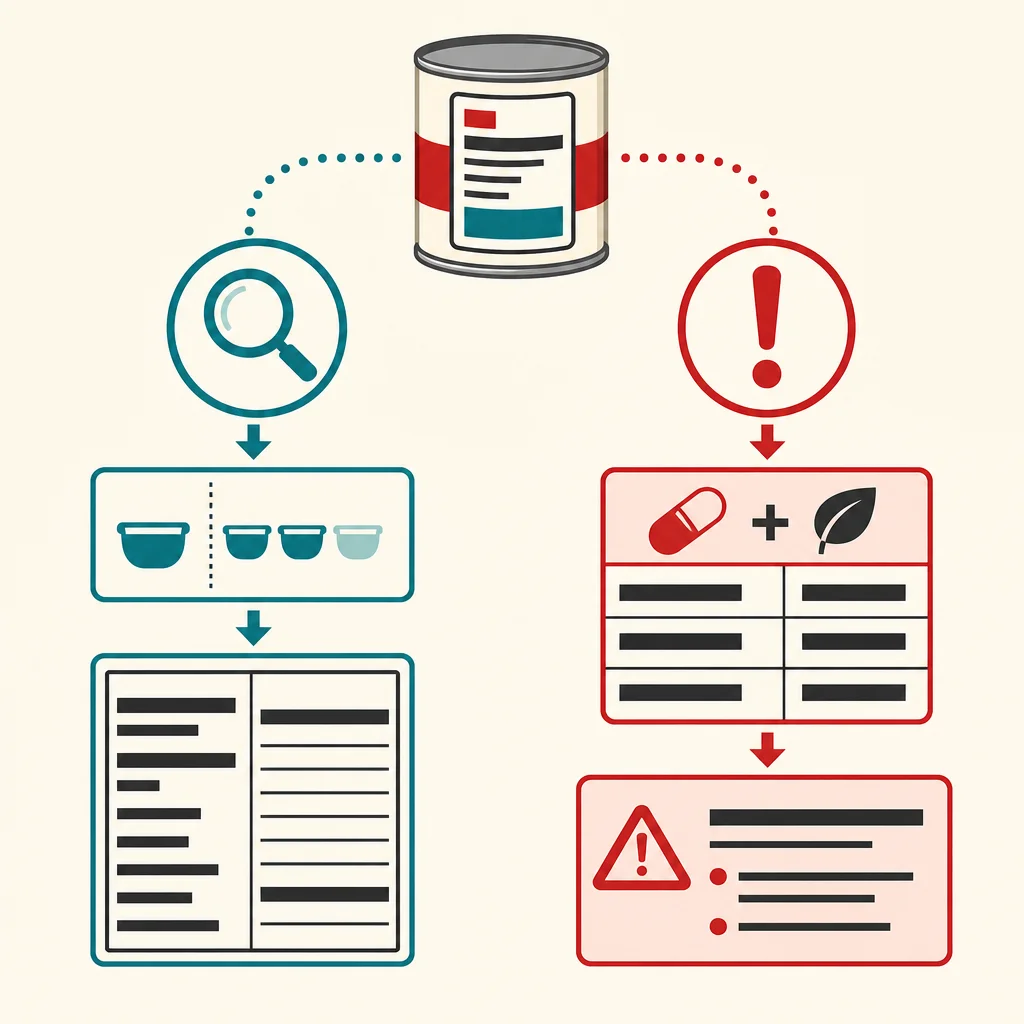
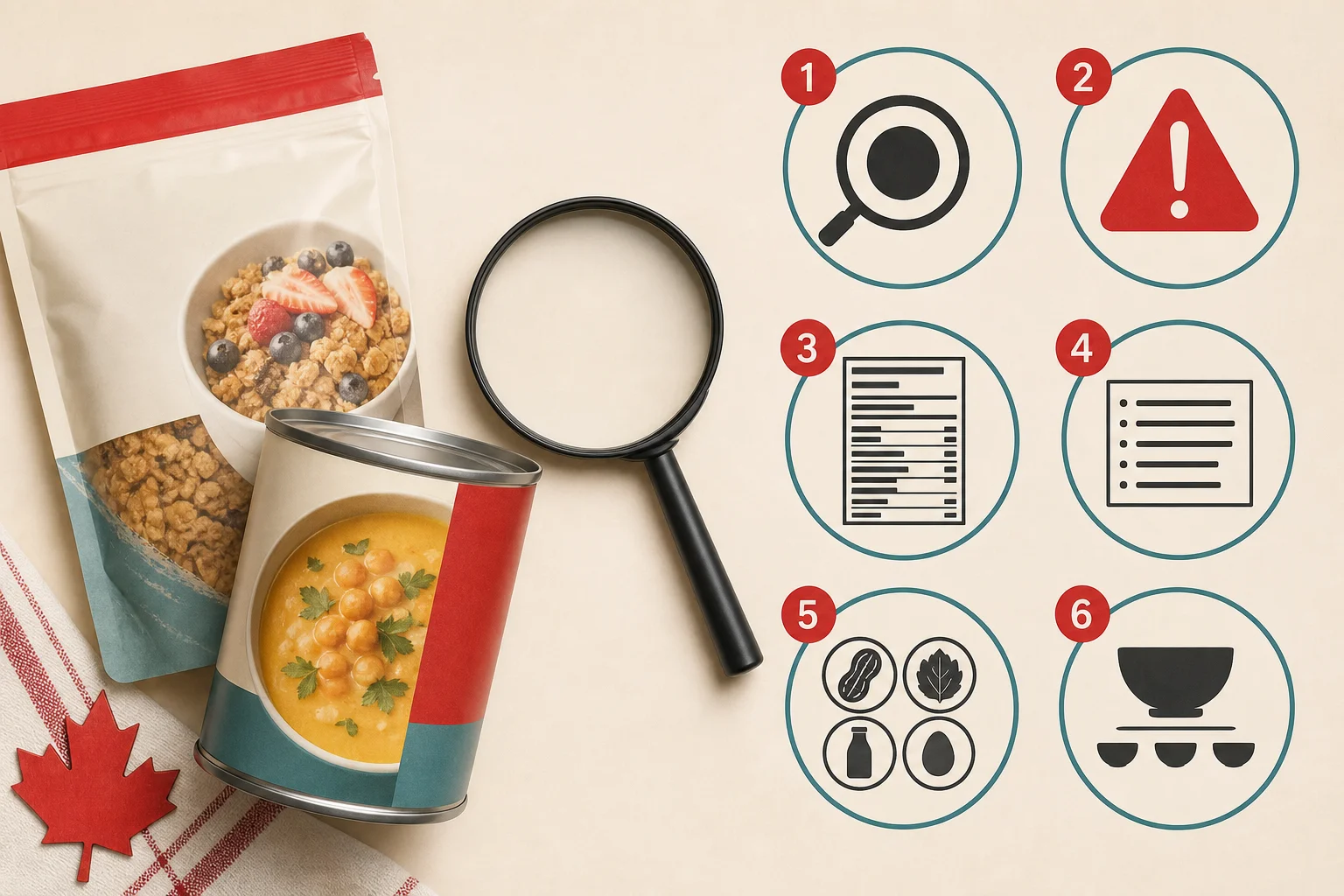
Health Canada's front-of-package nutrition symbol is designed to make three nutrients of public-health concern easier to spot: saturated fat, sugars, and sodium. A covered food that meets or exceeds the prescribed threshold must display the symbol naming the relevant nutrient or nutrients.
The symbol normally appears in the upper portion of the principal display panel. It is meant to be visible before a shopper turns the package around. The magnifying-glass design and standardized wording make the signal consistent across brands.
The symbol does not tell you the exact amount. For that, use the Nutrition Facts table. It also does not say whether the food contains an allergen, whether an ingredient is banned, or whether the food fits a specific medical or dietary plan. The low-sodium label guide shows how a nutrient-specific comparison needs more context than one front-panel cue.
Thresholds depend on the food context
Canada's rules use prescribed daily-value thresholds and product categories. The trigger is not one universal number for every package. Serving size and whether a food is a general prepackaged food, a small reference-amount product, or a main dish can affect how the rule applies.
This is why two products that look similar can display different combinations of words in the symbol. It is also why a shopper should compare the stated serving size instead of treating the front symbol as a complete nutritional ranking.
Exemptions prevent a simple healthy-versus-unhealthy reading
Some foods do not have to carry the symbol even when they contain one of the nutrients named by the system. Health Canada describes exemptions for technical categories and foods including qualifying fruits and vegetables, certain plain dairy products, raw single-ingredient ground meat and poultry, and foods used for the same purpose as butter, sugar, salt, or oil.
An exemption reflects how the regulation is designed. It is not an endorsement of unlimited consumption, and it does not make two exempt foods nutritionally equivalent.