Food Policy Watch

Health Star Ratings: What FSANZ P1067 Would Change

FSANZ is considering mandatory Health Star Ratings for most packaged foods that require nutrition information. The proposal is active, but it is not law yet.

Aug 1, 2026|8 min read
By Sanket Patel|Updated 2026-08-01|3 sources|Editorial standards
Health Star Ratings: What FSANZ P1067 Would Change

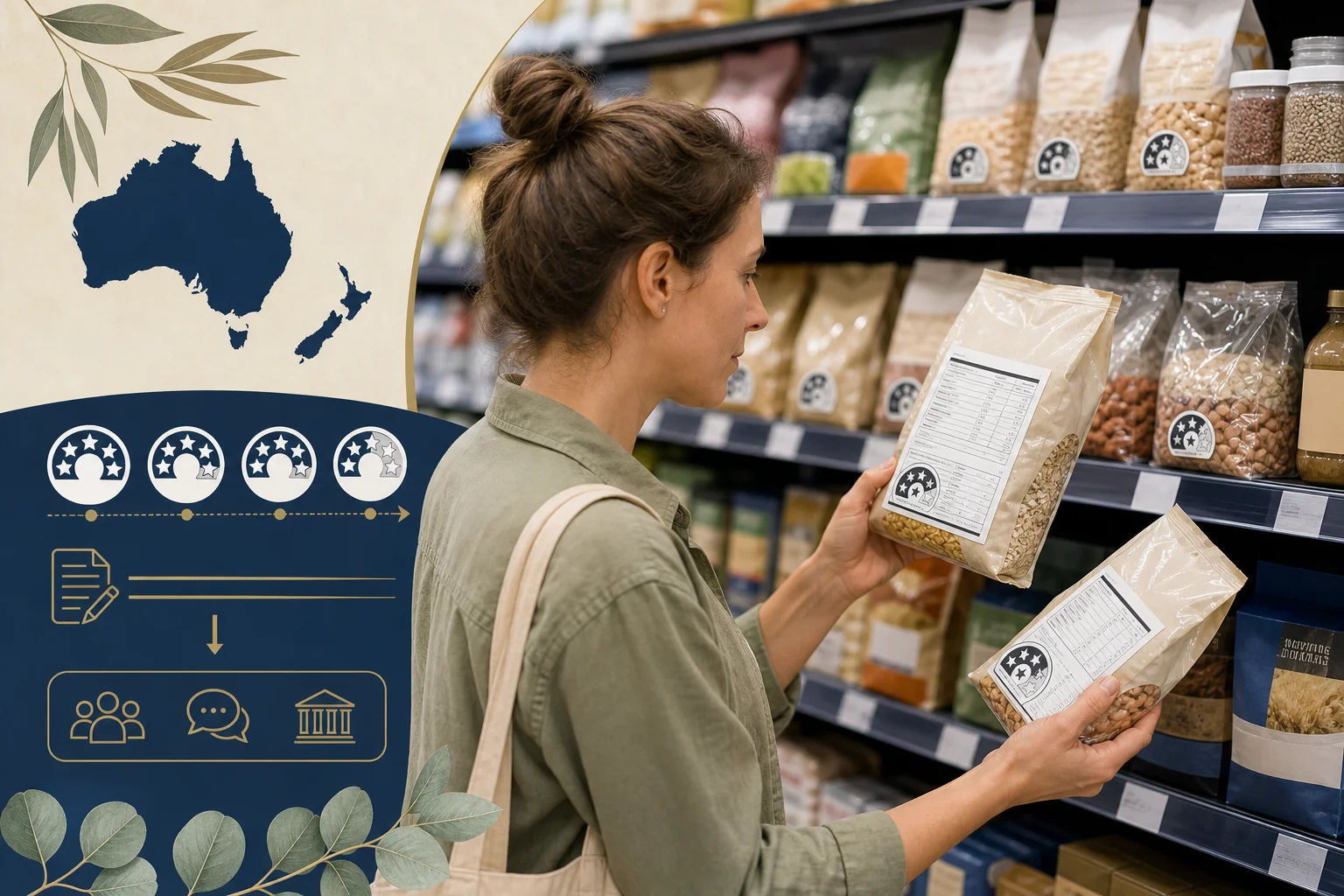
Health Star Ratings are familiar on many Australian and New Zealand packages, but their presence is still voluntary. A 2026 proposal could change that.

Food Standards Australia New Zealand opened Proposal P1067 to consider putting the Health Star Rating system into the Food Standards Code. The agency is examining whether most packaged retail foods that require a Nutrition Information Panel should also have to display a standardised star symbol.

The proposal is significant. It is also unfinished. The first public consultation closed on July 5, 2026, and a second consultation is expected under FSANZ's major procedure. No final Code variation has made the stars mandatory as of August 31, 2026.

That legal status belongs at the top of every explanation: P1067 is a proposal, not a current mandate.
The Short Answer

QuestionCurrent answer
Are Health Star Ratings mandatory now?No. The system remains voluntary while P1067 is assessed
What is FSANZ considering?Mandatory, standardised display on most packaged retail food that requires a Nutrition Information Panel
Is the formula part of the proposal?Yes. FSANZ is considering prescribing the algorithm in the Code
Is the first consultation the final decision?No. A second consultation and further statutory steps are expected
Would a star replace the ingredient list or allergen statement?No. It would be another label layer with a different purpose

The most useful way to follow P1067 is to separate today's voluntary system from the possible future Code requirements.

That separation prevents a live consultation from being mistaken for a rule already governing every shelf.

How the Current Health Star Rating Works

The Health Star Rating, or HSR, is a front-of-pack nutrition labelling system used in Australia and New Zealand. A product can receive from half a star to five stars, with more stars representing a more favourable nutrient profile within the system.

The calculation weighs components associated with higher chronic-disease risk, such as energy, saturated fat, sugars, and sodium, against positive components such as fruit, vegetable, nut, and legume content, protein, and fibre. The detailed algorithm and category rules matter. A star value is not a direct count of good or bad ingredients.

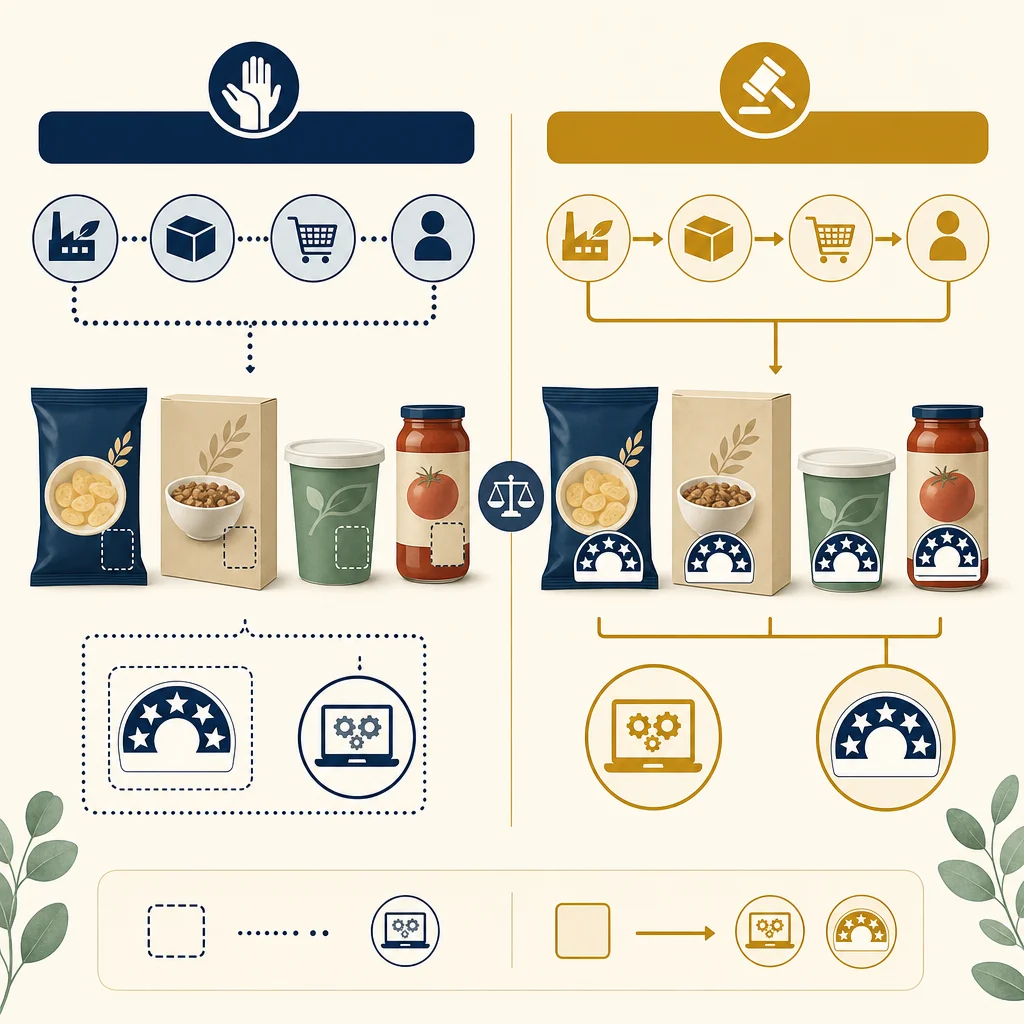
Manufacturers currently choose whether to display the rating on eligible products. That creates uneven coverage. One cereal may show stars while a competing cereal does not, even though both have Nutrition Information Panels.

Voluntary uptake has been the central policy concern. A government review recommended making the system mandatory if voluntary implementation did not meet an agreed target. P1067 is the formal standards process now considering that shift.

What P1067 Is Considering

What P1067 Is Considering

The FSANZ proposal page identifies three core elements under consideration:

  1. requiring an HSR symbol on most packaged retail foods for which a Nutrition Information Panel is required
  2. standardising how and where the symbol appears
  3. prescribing the HSR algorithm in the Food Standards Code

Moving the algorithm into the Code would be more than a graphic-design change. It would turn key calculation rules into enforceable food standards rather than leaving the system solely in an administrative framework.

The word most is essential. A proposal with exemptions or special categories is not the same as a star on every item in a supermarket. Unpackaged foods, foods without a required Nutrition Information Panel, and any categories excluded by a final variation could sit outside the mandate.

The 2026 Timeline

FSANZ published the P1067 proposal page on April 21, 2026. The first call for submissions ran from May 7 through July 5. The page was updated on June 11 during that consultation period.

Because P1067 follows the major procedure, the first consultation is not the last public step. FSANZ says a second call for submissions is expected. The agency must assess evidence, consider submissions, develop any draft variation, and follow its statutory approval process.

Possible outcomes include:

  • a final variation resembling the initial proposal
  • a narrower mandate with more exemptions
  • different implementation timing or transition periods
  • changes to presentation or the algorithm
  • abandonment or delay if the evidence does not support the proposed approach

Until those steps occur, package artwork is governed by the current system. A company can display a valid HSR voluntarily, and a product without one is not violating a P1067 mandate that does not yet exist.

What a Health Star Rating Can Tell You

An HSR provides a standardised summary of selected nutrition information. It can help compare broadly similar packaged products when the ratings were calculated under the same system.

For example, comparing two breakfast cereals can be more meaningful than comparing a cereal with olive oil. Product categories and the algorithm shape the result, so stars should not be treated as a universal league table for every food.

The symbol may also make nutrient differences more visible before the shopper turns the package around. That is the practical reason front-of-pack systems exist: they reduce the effort needed to notice a nutrition signal.

What the Stars Cannot Prove

A star is not an ingredient-safety certification

The HSR algorithm is based on nutrition-profile inputs. It does not certify that every additive is desirable, that a recipe is minimally processed, or that a product lacks an ingredient a shopper personally avoids.

A star is not an allergen check

A higher-star food can contain peanuts, milk, wheat, soy, sesame, or another allergen. Mandatory allergen declarations continue to answer that question. The Australia and New Zealand PEAL label guide explains the bold ingredient and Contains format.

A star is not a dietary compatibility badge

The rating does not prove vegan, vegetarian, halal, kosher, gluten-free, low-FODMAP, or suitable for a medical diet. Those decisions depend on ingredients, processing, certification, and individual rules.

No star does not currently mean a low score

While the system is voluntary, absence may simply mean the manufacturer did not display it. That inference could change if a future mandate takes effect, but exemptions and transition rules would still matter.

How to Read the Stars With the Rest of the Label

How to Read the Stars With the Rest of the Label

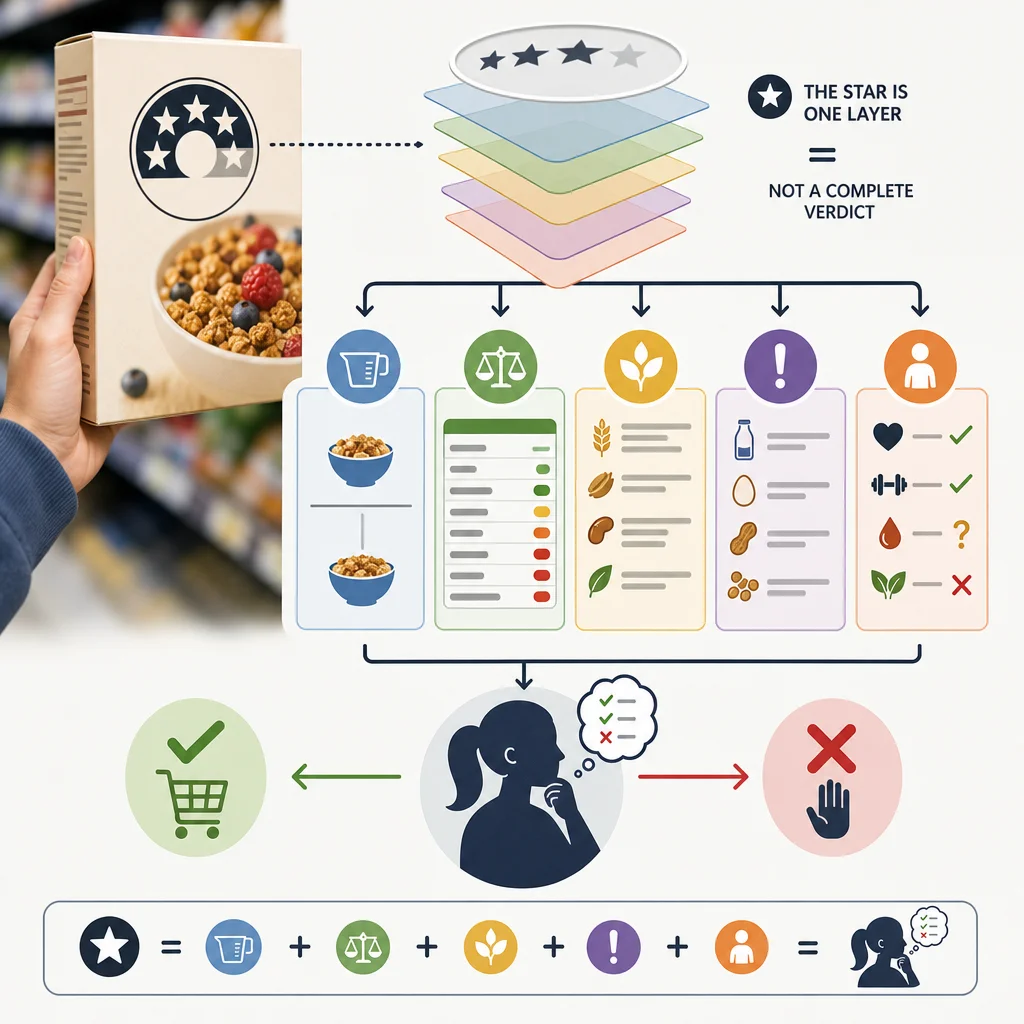
Use the HSR as the start of a comparison, not the end.

  1. Compare similar foods. A within-category comparison is generally more useful than comparing unrelated products.
  2. Check the Nutrition Information Panel. Review energy, saturated fat, sugars, sodium, protein, and serving information directly.
  3. Normalise the quantity. Per-100-gram or per-100-millilitre figures can help when serving sizes differ.
  4. Read the ingredient list. The star does not reveal ingredient source, additive identity, or the full recipe.
  5. Read allergen declarations separately. Do not infer safety from the number of stars.
  6. Apply your own dietary rule. A general population nutrition profile may not match a clinical or values-based restriction.

This layered approach also avoids a common mistake with any front-of-pack symbol: interpreting a summary score as a complete judgment about the food.

Questions P1067 Still Has to Resolve

Which foods would be covered?

The proposal describes most packaged retail foods that require a Nutrition Information Panel. Final drafting would need precise exemptions, category treatment, and application rules.

How would the symbol be standardised?

Placement, size, contrast, and permitted formats affect whether shoppers can compare packages. P1067 contemplates standardisation, but the final technical requirements cannot be assumed before a draft variation is settled.

When would businesses have to comply?

Even an approved change normally needs commencement and transition arrangements. A future decision date would not necessarily be the day every package on shelves changed.

Would the algorithm change?

The proposal considers prescribing the algorithm. Consultation could affect technical details, category rules, or later review mechanisms. Reporting a fixed future formula before the process ends would be premature.

Three Headlines to Reject

“Australia has made Health Star Ratings mandatory.” Not yet. FSANZ is considering it.

“Every food will need stars.” The proposal focuses on most packaged retail food with a required Nutrition Information Panel, not every edible item.

“Five stars means healthy for everyone.” The score summarises selected nutrition factors. It does not incorporate every allergy, medical need, processing concern, or personal diet.

The distinction between proposal and law is especially important for news coverage. A consultation announcement can generate a confident headline months or years before a final standard or compliance date.

The Practical Takeaway

P1067 could make one of Australasia's most visible nutrition symbols far more consistent across packaged food. The policy logic is easy to understand: a voluntary comparison tool is less useful when many packages omit it.

But the process is still live. Shoppers should continue to treat the current absence of stars as ambiguous, watch for the second consultation and any draft variation, and avoid assuming a compliance date that FSANZ has not set.

IngrediCheck can complement a Health Star Rating by reading the ingredients and highlighting conflicts with your allergies, dietary preferences, or avoided additives. Use the stars for their intended nutrition snapshot, then use the full label for the questions a star score was never designed to answer.

Next Label Check

Follow the scanner, hub, and ingredient paths connected to this guide

Get the app for clearer label decisions.

Scan labels, see what fits your food notes, and read the why in plain English.

IngrediCheck app