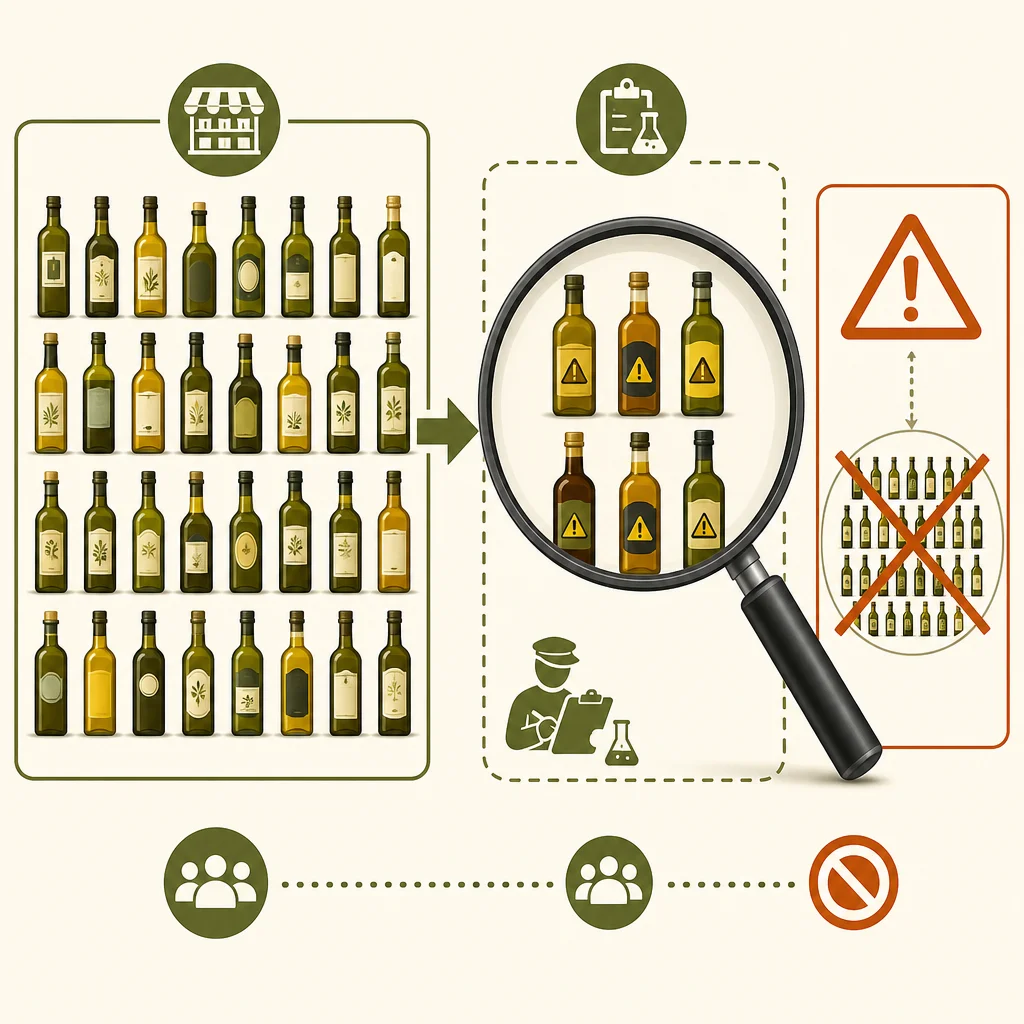
Canada's latest food-fraud report contains a striking olive-oil number: 33% of 85 targeted imported samples produced an unsatisfactory result. That number deserves attention. It does not mean one third of all olive oil sold in Canada is fake.
The Canadian Food Inspection Agency, or CFIA, deliberately targets higher-risk products, establishments, and importers in part of its surveillance. The agency says those inspectorate samples are not representative of overall marketplace compliance.
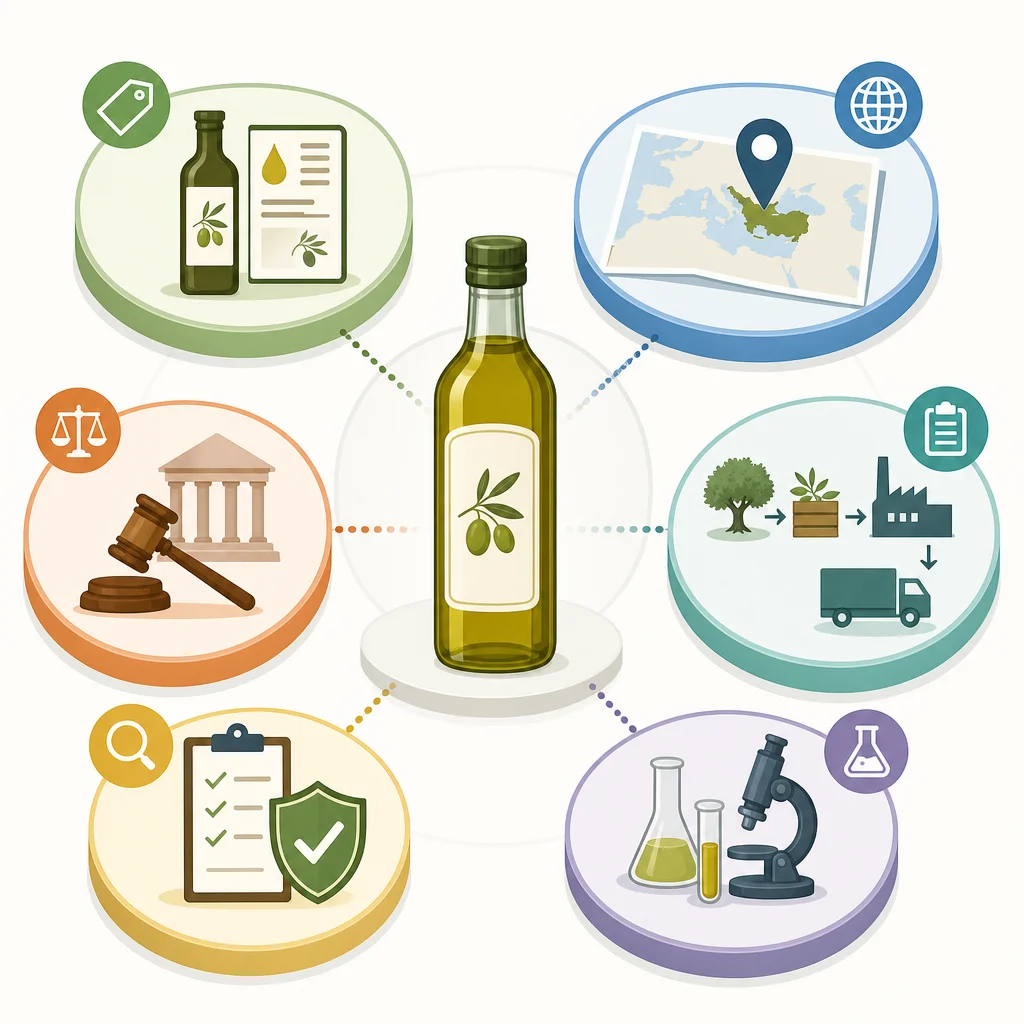
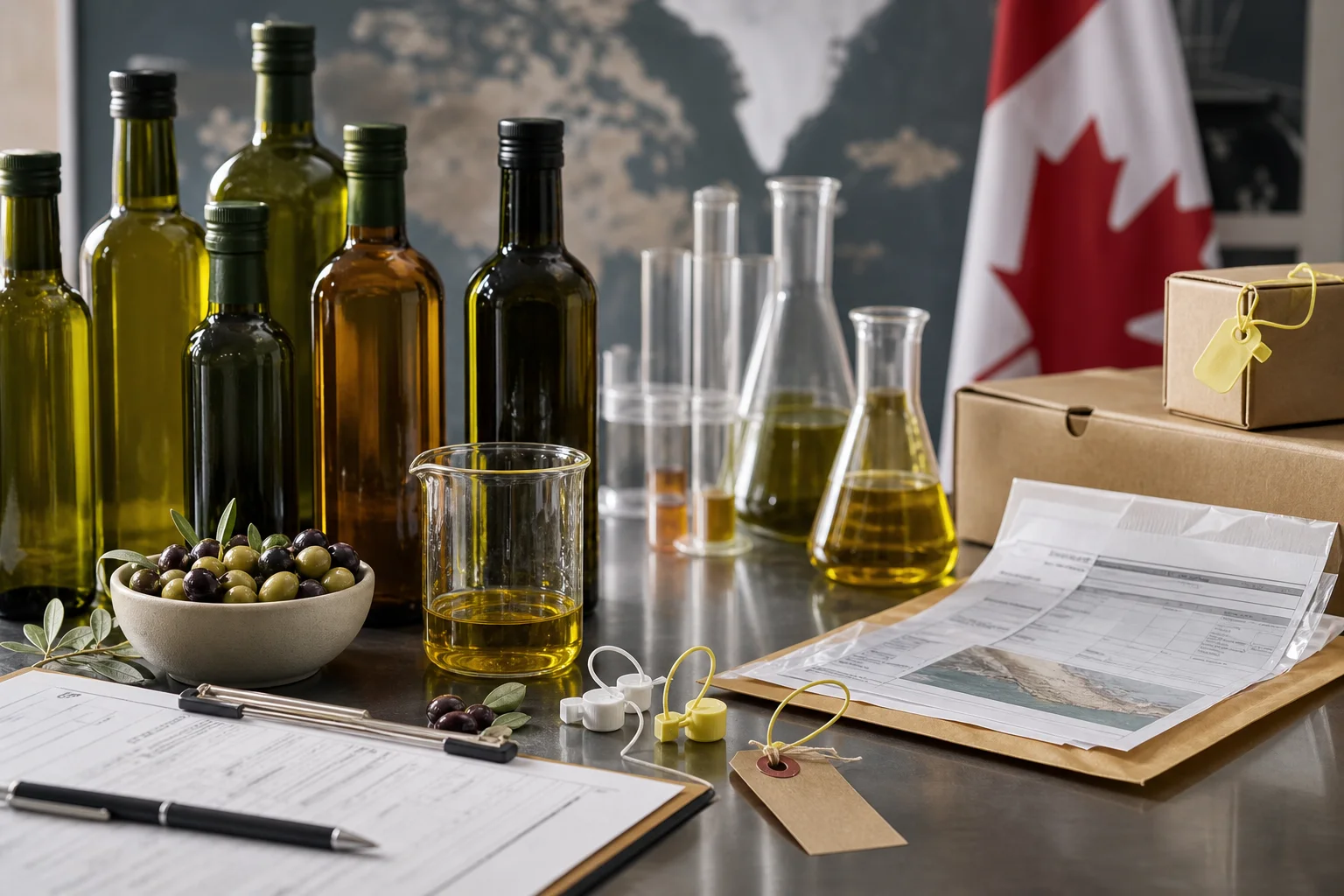
The useful story is therefore more precise. Targeted testing found a meaningful problem among the samples selected for closer scrutiny. It also shows why a bottle's ingredient list cannot prove authenticity on its own. Detecting substitution or misrepresentation may require laboratory analysis, traceability records, and enforcement work.