Food Policy Watch

EU Honey Origin Labels: Source Countries Required in 2026

EU honey blends labelled from June 14, 2026 now need country-by-country origin information. Learn the order, percentage options, old-stock rule, and limits of the claim.

Aug 14, 2026|8 min read
By Sanket Patel|Updated 2026-08-14|3 sources|Editorial standards
EU Honey Origin Labels: Source Countries Required in 2026

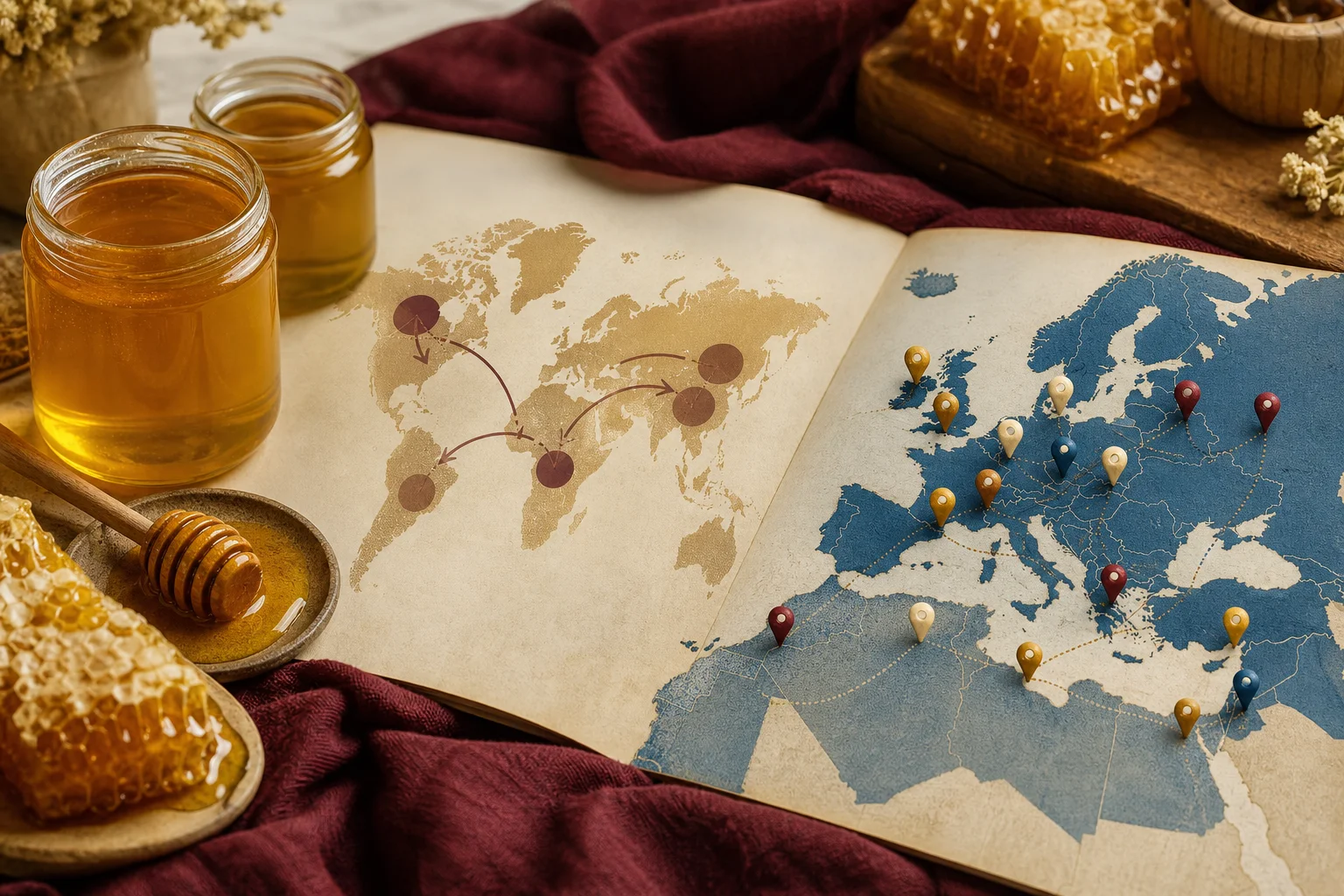
For years, a jar blended from several places could use broad language such as blend of EU and non-EU honeys. That told shoppers almost nothing about the actual source countries or how much each contributed.

The European Union changed that approach through the revised Breakfast Directives. Member States had to apply the new honey-origin measures from June 14, 2026. Newly labelled multi-country honey now needs country-by-country origin information rather than only a broad regional blend phrase.

The reform adds transparency. It does not prove that the honey is authentic, identify its floral source, or guarantee that the contents match the declared origin without effective traceability and enforcement.
The Short Answer

Question2026 EU label answer
Honey comes from one countryThe country of origin should be named
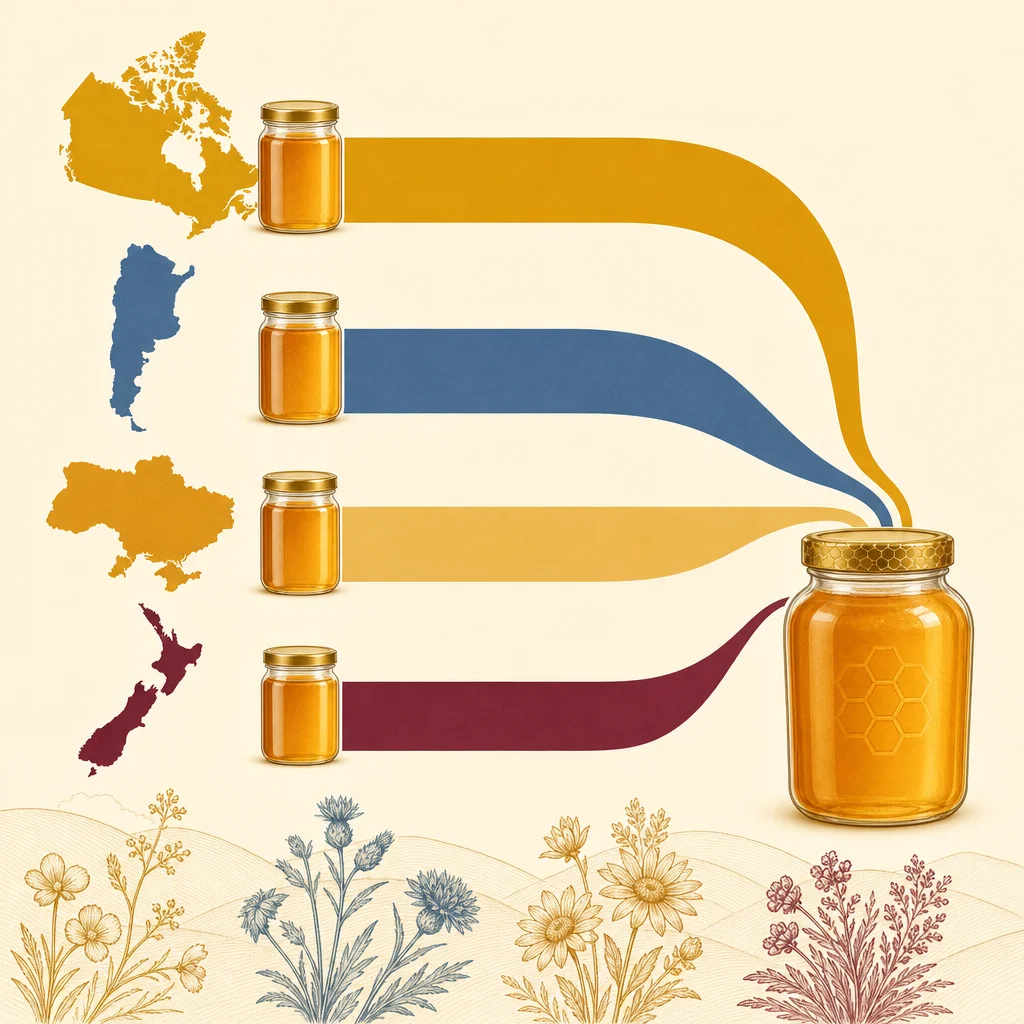
Honey is blended from multiple countriesCountries should appear in descending order by weight, with the applicable percentage detail
Jar was labelled before June 14, 2026It may continue to be marketed until stocks are exhausted if it complied with the former rules
Label names countriesThat is an origin declaration, not laboratory proof of authenticity or floral source

The old-stock provision is why shoppers may still see older regional wording beside newer country lists. When the declaration is unfamiliar, the food-label translation guide explains why jurisdiction and context matter alongside literal words.

What the New Rule Replaces

The earlier EU honey framework permitted multi-origin blend descriptions such as:

  • blend of EU honeys
  • blend of non-EU honeys
  • blend of EU and non-EU honeys

Those statements divided the world into broad buckets. A jar could combine honey from several distant countries without naming any of them on the front label.

Directive (EU) 2024/1438, part of the revised Breakfast Directives, replaced that low-resolution approach for newly labelled products. Countries of origin for a blend must now be identified and ordered according to their contribution by weight.

How a Multi-Country Honey List Works

How a Multi-Country Honey List Works

The default idea is easy to understand: list each source country from the largest share to the smallest and provide the required percentage information.

The directive also allows a limited Member State option for presenting the four largest shares when those countries together account for more than half of the blend. This means the practical design can depend on national implementation. An example from one EU country should not automatically be treated as the only lawful format everywhere.

If you are writing or checking a country-specific label, consult that Member State's transposing measure and enforcement guidance. The EU directive sets the common destination, but national law handles parts of the implementation.

Why Old Blend Wording Can Still Be on Shelves

The application date was June 14, 2026, not a recall deadline for every jar already in circulation. Products labelled before that date under the previous rules can continue to be sold until stocks are exhausted.

Honey has a relatively long shelf life. As a result, the overlap may be visible for some time. A broad EU and non-EU phrase on an older jar is not by itself proof that a retailer ignored the new rule.

Look for additional context:

  • when the jar was labelled or placed on the market
  • the best-before date and lot information
  • whether it is a new package design
  • the market where it is being sold
  • manufacturer information about the transition

The rule targets labelling dates and market placement, not the day a shopper picks up the jar.

What Origin Wording Can Tell You

The country list gives a more concrete answer to where the blend is declared to come from. It can help shoppers who prefer local or regional sourcing, want to compare blends, or need to understand a product's supply chain.

Descending order also prevents a tiny contribution from being presented as if it were the main origin. Percentage information gives more context than a bare list.

This makes the new label useful for:

  • comparing a single-country honey with a multi-country blend
  • seeing whether a named country is a major or minor contributor
  • distinguishing an EU-only blend from a broader global blend
  • asking a more precise question if traceability matters

What Origin Wording Cannot Prove

What Origin Wording Cannot Prove

Authenticity

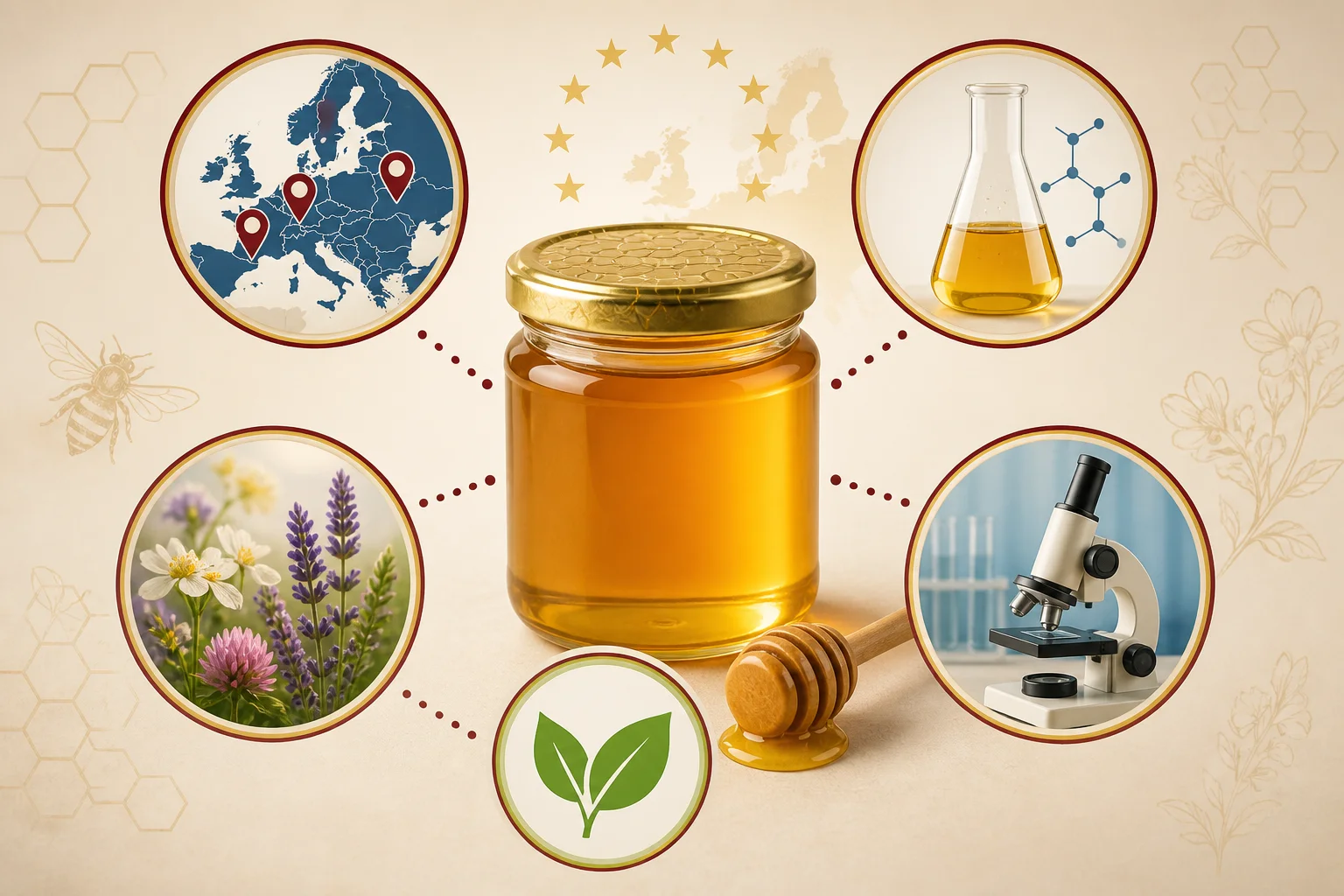
Honey can be affected by substitution, dilution, unauthorized processing, or inaccurate documentation. A printed origin list is a legal declaration, not a laboratory test. Regulators and businesses still need traceability records, sampling, analytical methods, and enforcement.

Floral source

Country is not botanical origin. Honey from Spain does not establish that it is orange blossom, thyme, or another monofloral type. Floral claims have their own evidence needs.

Organic status

Organic claims depend on certification and production rules. A named country does not imply organic production.

Vegan suitability

The EU origin rule does not resolve whether a shopper considers honey vegan. That is a dietary-definition question, separate from geography.

Absence of residues or contaminants

Country disclosure does not report measured residues, contaminants, or adulterants. Those require separate controls and testing.

Why the Change Matters Beyond Honey

Food labels often compress complex supply chains into simple phrases. Broad blend language can be legally accurate while remaining practically unhelpful. The 2026 honey rule is an example of regulation demanding greater specificity without pretending that a label can perform the work of an authenticity laboratory.

That boundary is important for ingredient-scanning tools too. A scanner can read declared countries and ingredients. It cannot inspect the contents of a sealed jar, validate invoices, or determine whether the honey matches its documentation.

The best system combines clear declarations with traceability and risk-based enforcement.

Single-Country Honey and Blend Honey Are Different Decisions

A single named country can make the origin statement simpler, but it does not make the jar automatically more authentic or higher quality. A producer can source from many apiaries within one country, and natural variation between harvests can still be substantial.

A multi-country blend is not automatically inferior. Blending can help a packer maintain flavor, color, availability, or price across seasons. The new rule makes that sourcing structure more visible so shoppers can decide whether it matches their preferences.

Use the declaration for what it can support:

  • a single-country jar declares one national origin
  • a blend declares several origins and their relative contribution under the applicable format
  • neither format replaces traceability or compositional testing

How National Implementation Affects the Shelf Label

EU directives require Member States to transpose common goals into national law. The resulting labels should follow the directive's country-specific transparency standard, but limited presentation choices can differ.

This matters for percentage detail. Before publishing a country-specific example or challenging a jar, check the law and guidance of the Member State where it is marketed. A four-country presentation that is allowed under one national option should not be portrayed as the only EU-wide design.

Retailers and packers also need enough space to present the list legibly. The information may appear near the product name, in an origin field, or in another compliant position depending on the package and national measure. Do not reduce compliance to one mockup.

What to Ask a Honey Producer

If the origin list prompts more questions, make them specific:

  1. Are the percentages based on the current lot or a standard recipe?
  2. Is the honey packed in the same country where it was harvested?
  3. What traceability records connect the lot to the named sources?
  4. Does a floral-source claim rely on pollen analysis, supplier controls, or another method?
  5. Which certification body supports an organic or other voluntary mark?

Clear questions help distinguish label information from assumptions about quality. They also give a responsible producer a fair chance to explain the supply chain without implying that every imported or blended honey is suspicious.

A Five-Step Honey Label Check

  1. Find the origin statement. Determine whether the jar names one country or several.
  2. Read the order and percentages. For a blend, the largest contribution should be presented first under the applicable implementation.
  3. Account for old stock. A jar labelled before June 14, 2026 may retain the former wording until stocks are exhausted.
  4. Separate origin from other claims. Floral source, organic certification, raw or pasteurized status, and authenticity are distinct questions.
  5. Use lot and manufacturer details. Contact the producer if sourcing is central to your purchase decision.

The new EU rule turns a vague regional honey blend into a more useful country list, while leaving authenticity and certification as separate evidence problems. IngrediCheck can help shoppers capture and interpret declared origin and ingredient wording, but traceability records and testing remain necessary when the question is whether the jar truly matches the label.

Next Label Check

Follow the scanner, hub, and ingredient paths connected to this guide

Get the app for clearer label decisions.

Scan labels, see what fits your food notes, and read the why in plain English.

IngrediCheck app