Food Policy Watch

Canada Sweetener Labels: What Changed After 2025 Rules

Canada removed several special front-panel and quantitative declarations for high-intensity sweeteners. Ingredient disclosure remains, and aspartame still carries a phenylalanine warning.

Aug 1, 2026|8 min read
By Sanket Patel|Updated 2026-08-01|3 sources|Editorial standards
Canada Sweetener Labels: What Changed After 2025 Rules

Canadian packages no longer need several special sweetener statements that once appeared outside the ingredient list. That does not mean aspartame, sucralose, acesulfame-potassium, or neotame can disappear from the label.

The broader 2022 nutrition-labelling amendments had a transition period ending December 31, 2025. Among many changes, Canada repealed older requirements for special quantitative or principal-display-panel statements tied to certain high-intensity sweeteners. The ordinary ingredient list now does more of the identification work.

One safety-critical statement remains. Food sweetened with aspartame still needs a bold warning about phenylalanine at the end of the ingredient list. That warning is intended for people with phenylketonuria, or PKU.

The practical lesson is simple: a missing front-panel sweetener callout in 2026 does not prove the product is sweetener-free. Turn the package around.

The Short Answer

Label featureCurrent Canadian position after the transitionWhat the shopper should infer
Special front-panel statement for named high-intensity sweetenersSeveral former requirements were repealedIts absence does not mean the sweetener is absent
Sweetener name in the ingredient listStill required when the sweetener is an ingredientCheck the list for the actual name
Aspartame phenylalanine warningStill required in the prescribed bold formatPeople with PKU must continue to look for it
Nutrition Facts tableStill provides nutrient and serving informationIt does not identify every sweetener by itself

The change is about presentation, not a new finding that the ingredients no longer matter. It also is not a safety ranking among sweeteners.

What the Old Rules Asked Packages to Show

What the Old Rules Asked Packages to Show

Before the amendments, Canada's Food and Drug Regulations contained special statements for certain sweeteners. Depending on the ingredient and food, a shopper could encounter wording on the principal display panel or quantitative information about the amount present.

Those special rules sat on top of ordinary ingredient disclosure. This created a label system in which a sweetener might be named in the ingredient list and highlighted elsewhere in a prescribed way.

Health Canada's summary of the labelling amendments explains that the former special statements for aspartame, sucralose, acesulfame-potassium, and neotame were repealed. The transition for the broader amendment package ended on December 31, 2025.

The result is a cleaner but potentially less obvious reading task. A shopper who learned to rely on a prominent sweetener callout now needs to inspect the ingredient list consistently.

The repeal is not universal to every sweetener statement. Table-top sweetener rules still include a sweetness-equivalence statement under section B.16.019 of the Food and Drug Regulations. Treat the food category and exact requirement separately instead of assuming that every specialised declaration vanished.

What Still Has to Appear

The ingredient name remains the primary clue

Sweeteners used as ingredients do not become anonymous because a special callout was repealed. They remain subject to ingredient-list rules and appear by an acceptable common name.

Names to watch include:

  • aspartame
  • sucralose
  • acesulfame-potassium or an accepted equivalent presentation
  • neotame
  • other permitted sweeteners such as saccharin, cyclamate, steviol glycosides, or sugar alcohols when used

The exact list depends on the product. A sugar-free or reduced sugar claim does not tell you which replacement sweetener was chosen. Two products making similar claims can use completely different ingredients.

The aspartame warning remains

Aspartame contains phenylalanine. People with PKU cannot process phenylalanine normally and must manage their intake under professional guidance. Canada's current format keeps the phenylalanine warning in bold at the end of the ingredient list.

That warning is not a general cancer warning and should not be interpreted as one. The aspartame safety explainer separates the PKU warning from the WHO and IARC hazard discussion.

For someone with PKU, the formatting change should not change the avoidance decision. It changes where the key evidence sits on the package.

The Nutrition Facts table still answers a different question

The Nutrition Facts table reports nutrients such as total sugars and serving information. A high-intensity sweetener may contribute little or no sugar, so its use cannot be inferred from the sugars line alone.

A diet drink can show zero grams of sugar and use aspartame, sucralose, acesulfame-potassium, another sweetener, or a blend. The facts table quantifies nutrients. The ingredient list identifies the formulation.

Why “No Front Label” Does Not Mean “No Sweetener”

Shoppers often use front-panel wording as a shortcut. Marketing claims such as zero sugar, diet, light, or no added sugar are visually prominent, while the ingredient list may be small.

The 2026 label-reading trap runs in the opposite direction. A shopper remembers that sweeteners once triggered a special declaration and assumes a current package without one must not contain them. That conclusion is no longer reliable.

Use this evidence order instead:

  1. Read the ingredient list. This is where the sweetener identity normally appears.
  2. Check the end of the list for bold caution information. This is especially important for the aspartame phenylalanine statement.
  3. Use the Nutrition Facts table for total sugars, calories, and serving size. Do not use it to guess the sweetener name.
  4. Interpret claims narrowly. Sugar-free describes a regulated nutrient condition. It does not mean free of artificial sweeteners or suitable for PKU.
  5. Recheck reformulated products. A familiar product can change its sweetener blend without changing its main brand design.

Four Common Misreadings

“Canada stopped requiring sweetener disclosure”

No. The repeal concerns special presentation and quantitative statements. Ingredient disclosure remains. Saying the ingredients became hidden would overstate the change.

“The phenylalanine warning was removed”

No. Health Canada's amendment summary explicitly distinguishes the repealed special statements from the warning that remains for aspartame.

“A product without sugar cannot affect PKU”

No. The relevant issue is phenylalanine, not sugar. Aspartame can sweeten a product with little or no sugar and still be relevant to PKU.

“All non-sugar sweeteners follow identical rules”

No. Ingredient identities, conditions of use, warnings, and claim rules differ. Canada's changes named particular sweeteners and should not be generalized into one rule for every sweet-tasting ingredient.

Where This Article Stops

This page is about Canadian label mechanics after the 2025 transition. It does not attempt to rank sweeteners by health effect, settle the aspartame cancer debate, or catalogue every sweetener authorised worldwide.

For ingredient identities and E-numbers, use the Artificial Sweeteners Dietary Guide. For a PKU-specific workflow that also covers protein ingredients and hydrolysates, see the PKU Dietary Guide.

Those pages answer different search intents. The present change is narrower: what a Canadian shopper may stop seeing prominently, and what must still be found elsewhere on the label.

How to Check a Canadian Package in 2026

How to Check a Canadian Package in 2026

Start with the complete current package, not an online photo. Retail images can show older label artwork, and a long transition produces both familiar and revised layouts in search results.

Then follow a fixed scan:

  1. Find the ingredient list and read every sweetener name.
  2. Look directly after the ingredient list for bold caution statements.
  3. If aspartame appears, confirm the phenylalanine warning is present and legible.
  4. Compare the Nutrition Facts table using the same serving amount when choosing between products.
  5. Treat front-panel claims as one clue, never as a substitute for ingredients.
  6. If the label is damaged, obscured, or inconsistent, do not guess. Contact the manufacturer or choose a product with complete information.

Imported products still need Canadian-market scrutiny

A package designed for another country may use different terminology or layout. Products sold in Canada must meet Canadian requirements, but online listings and items obtained while travelling can show other systems. Do not assume that an E-number-only declaration, U.S. warning format, or foreign-language photo represents the current Canadian retail label.

Formulas can change faster than habits

Manufacturers blend high-intensity sweeteners to manage taste, stability, and cost. A drink that once used aspartame may add acesulfame-potassium or move to sucralose. Check each current label if the ingredient matters to you.

Different claims answer different questions

Unsweetened, no added sugars, sugar-free, and reduced in sugars are not interchangeable promises. A product can make a sugar-related claim and still contain a non-sugar sweetener, provided it meets the rules governing that claim. Conversely, an unsweetened product may contain naturally occurring sugars from milk or fruit.

Avoid converting one claim into a broader ingredient conclusion. Read the exact wording, check the Nutrition Facts table, and then confirm the formula in the ingredient list. This three-step approach remains useful even when no special high-intensity-sweetener statement appears on the front panel.
What the Change Means for Ingredient Scanning

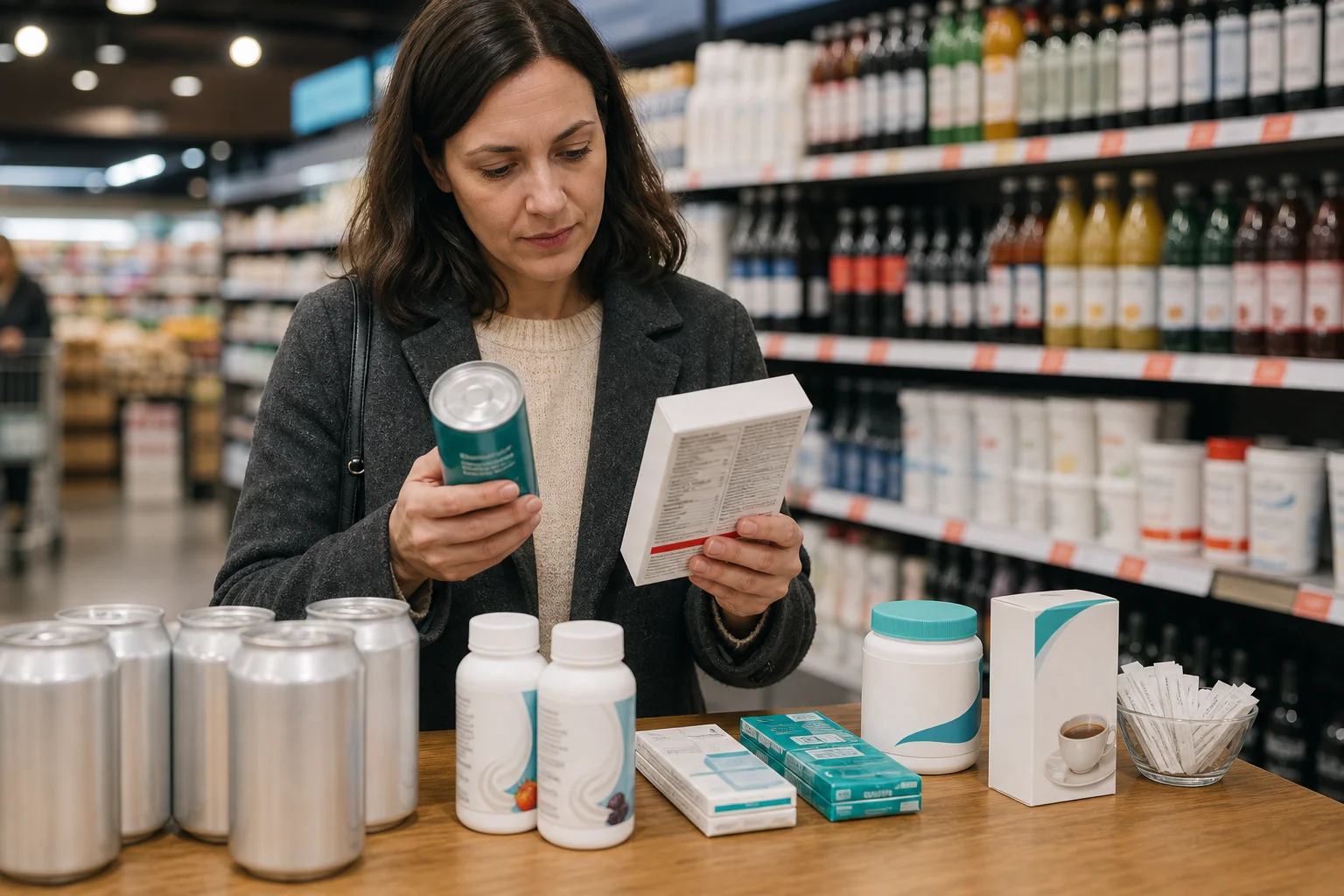
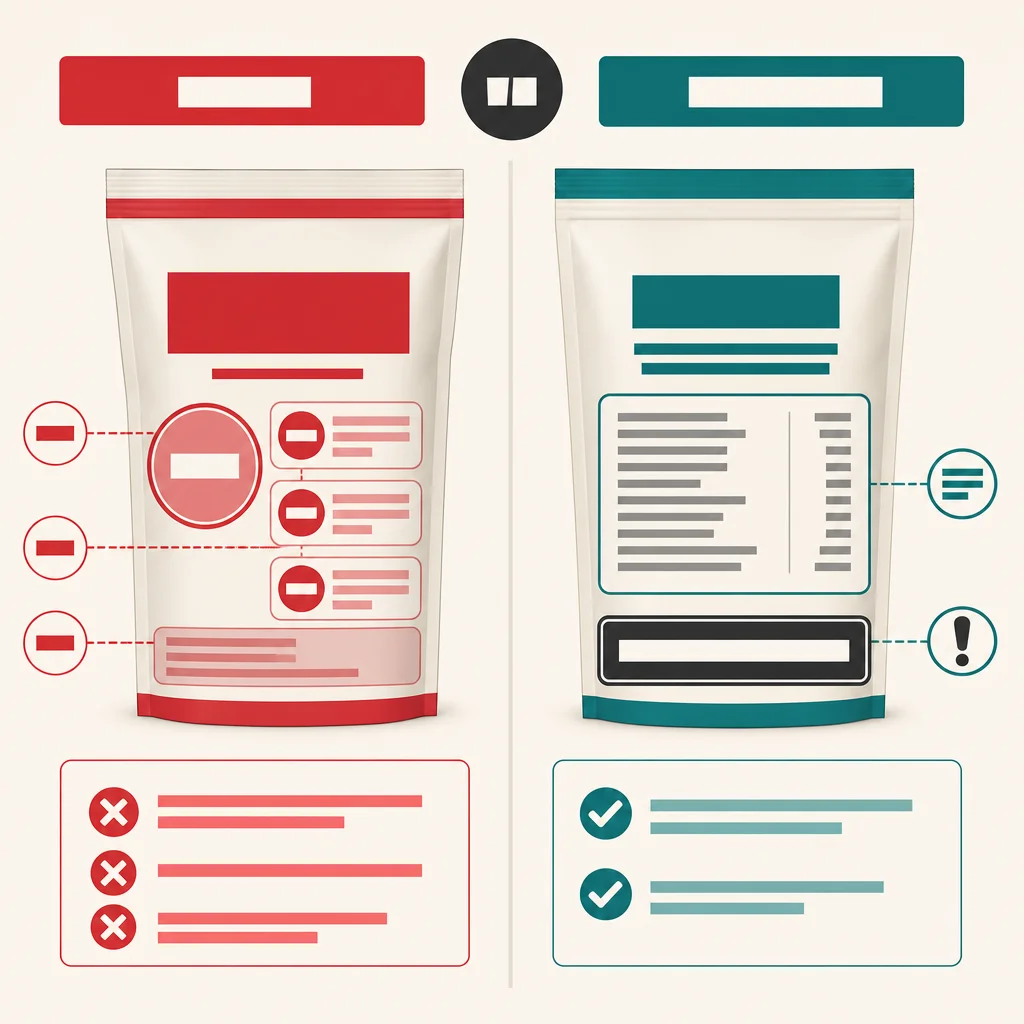
The amendments make accurate ingredient capture more important. A front-panel photo may no longer contain the sweetener information a shopper expects. The back or side panel is the useful scan target.

Capture the full ingredient list, including the final bold line. Avoid cropping out the warning because it sits below the list. If glare or package curvature hides part of the text, take another image rather than relying on a partial result.

IngrediCheck can help identify aspartame, sucralose, acesulfame-potassium, neotame, and related sweetener terms in the current ingredient list. For Canadian products, make sure the scan includes the bold phenylalanine statement so the app and the shopper are working from the same complete evidence.

Next Label Check

Follow the scanner, hub, and ingredient paths connected to this guide

Get the app for clearer label decisions.

Scan labels, see what fits your food notes, and read the why in plain English.

IngrediCheck app