Food Policy Watch

EU Produce Coatings: What Fresh-Food Labels May Not Show

EU rules allow specified surface treatments on kiwis, passion fruit, and cassava without requiring an ingredient list. Here is what that narrow exception means for shoppers.

Aug 1, 2026|8 min read
By Sanket Patel|Updated 2026-08-01|3 sources|Editorial standards
EU Produce Coatings: What Fresh-Food Labels May Not Show

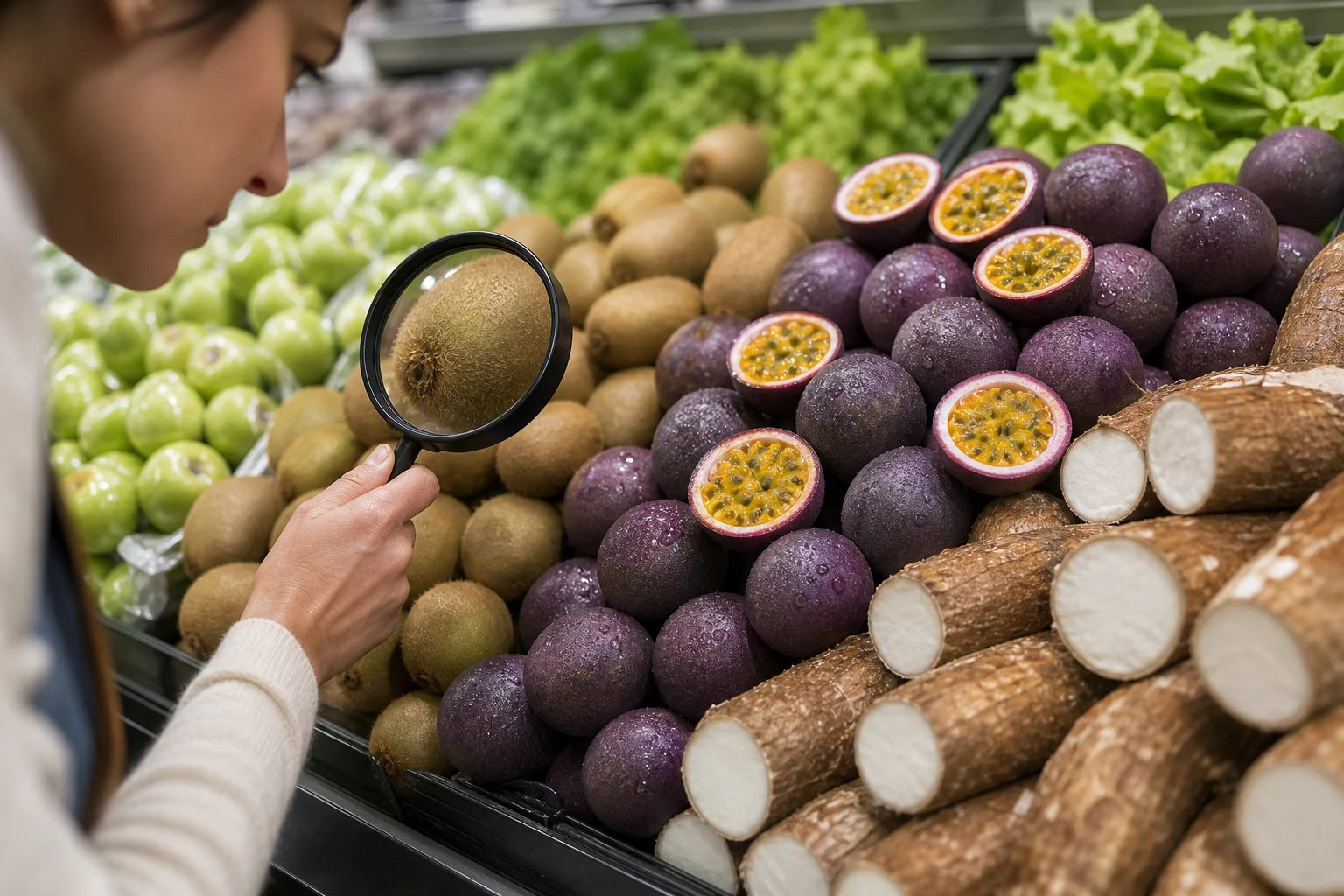
A loose kiwi does not come with an ingredient list. Neither does a passion fruit or a whole cassava root. Yet European Union rules can permit specified food additives on the surface of those foods.

That creates a real label-reading limit. In 2025, the EU expanded authorised surface-treatment uses for several additives on those three types of produce. The same regulation explains that consumers do not have to be informed about those particular surface additives under the applicable food-information rules.

This does not mean every kiwi is coated, that coatings are unregulated, or that additives are hidden inside the fruit. It means authorisation and disclosure are two different questions. A shopper can inspect a package perfectly and still lack the information needed to identify an authorised surface treatment on loose fresh produce.
The Short Answer

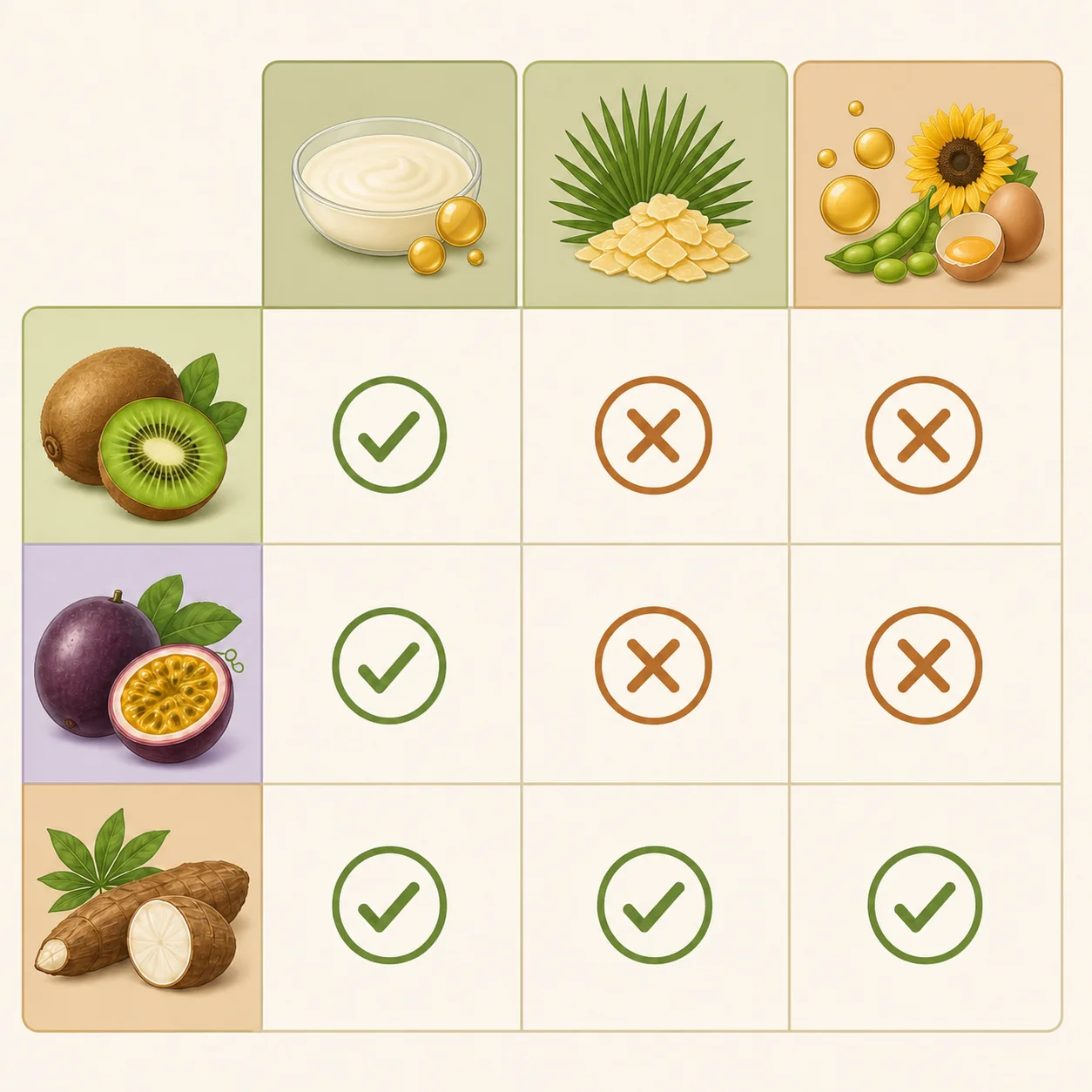
ProduceSurface-treatment uses added by the 2025 ruleMust the loose fruit or root carry an ingredient list for them?
KiwisE 471 mono- and diglycerides of fatty acids at quantum satisNot under the disclosure conclusion described in the regulation
Passion fruitE 471 mono- and diglycerides of fatty acids at quantum satisNot under the same conclusion
CassavaE 471 at quantum satis; E 903 carnauba wax at 200 mg/kg; specified E 322 lecithin and E 570 fatty-acid carrier uses at quantum satisNot under the same conclusion

These are permissions, not a recipe. A particular supplier may use none of them. A different additive cannot be assumed legal merely because one coating is authorised. The exact food, additive, function, and conditions in the EU list matter.

In EU additive law, quantum satis does not mean uncontrolled or literally unlimited use. It means no numerical maximum is set in the entry, while good manufacturing practice and the amount needed for the intended purpose still constrain use.

What Regulation 2025/651 Changed

What Regulation 2025/651 Changed

Commission Regulation (EU) 2025/651 was adopted on April 2, 2025, published the next day, and entered into force on April 23. It amended the EU's authorised-use list for food additives after applications involving surface treatment of fresh produce.

The change covered a narrow set of pairings:

  • E 471, mono- and diglycerides of fatty acids: passion fruit, kiwis, and cassava
  • E 903, carnauba wax: cassava
  • E 322, lecithins, and E 570, fatty acids: specified carrier roles connected with cassava surface treatment

The regulation describes the technological purpose in terms such as glazing agents and carriers. A surface layer can help protect the produce during handling and storage. That functional explanation does not prove any particular item was treated.

The rule also did not create a general permission to coat all fresh fruit. EU additive law operates through a positive list. The permitted combination and any conditions must appear in the relevant annex. A permission for E 471 on kiwi does not automatically authorise E 471 on every fruit beside it.

Why the Coating May Not Appear on a Label

The surprising part is not that fresh produce can receive a post-harvest treatment. The surprising part is that a food additive can be authorised while the shopper is not necessarily told about it on the item.

The recitals to Regulation 2025/651 state that Union law does not require consumers to be informed about these additives when they are used on the surface of the fresh produce covered by the amendment. The Commission's reasoning refers to peels that are normally not consumed and to the expectation that the substances will not migrate into the internal edible part.

That reasoning is specific. It should not be turned into any of these broader claims:

  • all surface treatments are exempt from disclosure
  • any additive used before sale can be omitted
  • the inside of treated produce contains the coating
  • a produce sticker proves whether treatment occurred
  • an organic, vegan, or vegetarian claim answers every source question

Fresh produce also reaches shoppers in different formats. Loose fruit, prepacked whole fruit, peeled pieces, prepared fruit cups, and processed foods can trigger different labeling considerations. The 2025 rule's conclusion about surface treatment of named fresh produce should not be pasted onto a packaged fruit dessert or a cassava snack with its own ingredient list.

What the Additive Names Do and Do Not Prove

E 471 is a function and identity, not a source certificate

Mono- and diglycerides of fatty acids are emulsifiers and glazing agents that can be made from fats or oils. The term does not necessarily tell a shopper whether the feedstock was plant-derived or animal-derived. The EU authorisation establishes an allowed use. It does not certify the material as vegan or vegetarian.

For a fuller source analysis, see Mono and Diglycerides: Are They Vegan or Vegetarian?. Someone avoiding animal-derived ingredients may need supplier confirmation even when the E-number is known.

E 903 is carnauba wax

Carnauba wax comes from the leaves of the carnauba palm. Its plant origin does not make every coated product suitable for every diet. Other treatments, handling materials, or supply-chain controls can matter, and the absence of a declaration limits what can be verified from the item alone.

E 322 and E 570 remain source-sensitive terms

Lecithins can come from sources such as soy, sunflower, or egg. Fatty acids can also come from different feedstocks. Their authorised carrier role does not reveal the source used for a specific lot of cassava.

Authorised Does Not Mean Universally Used

Authorised Does Not Mean Universally Used

An EU authorisation gives food businesses a legal option under stated conditions. It does not require adoption. Cost, customer specifications, organic rules, retailer policies, shelf-life needs, geography, and supplier practice can all affect whether a treatment is used.

That difference matters because visual inspection is weak evidence. A shiny kiwi might be naturally glossy. A dull one might still have received a treatment that is hard to see. Washing may remove surface soil and some residues, but it is not a reliable identification test and does not establish which material was originally present.

If the information matters to a dietary rule, the useful question is not, "Does this look waxed?" Ask instead:

  1. Was this produce treated with a post-harvest glazing agent or carrier?
  2. If so, what is the additive name or E-number?
  3. What is the biological source of any source-sensitive additive such as E 471, E 322, or E 570?
  4. Does an applicable certification restrict the treatment?
  5. Is the answer specific to this supplier and current lot?

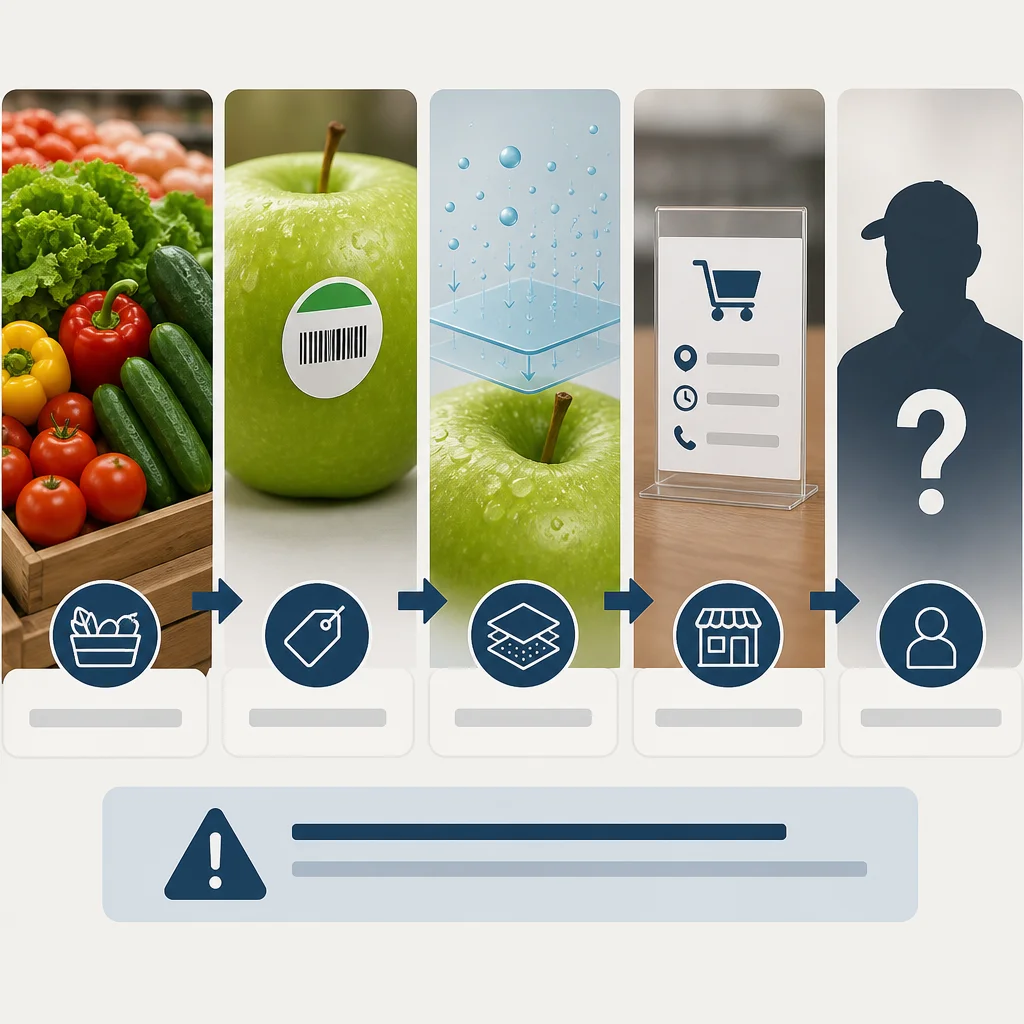
Retailers may not have every answer at the display. A produce buyer, packer, importer, or supplier specification is more likely to identify the treatment than a barcode database for a loose item.

What Shoppers Can Reliably Learn

Treat the package or display as one evidence layer, not the whole file.

When produce is loose: look for country of origin, organic certification, retailer notices, and any voluntary treatment statement. Do not assume silence means untreated.

When produce is prepacked: read all mandatory and voluntary information, but remember that the regulation's disclosure conclusion can still limit what appears for the named surface treatments.

When the peel will be eaten: the regulation's rationale about normally unconsumed peels may not match your behavior. That does not rewrite the legal rule, but it can make a supplier question more important to you.

When managing an allergy: do not treat a vegan-source question as an allergen assessment. For example, egg-derived lecithin and soy lecithin raise different label and allergy questions. Use the ingredient and allergen information that applies to the food format, and contact the supplier when a serious risk cannot be resolved.

When following a vegan or vegetarian standard: identify whether your rule excludes animal-derived fatty acids or uncertain-source processing materials. Then ask a source-specific question. The E-number alone may be insufficient.

How This Differs From the Broader Fruit-Wax Debate

Fruit-coating discussions often combine waxes, fungicides, morpholine, cleaning agents, and edible films into one category. That can produce alarming but imprecise advice.

The morpholine fruit-coating explainer addresses a different chemical and different regulatory history. This article owns a narrower question: what the EU specifically authorised in Regulation 2025/651 for kiwis, passion fruit, and cassava, and why those uses may not generate consumer-facing ingredient information.

Keeping those questions separate is useful. A substance can be authorised for one function and food but not another. A treatment can be lawful without being mandatory. A permitted coating can also be impossible to confirm from the retail item alone.

The Practical Takeaway

The EU rule exposes a boundary of ingredient scanning. Scanning works best when the product carries an ingredient list. Loose fresh produce may not provide one, and these authorised surface treatments are a documented case where the law does not require the missing detail to be added.

That is not a reason to distrust every kiwi. It is a reason to match confidence to the available evidence. If the exact coating affects an allergy, vegan rule, vegetarian rule, or personal restriction, seek current supplier confirmation instead of making a visual guess.

IngrediCheck can help identify E 471, carnauba wax, lecithins, and fatty-acid terms when they appear on packaged-food labels. For fresh produce with no declaration, use the app's result as a prompt to ask the retailer or supplier the source question the label cannot answer.

Next Label Check

Follow the scanner, hub, and ingredient paths connected to this guide

Get the app for clearer label decisions.

Scan labels, see what fits your food notes, and read the why in plain English.

IngrediCheck app