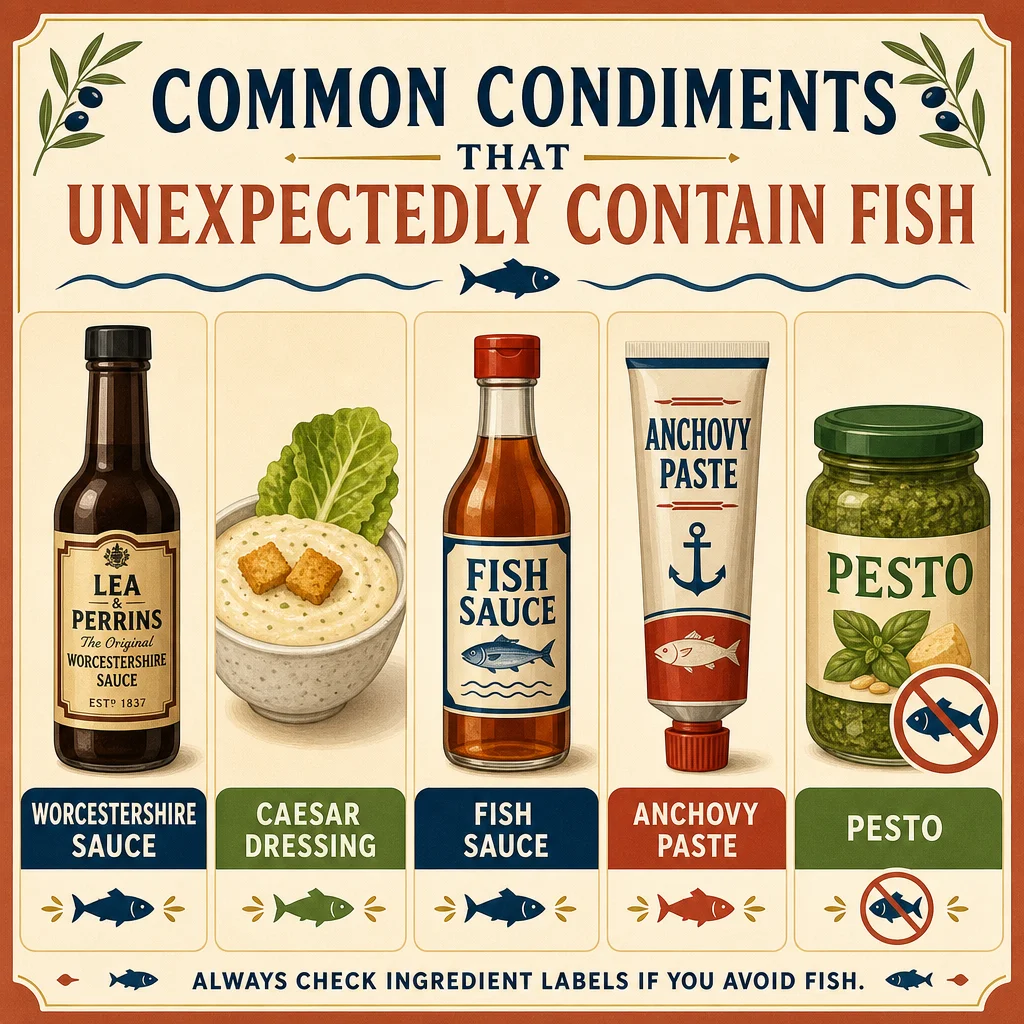
Pesto is not the only condiment where fish appears without obvious announcement. The list of common foods that contain fish, fish derivatives, or fish-based flavor extracts is longer than most people realize.
Worcestershire Sauce
Most commercial Worcestershire sauces include anchovies as a core ingredient. Lea and Perrins, the original brand, lists anchovies in its recipe. This matters because Worcestershire sauce appears in hundreds of preparations: marinades, gravies, Bloody Marys, Caesar dressing, some barbecue sauces, and restaurant recipes where "Worcestershire" is a listed ingredient but "fish" or "anchovy" is not.
Caesar Dressing
Traditional Caesar dressing uses anchovy paste or anchovy fillets. Bottled Caesar dressings at the grocery store generally list anchovies in the ingredients, but the listing can be easy to miss among a long ingredient roll. Restaurant Caesar dressings vary by recipe and are not always labeled with full allergen disclosure.
Asian Condiments
Fish sauce — made from fermented fish, typically anchovies — is a foundational ingredient in Thai, Vietnamese, Filipino, and many other Asian cuisines. It appears in pad thai, pho, spring roll dipping sauces, and countless stir-fry preparations. Sriracha and chili garlic sauces vary by brand: some are fish-free, some use fish sauce for flavor depth. Oyster sauce, a common ingredient in Chinese cooking, contains shellfish rather than finned fish but is often confused by consumers reading broadly for "seafood."
Anchovy Paste and Spreads
Anchovy paste is frequently used in tapenade (black olive spread), some brands of olive spread, Mediterranean-style dips, and — as with the Filippo Berio product — in spicy or chili-inflected condiments where it adds umami rather than a distinct fish character.
The common thread is umami. Anchovy and other fish products are used in processed foods for the same reason MSG is used: they enhance savory depth without adding a distinctive flavor of their own. A well-integrated anchovy addition does not taste "fishy" to most palates. That invisibility is what makes it a labeling risk.