Withaferin A is not a simple toxin. It is a bioactive compound with a dual identity: researchers are actively studying it as a potential anticancer agent, while regulators and safety bodies are increasingly concerned about its cytotoxicity in healthy tissue.
The mechanism is precise. Withaferin A reacts with cysteine residues in proteins via a Michael addition — an irreversible chemical bond that disrupts the function of key structural and regulatory proteins. It inhibits NF-κB signaling, disrupts tubulin (a protein critical to cell division), and induces apoptosis (programmed cell death) in exposed cells.
In cancer research, those properties are potentially useful. Withaferin A is being investigated for ALT cancers (a subset accounting for about 15 percent of all cancers), as well as gastrointestinal, pancreatic, and liver malignancies. The compound shows real promise in laboratory models.
In a healthy person consuming it as part of a supplement or protein powder, the same properties become a concern. The cytotoxic activity does not distinguish between cancer cells and healthy ones at the doses that might be consumed through multiple servings of a leaf-containing product over time.
The liver toxicity signal is the clearest real-world concern. A review published in MDPI Pharmaceuticals in August 2023 catalogued published cases of herb-induced liver injury linked to ashwagandha. One documented case involved a 24-year-old male who developed jaundice, nausea, and elevated liver enzymes after taking 450 to 1,350 mg per day for seven days. Several documented cases involved supplements that contained both root and leaf material, complicating efforts to determine which part of the plant was responsible. The review noted that the cytotoxicity of both Withaferin A and Withanone (another withanolide found in leaves) had been linked to DNA damage in liver cells.
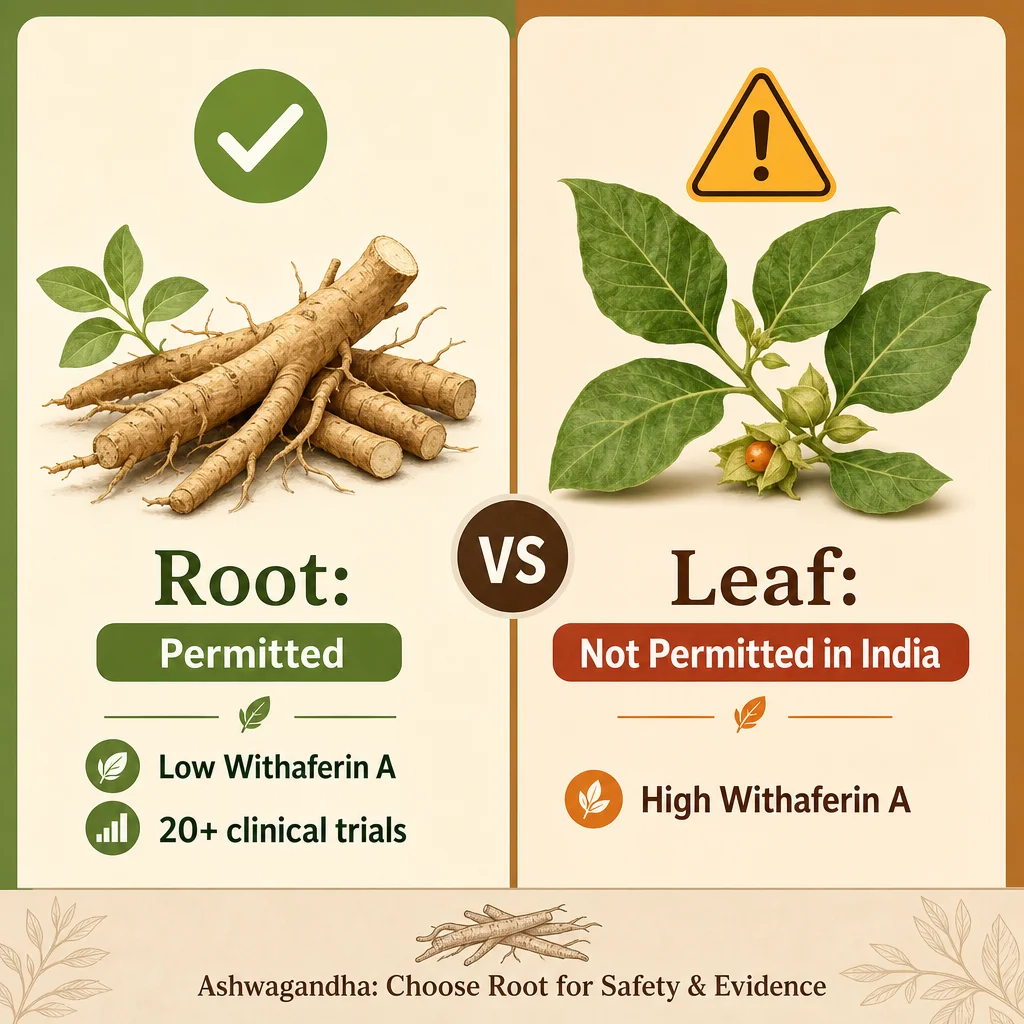
This does not mean all ashwagandha products cause liver damage. The majority of clinical trials — of which there are now dozens — have used root-only formulations and reported no significant safety signals. The concern is specifically with products using leaf material, unspecified "whole plant" extracts, or high-withanolide blends that incorporate leaf components to hit concentration targets.