Quick answer: The highest-mercury fish to avoid or strictly limit are shark, swordfish, king mackerel, bigeye tuna, tilefish, orange roughy, and marlin. Lower-mercury choices include salmon, sardines, anchovies, Atlantic mackerel, shrimp, pollock, and tilapia, especially for pregnancy and kids.
Ingredient Deep Dives
Mercury Fish List: High-Mercury Fish to Avoid
Use this mercury fish list to avoid high-mercury fish like shark, swordfish, king mackerel, bigeye tuna, tilefish, and orange roughy.
Mar 27, 2026|10 min read
Start from the cluster
High-Mercury Fish List and Safer Choices
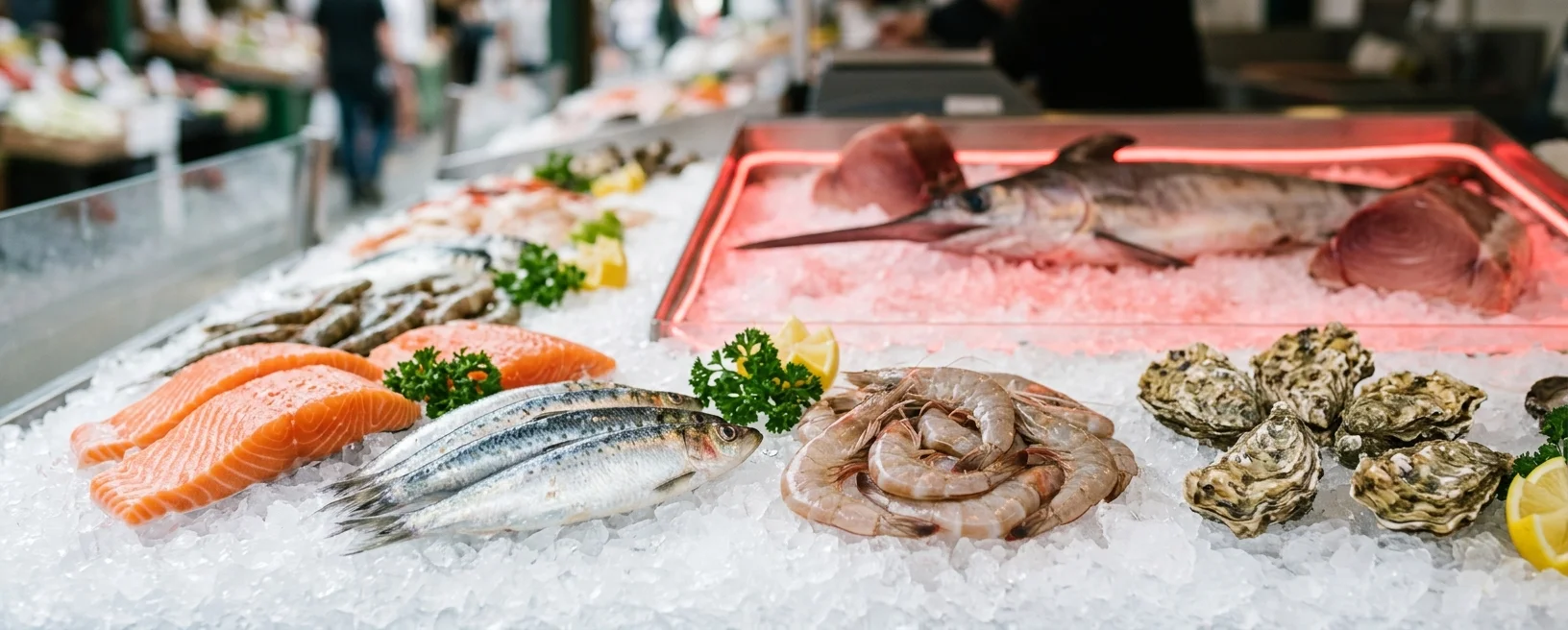
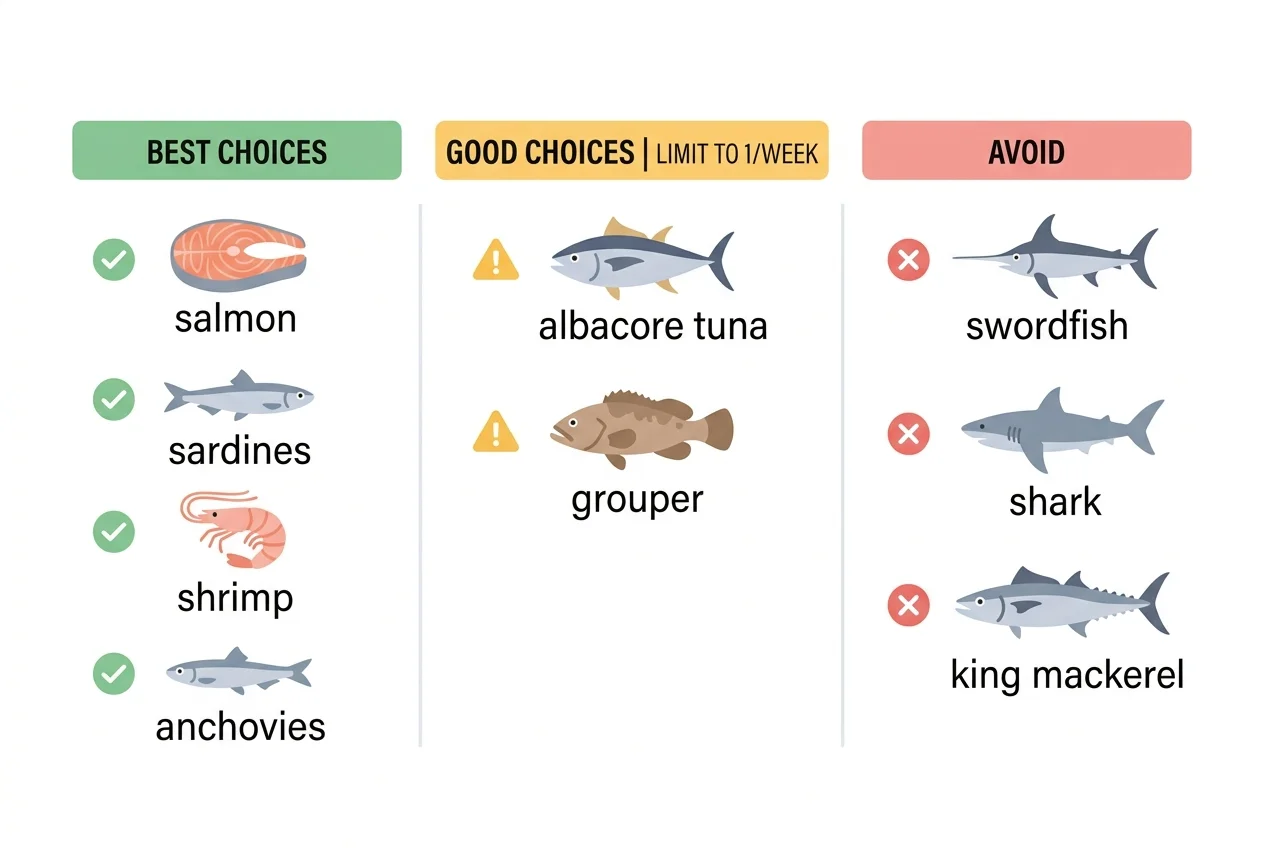
The FDA and EPA organize fish into three practical tiers for people who are pregnant or breastfeeding, people who may become pregnant, and children. Local advisories take priority for fish caught by family or friends.
| Choice | Common fish and seafood | Pregnancy, breastfeeding, and children |
|---|---|---|
| Avoid | Shark, swordfish, king mackerel, bigeye tuna, Gulf of Mexico tilefish, orange roughy, and marlin | Choose a lower-mercury species instead. Cooking does not remove methylmercury. |
| Limit to 1 serving per week | Albacore or white tuna, yellowfin tuna, grouper, halibut, Chilean sea bass, bluefish, and Spanish mackerel | Eat no other fish that week. Check the FDA/EPA chart because species and serving sizes matter. |
| Choose 2 to 3 servings per week | Salmon, sardines, anchovies, Atlantic mackerel, shrimp, pollock, tilapia, trout, herring, oysters, clams, and canned light tuna | These are common lower-mercury choices. Use age-appropriate portions for children. |
Easy tuna rule: canned light tuna is generally a lower-mercury choice, albacore or white tuna belongs in the once-per-week tier, and bigeye tuna belongs in the avoid tier. A menu that says only "tuna" may not identify the species, so ask before ordering during pregnancy or for a young child.
Fish is one of the most nutritious foods on the planet, rich in omega-3 fatty acids, high-quality protein, and essential micronutrients. Most health authorities recommend eating it at least twice a week. And yet fish also carries a hidden risk that a significant portion of consumers are either unaware of or choosing to ignore: methylmercury, a potent neurotoxin that accumulates in the flesh of certain species and cannot be cooked, cleaned, or processed away.
New data from the European Food Safety Authority (EFSA) published in February 2026 found that the proportion of EU consumers eating high-mercury fish three or more times per week jumped from 26% in 2023 to 50% in 2024, a near-doubling in a single year. Around one in three Europeans, including one in three pregnant women, are now consuming potentially unsafe quantities of high-mercury seafood.
This is not a theoretical concern. Methylmercury exposure during pregnancy and early childhood is linked to measurable cognitive impairment, developmental delays, and neurological damage. Knowing which fish to eat freely and which to limit or avoid is practical, actionable knowledge that matters.
What Is Methylmercury and Where Does It Come From?
Mercury is a naturally occurring heavy metal found in trace amounts in soil, water, and air. Industrial processes, particularly coal combustion, release additional mercury into the atmosphere, which eventually settles into rivers, lakes, and oceans where bacteria convert it into methylmercury (MeHg): the organic form that is absorbed into fish tissue and passes up the food chain.
The critical mechanism is bioaccumulation. Small fish absorb methylmercury from water and algae. Medium-sized fish eat many small fish. Large, long-lived predators eat many medium fish over decades. By the time you eat a swordfish or a large tuna, you're eating the accumulated mercury from thousands of smaller organisms. This is why species at the top of the food chain carry levels that can be 1–10 million times higher than the concentration in the surrounding water.
Once consumed, methylmercury is almost entirely absorbed from the gut into the bloodstream. It crosses the blood-brain barrier and the placental barrier with ease, which is why developing brains are the most vulnerable targets: the fetus, infants, and young children face the greatest risk.
The 2026 EFSA Finding: A Significant Escalation
EFSA's 2026 survey covered nearly 23,000 interviews across 29 European countries in two waves: 2023 and late 2024. The findings reveal a troubling trend.
Consumption of species at the highest mercury risk tier, those at or above the EU maximum level of 1 mg methylmercury per kilogram of fish wet weight, more than doubled among frequent eaters in just one year. Awareness of mercury in fish was relatively common, but that awareness was not translating into behaviour change. Respondents cited taste, price, and perceived health benefits as the main reasons they continued eating high-mercury species despite knowing the risks.
This knowledge-behaviour gap is precisely why the EFSA findings are significant. The people eating swordfish and large tuna most frequently often do so because they associate seafood with health. The irony is that for certain species, that association can work against them.
Around 1 in 3 people in Europe, including pregnant women, are consuming potentially unsafe amounts of fish species with the highest methylmercury contamination levels — EFSA, February 2026.
Which Fish Have the Most Mercury?
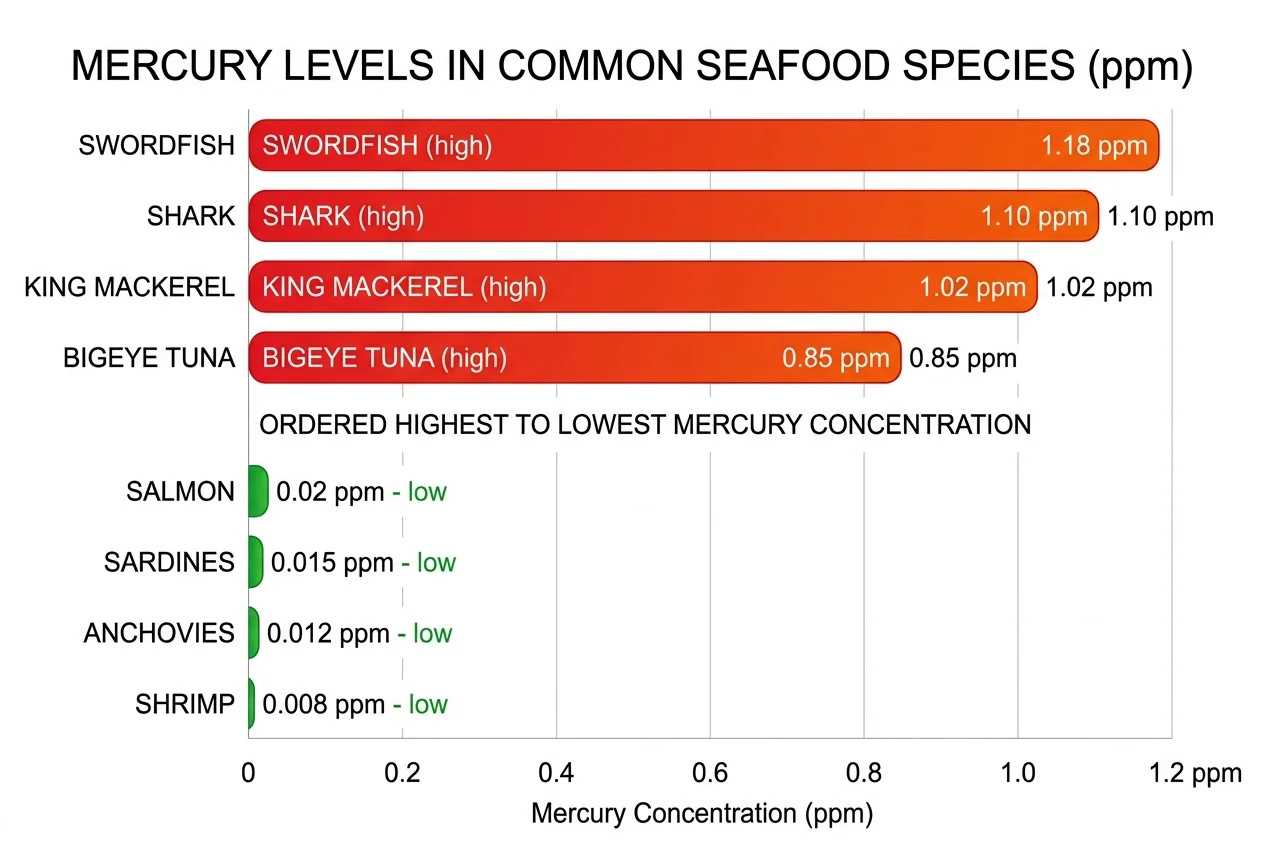
The FDA's monitoring data on commercial seafood provides the most comprehensive species-level picture available. Mercury content is measured in parts per million (ppm) of wet weight.
Highest mercury — avoid or strictly limit:
| Fish | Average Mercury (ppm) |
|---|---|
| Tilefish (Gulf of Mexico) | 1.123 |
| Swordfish | 0.995 |
| Shark | 0.979 |
| King mackerel | 0.730 |
| Bigeye tuna | 0.689 |
| Orange roughy | 0.571 |
| Marlin | 0.485 |
The FDA and EPA classify tilefish (Gulf of Mexico), swordfish, shark, king mackerel, bigeye tuna, orange roughy, and marlin as fish to avoid entirely for pregnant women, women who may become pregnant, breastfeeding mothers, and young children. For the general adult population, consumption should be strictly limited or avoided.
Moderate mercury — limit to 1 serving per week:
- Albacore (white) canned tuna
- Yellowfin tuna (fresh/frozen)
- Chilean sea bass / Patagonian toothfish
- Bluefish
- Grouper
- Spanish mackerel
Lower mercury — 2–3 servings per week generally considered safe:
- Salmon (wild Alaska: ~0.022 ppm)
- Sardines and anchovies
- Atlantic mackerel (not king mackerel)
- Herring
- Oysters, clams, scallops
- Shrimp and prawns
- Pollock, haddock, tilapia, flounder
- Canned light tuna (not albacore)
The contrast is stark. Wild Alaska salmon averages 0.022 ppm, about 45 times less mercury than swordfish. Switching from swordfish to salmon doesn't mean giving up seafood; it means eating a species that is simultaneously lower in mercury and higher in omega-3 fatty acids.
Why Pregnant Women and Children Face the Highest Risk
Methylmercury is a developmental neurotoxin. Its effects are most severe when exposure occurs during periods of rapid brain growth, which is precisely what happens in the fetal period and early childhood.
Research published in PMC/NIH has documented the effects of prenatal methylmercury exposure across multiple population studies. At higher exposure levels, effects include impaired cognitive function, delayed language development, reduced fine motor skills, and disrupted auditory processing. Critically, these impairments can occur at blood mercury levels that produce no symptoms in the mother herself. A pregnant woman may feel completely well while her developing baby is being harmed.
The FDA and EPA joint guidance recommends that pregnant women, women who may become pregnant, breastfeeding mothers, and children aged 1–11:
- Eat 2–3 servings per week of fish from the "best choices" low-mercury list (salmon, sardines, shrimp, canned light tuna, pollock, tilapia)
- Limit to 1 serving per week of fish from the "good choices" moderate-mercury list
- Avoid entirely: shark, swordfish, king mackerel, tilefish (Gulf), bigeye tuna, orange roughy, marlin
This is a case where the guidance does not say "avoid all fish." It says eat the right fish. The omega-3 fatty acids in low-mercury seafood, particularly DHA, actively support fetal brain development. The goal is to maximise the nutritional benefits while eliminating the species that carry meaningful risk.
For adults outside these vulnerable groups, the risk from moderate fish consumption is lower, but regular consumption of the highest-mercury species still warrants attention. Chronic low-level methylmercury exposure has been associated in some research with cardiovascular effects and subtle neurological changes in adults, though the evidence here is less definitive than for developmental effects.
The Tuna Question
Tuna deserves special mention because it is the most commonly consumed fish in many countries, and it is not a single category.
Canned light tuna (primarily skipjack) averages around 0.128 ppm, placing it comfortably in the low-mercury "best choices" tier. Most people can eat this 2–3 times per week without concern.
Canned albacore (white) tuna averages 0.350 ppm, more than twice as high. The FDA recommends limiting this to 1 serving per week for vulnerable populations.
Bigeye tuna (often served as sushi or tuna steak) averages 0.689 ppm, putting it in the high-mercury avoid category.
Bluefin tuna, prized in high-end sushi, can reach levels comparable to swordfish.
The label matters enormously here. "Tuna" on a restaurant menu or a product label does not specify species, and the difference in mercury content between a can of skipjack light tuna and a portion of bigeye or bluefin is substantial.
How to Read Fish Choices Practically
A few principles make navigating this easier in practice:
Size and longevity are the key indicators. Large, long-lived predatory fish are almost always higher in mercury than smaller, shorter-lived species. A sardine lives 1–2 years. A swordfish can live 9 years and reach 650 kg. The accumulation difference is enormous.
Farmed vs. wild is not the primary concern here. Mercury content is determined mainly by what the fish eats and how long it lives, not whether it was farmed or wild-caught. Farmed salmon is low in mercury for the same reason wild salmon is: it's a relatively short-lived species that doesn't bioaccumulate to dangerous levels.
Cooking does not reduce mercury. Grilling, steaming, poaching, or frying a high-mercury fish does not reduce its methylmercury content. The only way to avoid mercury exposure from a given species is not to eat it.
Omega-3 supplements can substitute for high-mercury fish. If you want the cardiovascular and cognitive benefits of omega-3s without high-mercury species, fish oil supplements derived from small, low-mercury fish (anchovies, sardines, mackerel) or algae-based DHA supplements provide the nutrients without the exposure.
What the EFSA Survey Reveals About Awareness
One of the more striking aspects of the EFSA 2026 data is that awareness was not the main problem. Mercury was the most commonly recognised chemical contaminant in fish; more people knew about mercury in seafood than about most other food safety issues. Yet that awareness was not changing eating habits.
The survey found that pregnant women, despite higher awareness of the relevant guidance, were not consuming significantly less high-mercury fish than the general population. Taste preferences, habitual choices, and the general perception of seafood as "healthy" were consistently more influential than specific safety knowledge.
This is a familiar pattern in food safety: knowing a risk exists and acting on that knowledge in your weekly shop are two different things. The information needs to be accessible at the point of decision: when you're looking at a menu, scanning a label, or choosing at a fish counter.
The Bottom Line
The nutritional case for eating fish is strong, and the Mayo Clinic and other major health authorities are emphatic that the benefits outweigh the risks, provided the right species are chosen. The problem is not fish. The problem is a handful of large, long-lived predatory species that have accumulated mercury to levels that pose a measurable risk, particularly to developing brains.
The practical guidance is simple:
- Eat salmon, sardines, anchovies, herring, oysters, shrimp, and canned light tuna freely
- Limit albacore tuna and similar moderate-mercury choices to once a week
- Avoid swordfish, shark, king mackerel, bigeye tuna, tilefish (Gulf), orange roughy, and marlin. This is especially important during pregnancy and when feeding young children.
IngrediCheck can help you navigate these distinctions at the product level, flagging seafood products that contain high-mercury species, cross-referencing fish-based ingredients in processed foods (fish sauces, seafood snacks, supplements) against mercury risk tiers, and helping you make confident choices whether you're shopping for yourself, for a pregnant family member, or for your children.
For a quicker shopping reference, compare this guide with the pregnancy safe food scanner, the mercury ingredient profile, and the broader Ingredient Safety hub.
On this page
Frequently Asked Questions
Which fish are highest in mercury?
Shark, swordfish, king mackerel, bigeye tuna, tilefish, orange roughy, and marlin are among the fish shoppers most often need to limit or avoid.
What seafood is lower in mercury?
Salmon, sardines, anchovies, Atlantic mackerel, trout, shrimp, pollock, and tilapia are common lower-mercury choices in many advisories.
Who should follow mercury fish advice most closely?
Pregnant people, people who may become pregnant, breastfeeding parents, young children, and frequent seafood eaters should pay closest attention.
Sources
Source lists are maintained with our editorial policy.
Next Label Check
Follow the scanner, hub, and ingredient paths connected to this guide
Topic hubs
Topic hub
Ingredient Safety
Explore IngrediCheck's ingredient safety hub for additives, contaminants, preservatives, and evidence-based label guidance.
Topic hub
Food Dyes
Browse food dye guidance for Red 40, Yellow 5, Yellow 6, Blue 1, Blue 2, Green 3, Red 3, and titanium dioxide labels.
Topic hub
Food Contaminants
Understand food contaminants including mercury in seafood, PFAS exposure, cereulide in reheated rice, and safety guidance.
Related articles
Ingredient Deep DivesArticle
Bacillus cereus Toxin in Reheated Rice: Is It Safe?
Bacillus cereus toxin in reheated rice can survive cooking once cereulide forms. Learn the symptoms, risky foods, and safe storage rules.
Ingredient Deep DivesArticle
Guar Gum: From Ice Cream to Baby Formula, What to Know
Guar gum is one of the most common thickeners in processed food. A 2024 EFSA re-evaluation and a 2026 EU regulation have now removed it from infant formula — here's what consumers need to know.
Ingredient Deep DivesArticle
Are Seed Oils Bad for You? 30+ Studies Say No — Mostly
The internet says seed oils are toxic. Harvard, Johns Hopkins, and 30+ clinical trials say otherwise. Here's what the evidence actually shows — and where the real concerns are.
Get the app for clearer label decisions.
Scan labels, see what fits your food notes, and read the why in plain English.