When 'Beef' Ravioli Contains Shrimp: The Costco Allergen Alert

A May 2026 FSIS public health alert found that bags of Giovanni Rana beef ravioli sold at Costco actually contained shrimp ravioli in lobster sauce. Here's what happened, why production mix-ups are so dangerous, and what shellfish-allergic consumers should know.

May 24, 2026|8 min read
By Sanket Patel|Updated 2026-05-24|6 sources|Editorial standards
When 'Beef' Ravioli Contains Shrimp: The Costco Allergen Alert

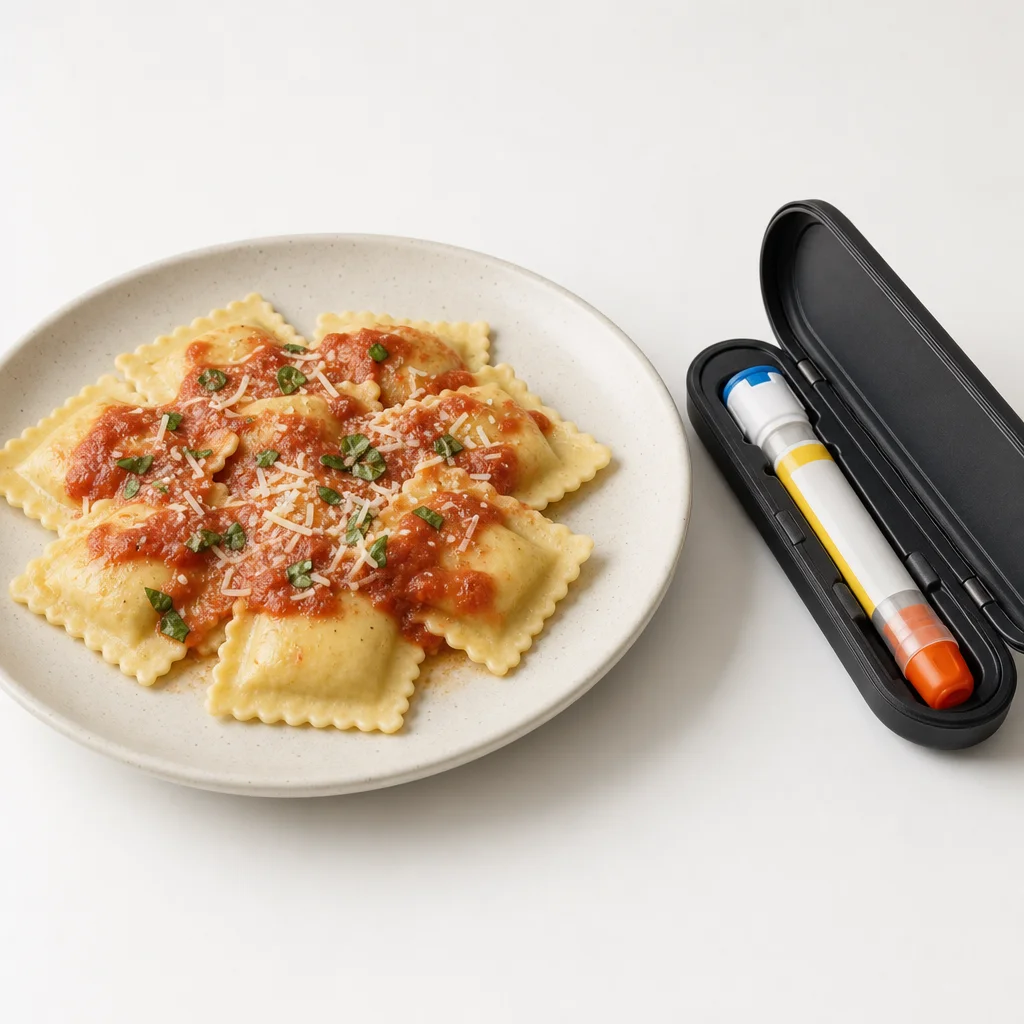
On May 4, 2026, the USDA's Food Safety and Inspection Service issued a public health alert with an unusual headline: a product labeled as "Rustic Beef Sauce & Creamy Burrata Cheese Ravioli" actually contained shrimp ravioli in lobster sauce.

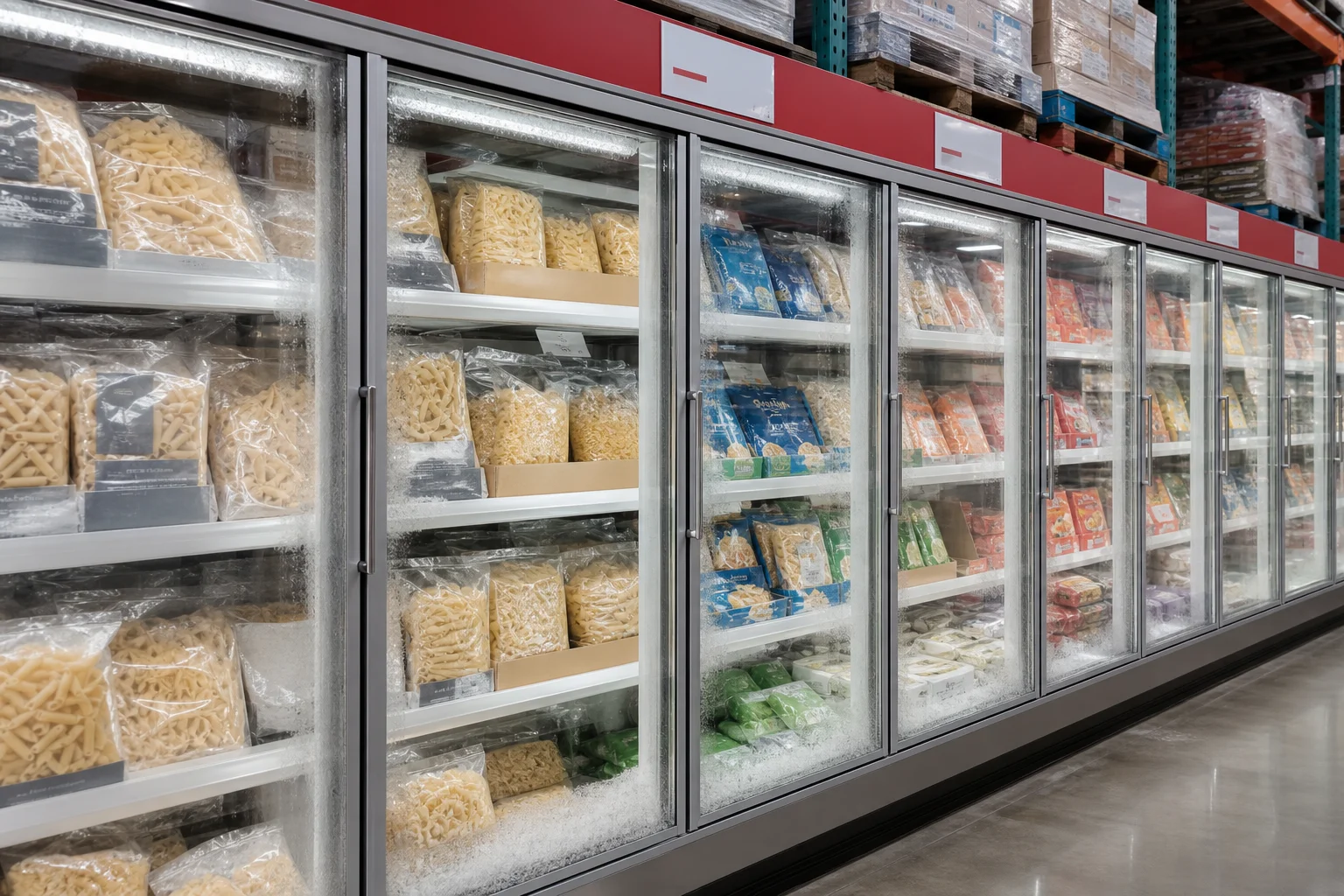
The product was Giovanni Rana brand pasta, sold at Costco locations in Maryland and New Jersey. Rana Meal Solutions, LLC — the manufacturer — discovered the problem after receiving two consumer complaints. By the time FSIS was notified, the product was already off store shelves. But it could still be sitting in home freezers.

FSIS assigned the alert number PHA-05042026-01 and listed the affected products with use-by dates ranging from May 14 through June 25, 2026.

This was not the kind of undeclared allergen labeling error that characterizes most food recalls. No ingredient was accidentally omitted from a list, no allergen statement was missing from the package. The label was fine — it just described an entirely different product. What was inside the bag had nothing to do with what the label said.
What Happened

What Happened

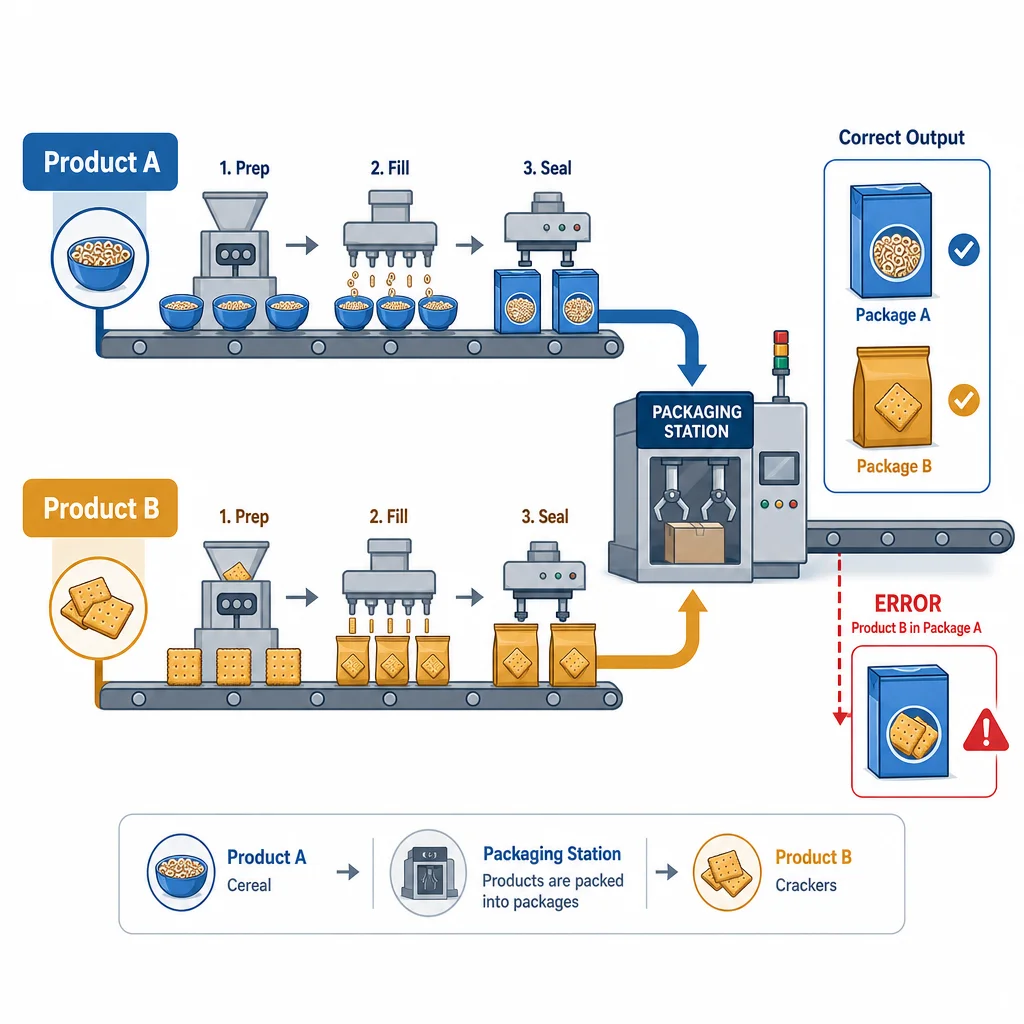
The most likely explanation for this type of alert is a packaging line error. High-volume food manufacturing facilities process multiple products on the same line, sometimes switching between different fillings and sauces within the same shift. When a changeover is not completed cleanly, product from one run ends up sealed into packaging meant for another.

In the Rana case, bags printed for the beef-and-burrata line appear to have been filled with shrimp ravioli in lobster sauce during a production window covering roughly March 10 through April 21, 2026. The error was only caught when customers opened their bags at home.

A 2023 analysis of food allergen recalls published in research by Deibel Laboratories found that 64.6 percent of major allergen recalls were caused by labeling and packaging errors — with wrong package or wrong label being the single most common root cause. A further 21.3 percent were caused by allergen cross-contact during production. The study concluded that better packaging line controls could have prevented more than three-quarters of all major allergen recalls.

This kind of error has precedent. In June 2024, FSIS issued a similar alert for "WOW BAO Thai-Style Curry Chicken" sold at Walmart after the boxes were found to actually contain teriyaki chicken bao with undeclared soy and sesame allergens. The mechanism was identical: wrong product in the wrong package, discovered via consumer complaints after the product had already left stores.

Why This Is Particularly Dangerous for Shellfish Allergy

Why This Is Particularly Dangerous for Shellfish Allergy

Shellfish allergy is the most common food allergy among adults in the United States. Roughly 8.4 million Americans live with it, according to the Food Allergy Research and Education (FARE) 2024 statistics. Unlike peanut allergy, which most people develop in childhood, approximately 60 percent of people with shellfish allergy experience their first reaction as adults — meaning many adults have no childhood history of avoiding it and may not have an epinephrine auto-injector at home.

Crustacean shellfish — shrimp, crab, lobster, and crayfish — are among the most severe allergen triggers. The CDC's 2024 data shows 6.7 percent of US adults and 5.8 percent of children have a food allergy of some kind. Among adults, shellfish tops the list.

Reactions can range from hives and gastrointestinal symptoms to anaphylaxis. More than 51 percent of adults with food allergies have experienced at least one severe reaction, according to AAFA. Teenagers and young adults face the highest statistical risk of fatal food-induced anaphylaxis. Epinephrine — an EpiPen or equivalent auto-injector — is the only first-line treatment for anaphylaxis. Antihistamines and steroids are not adequate for severe reactions.

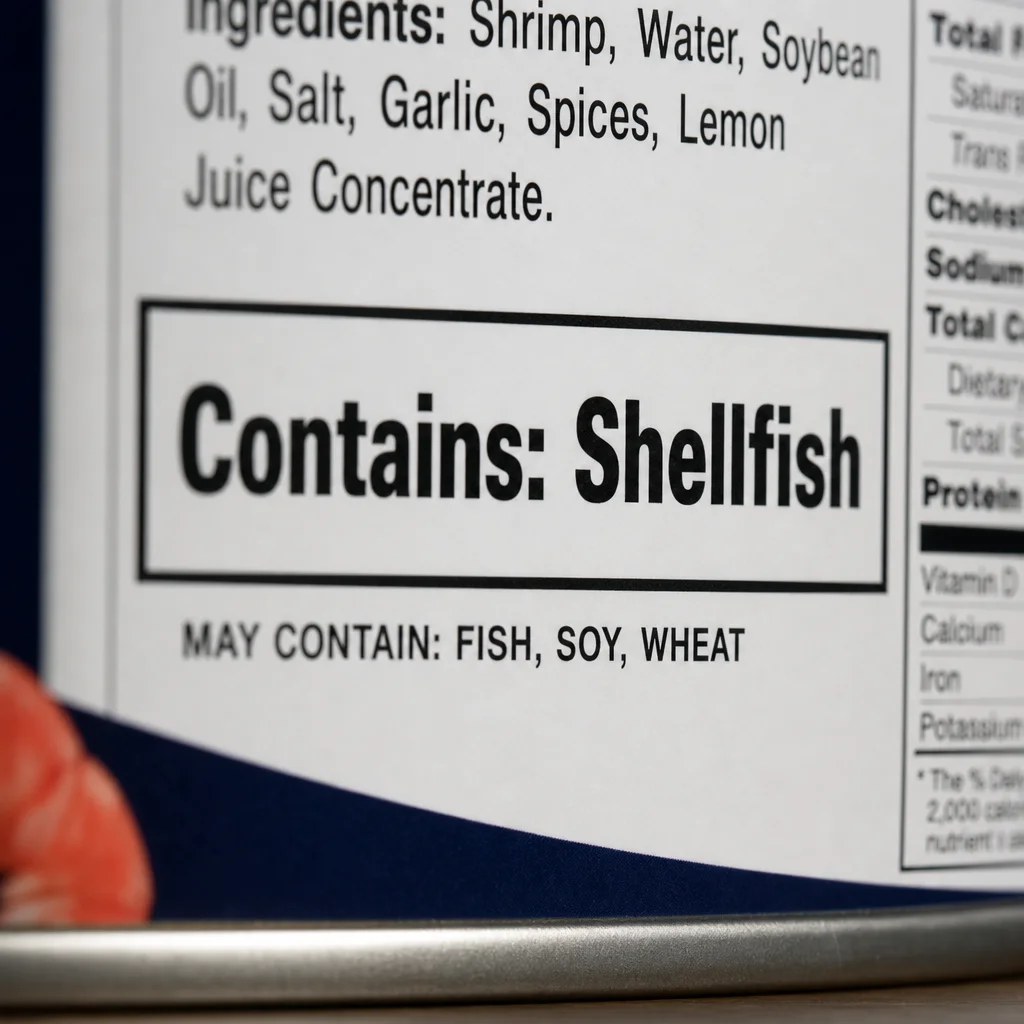
The Rana product contained both shrimp and lobster. Both are crustacean shellfish and must be declared under the federal allergen labeling system. Neither was declared anywhere on the bag, because the bag was labeled for a completely different product.

The FALCPA Gap Nobody Talks About

The Food Allergen Labeling and Consumer Protection Act (FALCPA), first passed in 2004 and updated in 2023 to add sesame as the ninth major allergen, requires clear disclosure of the Big 9 allergens on food labels. Shellfish are on the list. Any food containing shrimp or lobster must declare it.

But here is the regulatory nuance that rarely gets discussed: FALCPA applies only to food products regulated by the FDA. It does not apply to meat, poultry, and egg products regulated by the USDA's Food Safety and Inspection Service.

The Giovanni Rana ravioli is classified as a meat product because the intended contents were beef. That puts the product under FSIS jurisdiction — not FDA. For FSIS-regulated products, allergen labeling is technically voluntary under FALCPA. FSIS enforces allergen disclosures through its misbranding provisions under the Federal Meat Inspection Act, but there is no FSIS equivalent of FALCPA's explicit labeling mandate.

The Asthma and Allergy Foundation of America (AAFA) has called this out directly: "FALCPA's allergen labeling requirements only extend to those products that the FDA regulates. They do not apply to meat, poultry, and egg products overseen by the USDA."

This gap has real consequences. A consumer with shellfish allergy shopping for a frozen pasta entrée at a large retailer might reasonably assume that allergen labeling rules apply uniformly. They do not. Products containing meat — including most ravioli, stuffed pasta, and meat-based frozen entrees — fall under FSIS, not FDA, and the legal floor for allergen disclosure is different.

Why Ingredient Scanning Has Limits Here

Most food safety tools, including ingredient scanner apps, work by reading what is declared on a label. If a label correctly lists shrimp, a scanner can flag it for someone with shellfish allergy. If a label correctly lists milk, it can flag that too.

The Giovanni Rana situation represents a different category of risk: the label is accurate for a product that is not inside the package. No scanner can catch that. The only path to detection is reading what is physically in front of you when you open the package.

This is why FSIS issued a public health alert rather than simply noting that the label should have listed shellfish. The hazard is not a labeling omission — it is a production failure. The label matched a different product that was never supposed to be in this particular bag.

Costco offered full refunds without requiring a receipt, since Costco membership purchases are tracked and can be confirmed through member accounts. FSIS listed the contact for the manufacturer as April Klein, customer service manager for Rana Meal Solutions (aklein@ranausa.us), for consumers with questions.

What to Do If You Have Shellfish Allergy

What to Do If You Have Shellfish Allergy

The affected production window runs from March 10 to April 21, 2026. The use-by dates on affected packages range from May 14 to June 25, 2026. If you purchased Giovanni Rana Rustic Beef Sauce & Creamy Burrata Cheese Ravioli at a Costco in Maryland or New Jersey during that period, FSIS recommends:

  • Do not eat the product
  • Return it to the store for a full refund or discard it
  • If you have shellfish allergy and ate the product and developed symptoms, seek emergency care

More broadly, if you or someone in your household has shellfish allergy, a few habits reduce risk from production mix-up scenarios:

  • Always inspect prepared food before eating, particularly from bulk packaging
  • Keep an epinephrine auto-injector current and accessible
  • Know the difference between a formal recall (product pulled from shelves) and a public health alert (product off shelves, may be in homes) — both require action if you have the product
  • Report unexpected product contents directly to FSIS via their report portal

For ongoing protection, IngrediCheck can help you scan grocery products to check for any declared shellfish ingredients before purchase — including seafood ingredients that sometimes appear in unexpected places like pasta sauces, condiments, and seasoning blends. The Rana alert is a reminder that declared ingredients are only one part of the story, but they are the part that scanning can address.

Next Label Check

Follow the scanner, hub, and ingredient paths connected to this guide

Get the app for clearer label decisions.

Scan labels, see what fits your food notes, and read the why in plain English.

IngrediCheck app