Food Policy Watch

Dubai Chocolate Recall Risk: What 44 of 45 UK Tests Revealed

The UK's Food Standards Agency tested 45 samples of viral Dubai-style chocolate and found only one that met basic labeling and safety requirements. Here's what went wrong and why imported viral foods keep slipping past allergen checks.

Jul 2, 2026|9 min read
By Sanket Patel|Updated 2026-07-02|4 sources|Editorial standards
Dubai Chocolate Recall Risk: What 44 of 45 UK Tests Revealed

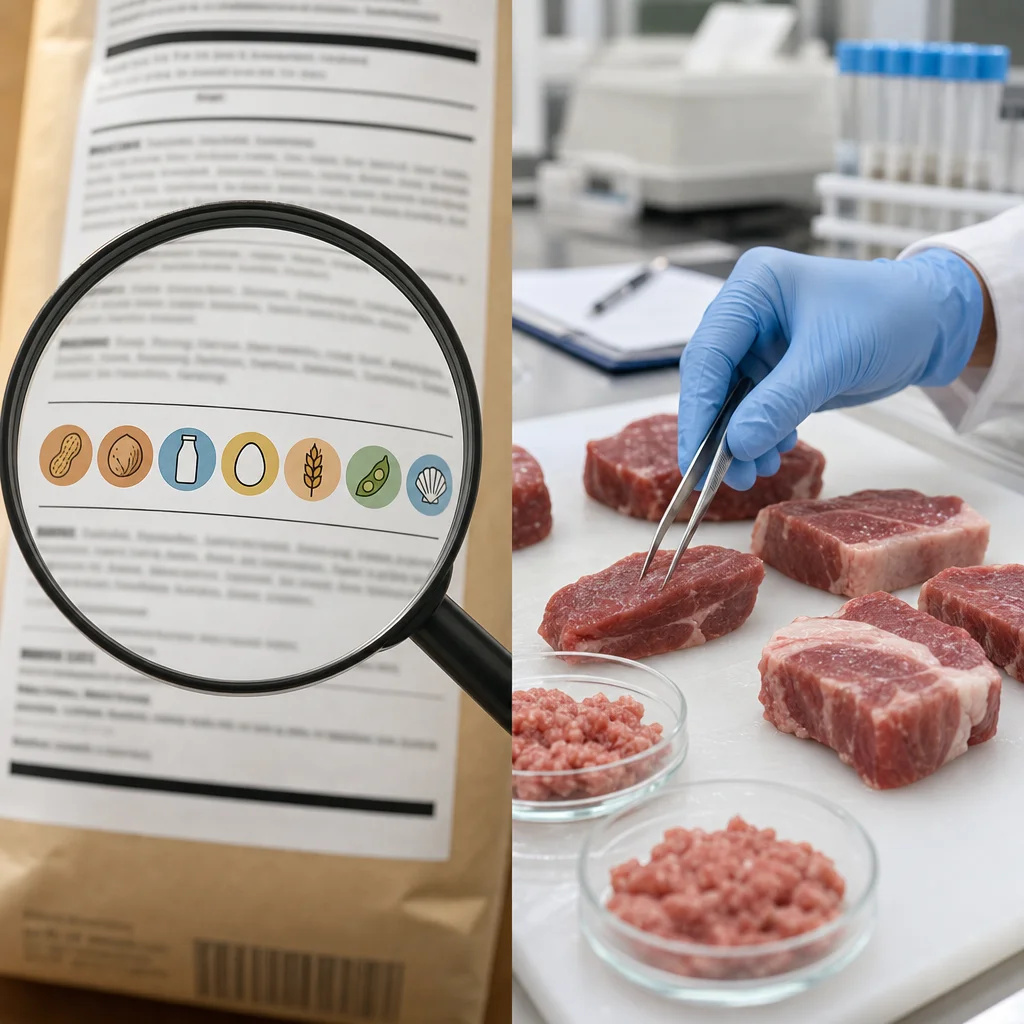
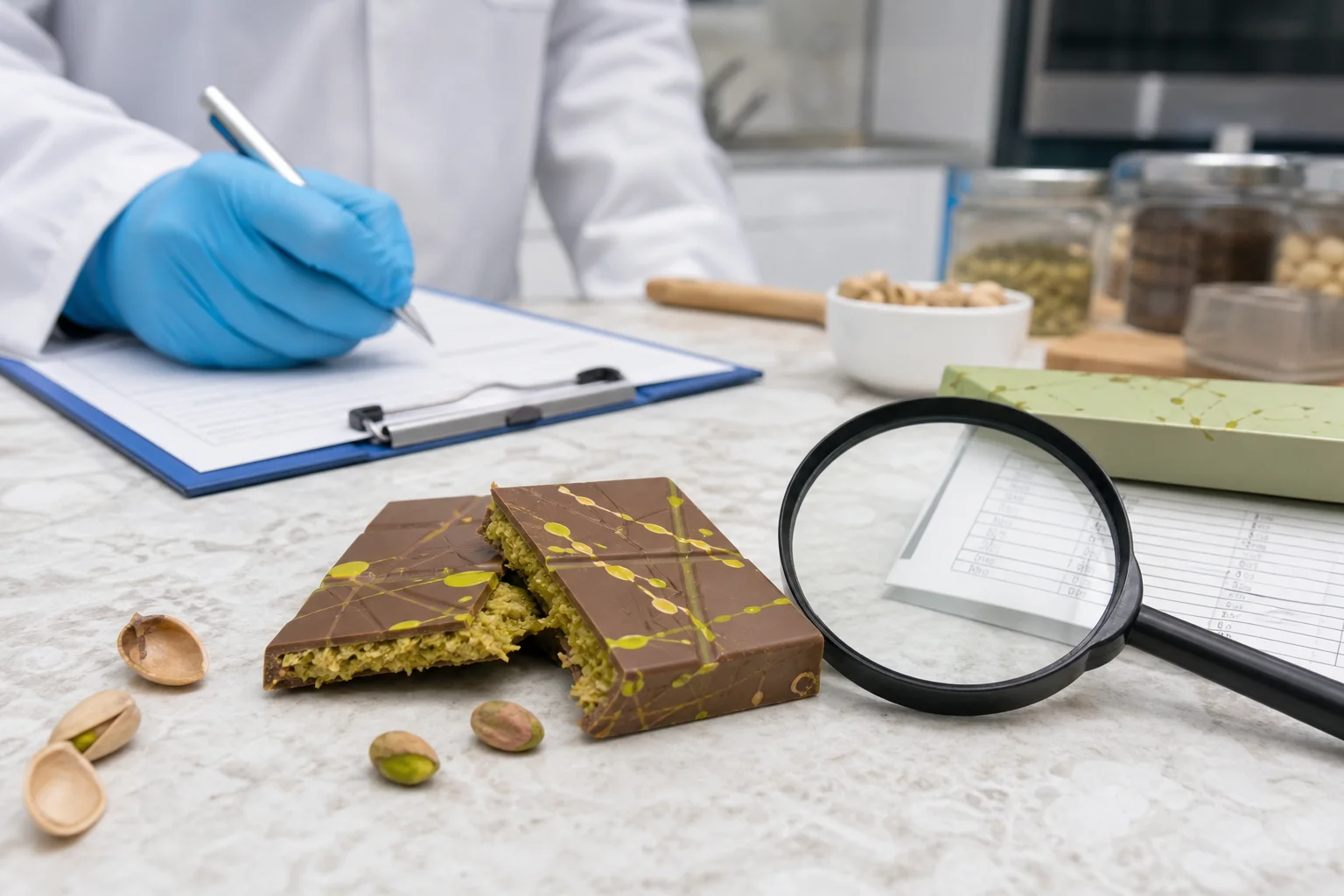
The UK's Food Standards Agency ran its sixth annual retail surveillance survey between July and December 2025, pulling 845 products from supermarkets, independent shops, and online sellers. Among the categories tested was the viral pistachio-and-kunafa chocolate bar that has dominated social media feeds since 2024. The agency tested 45 samples. Only one passed every labeling and safety requirement.

That is not a minor compliance gap. It is a near-total failure rate for a product millions of shoppers have bought sight unseen, often through resellers, market stalls, or online listings with no obvious connection to a regulated UK food business.

What the FSA Actually Found

Forty-two of the 45 Dubai-style chocolate samples failed on labeling grounds: missing or incorrect use-by and best-before dates, allergens not clearly emphasized on the ingredients list, ingredients not listed in the correct order, and no UK importer or food business operator details printed anywhere on the packaging. Rebecca Sudworth, the FSA's Director of Policy, put it plainly: "Our role is to make sure the food people buy is safe and what it says it is. In December 2025, when we found that the majority of Dubai-style products did not pass our stringent food safety checks, we took immediate action."

That immediate action followed a stark warning issued the same month. Sudworth told consumers directly that "people with an allergy should not eat Dubai-style chocolate," adding that the warning "includes all allergies, not just peanut and sesame." When a food safety regulator tells an entire population of allergic consumers to simply avoid a product category, it signals that the labeling problem is not an isolated bad batch. It is structural.

"Only one of the 45 samples of Dubai-style chocolate passed every test and labelling requirement." — Food Standards Agency

Why a Chocolate Bar Became a Global Phenomenon

Why a Chocolate Bar Became a Global Phenomenon

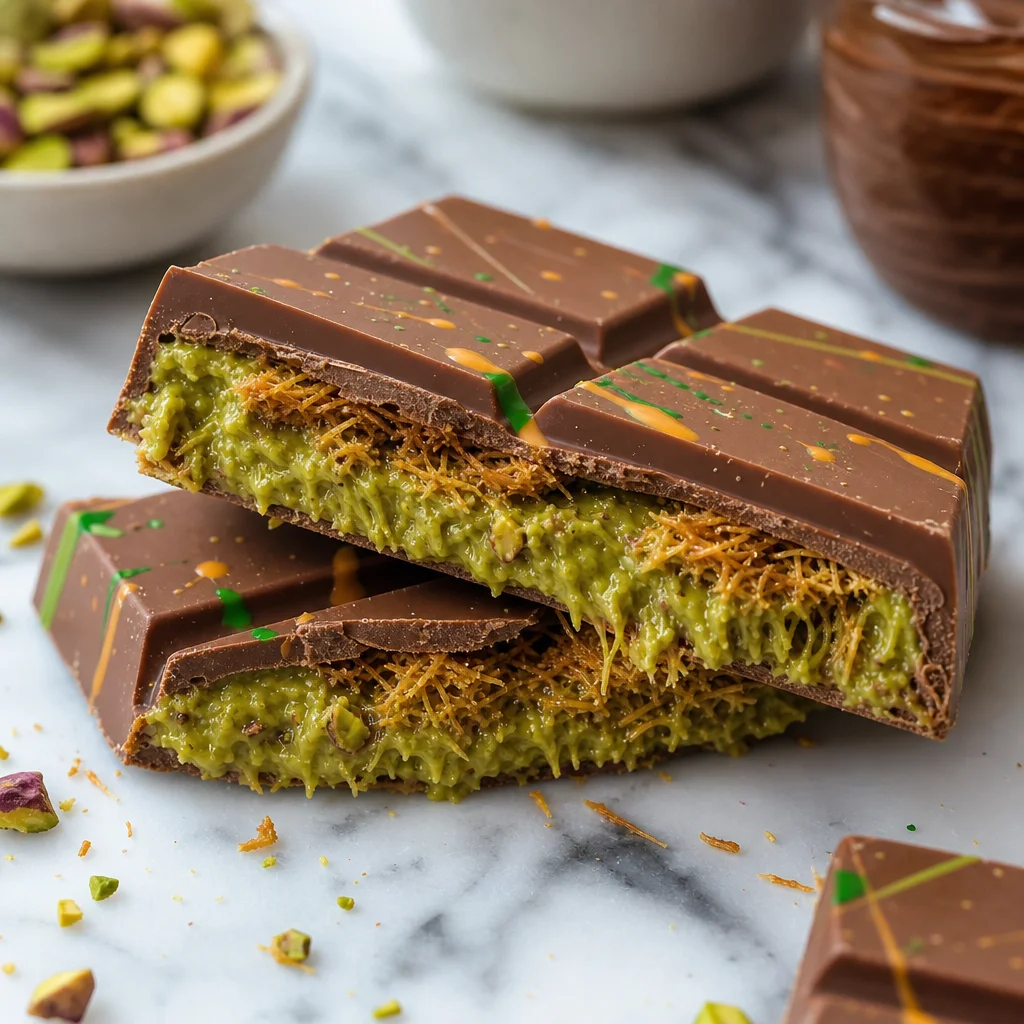
Dubai-style chocolate traces back to 2021, when British-Egyptian engineer Sarah Hamouda and chef Nouel Catis Omamalin created a milk chocolate bar filled with pistachio-tahini cream and kadayif, the shredded filo pastry used in traditional Middle Eastern desserts. Their brand, Fix Dessert Chocolatier, called it "Can't Get Knafeh of It." The bar stayed a niche Dubai product until December 2023, when a TikTok ASMR video of someone biting into it collected more than 120 million views. From there, the bar became a global obsession, spawning imitations from Lindt, Aldi, and Läderach, inspiring copycat products as far away as South Korea, and even prompting a German court to rule that "Dubai chocolate" is not a protected geographic term anyone can trademark.

That last detail matters more than it sounds. Because the name carries no legal protection and the original is genuinely made in Dubai, a flood of unofficial, unbranded, and outright counterfeit versions has entered global supply chains, often through informal import channels that never touch a standard UK or US food safety inspection regime.

The Allergen and Contamination Problems Hiding Inside

Kunafa filling is built on pistachio and tahini (sesame paste), two of the most potent allergens on any regulator's list. That alone makes precise labeling essential. But UK recalls through 2025 found something worse than a labeling oversight: bars sold under the Noesis, Fix It, and Le Damas names were traced to an "uncontactable" importer, Black Sea Trading Ltd, and contained undeclared peanuts, almonds, cashews, and walnuts that were nowhere on the label. Le Damas confirmed that the specific recalled product was a counterfeit using its branding without authorization, meaning the company whose name was on the wrapper had no control over what was actually inside it.

This is the same pattern behind a string of recalls where allergens went undeclared on the label: the fastest-growing part of a supply chain is usually the least tested. A regulatory laboratory in Baden-Württemberg, Germany, tested eight imported Dubai-style chocolate samples and found every single one defective. Five contained non-cocoa fats that violate Germany's legal definition of "chocolate." Five, all traced to the same UAE producer, showed contamination with 3-MCPD and glycidyl esters, industrial byproducts of low-quality palm oil refining that carry carcinogenic risk. All three Turkish-sourced samples had undeclared sesame and tahini. One sample's pistachio component tested for elevated aflatoxin, a toxin produced by mold that can contaminate poorly stored nuts.

This is what happens when a viral food trend outruns the supply chain built to catch problems in it. A product engineered around two major allergens, manufactured across multiple countries with wildly inconsistent quality control, and distributed through resellers with no traceable importer, is close to a worst-case scenario for allergen safety.

The US Has Not Been Immune

American shoppers have run into their own version of the problem. A Dubai-style chocolate spread sold under the Emek brand at World Market was recalled in mid-2025 as a Class I recall, the FDA's highest-risk category, after testing positive for Salmonella. Separately, Costco pulled its "Rolling Pin" Dubai-style chocolate bar in September 2025 because the label listed "gluten" as an allergen warning instead of correctly identifying wheat, the allergen actually required under US labeling rules. Neither recall points to an FDA import alert targeting the category as a whole, but both show the same underlying pattern the FSA documented at scale: a trending import moving faster than the systems meant to verify what is actually in it.

Goat Meat That Was Actually Sheep

Goat Meat That Was Actually Sheep

The same FSA survey tested 40 samples described as goat meat. Twenty contained only sheep. One was a sheep-and-goat mix. Another was, in the FSA's words, "wholly deer." Species substitution like this is not rare. A DNA-barcoding study of ceviche and poke dishes across 103 US samples found species substitution in 23.3% of cases, and similar mislabeling has been repeatedly documented in swordfish and shark markets.

Substituting sheep for goat might look like ordinary fraud, cutting corners with a cheaper ingredient, until you consider who relies on that label being accurate. Someone managing a specific meat allergy, someone keeping halal or kosher dietary rules that name goat and not sheep or venison, or someone simply avoiding an ingredient for religious or ethical reasons has no way to catch the substitution themselves. The label is the only tool they have, and in this survey, it was wrong half the time.

Jessica Merryfield of the Chartered Trading Standards Institute described the stakes bluntly: "To not do this is illegal and also highly dangerous as it makes such foods unsafe to those with food allergies." The global market for food authenticity testing, valued around $5.3 billion in 2017 and projected to nearly double by 2030, exists precisely because economically motivated food fraud keeps outpacing voluntary compliance.

Why the Gaps Exist: Natasha's Law and Its Limits

The UK's Natasha's Law, effective since October 2021, requires prepacked-for-direct-sale foods to carry a full ingredients list with all 14 major allergens clearly emphasized, typically in bold. The law was named for Natasha Ednan-Laperouse, who died after eating a Pret a Manger baguette containing undeclared sesame. It is one of the more rigorous allergen labeling frameworks anywhere.

The problem is that Natasha's Law, like most allergen labeling rules, was built around food made and sold within a regulated domestic supply chain. Dubai-style chocolate imported through informal channels, repackaged by resellers, or sold via online marketplaces frequently does not pass through the checkpoints the law assumes exist. The FSA's repeated finding of "no UK importer details" on failed samples is the tell: when nobody can be identified as legally responsible for a product's safety, the entire framework built to protect allergic consumers has nothing to attach to.

A Practical Way to Approach Viral Imported Foods

The lesson from this survey is not that Dubai chocolate itself is uniquely dangerous. It is that any food trend that goes viral faster than a regulated supply chain can adapt becomes a temporary blind spot, and that blind spot is exactly where allergen labeling failures cluster. A few habits help close that gap for any viral or informally imported food, not just this one.

Check for a named, traceable importer or distributor on the package, not just a brand name or logo. Read the full ingredients list rather than trusting the product name. A "chocolate" bar with pistachio filling should list every nut and every form of sesame or tahini explicitly, and if it doesn't, treat that as a red flag rather than an oversight. Be more cautious with products bought through resellers, pop-up stalls, or marketplace listings than with the same item bought from an established retailer's own shelf, since traceability tends to break down exactly at that handoff. And if you have a diagnosed allergy, treat any product still riding a social media wave, with limited regulatory history and inconsistent sourcing, as higher risk until it has been on the market long enough for agencies like the FSA or FDA to actually test it.

Using IngrediCheck, you can scan the ingredient list on chocolate, confectionery, and imported specialty foods to flag pistachio, sesame, tree nuts, and other allergens the moment you pick up a product, even when the labeling on a trending import is incomplete, inconsistent, or missing the details a full safety check would normally catch.
Next Label Check

Follow the scanner, hub, and ingredient paths connected to this guide

Get the app for clearer label decisions.

Scan labels, see what fits your food notes, and read the why in plain English.

IngrediCheck app