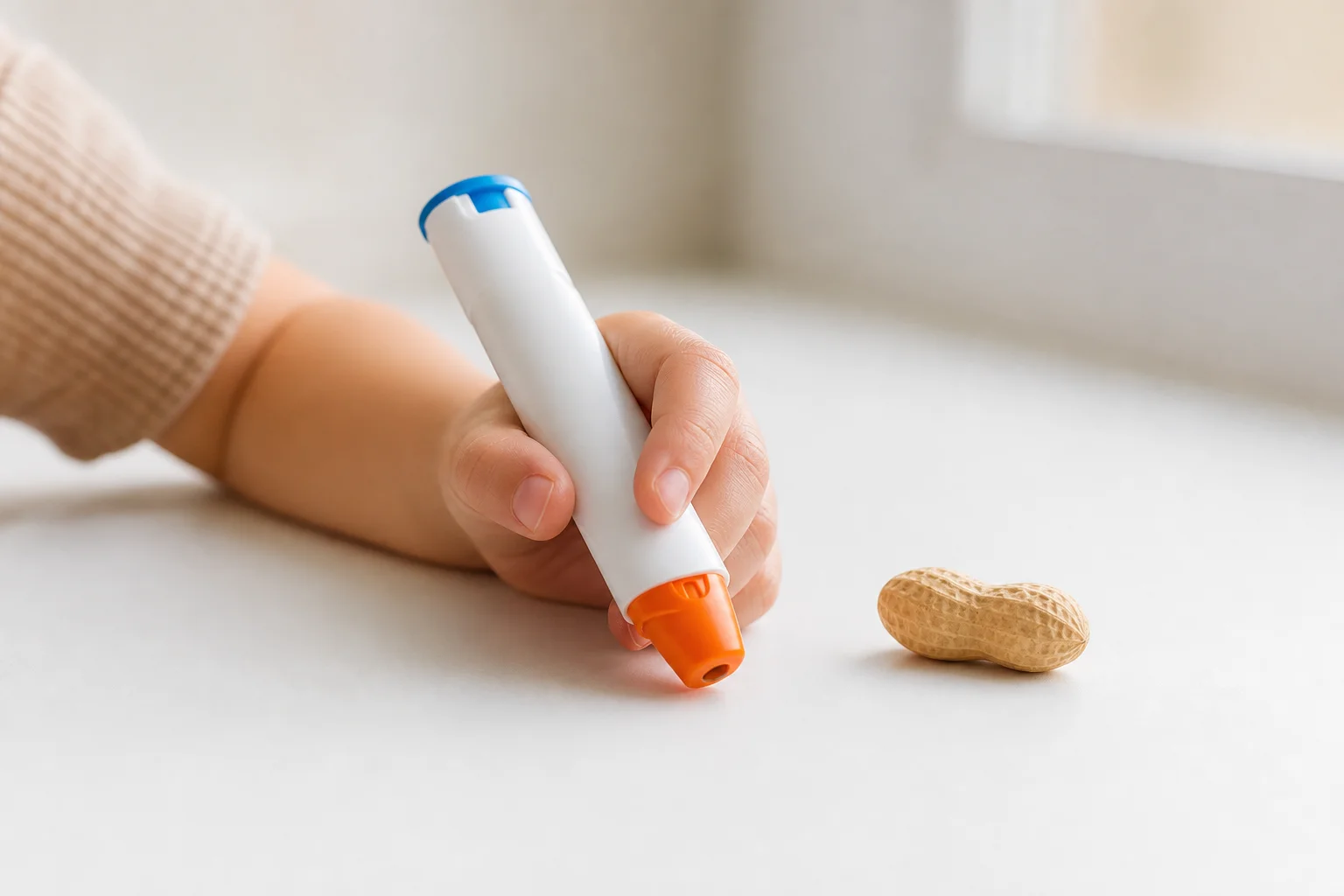
In early 2020, the food allergy community celebrated what many allergists called a monumental moment. The U.S. Food and Drug Administration had just approved Palforzia, the first ever oral immunotherapy treatment for peanut allergy. For the first time, children with peanut allergies had a standardized, FDA-sanctioned option beyond strict avoidance and carrying epinephrine everywhere they went.
Six years later, that treatment is ending.
Stallergenes Greer, the biopharmaceutical company that acquired Palforzia from Nestle Health Science in 2023, announced in January 2026 that it will discontinue the product worldwide. The final date: July 31, 2026. No new patients will start treatment after April 1, 2026. The company has stated the decision is "not related to product safety, quality, or efficacy." It is a commercial and strategic decision.
For the roughly 6.2 million Americans with peanut allergy, the news lands hard. For families midway through treatment, it raises urgent questions. For the broader allergy community, it raises a deeper question.
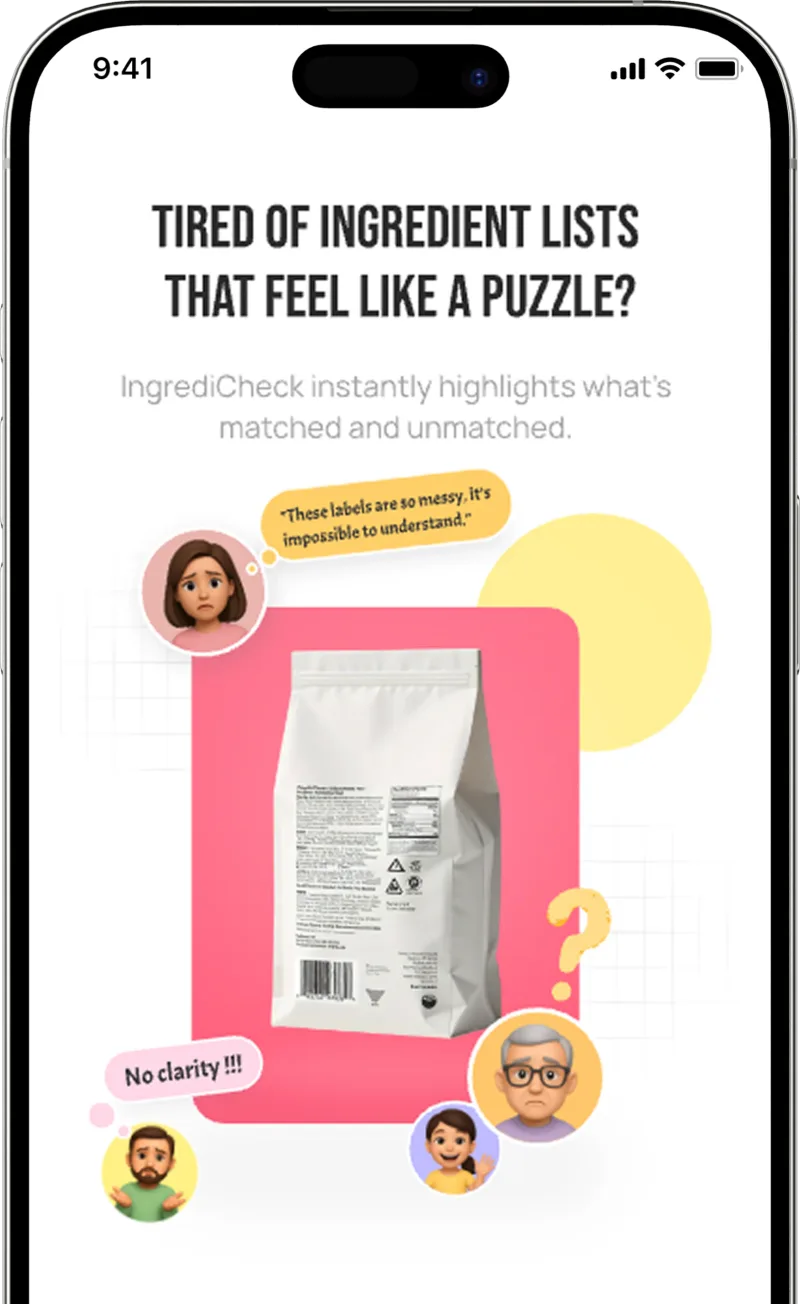
What does the future of food allergy treatment look like now? For help navigating peanut allergies in daily life, see our peanut-free ingredient checker.
What Palforzia Was
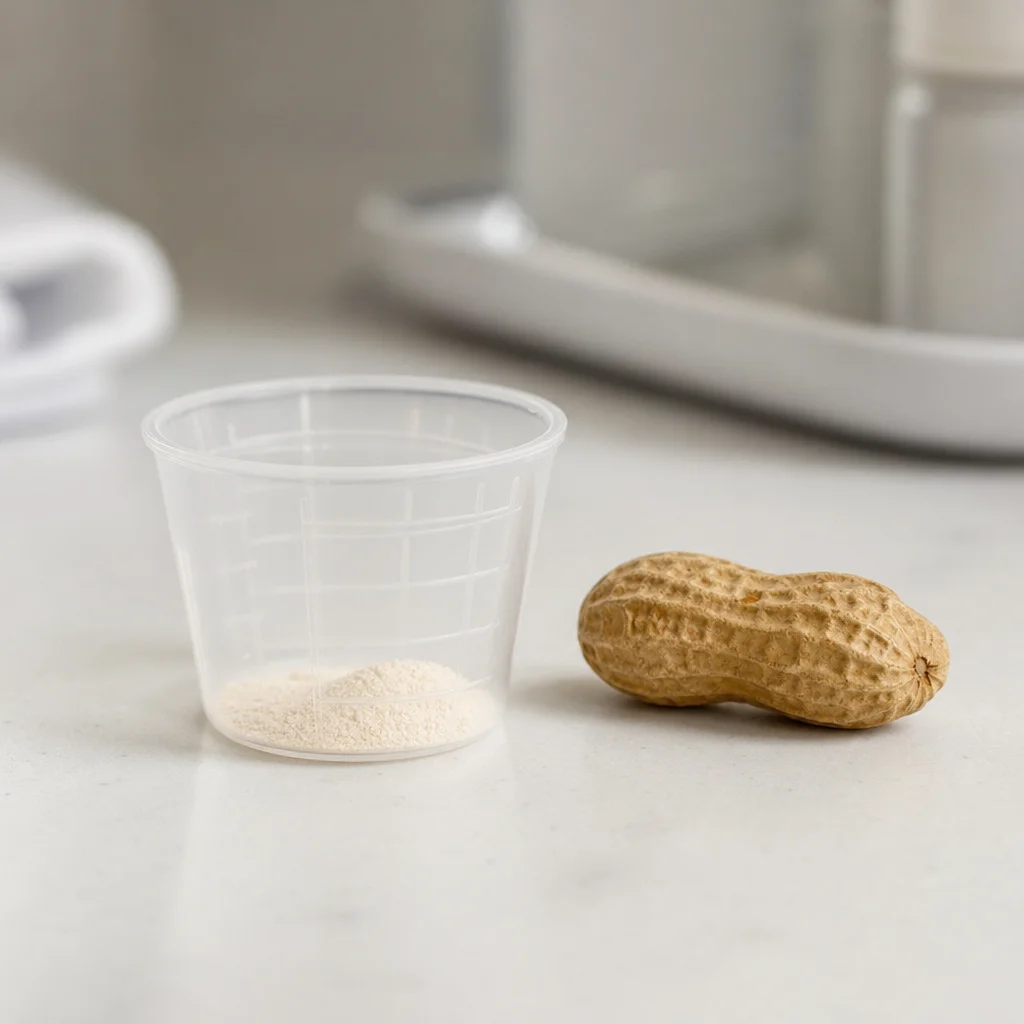
To understand what is being lost, you need to understand what Palforzia actually did. The treatment was a form of oral immunotherapy, often abbreviated as OIT. It worked by giving patients precisely calibrated, gradually increasing doses of peanut protein powder in capsule form. The goal was desensitization: training the immune system to tolerate small amounts of peanut so that accidental exposure would be less likely to trigger a severe reaction.
The treatment was not a cure. Patients still had to maintain a strict peanut-free diet.
They still had to carry epinephrine auto-injectors. What Palforzia offered was a safety net: the confidence that if your child accidentally ate a cookie that touched a peanut butter one, the reaction might be mild rather than life-threatening.
The pivotal clinical trial, published in the New England Journal of Medicine in 2018, showed that two-thirds of children who received Palforzia could tolerate the equivalent of roughly two peanuts at the end of treatment, compared to just 4% in the placebo group. A follow-on study published in the Journal of Allergy and Clinical Immunology: In Practice confirmed that the benefits persisted with continuous daily dosing beyond two years.
The treatment was available only through a restricted access program called the Palforzia Risk Evaluation and Mitigation Strategy. Patients had to be treated in certified allergy centers, and the first dose of each escalation level was administered under medical supervision. It was not convenient. It was not cheap. But for many families, it was the first real hope.
Why It Is Being Discontinued
Stallergenes Greer has been clear: the discontinuation is not about safety. Multiple independent organizations have confirmed this. Anaphylaxis UK stated that the manufacturer confirmed the decision has nothing to do with the treatment's safety profile, quality, or effectiveness.
The problem appears to be commercial. Palforzia was originally developed by Aimmune Therapeutics, which was acquired by Nestle Health Science. Nestle then sold the product to Stallergenes Greer in September 2023. After a strategic review, Stallergenes determined that continuing production did not make business sense. The product is not being sold or transferred to another company.
The commercial failure of a medically validated treatment is not unique to Palforzia. Food allergy immunotherapy faces inherent market challenges. The treatment requires months of specialized medical supervision, making it expensive to deliver. Insurance coverage has been inconsistent. And the market, while real, is fragmented across thousands of allergy practices.
The Numbers Behind Peanut Allergy
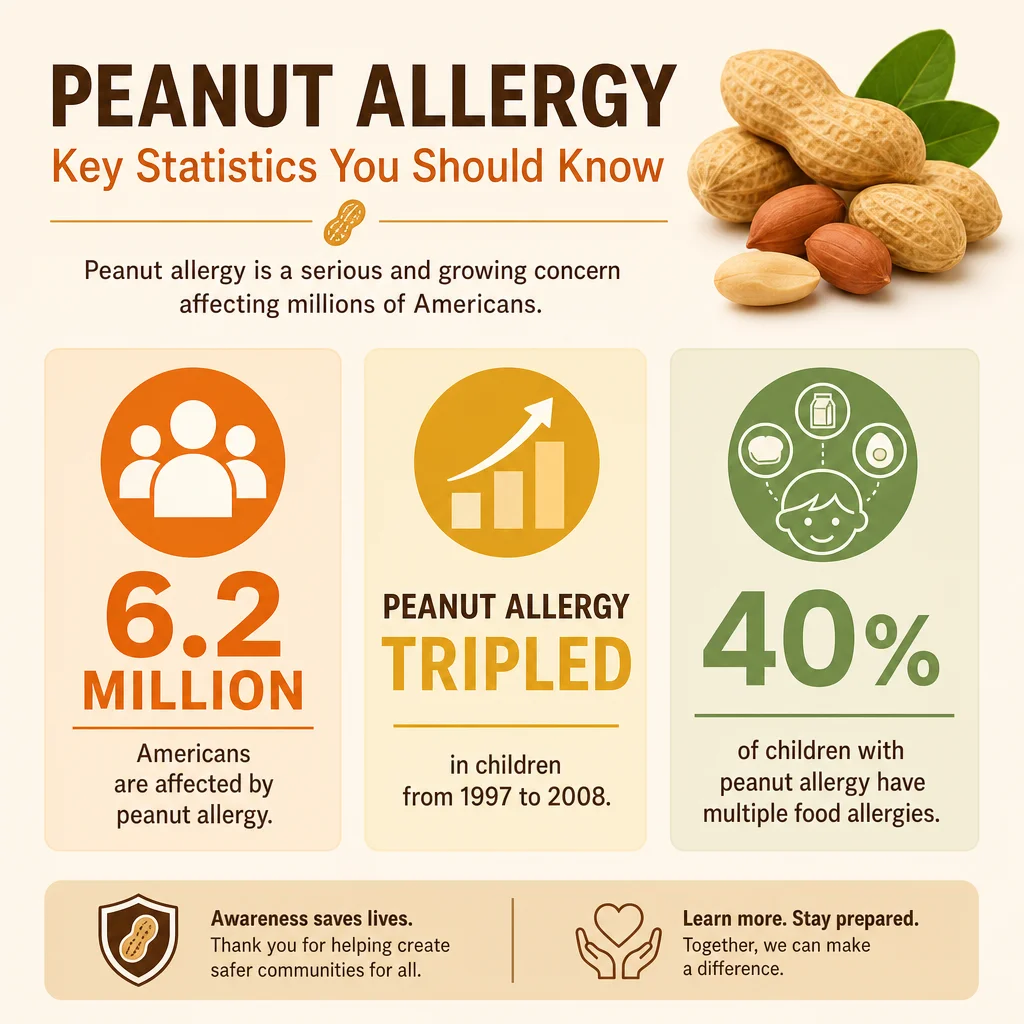
The discontinuation comes at a time when peanut allergy is more common than ever. According to FARE, approximately 6.2 million Americans have a peanut allergy. Food allergy prevalence among children increased by 50% between 1997 and 2011, and by another 50% between 2007 and 2021. The prevalence of peanut allergy in children more than tripled between 1997 and 2008.
About 40% of children with food allergies are allergic to more than one food. Peanut allergy is rarely outgrown: only about one in five children with the condition will naturally outgrow it. And it remains the most common cause of fatal food-related anaphylaxis.
Caring for children with food allergies costs U.S. families nearly $33 billion per year in inflation-adjusted dollars, according to research published by FARE. Emergency department visits for food-induced anaphylaxis increased by 377% between 2007 and 2016.
These are not abstract statistics. They represent real families who check every label, carry epinephrine everywhere, and live with constant vigilance.
What Happens to Patients Now
The wind-down has already begun. Hospitals were advised to stop starting new patients on Palforzia after April 1, 2026. For the three groups of patients affected, the guidance varies.
If You Are on a Waiting List
You will not receive Palforzia. Your hospital or allergy clinic should contact you directly. In the meantime, continued strict peanut avoidance and carrying two epinephrine auto-injectors at all times remains essential. Anaphylaxis UK emphasizes that this news, while deeply disappointing, does not change the fundamentals of peanut allergy management.
If You Had a Confirmed Start Date Before April 1
The manufacturer has reassured hospitals that sufficient supplies exist for patients who already had confirmed start dates to complete their treatment. If supply issues arise during the up-dosing phase, your allergy team may discuss alternative approaches, such as transitioning to a carefully measured dose of whole peanut under medical supervision.
If You Are Already Mid-Treatment
Continue taking your current dose. Follow the guidance from your most recent clinic appointment. Stallergenes Greer has stated that up-dosing and maintenance packs will be supplied through March 2027, giving patients on active treatment time to complete their course or transition. If you have concerns, speak with your allergy specialist.
The Legacy of Palforzia
Despite its commercial failure, Palforzia leaves behind something significant. It proved the concept. Before Palforzia, oral immunotherapy existed primarily in research settings and a handful of private clinics. The treatment demonstrated that a standardized, FDA-reviewed OIT protocol could work at scale. It established safety monitoring frameworks. It generated years of real-world data.
Dr. Stephen Tilles, a co-author of the pivotal Palforzia study, told Allergic Living that Palforzia "succeeded in addressing an unmet need." Dr. Kelly O'Shea of the University of Michigan's OIT program called the decision disheartening, noting that Palforzia "was a major milestone in the realm of food allergy."
The clinical infrastructure built around Palforzia certification, the protocols for up-dosing and monitoring, and the body of evidence are not going away. They will inform the next generation of treatments.
What Comes Next
The discontinuation of Palforzia does not mean the end of peanut oral immunotherapy. It means the field is returning to a landscape it knew before 2020, but with far more knowledge.
Private allergy clinics in the U.S. and UK continue to offer OIT using various protocols. In the UK, the Allergy Centre of Excellence has already announced an alternative peanut OIT program for children over age 4, with pricing in line with existing single-allergen protocols.
Research is also advancing rapidly on alternative approaches. Real-food immunotherapy, where patients consume carefully measured doses of actual peanut or boiled peanut rather than pharmaceutical-grade capsules, is being studied extensively. Boiling peanuts for several hours reduces allergenicity, potentially making the treatment safer with fewer side effects. The goal, researchers say, is to make OIT safer, more effective, and more widely available.
The broader pipeline for food allergy treatments includes sublingual immunotherapy (placing allergen extracts under the tongue), epicutaneous immunotherapy (absorbing allergens through a skin patch), and biologic medications that target the immune pathways involved in allergic reactions. Xolair, an injectable biologic originally approved for asthma, received FDA approval in 2024 for reducing allergic reactions to multiple foods simultaneously.
How Families Can Protect Themselves
While the treatment landscape shifts, the fundamentals of peanut allergy management remain constant. Strict avoidance of peanut-containing foods is the first line of defense. Reading every label, every time, is non-negotiable. Ingredients change. Manufacturing processes change. A product that was safe last month may not be safe today.
Cross-contamination remains one of the most difficult risks to navigate. Products manufactured on shared equipment with peanut-containing foods may carry advisory labels like "may contain peanuts." These labels are voluntary and inconsistent. A product without such a label may still carry risk.
For families navigating this reality, having reliable information at the point of purchase makes a meaningful difference.
Being able to scan a product and quickly understand whether it contains peanut or has been processed in a facility with peanut risk reduces the mental load of constant label checking.
A Setback but Not the End
The discontinuation of Palforzia is a genuine loss for the food allergy community. It removes the only FDA-approved standardized treatment option for peanut allergy. It will leave some families without a path they had been counting on. It raises uncomfortable questions about whether the market can sustain specialized food allergy treatments.
But the science does not stop. Research into food allergy treatments is more active than ever. The knowledge gained from six years of Palforzia use has advanced the entire field. And for the millions of families managing peanut allergy every day, the core mission remains the same: stay safe, stay informed, and keep pushing for better options.
Using IngrediCheck, you can scan food products and instantly identify whether they contain peanut or have been processed in facilities with peanut risk. For families managing peanut allergy, having this information at your fingertips can reduce the anxiety of every shopping trip and every meal.