Label Reading Guides

Perimenopause Diet: Trigger Foods and Nutrients That Help

There is no official list of foods to avoid in perimenopause. Here is what the evidence says about caffeine, alcohol, spicy food and sugar, which nutrients matter, and how to find your own triggers.

Sep 12, 2026|9 min read
By Sanket Patel|Updated 2026-09-12|3 sources|Editorial standards
Perimenopause Diet: Trigger Foods and Nutrients That Help

If you are in your forties and your cycle has started to behave unpredictably, you have probably typed some version of the same question into a search bar: what should I stop eating? The honest answer is less dramatic than most wellness articles suggest. There is no definitive list of foods to avoid in perimenopause. There is a short list of things that bother some women, a handful of nutrients worth paying attention to, and a practical way to work out which category your own symptoms fall into.

This guide walks through what the evidence supports, where it conflicts, and how to turn a vague hunch ("coffee makes my hot flashes worse") into something you can actually test.

What Perimenopause Actually Is

Perimenopause is the transition before menopause. According to the NHS, it is when periods become irregular, while menopause is defined as 12 months without a period. It usually affects women between 45 and 55, can start earlier, and has no routine diagnostic test. A doctor typically diagnoses it from age and symptoms.

Common symptoms include hot flashes, night sweats, sleep problems, low mood and memory changes. Some women have severe symptoms and others barely notice any. That variability is the key to understanding why food advice in this area is so inconsistent.

Why There Is No Official "Avoid" List

For conditions like celiac disease or a peanut allergy, the trigger is well defined and the response is predictable. Perimenopause is different. Symptoms are driven by shifting hormone levels, and food is at most a modifier. Whether a given food makes a difference depends on the person.

The research reflects this. The National Institute on Aging advises avoiding alcohol, spicy foods and caffeine because these can make symptoms worse. The Office on Women's Health frames it more carefully: write down what triggers your hot flashes, and try to avoid those things. Possible triggers, it says, include spicy foods, alcohol, caffeine, stress or a hot room.

Notice the wording. These are possible triggers, not proven causes.

What the Evidence Says About Common Triggers

Caffeine

A Mayo Clinic study of 1,806 women who attended a menopause clinic found that caffeine use was associated with higher vasomotor symptom scores (hot flashes and night sweats). The difference was statistically significant but small, and the study was cross-sectional, so it cannot show that caffeine caused the symptoms.

Caffeine also affects sleep, and sleep is one of the most disrupted areas in perimenopause. The Office on Women's Health suggests avoiding caffeine after noon if you struggle to sleep through the night. For many women, the practical effect of caffeine is on rest rather than on hot flashes directly.

Alcohol

Alcohol dilates blood vessels and can fragment sleep, so it is a plausible trigger for night sweats. Health agencies commonly suggest limiting it. The Office on Women's Health describes a moderate amount for women as one drink a day and no more than seven in a week, and recommends avoiding alcohol right before bed.

Spicy Food

Spicy food is the most anecdotal of the group. It appears in agency lists of possible triggers, but there is little controlled research on it in perimenopausal women. If a hot curry reliably sets off a flush for you, that is useful personal information. If it does not, there is no evidence-based reason to give it up.

Sugar and Refined Carbohydrates

Large swings in blood sugar can feel a lot like a hot flash or an energy crash, and sugary foods can worsen mood and sleep for some people. Sugar also matters for long-term health in midlife, when weight distribution and insulin sensitivity often change. This is a general-health reason to limit added sugar rather than a perimenopause-specific rule. If you want to read labels for it, our guide to the 30 hidden names for sugar covers the aliases.

Where the Research Disagrees

It would be misleading to present these triggers as settled. The Study of Women's Health Across the Nation (SWAN) is one of the largest and longest studies of the menopausal transition. In its summary of vasomotor symptom findings, the researchers noted that dietary factors including total calories, fat, fibre, caffeine, alcohol and specific vitamins were not associated with hot flashes after accounting for confounders such as education, smoking and BMI. The factors most consistently linked to hot flashes in SWAN were psychological, with anxiety standing out, and poor sleep.

So two reasonable statements can both be true. Across a large population, diet shows a weak link to hot flashes. For an individual woman, a specific food may still reliably set off her symptoms. Your own diary beats the average.

Nutrients Worth Paying Attention To

Nutrients Worth Paying Attention To

Rather than a list of bad foods, the stronger evidence points to a few nutrients that matter more as estrogen declines.

Calcium and Vitamin D

Bone loss speeds up around the menopausal transition. A North American Menopause Society consensus opinion concluded that adequate calcium, with adequate vitamin D, helps prevent bone loss and reduce fracture risk in peri- and postmenopausal women. It put the target at at least 1,200 mg of calcium a day for most women, with intakes above 2,500 mg not recommended. That opinion dates from 2001, so check current national recommendations. The NIH Office of Dietary Supplements lists the recommended dietary allowance by age, and its vitamin D fact sheet gives 600 IU (15 mcg) for adult women.

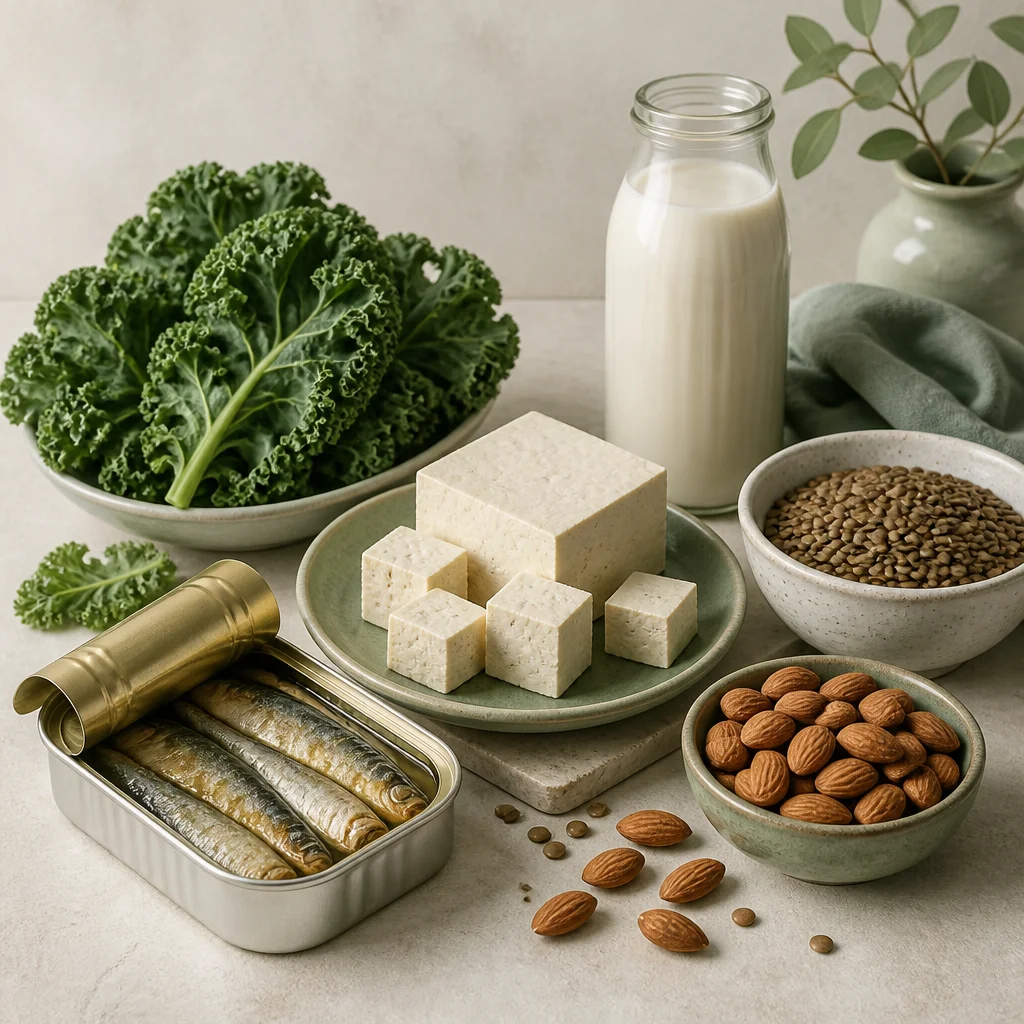
Food sources include dairy, calcium-set tofu, canned fish with bones, leafy greens such as kale and bok choy, and fortified plant milks. If you avoid dairy, check that your plant milk is actually fortified with calcium, since many are not.

Protein

Muscle mass declines with age, and protein helps preserve it. A UPMC summary of Menopause Society guidance cites 1.2 grams of protein per kilogram of body weight per day, which is higher than the minimum for younger adults. Spreading protein across meals, rather than loading it into dinner, is a practical approach.

Fibre, Iron and Overall Pattern

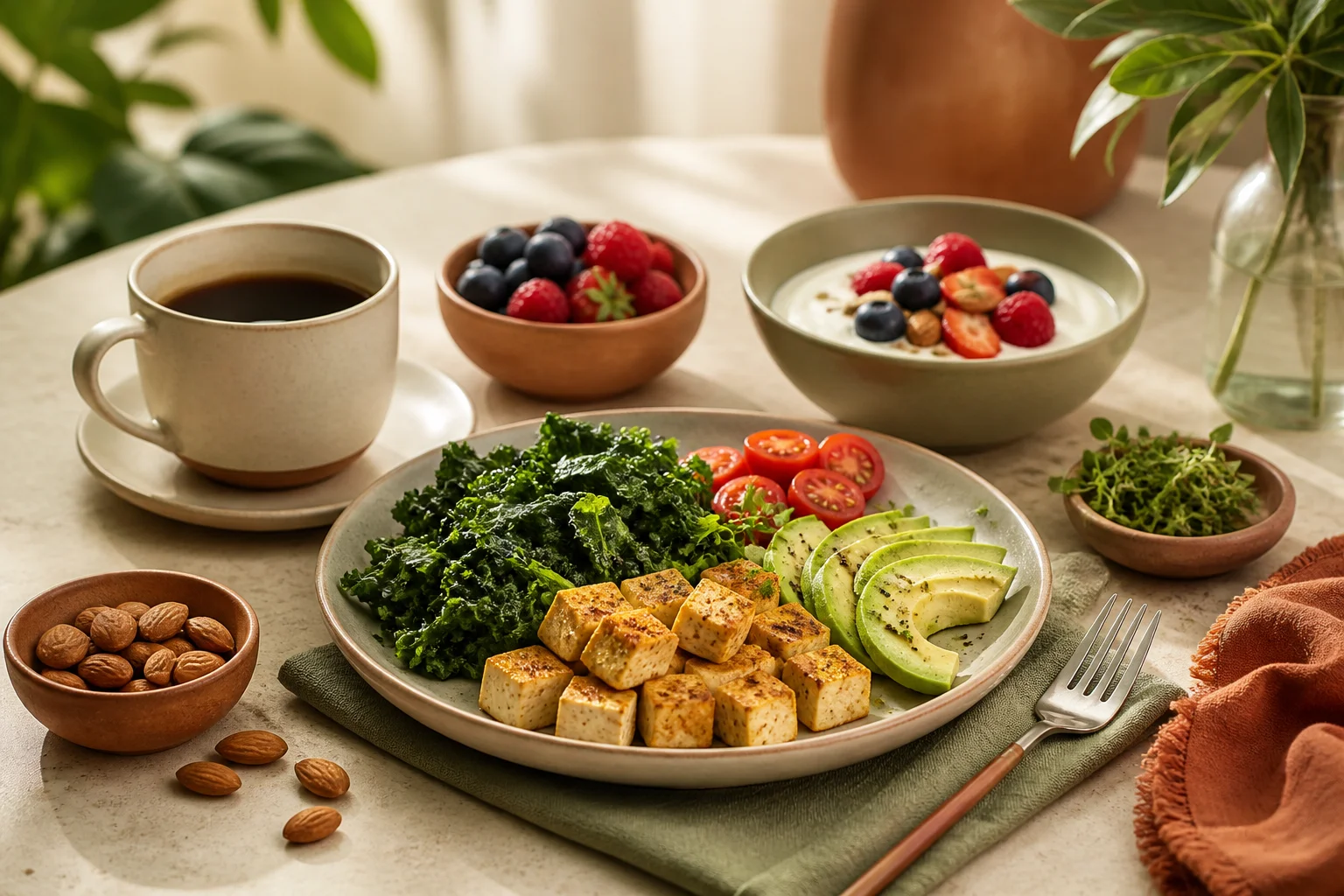
A small Irish study of 63 perimenopausal women found that average intakes of fibre, vitamin D, calcium and iron were significantly below dietary guidelines, while saturated fat exceeded them. It was a small sample, but it matches a common pattern: the issue for many women is not one trigger food but the gaps in an ordinary diet. A Mediterranean-style pattern built on vegetables, legumes, whole grains, fish, nuts and olive oil is a sensible default because it supports bone, heart and metabolic health together.
Phytoestrogens and Soy: Promising, Not Proven

Phytoestrogens are plant compounds with a structure similar to estrogen. Soy isoflavones are the best-known example, and flaxseed is another source. The evidence is mixed. A 2012 meta-analysis found that isoflavones reduced hot flash severity by 26.2 percent compared with placebo. A 2025 meta-analysis in perimenopausal women also looked at soy isoflavones and called for more trials to confirm its findings. Meanwhile, the NCCIH notes that studies of soy and red clover isoflavones have had inconsistent results and that flaxseed products were no more effective than placebo for hot flashes.

The practical reading: eating soy foods such as tofu, tempeh, edamame and soy milk is a nutritious choice for most people and may help some women. It is not a guaranteed treatment. Anyone with a soy allergy should obviously skip it, and our soy allergy guide lists the label names to watch. Supplements are a different matter. Talk to a doctor before taking concentrated isoflavone or herbal products.

A Practical Method: Find Your Own Triggers

A Practical Method: Find Your Own Triggers

Because the evidence is mixed, the most reliable approach is personal experiment.

  1. Keep a simple log for two to four weeks. Record what you eat and drink, the time, and any hot flashes, night sweats, sleep quality and mood.
  2. Look for patterns, not single events. One bad night after wine proves little. Three in a row after evening wine is worth noting.
  3. Change one thing at a time. Move your last coffee to before noon, or swap evening alcohol for a non-alcoholic drink, for a couple of weeks.
  4. Compare. If symptoms improve, you have found a trigger. If nothing changes, you can stop worrying about that food.
  5. Keep the foods that do not bother you. Cutting out things unnecessarily can narrow your diet and make it harder to meet calcium, protein and fibre needs.

If symptoms are severe or disrupt daily life, see a doctor. Hormone therapy and other treatments can be very effective, and diet changes alone are rarely enough in those cases.

Reading Labels for Your Triggers

Once you know what affects you, packaged food gets trickier, because triggers hide under other names.

  • Caffeine appears in coffee, tea, cola, energy drinks and chocolate, and in added forms such as guarana, yerba mate and green tea extract. Some "wellness" and sleep-adjacent products contain more than you would expect. See the FSANZ caffeine rules for how one regulator handles labelling.
  • Added sugar goes by many names, including syrups, concentrates and words ending in "-ose".
  • Alcohol can appear in flavour extracts, some sauces and kombucha-style drinks. If you are limiting it for sleep, check these.
  • Spice may show up as chilli, cayenne, capsaicin, "spice blend" or "natural flavour" in sauces and snacks.
  • Calcium and vitamin D are worth checking on the nutrition panel and on plant-milk cartons, where fortification varies by brand.

Alcohol and fermented foods can also matter for women who find that red wine, aged cheese or other high-histamine foods bring on flushing or headaches. That overlaps with histamine sensitivity, covered in our histamine intolerance guide.

The Bottom Line

Perimenopause does not come with a mandatory list of forbidden foods. Caffeine, alcohol, spicy food and sugar are the usual suspects, and agencies list them as possible triggers, but large studies like SWAN show the link is weak on average and strongly individual. Your priorities are to protect your bones and muscle with enough calcium, vitamin D and protein, to eat a varied pattern rich in fibre, and to treat any trigger as something you confirm for yourself before you cut it.

Using IngrediCheck, you can set up personal food notes for the ingredients you have found bother you, whether that is caffeine, added sugar, alcohol-based flavourings or soy, and scan a barcode or ingredient label to see whether a product contains them. That turns your symptom diary into a shopping filter, so you avoid only the things that actually affect you.

Next Label Check

Follow the scanner, hub, and ingredient paths connected to this guide

Get the app for clearer label decisions.

Scan labels, see what fits your food notes, and read the why in plain English.

IngrediCheck app