Polysorbate 80: What This Common Emulsifier Does to Your Gut

Polysorbate 80 keeps your ice cream smooth and your salad dressing from separating. A growing body of research suggests it may also be quietly reshaping your gut microbiome.

May 30, 2026|9 min read
By Sanket Patel|Updated 2026-05-30|5 sources|Editorial standards
Polysorbate 80: What This Common Emulsifier Does to Your Gut

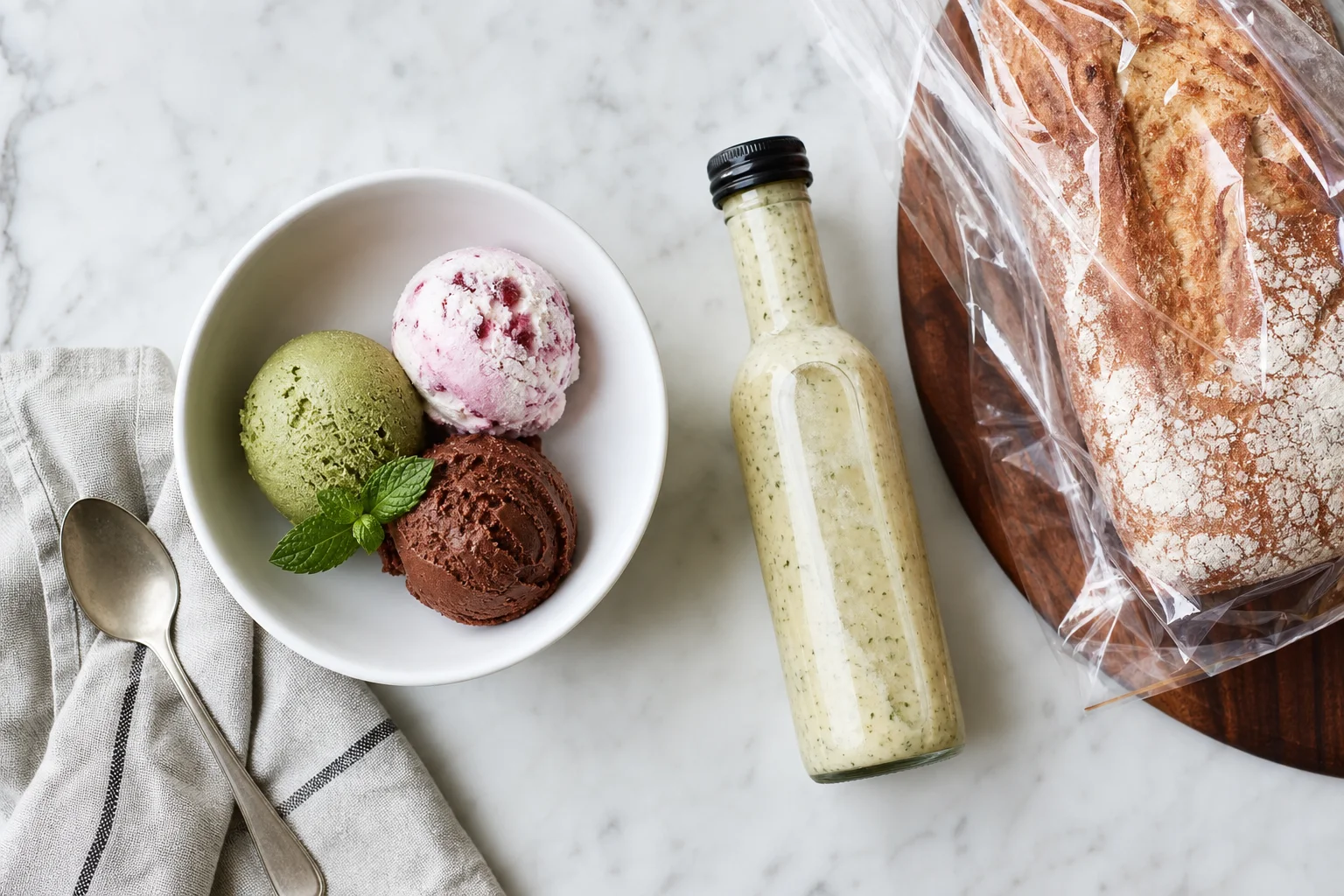
Open your freezer, pull out a tub of ice cream, and scan the label. Somewhere between "cream" and "vanilla extract" you will probably find it: polysorbate 80. It might be listed as "polysorbate 80," or on European labels as "E433." Either way, it is doing its job — keeping the fat droplets in your ice cream blended smoothly, preventing graininess, and helping the texture hold up as the product thaws and refreezes on its way from factory to your spoon.

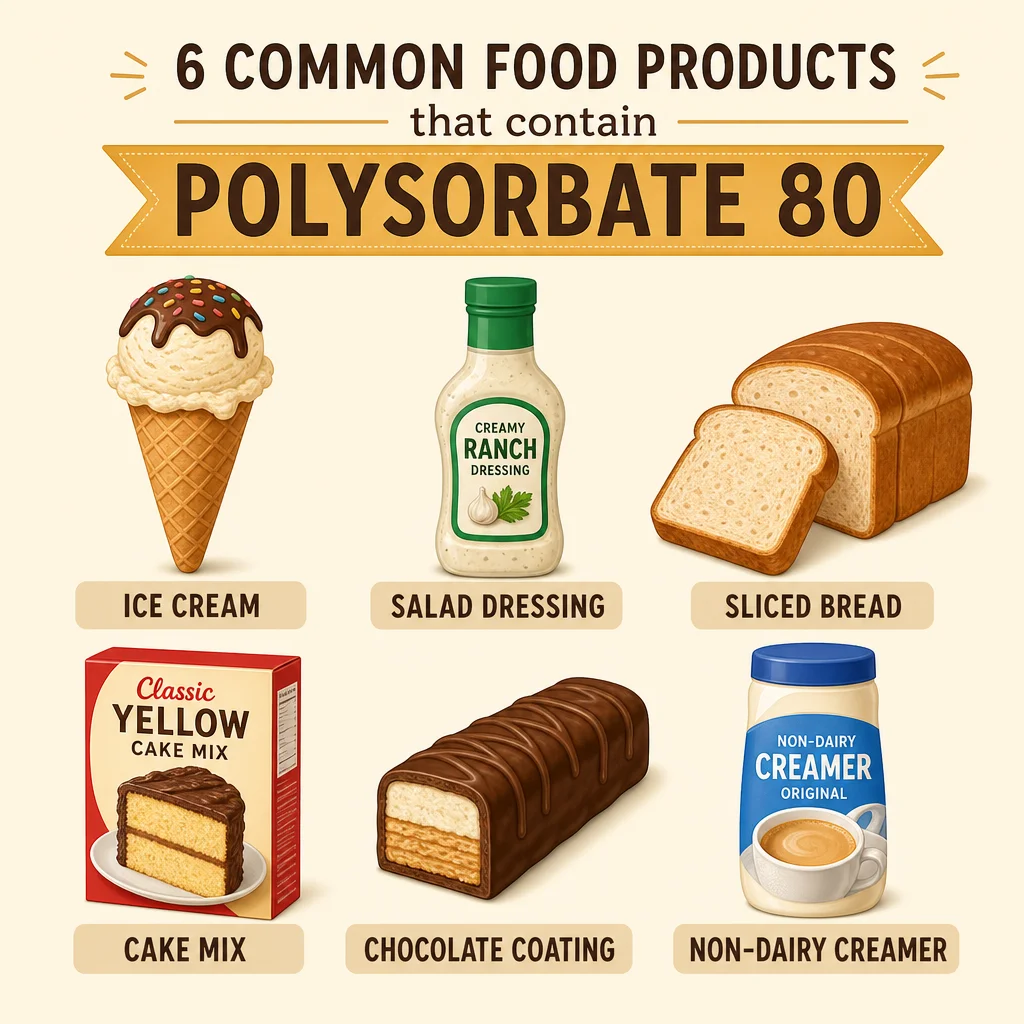
Polysorbate 80 is one of the most widely used emulsifiers in the world. It shows up not just in ice cream but in salad dressings, baked goods, chocolate coatings, shortening, bread, and cake mixes. It is also in many pharmaceuticals and personal care products. For decades, it has been considered safe. Regulators on both sides of the Atlantic have approved it. The FDA allows it at up to 0.1% in frozen desserts and has assigned it GRAS (Generally Recognized as Safe) status.

But GRAS status reflects the state of science at the time the original approval was made. It does not automatically update as new research accumulates. And in the last five years, a consistent body of research has begun asking whether polysorbate 80 — and other synthetic emulsifiers like it — might be doing something to the gut microbiome that nobody fully anticipated.
What Polysorbate 80 Actually Is

What Polysorbate 80 Actually Is

Polysorbate 80 is made by reacting sorbitol (a sugar alcohol) with ethylene oxide and oleic acid (a fatty acid). The result is a molecule with both water-soluble and oil-soluble regions — the structural property that makes it such an effective emulsifier. It physically bridges the gap between fat and water, keeping them mixed in products that would otherwise separate.

The "80" in the name refers to the oleic acid chain used in production. Polysorbate 20, 40, and 60 are close relatives with different fatty acid chains, but polysorbate 80 is the most commonly used in food.

Because emulsifiers like polysorbate 80 are added in relatively small amounts, and because earlier toxicological studies showed no acute toxicity, they earned broad regulatory approval. The JECFA (Joint FAO/WHO Expert Committee on Food Additives) set an acceptable daily intake of 25 mg/kg body weight per day — a number based on older animal studies, not on contemporary microbiome research.

The Gut Microbiome Problem

The human gut is home to roughly 38 trillion bacteria, fungi, and other microorganisms. The composition of this community matters — not just for digestion, but for immune function, metabolic health, and inflammatory responses throughout the body. Disrupting the balance of gut microbiota has been linked to conditions ranging from inflammatory bowel disease (IBD) to metabolic syndrome to autoimmune conditions.

The question researchers started asking around 2015 was simple: what does a daily low-dose emulsifier do to that microbial community over time?

A landmark 2021 study published in Microbiome by researchers at the Institut Pasteur in Paris was among the first to examine the direct impact on human gut microbiota. The team used a sophisticated gut simulator model to expose human microbial communities to polysorbate 80 and carboxymethylcellulose (CMC), another common emulsifier. Both compounds acted directly on the microbiota to increase its pro-inflammatory potential, reflected in elevated levels of bioactive flagellin — a bacterial protein that can trigger immune responses. Crucially, the effect was direct: the emulsifiers changed the microbial community even without a living host to mediate the interaction.

A 2025 study in Food and Chemical Toxicology from Spanish researchers used a four-stage gut microbiota simulator to dig deeper into polysorbate 80 specifically. Their results showed that increasing doses of P80 significantly decreased Bacteroides dorei and Akkermansia — two microbial taxa associated with anti-inflammatory function and intestinal barrier health. The same study found that P80 increased microbial groups with proinflammatory properties. These changes occurred in a dose-dependent manner.

Akkermansia is worth noting by name because its reduction is significant. This bacterium is considered a keystone species in gut health. Lower levels of Akkermansia have been associated in other research with increased intestinal permeability, sometimes called "leaky gut" — a condition in which the gut lining becomes more permeable, allowing bacterial fragments to enter the bloodstream and trigger systemic inflammation.

The Mucus Layer: A Critical Target

The Mucus Layer: A Critical Target

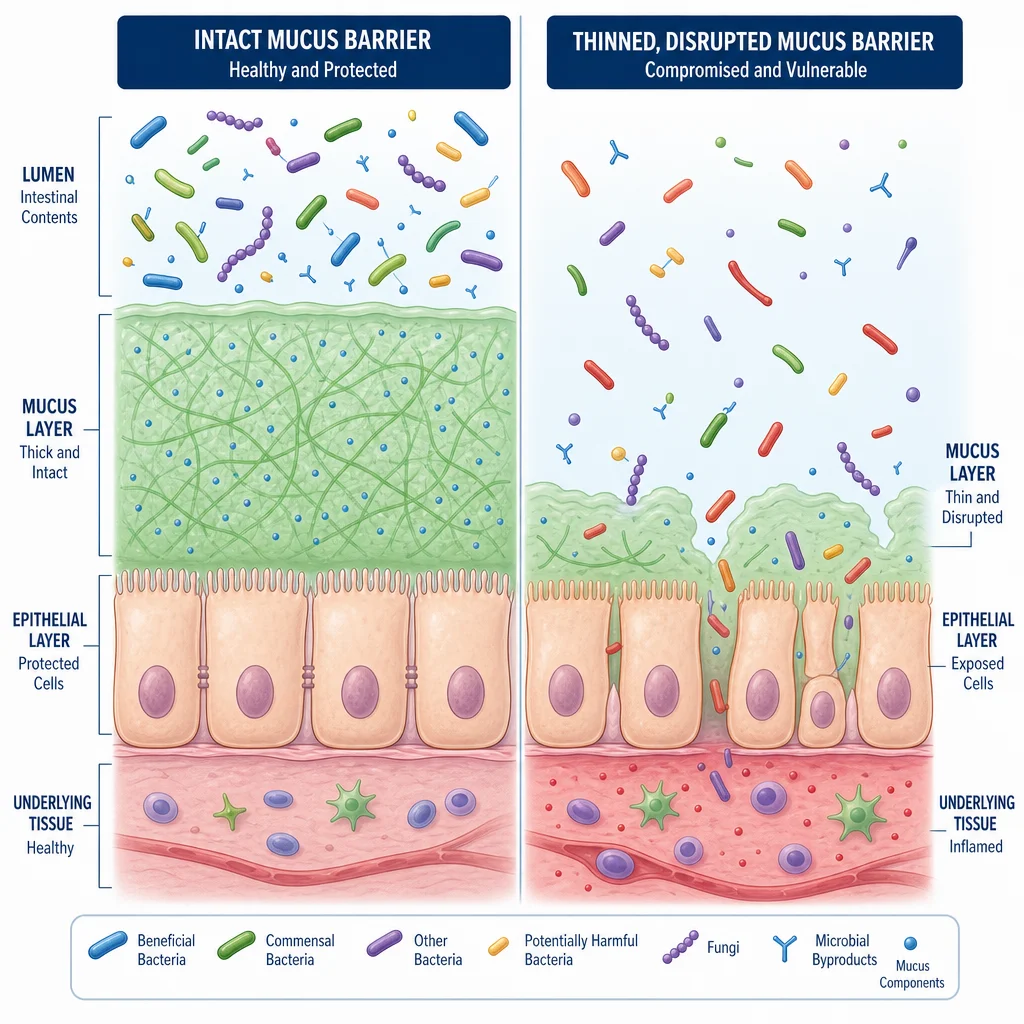
One mechanism researchers have pointed to involves the protective mucus layer lining the gut. This layer acts as a physical barrier between the hundreds of billions of bacteria living in your intestinal lumen and the epithelial cells of your gut wall. The layer must remain intact. If bacteria or their byproducts breach it, the immune system responds with an inflammatory cascade.

Emulsifiers, by their chemical nature, have detergent-like properties — they break up fat-water interfaces. There is growing concern that in the gut, this same surfactant action may thin or disrupt the protective mucus layer, allowing bacteria closer contact with the gut epithelium. Animal studies have demonstrated this mucus penetration effect for polysorbate 80 and CMC, with results showing bacterial infiltration through the mucus barrier and subsequent intestinal inflammation.

A review published in Hypertension in 2025 summarized the emerging picture: emulsifiers including polysorbate 80 "are thought to disrupt gut microbiota composition, which can lead to inflammation and other metabolic disturbances." The review also cited a study of over 95,000 French adults that found positive associations between the consumption of certain emulsifiers from ultra-processed foods and the incidence of cardiovascular disease over seven years.

Where You Will Find Polysorbate 80

The ingredient is not unusual to encounter. Scan labels in a typical grocery store and you will find polysorbate 80 in:

  • Ice cream and frozen desserts — smoothes texture, increases melt resistance
  • Bread and cake mixes — conditions dough, extends shelf life
  • Salad dressings and sauces — prevents separation of oil and water
  • Chocolate coatings and confections — improves flow and gloss
  • Non-dairy creamers and whipped toppings — stabilizes the emulsion
  • Medications — liquid ibuprofen formulations and some vaccines use it as a solubilizer
  • Infant colic and gas drops — some formulations include emulsifiers including polysorbate 80

The last two categories are particularly notable because pharmaceutical doses can be significant relative to body weight, especially in children.

The GRAS Gap

One of the most important things to understand about polysorbate 80's regulatory status is the limitation of how it was evaluated. The GRAS designation was based on standard toxicological testing: feeding large doses to animals and looking for acute toxic effects, carcinogenicity, and developmental problems. Those studies generally found no concerning signals at expected food intake levels.

What those studies could not do was measure the effect on gut microbiome composition — because the science of characterizing the gut microbiome simply did not exist in the form we have today. High-throughput 16S rRNA sequencing, which allows researchers to identify the thousands of bacterial species living in the gut, only became affordable and accessible in the 2010s. The regulatory approvals for polysorbate 80 predate this technology.

This is not unique to polysorbate 80. It is a broader challenge for the GRAS system. Ingredients approved decades ago under a narrower definition of "safety" are now being studied using tools that did not exist at the time of original review.

Neither the FDA nor EFSA has issued updated safety guidance on polysorbate 80 that incorporates the new microbiome research, though EFSA has initiated re-evaluation processes for several emulsifier classes. For consumers who want to exercise caution, that review process can take years.

Who Should Pay Closest Attention

The microbiome research on polysorbate 80 comes mainly from animal studies and ex vivo human gut simulators. Randomized controlled human trials are still limited, and the field is careful not to overstate causation. But certain groups have reason to be more alert:

People with IBD, Crohn's disease, or ulcerative colitis. The mechanistic pathway — emulsifier disruption of the mucus layer, bacterial infiltration, immune activation — overlaps closely with what drives IBD flares. Gastroenterologists increasingly counsel IBD patients to reduce ultra-processed food intake, and reducing emulsifier exposure is part of that guidance.

People with irritable bowel syndrome (IBS). The gut microbiome is deeply implicated in IBS, and any ingredient with demonstrated microbiome-disrupting effects is worth noting.

Children and infants. The developing gut microbiome is more plastic and potentially more vulnerable to external perturbation. Emulsifiers found in children's foods and medicines deserve particular scrutiny.

Anyone on a medically supervised clean-label or low-additive diet. Functional medicine and integrative practitioners often recommend reducing synthetic emulsifier exposure as part of gut-healing protocols.

Practical Steps for Label Readers

Avoiding polysorbate 80 entirely is difficult if you consume any amount of processed food — it is simply too widely distributed. But reducing exposure is achievable with some targeted label reading.

Read frozen dessert labels. This is one of the highest-exposure categories. Look for ice creams made with only dairy, eggs, and flavorings. Many premium and organic ice creams use simpler formulas.

Check bread and bakery labels. Commercial sandwich bread is a common source. Artisan breads and whole-food baking mixes typically do not contain emulsifiers.

Look at liquid medications. If you or a child regularly take a liquid formulation of ibuprofen or another OTC medication, check whether polysorbate 80 is listed in the inactive ingredients. Compounded alternatives without emulsifiers exist for sensitive patients.

Watch for the E number. On European-market products, polysorbate 80 appears as E433.

Be aware of alternate contexts. Polysorbate 80 is also found in some dietary supplements as a carrier for fat-soluble vitamins, and in cosmetics and skincare.

The Broader Emulsifier Picture

Polysorbate 80 is one member of a larger class of synthetic emulsifiers under scientific scrutiny. Carboxymethylcellulose (CMC), carrageenan, and mono- and diglycerides have all been studied for gut microbiome effects. Each has a distinct mechanism and a distinct profile. They share the common feature of having been approved under safety frameworks that predated microbiome science.

This does not mean every emulsifier is harmful. Not all emulsifiers behave the same way. Gum arabic and arabinogalactan, for instance, appear to support rather than disrupt beneficial bacteria. The picture is nuanced. But the pattern of concern around synthetic emulsifiers has become consistent enough that several food manufacturers have begun voluntarily reformulating to remove polysorbate 80 and CMC from product lines, citing consumer demand and precautionary reasoning.

Using IngrediCheck, you can scan any packaged food and instantly flag whether polysorbate 80 — or any other emulsifier you are monitoring — appears in the ingredient list, helping you make informed choices for your own gut health without having to memorize every product formula.

Next Label Check

Follow the scanner, hub, and ingredient paths connected to this guide

Get the app for clearer label decisions.

Scan labels, see what fits your food notes, and read the why in plain English.

IngrediCheck app