Red Yeast Rice Supplements: Why the EU Is Banning Them

The European Union is set to fully prohibit monacolins from red yeast rice in supplements by Q3 2026. Here's why regulators acted, what the science says, and what it means if you take these supplements.

May 28, 2026|10 min read
By Sanket Patel|Updated 2026-05-28|3 sources|Editorial standards
Red Yeast Rice Supplements: Why the EU Is Banning Them

Red yeast rice has been used in traditional Chinese medicine and cooking for over a thousand years. It colors food, aids digestion, and in higher-dose preparations, has a meaningful effect on blood cholesterol. That last property made it one of Europe's most popular "natural" alternatives to prescription statins, sold in health food stores and pharmacies across the continent.

That chapter is ending. On March 4, 2026, the European Commission notified the World Trade Organization of a draft regulation that would fully prohibit the use of monacolins from red yeast rice in foods and dietary supplements. The final regulation is expected to be adopted in Q3 2026, with a 12-month transitional period for products already on the market. For millions of Europeans who take these supplements to manage their cholesterol, this is a significant change with an urgent timeline.

Understanding why Europe is acting — and why US consumers should pay attention too — requires looking at the science behind what makes red yeast rice work, and why that same mechanism makes it a safety concern.
What Red Yeast Rice Is

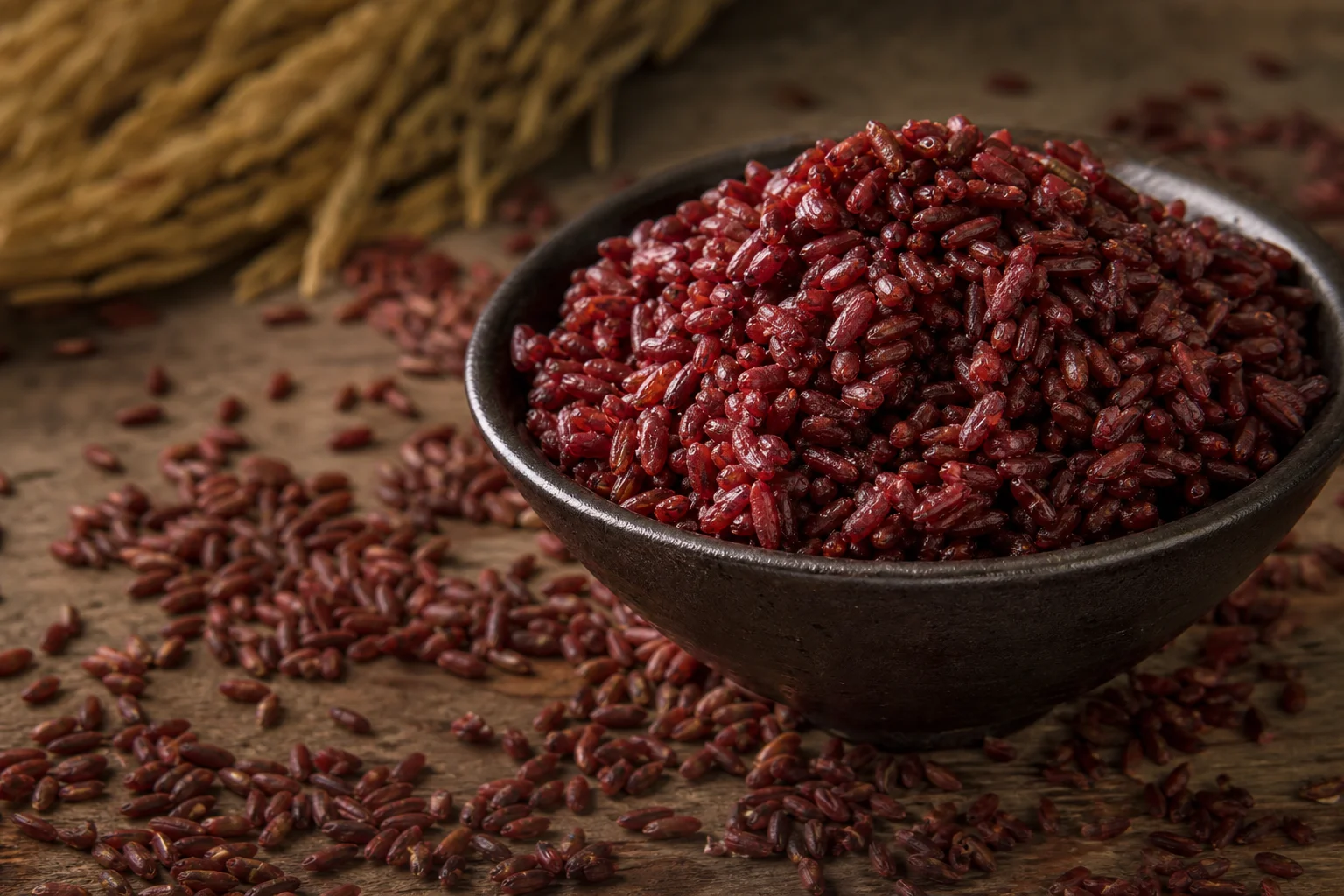
Red yeast rice is produced by fermenting white rice with the mold Monascus purpureus. The fermentation process produces a vivid red pigment and a range of biologically active compounds called monacolins. In Chinese culinary history, it has been used as a food coloring in dishes like Peking duck and fermented tofu. In traditional medicine, it was used to "invigorate the blood," improve digestion, and treat minor ailments.

The reason red yeast rice affects cholesterol is specific to one of those monacolins: monacolin K. Its chemical structure is identical to lovastatin, the active ingredient in the prescription drug Mevacor. Lovastatin and monacolin K work by the same mechanism: they inhibit the enzyme HMG-CoA reductase, which the liver uses to produce cholesterol.

This is not a resemblance or a partial overlap. The molecules are the same.

The Statin Inside Your Supplement

The Statin Inside Your Supplement

That chemical identity has been a regulatory flashpoint since 1998. The FDA ruled that year that a red yeast rice product called Cholestin, which was being marketed for cholesterol management, was effectively an unapproved drug because of its lovastatin content. The FDA has maintained this position since: any red yeast rice product that contains meaningful amounts of monacolin K and is marketed to lower cholesterol is subject to drug regulations, not supplement regulations.

Despite that stance, according to the Mayo Clinic, many red yeast rice supplements remain widely available in the US and continue to be purchased without a prescription or physician oversight.

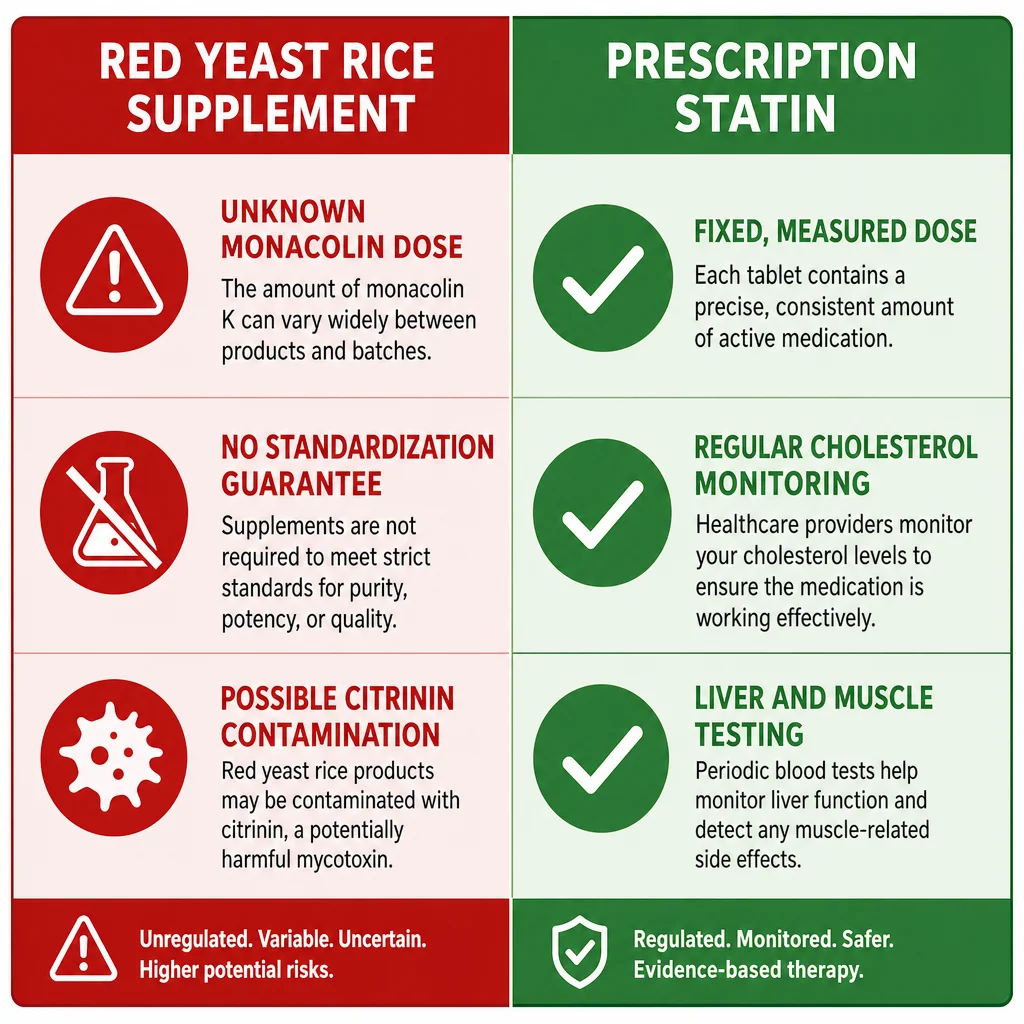
The core problem is one of standardization. Studies have found a 100-fold difference in monacolin content between different brands of red yeast rice supplements. In a review of 117 commercially available products, more than 80% provided no information about lovastatin content on the label and their manufacturers were unwilling or unable to disclose it. Consumers buying these products often cannot determine the dose of the pharmacologically active compound they are taking.

Some products contain very low levels of monacolin K and likely have minimal cholesterol effects. Others approach prescription-equivalent doses — without any of the clinical oversight, drug interaction screening, or dosage control that would accompany a prescription medication.

EFSA's Path to "Unsafe at Any Dose"

The European Food Safety Authority has been examining this question since 2018. Its trajectory has been consistently in one direction.

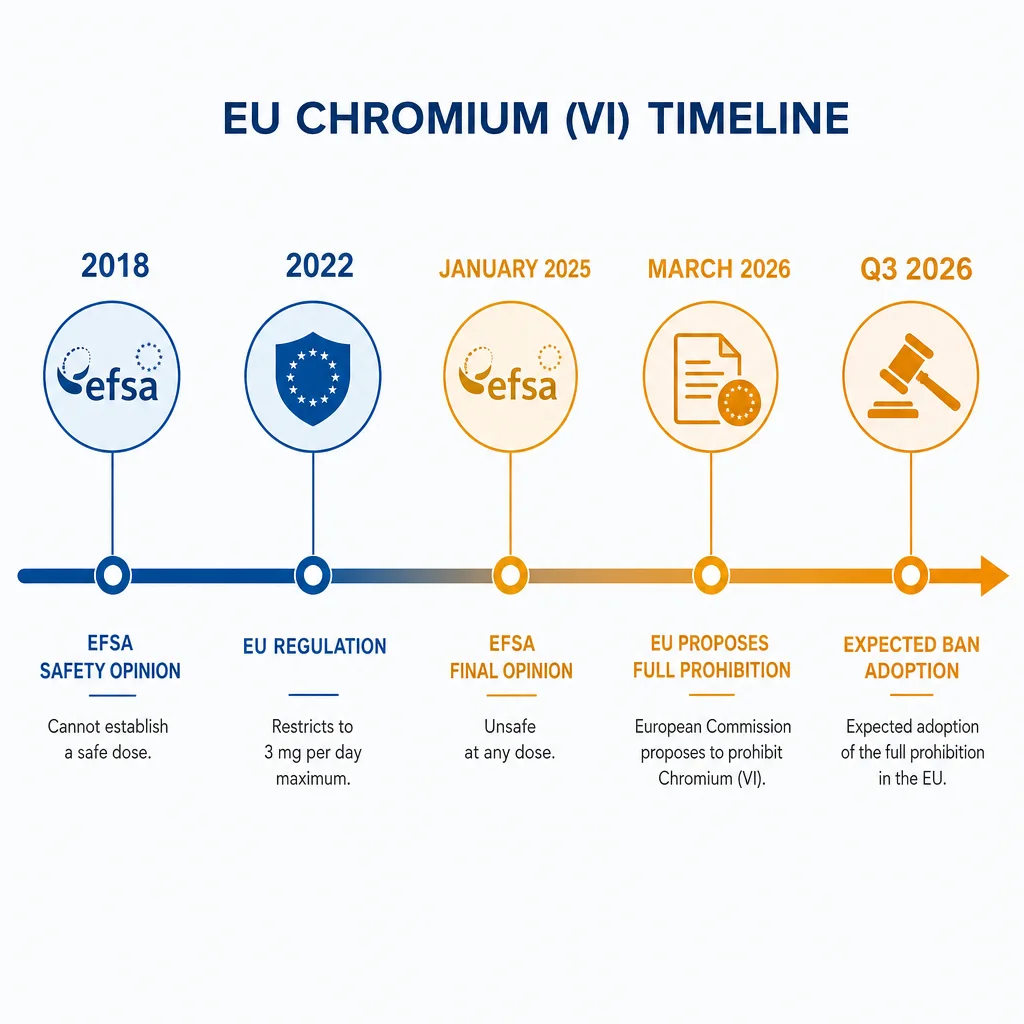
In 2018, EFSA's scientific panel concluded that it could not establish a safe daily intake level for monacolins from red yeast rice at the 10 mg/day dose underpinning the authorized health claim ("contributes to the maintenance of normal blood cholesterol levels"). The panel flagged serious adverse event reports — cases of rhabdomyolysis, hepatotoxicity, and digestive disorders — that mirrored the known safety profile of prescription lovastatin. Because monacolin K is lovastatin, this was not surprising.

The EU responded in 2022 with Regulation (EU) 2022/860, which placed monacolins on the restricted substances list and capped daily dose at less than 3 mg. The same regulation removed the health claim because it was based on a 10 mg dose.

Industry stakeholders were given a scrutiny period through the end of 2025 to submit safety data demonstrating that lower doses were safe. EFSA's Panel on Nutrition, Novel Foods and Food Allergens reviewed that data in January 2025 and reached a stark conclusion: the evidence submitted did not allow the panel to establish a safe daily intake below 3 mg/day, or to identify any dose level that did not raise safety concerns. Severe adverse effects on the musculoskeletal system, including rhabdomyolysis — a condition in which muscle tissue breaks down and releases proteins that can cause kidney failure — had been reported at doses as low as 3 mg/day.

The panel could not identify a safe threshold.

That EFSA conclusion triggered the March 2026 draft regulation moving monacolins from the restricted list to the prohibited list. As NutraIngredients reported, this was described by industry observers as a "major blow" to the supplement sector. The public consultation closed May 3, 2026. The probability of reversing course at this stage is minimal.

Who Is Most at Risk

The safety concerns are not distributed equally across all supplement users. EFSA specifically identified several groups facing elevated risk of serious adverse reactions:

  • Pregnant women and those trying to conceive (statins are potential teratogens; limb and CNS defects have been reported in newborns exposed in utero)
  • People with pre-existing liver or kidney conditions
  • People with muscle disorders, or anyone already taking a prescription statin (combining the two effectively doubles the dose)
  • Adults over 70 years old
  • Children and adolescents

The muscle damage risk is the most serious for the general population. Rhabdomyolysis at its worst leads to acute kidney failure and, in rare cases, death. Even at milder levels, muscle pain and weakness from statin-equivalent compounds in a supplement can go unattributed and unmanaged for months.

There is also a second contamination concern. According to the Mayo Clinic, some strains of Monascus purpureus and related molds produce a mycotoxin called citrinin during fermentation. Citrinin is nephrotoxic — it damages the kidneys. An analysis of 37 red yeast rice supplements found that only one had citrinin at safe levels.

What This Means for Supplement Users in Europe

What This Means for Supplement Users in Europe

If you currently take a red yeast rice supplement in the EU, you should be aware that the regulatory landscape is shifting quickly. Once the regulation is adopted — likely between July and September 2026 — manufacturers will no longer be permitted to sell products containing monacolins from red yeast rice. A 12-month sell-through period applies to products already on shelves.

Practically, that means supplements bought today may remain available in stores for up to a year after adoption. But new production will have to comply with the prohibition, and the broader market will shift.

If you are taking red yeast rice for cholesterol management, the most important next step is speaking with a physician. Managing cardiovascular risk with an unsupervised supplement that contains statin-equivalent compounds at unknown doses is not a safe alternative to medical evaluation. Prescription statins — when appropriate for your individual risk profile — are prescribed at known doses, monitored for side effects, and adjusted based on lab results.

The US Situation

In the US, the regulatory picture is different but not more reassuring. The broader pattern of ingredient scrutiny across US states is covered in our state food ingredient bans overview for 2026. The FDA has maintained since 1998 that red yeast rice products containing meaningful amounts of monacolin K are unapproved drugs. In practice, however, the agency has not consistently enforced this across the market. Many products remain on shelves.

The US has not moved toward an EU-style prohibition on monacolins. The MAHA initiative has focused primarily on food additives and dyes rather than dietary supplements. But the fundamental safety question — that monacolin K is chemically identical to a prescription drug and carries identical risk — is not jurisdiction-specific. It applies regardless of whether a regulator has acted.

For US consumers, the label often won't tell them how much monacolin K their supplement contains. Many products don't disclose it at all.

Cholesterol Management Without Red Yeast Rice

For people who were relying on red yeast rice as a "natural" cholesterol management strategy, the EU ban raises the practical question of what comes next.

Several evidence-backed alternatives exist for individuals with elevated LDL who either cannot tolerate prescription statins or prefer lifestyle-first approaches:

Plant sterols and stanols are structurally similar to cholesterol and reduce its absorption in the gut. They are found naturally in vegetable oils, nuts, and some fortified foods, and are considered safe at supplemental doses.

Berberine is a plant compound with demonstrated LDL-lowering properties in clinical studies, working through a different mechanism than statins. It is available as a supplement and has not been subject to the same regulatory restrictions.

Soluble fiber from oats, beans, and psyllium husk has a well-established modest cholesterol-lowering effect through bile acid binding.

Lifestyle changes — specifically reducing dietary saturated fat, increasing physical activity, and achieving a healthy body weight — remain the most effective non-pharmaceutical interventions for lipid management.

None of these alternatives should replace a physician's guidance when cardiovascular risk is a genuine concern. But they represent options that do not carry the hidden statin-equivalent exposure risk that red yeast rice supplements can pose.

Using IngrediCheck, you can identify products that contain red yeast rice or monacolins in their ingredient list — whether in supplements, functional foods, or traditional fermented products — helping you understand what you're consuming and make informed decisions about your cardiovascular health.

Next Label Check

Follow the scanner, hub, and ingredient paths connected to this guide

Get the app for clearer label decisions.

Scan labels, see what fits your food notes, and read the why in plain English.

IngrediCheck app