Food Policy Watch

Salmonella in Instant Noodles: The Seasoning Packet Risk

A 2026 Salmonella outbreak linked to flavoured instant noodles sickened 106 people across Europe and the UK, most of them children. Here is what happened and how to prepare instant noodles safely.

Jul 1, 2026|10 min read
By Sanket Patel|Updated 2026-07-06|3 sources|Editorial standards
Salmonella in Instant Noodles: The Seasoning Packet Risk

Instant noodles feel like the safest food in the pantry. They are cheap, shelf-stable, and impossible to get wrong. Boil water, wait three minutes, stir in the little sachet of seasoning. So it came as a shock when European health authorities traced a growing outbreak of Salmonella to exactly this product, and found that many of the people who got sick were children.

On 1 July 2026, the European Centre for Disease Prevention and Control (ECDC) and the European Food Safety Authority published a joint Rapid Outbreak Assessment naming flavoured instant noodle products as the most likely source of a multi-country outbreak of Salmonella Stanley. This post walks through what happened, why a dry seasoning powder can carry a live pathogen for months, and the simple preparation habit that keeps you and your family safe.

What Happened

What Happened

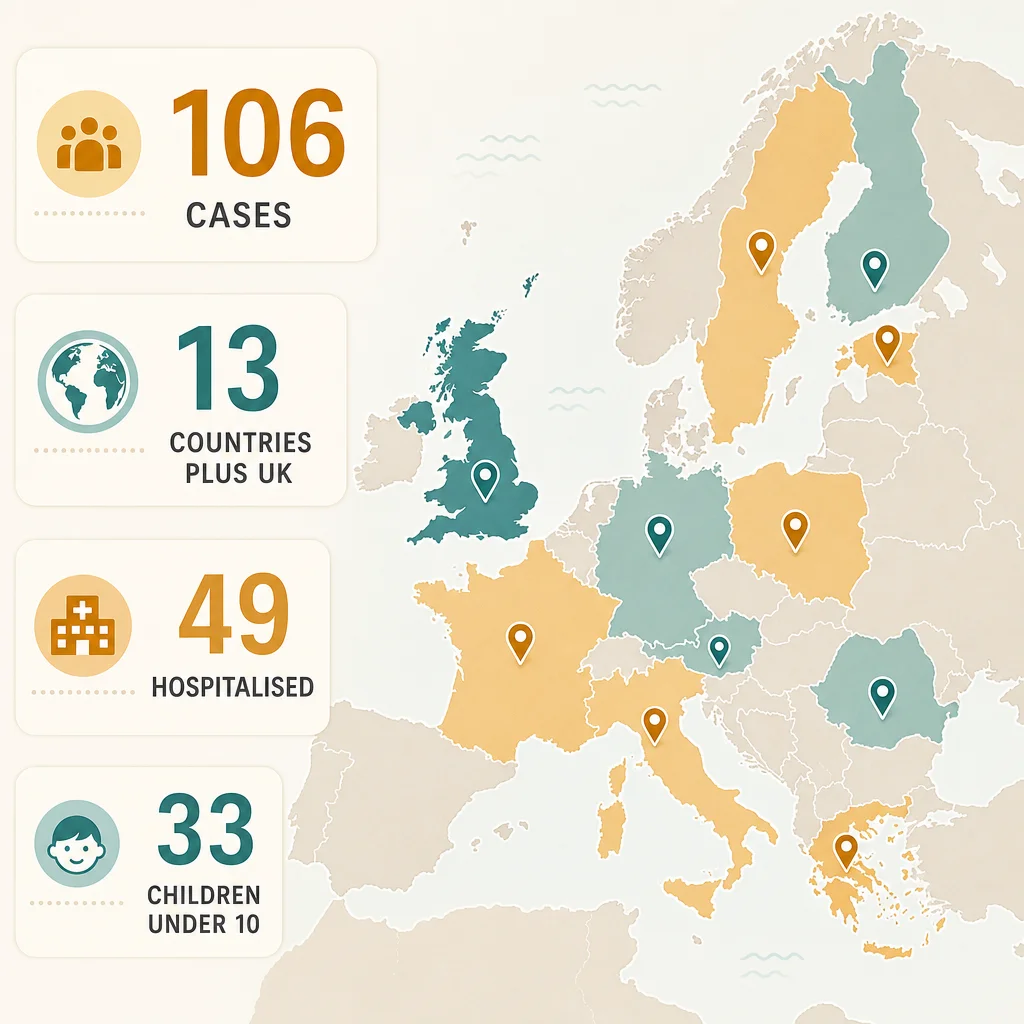
Between November 2025 and June 2026, 106 confirmed cases of Salmonella Stanley infection were reported across the European Union, the European Economic Area, and the United Kingdom. According to the ECDC, cases turned up in 13 EU and EEA countries plus the UK: Austria, Czechia, Denmark, Estonia, France, Germany, Hungary, Latvia, Lithuania, the Netherlands, Norway, Poland, Sweden, and the United Kingdom.

The most striking detail was who got sick. At least 49 people were hospitalised, and the outbreak fell heavily on the young. Thirty-three of the confirmed cases were in children under ten years old. The strain involved was Salmonella Stanley, sequence type ST2045, with isolates so genetically similar that investigators were confident they shared a single source.

Denmark first spotted the cluster and raised the alarm through the European surveillance network in March 2026. German authorities then found the outbreak strain in chicken-flavoured instant noodles during sampling in April, which triggered a formal alert through the EU's Rapid Alert System for Food and Feed. Investigators eventually traced the products to a single producer in Ukraine, distributed through a Polish wholesaler into several countries. Multiple flavours were involved, including chicken, hot chicken, beef, duck, shrimp, curry, and vegetable.

Several national recalls followed. As Food Safety News reported, Germany pulled a 60-gram chicken-flavour instant noodle product after Saxony authorities detected Salmonella in it, and withdrawals were issued in Lithuania, Austria, Estonia, and Latvia as well. One important note on attribution: the official EU assessment did not name the brand or producer. Brand names surfaced only through individual national recalls, so treat any single product name as one piece of a larger picture rather than the whole story.

Investigators also detected other Salmonella serotypes in the same range of products, including strains in Lithuanian and Estonian chicken noodles that were distinct from the main outbreak strain. That points to more than one contamination event, which usually means the problem sat somewhere in the ingredients or the production environment rather than in a single bad batch.
Why a Dry Seasoning Sachet Can Make You Sick

Why a Dry Seasoning Sachet Can Make You Sick

Here is the part that surprises most people. Salmonella is a bacterium we associate with raw chicken, runny eggs, and unwashed produce. All of those are moist, and moisture is exactly what bacteria need to multiply. A dry seasoning powder seems like the last place a live pathogen could survive.

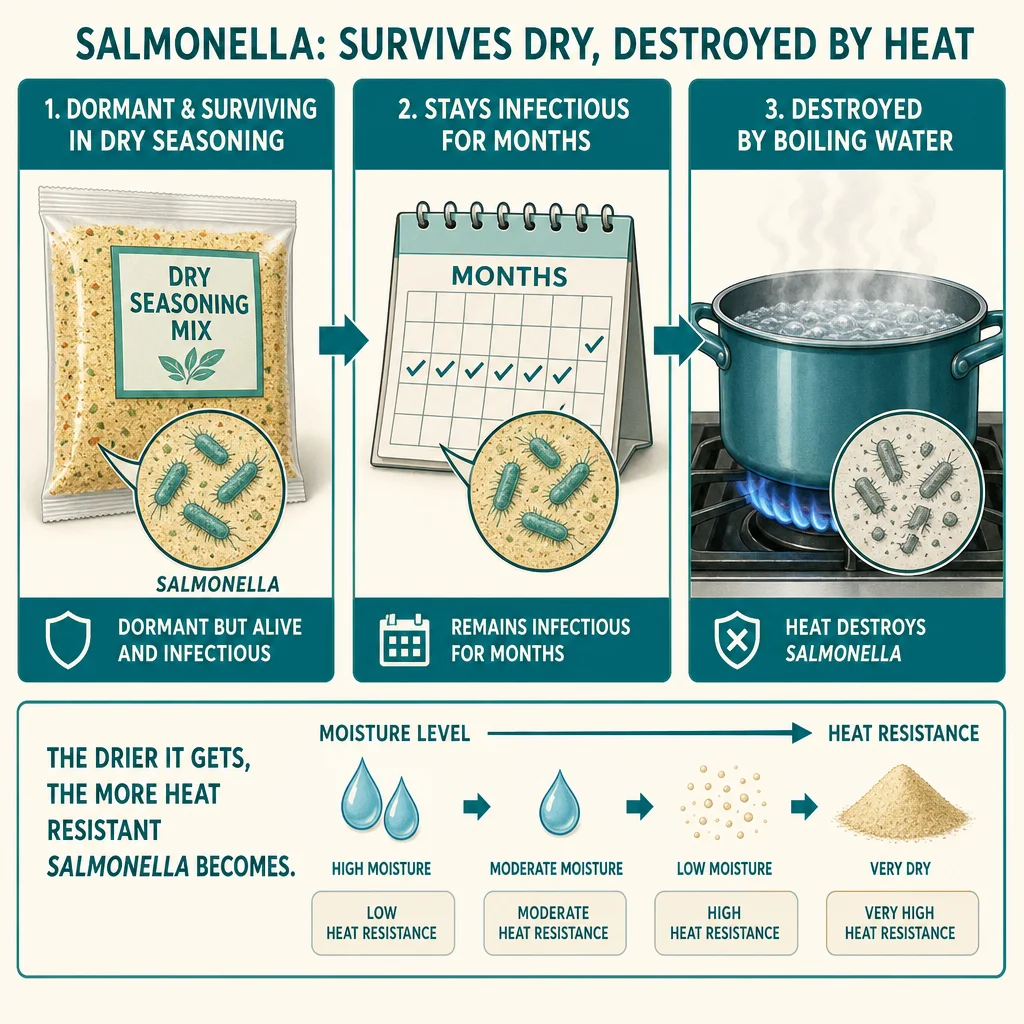
The science says otherwise. Salmonella cannot grow in a low-moisture food like seasoning powder, dried vegetables, or ground spice. What it can do is survive, sometimes for many months, in a dormant but still infectious state. A well-known review in the Journal of Food Protection documented how Salmonella persists in low-water-activity foods such as peanut butter, chocolate, dried milk, cereal, and spices. The danger appears when contamination sneaks in after the step that was supposed to kill it, through poor sanitation, hard-to-clean equipment, or an already-contaminated raw ingredient.

Drying the food does not just fail to kill the bacteria. It actively makes them harder to kill later. Food scientists at Campden BRI note that Salmonella becomes dramatically more heat-resistant as moisture drops. In moist ground beef the bacterium is destroyed in seconds at 60 degrees Celsius. In dry wheat flour at a similar temperature it can take many hours. The same protection that lets it ride along in a dry sachet also lets it shrug off gentle heat.

Spices and seasoning blends are a known weak point. A peer-reviewed analysis of foodborne illness outbreaks traced to spices between 1973 and 2010, published in the journal Food Microbiology, found Salmonella to be the pathogen most frequently implicated. A flavour sachet is essentially a small packet of concentrated dried seasoning. If any component was contaminated at the source and was not given a proper pathogen-reduction treatment, the live bacteria can end up sealed inside your noodle packet.

This is not a one-off. Dried and powdered foods have caused outbreaks before. That same review of spice-linked outbreaks documented dozens of illnesses over nearly four decades, and imported ground pepper was behind well-known multi-state Salmonella outbreaks in the United States around 2009 and 2010. Seasoning mixes, dried seeds, and other low-moisture pantry staples have been implicated repeatedly. The instant noodle outbreak fits a pattern that food safety experts have watched for a long time.

The Real Problem: Treating a Cook-First Food as a Snack

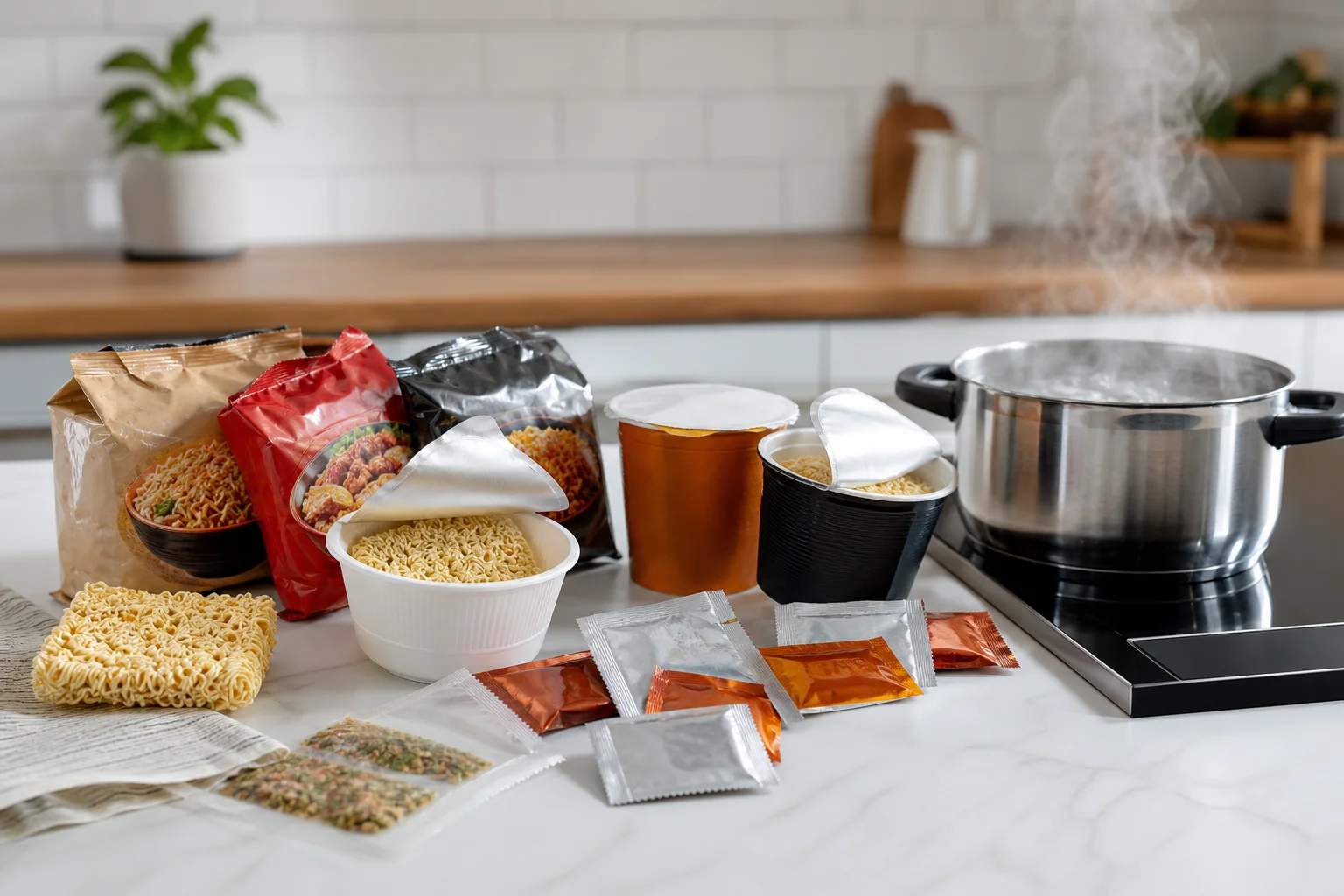
If the seasoning is the source, the behaviour is the trigger. The instant noodle products in this outbreak were sold as foods that require cooking. They are not ready to eat straight from the pack. Yet investigators found that some patients had eaten the noodles without preparing them, snacking on the dry block and sprinkling the raw seasoning on top the way you might eat a bag of crisps.

This is where the ECDC's risk framing matters. The centre rated the risk as very low for the general population and low for children and young adults, but only as long as cooking instructions are followed. The whole safety margin of the product depends on the boiling step. Proper cooking heats the seasoning along with the noodles and destroys the bacteria. Skip that step, or add the sachet after cooking without any further heat, and the protective step never happens.

Children are especially exposed here for two reasons. First, they are more likely to treat instant noodles as a dry crunchy snack. Second, it takes a smaller dose of Salmonella to make a small body sick. That combination is almost certainly why so many of the confirmed cases in this outbreak were in children under ten.

There is a labelling lesson too. A product that carries clear cooking instructions is doing its job on paper, but instructions only work if people read and follow them. When a food looks snackable, tastes fine dry, and sits in a cupboard next to actual snacks, the label alone may not be enough to change behaviour. That gap between how a product is meant to be used and how it is actually used is a recurring theme in food safety.

Salmonella by the Numbers

Salmonella is not a rare or exotic threat. It is one of the most common causes of foodborne illness in the world. The U.S. Centers for Disease Control and Prevention estimates that Salmonella causes about 1.35 million infections in the United States every year, and notes that only a small fraction of infections are ever formally diagnosed. The true burden is much larger than official case counts suggest.

In Europe the picture is similar. Salmonellosis was the second most reported animal-borne disease in the EU in 2024, with tens of thousands of confirmed human cases and a rate of roughly 18.6 cases per 100,000 people. The World Health Organization counts Salmonella among the four key global causes of diarrhoeal disease and lists cooking food thoroughly as a basic, effective prevention measure.

Most cases of salmonellosis are mild, but the infection can be life-threatening, especially in young children, elderly people, and those with weakened immune systems.

Symptoms usually begin between 6 hours and 6 days after exposure and include diarrhoea, stomach cramps, fever, nausea, and vomiting, according to the CDC. Most healthy adults recover within about a week without specific treatment. The people at highest risk of severe illness are children under five, adults over 65, pregnant women, and anyone with a weakened immune system. For these groups, staying hydrated matters, and warning signs like bloody diarrhoea, a high fever, diarrhoea lasting more than three days, or signs of dehydration are reasons to contact a doctor.

How to Eat Instant Noodles Safely

The good news is that the fix is simple and free. You do not need to give up instant noodles. You need to respect the cooking step. Here is a practical checklist.

  1. Always cook the noodles fully. Boil them for the full time on the package. Boiling water reaches 100 degrees Celsius, which is far more than enough to destroy Salmonella even in a dried food.
  2. Cook the seasoning with the noodles, not after. If you stir the sachet into the boiling water and let it heat through, the seasoning gets the same lethal treatment as the noodles. Sprinkling raw powder onto a finished bowl skips that protection.
  3. Do not eat the dry block as a snack. This is the single most important habit, especially for children. The crunchy dry noodle plus raw seasoning is exactly the pattern linked to illness in this outbreak.
  4. Talk to kids about it. Children are the most affected group. A quick explanation that these noodles have to be cooked, and are not a bag of crisps, goes a long way.
  5. Check for recalls if you feel unwell. If you develop symptoms after eating a specific product, keep the packaging, note the brand, lot number, and best-before date, and check your national food safety authority's recall notices.
  6. Wash your hands and utensils. Handle the dry blocks and sachets with clean hands, and do not let a contaminated packet touch surfaces where you prepare other food.

Follow those steps and the risk drops to what the ECDC described as very low. The outbreak is a reminder that food safety is not only about what is in a product. It is also about how the product is meant to be used.

Reading labels well is the other half of the equation. Instant noodles, seasoning sachets, and dried mixes hide a lot of information in small print, including allergens, additives, and preparation instructions that actually matter for safety. The same gap between what a package should say and what it actually reveals runs through many product recalls, as our coverage of undeclared allergens explains. Using IngrediCheck, you can scan a product's ingredient list and instantly surface allergens, additives, and preferences you want to avoid, so you know exactly what is in the packet and can make an informed choice for yourself and your family before it ever reaches the pot.

Next Label Check

Follow the scanner, hub, and ingredient paths connected to this guide

Get the app for clearer label decisions.

Scan labels, see what fits your food notes, and read the why in plain English.

IngrediCheck app