Most newly diagnosed AGS patients know to avoid beef, pork, and lamb. The list of actual triggers extends much further.
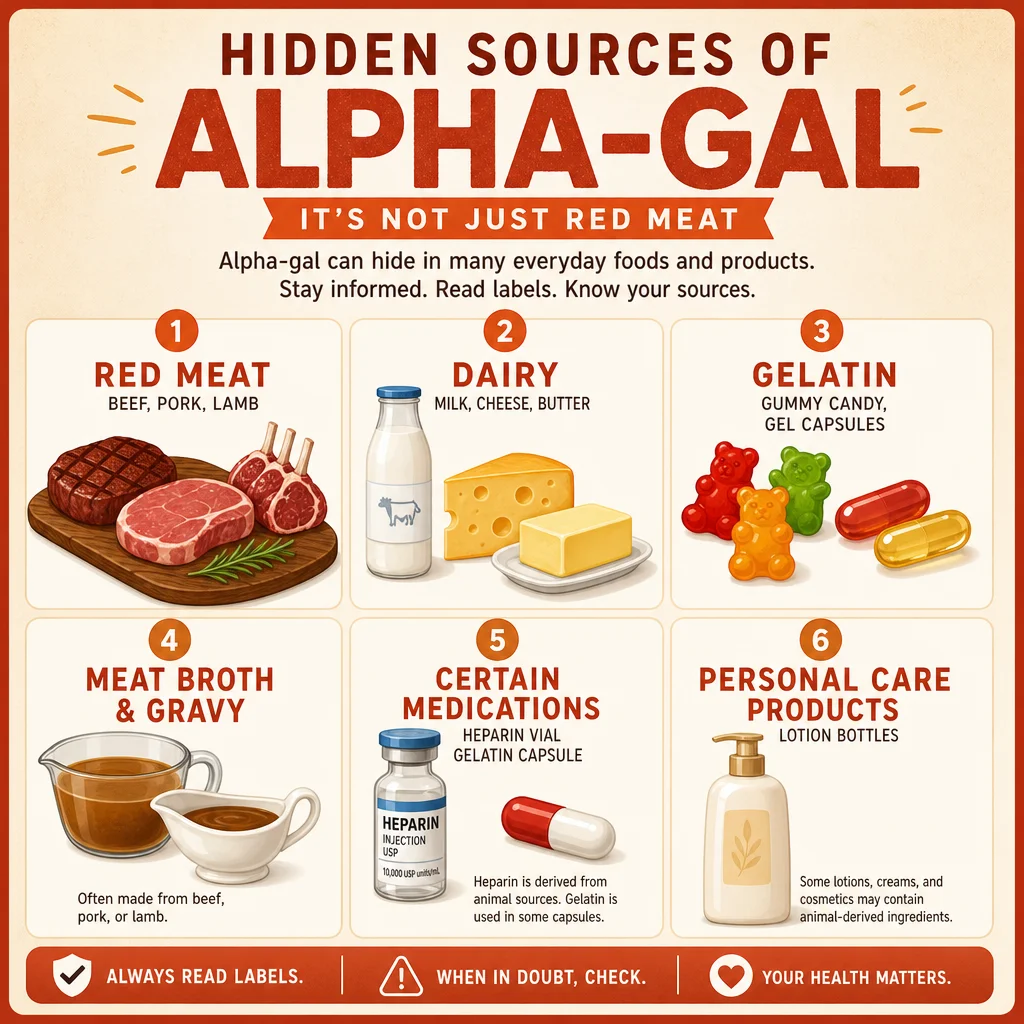
Dairy products. Milk, cheese, butter, cream, yogurt, and anything made with them can trigger reactions in individuals with moderate to severe AGS. The alpha-gal molecule is present in mammalian milk.
Gelatin. Gelatin is derived from animal collagen, usually from cattle or pigs. It appears in marshmallows, gummy candies, gel capsules for supplements and medications, and some vaccines. It is one of the most commonly overlooked sources of alpha-gal in processed foods.
Mammalian fats and organ meats. Lard, suet, tallow, tripe, liver, kidney, and similar products contain alpha-gal in concentrated forms.
Broth, stock, and gravy. Meat-based bouillon and broths are used as flavoring agents in many packaged foods, sauces, and soups. Their presence is not always obvious from the ingredient name.
Medications. Heparin, a widely used blood thinner derived from pig intestines, contains alpha-gal. The cancer drug cetuximab is associated with severe reactions in AGS patients and carries a black box warning related to hypersensitivity. Gelatin-containing vaccines, some thyroid medications, and products with magnesium stearate or lactose derived from animal sources are also potential exposures. Critically, drug manufacturers are not currently required to disclose whether inactive ingredients are animal-derived.
Personal care products. Lanolin, glycerin, and collagen in lotions, shampoos, and cosmetics can be mammal-sourced. Some patients report skin reactions from contact with these products.
The absence of labeling requirements for alpha-gal in the United States is a recognized gap. The Alpha-Gal Allergen Inclusion Act, currently under consideration in Congress, would add alpha-gal to the FDA's list of major food allergens and require disclosure on packaged food labels. Until that legislation passes, patients must contact manufacturers directly to verify the source of ingredients. For a deeper look at how allergen labeling gaps affect recalls, see Undeclared Allergens: Why Food Recalls Keep Missing the Label.