Ingredient FAQs

Is Allulose Safe? Side Effects, Labels, and Keto Use

Allulose is a rare sugar with almost no calories and little effect on blood sugar, but it is not authorized in the EU and large servings upset the gut. Here is what regulators and studies say, and how to spot it on a label.

Oct 23, 2026|13 min read
By Sanket Patel|Updated 2026-11-21|8 sources|Editorial standards
Is Allulose Safe? Side Effects, Labels, and Keto Use

For most healthy adults, yes. Allulose is a rare sugar that the FDA has accepted as safe in more than ten GRAS notices since 2012, it causes only a negligible rise in blood sugar, and it counts for about 0.4 calories per gram. The real limit is your gut: large single servings can cause bloating, gas and diarrhea, and allulose is still not authorized as a food in the European Union or the UK.

Checking a keto snack or sugar-free syrup? Paste the ingredient list into the keto ingredient checker to see where allulose and the other sweeteners in the blend land.

Below: how allulose is made, where it is approved, what the side-effect and blood-sugar research shows, and how to read a label that contains it.

What Is Allulose?

What Is Allulose?

Allulose is a simple sugar, also called D-allulose or D-psicose. Chemically it has the same formula as fructose (C6H12O6), with one hydroxyl group flipped, which makes it an "epimer" of fructose. That small change matters: the body absorbs allulose but barely breaks it down.

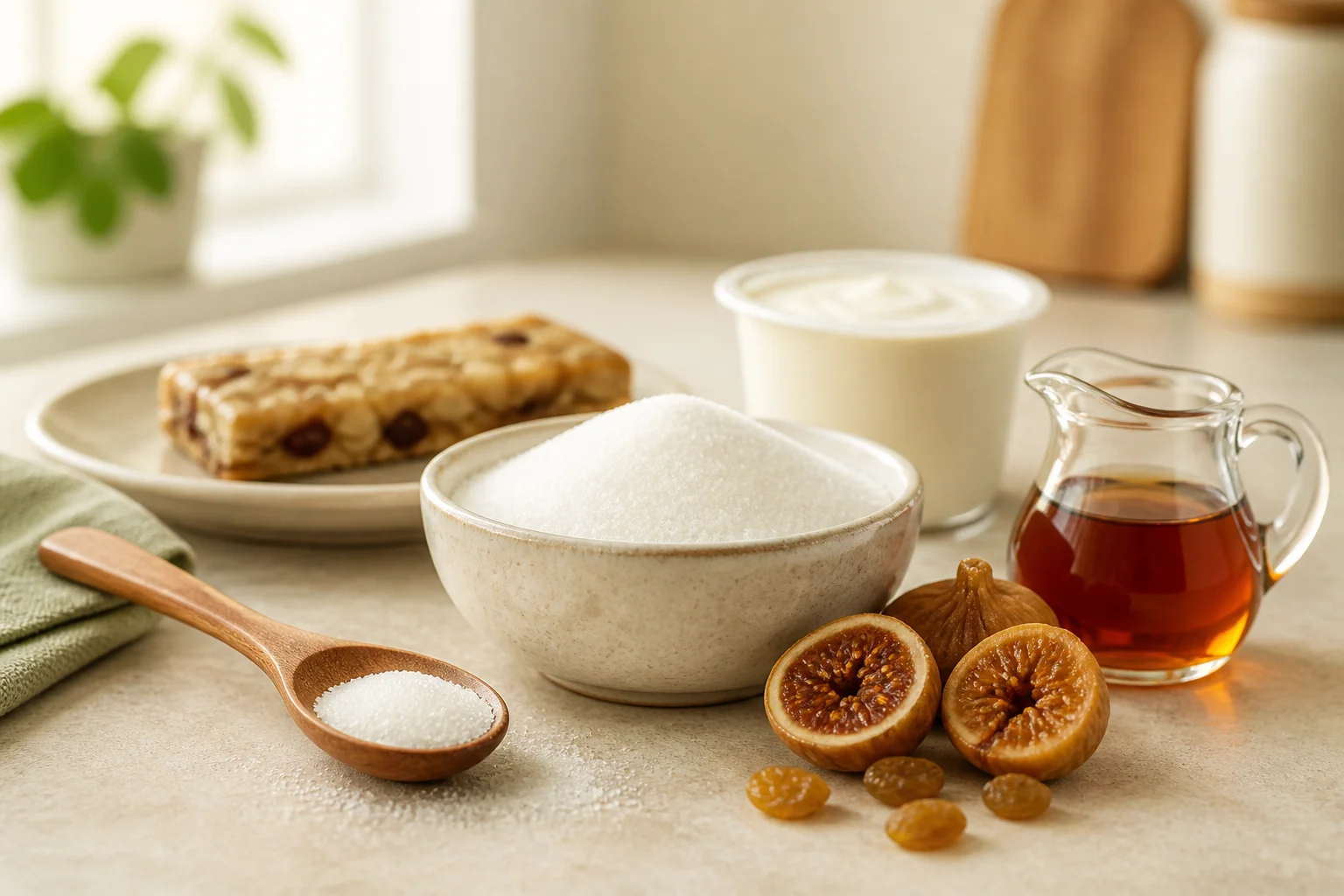
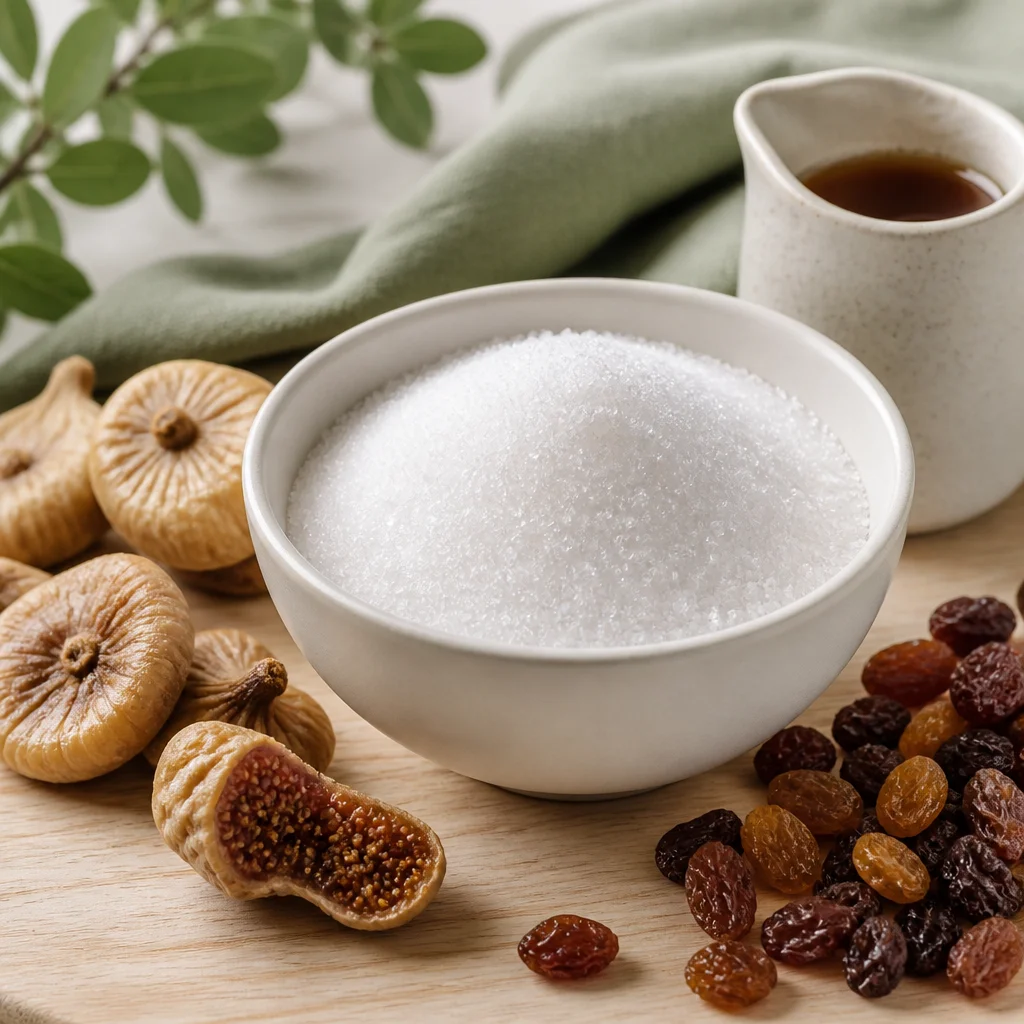
It is called a "rare sugar" because it exists in nature only in trace amounts. The FDA's labeling guidance lists wheat, raisins, dried figs, molasses, maple syrup and brown sugar as natural sources.

Allulose tastes and behaves much like table sugar. It is roughly 70% as sweet as sucrose, it adds bulk and texture, and it browns in the oven, which is why food makers like it for baked goods, ice cream and syrups where high-intensity sweeteners alone fall flat.

How allulose is made

Commercial allulose starts with fructose, usually from corn or another starch source. An enzyme called D-psicose 3-epimerase (also called allulose 3-epimerase) converts part of the fructose into allulose, which is then purified and sold as crystals or syrup. FSANZ's approval report describes this process for Samyang's Nexweet brand, which uses the enzyme from the microorganism Microbacterium foliorum. FoodNavigator reported that Tate & Lyle follows the same broad route: corn to starch, starch to fructose, fructose to allulose.

What happens after you eat it

The FDA's review found that allulose is absorbed quickly (within about an hour), cleared from the blood within 24 hours, and about 70% of an oral dose leaves the body intact in urine and feces within 48 hours. It produces "only a negligible increase" in blood glucose and insulin, is not readily fermented in the large intestine, and does not promote tooth decay. That is the basis for its low calorie value.

Is Allulose Safe? What Regulators Say

United States: GRAS since 2012

In the US, allulose is used under the "generally recognized as safe" (GRAS) pathway. The FDA's GRAS notice inventory lists 11 D-psicose notices closed with an "FDA has no questions" letter, starting with GRN 400 in June 2012 and most recently GRN 1309 in July 2026, with another notice pending.

GRAS is not a formal food additive approval: companies assess safety themselves and notify the FDA, a pathway the Center for Science in the Public Interest (CSPI) criticizes. CSPI rates allulose "cut back" and, in 2019, asked the FDA to consider a label warning that excess consumption may cause diarrhea or other digestive effects.

Australia and New Zealand: approved in 2024

Food Standards Australia New Zealand approved D-allulose as a novel food in August 2024 after a full risk assessment and concluded it "would pose no public health and safety concerns" as proposed. The approval came with conditions: an energy factor of 2 kJ/g for labels, exclusion from the sugars line, maximum use levels by food category, and a mandatory advisory statement that excess consumption may have a laxative effect for certain foods.

FSANZ also flagged a gap worth knowing about. The human studies it reviewed excluded people with diabetes, liver or kidney disorders, and pregnant or breastfeeding women, so there is little direct safety data for those groups.

Japan, South Korea, Mexico and others

Per the FSANZ report, allulose is sold in Japan without specific approval and permitted in South Korea, both treating it as zero calories, and Mexico approved it as a non-caloric sweetener in 2017. FoodNavigator adds China and Singapore.

European Union and UK: not authorized

In the EU, allulose is a novel food (not eaten to a significant degree before May 1997), so it needs authorization before sale. The European Commission's application register lists allulose applications from CJ-Tereos, Petiva and Samyang in 2018 and Savanna Ingredients in 2020. A review that checked the Union list on August 10, 2026 found no authorization.

The only finished EFSA opinion so far, published in June 2025, concerned Petiva's application. EFSA concluded that safety "cannot be established" because the applicant never answered requests for more data on identity, production, use levels, genotoxicity and longer-term human studies. That is an incomplete dossier, not evidence of harm, but allulose still cannot legally be sold as food in the EU.

The UK runs its own process after Brexit. The Food Standards Agency register shows an allulose application from Savanna Ingredients still at the risk assessment stage.

Canada

Allulose is not on Health Canada's List of Permitted Sweeteners for ordinary foods, and industry regulatory reviews report no completed novel food assessment for it. It does show up as a non-medicinal ingredient in some licensed natural health products, which is a separate regulatory category.
Allulose Side Effects: The Gut Sets the Limit

The most consistent side effect in the research is digestive. Because part of each dose reaches the large intestine unabsorbed, big servings can cause bloating, rumbling, gas, abdominal pain and loose stools.

The most cited dose study is a 2018 Korean tolerance trial in Nutrients. Researchers raised the dose step by step and found no severe symptoms up to 0.4 g per kg of body weight in a single drink, with severe diarrhea appearing at 0.5 g per kg. Spread across the day, healthy young adults tolerated up to 0.9 g per kg. For a 60 kg adult, that works out to about 24 g at once and 54 g per day. FSANZ adopted the same thresholds (28 g at once for a 70 kg adult) and noted a separate study that found a lower threshold of about 25 g on an empty stomach.

  • Stacking adds up. A sweetened coffee, a protein bar and allulose ice cream each look modest, but together they can pass the single-sitting threshold for a smaller adult.
  • Blends compound the effect. Many products pair allulose with erythritol or other sugar alcohols, which have their own laxative threshold.
  • Long-term data is thin. Most trials last weeks to months, and EFSA specifically asked for longer human studies.

The intake numbers you see quoted for allulose come from these digestive tolerance studies, not from evidence of toxicity.

Allulose and Blood Sugar: Keto and Diabetes

Allulose does not raise blood glucose itself, and several trials suggest it can slightly blunt the spike from other carbohydrates eaten with it.

In short: a small extra benefit on post-meal spikes in short studies, but not a diabetes treatment, and no long-term outcome data yet.

Does allulose count toward net carbs?

Keto followers commonly subtract allulose like fiber or erythritol, because so little is metabolized. On a US Nutrition Facts label, though, the FDA requires allulose to be included in Total Carbohydrate. That is why a keto bar might show 20 g of total carbohydrate but advertise 3 g "net carbs." Net carbs is a manufacturer calculation, not an FDA-defined term, so check which ingredients a brand subtracted. Our keto diet guide explains which sweeteners can be subtracted and which, like maltitol, should not.

If you have diabetes, note that FSANZ's safety studies excluded people with diabetes, and the blood-sugar trials that included them were short. Our diabetes dietary guide covers how "sugar-free" claims can mislead.

Is Allulose Low FODMAP?

Monash University, which developed the low FODMAP diet, has not published a FODMAP rating for allulose. Its lab measures specific FODMAPs (fructose, lactose, fructans, GOS, sorbitol and mannitol), and allulose is none of these. Monash researchers did recruit volunteers in 2024 for a randomized study comparing how people with IBS tolerate erythritol, monk fruit, stevia, allulose and sucrose. We could not find published results.

Some allulose products carry third-party low FODMAP certification, but that certification measures the standard FODMAPs, so it does not tell you whether allulose itself will agree with you. Until there is data, treat allulose as untested: leave it out during the elimination phase and trial a small amount (a teaspoon or two) during reintroduction.

How Allulose Appears on Food Labels

How Allulose Appears on Food Labels

In the US, the FDA's 2020 final guidance lets manufacturers leave allulose out of Total Sugars and Added Sugars and use 0.4 calories per gram instead of the usual 4. This is enforcement discretion "pending review of the issues in a rulemaking," first proposed in a 2019 draft and still not written into the regulations. Allulose must still be listed in the ingredient statement and counted in Total Carbohydrate.

That gap became a legal fight in 2026. In July, a federal appeals court ruled that Chobani must face a lawsuit over its "Zero Sugar" yogurt, which contained 4 g of allulose per serving, Reuters reported. The Seventh Circuit held that allulose is still a "sugar" under the federal definition, so FDA's labeling flexibility does not automatically cover front-of-pack "zero sugar" or "sugar free" claims. The ruling binds only federal courts in Illinois, Indiana and Wisconsin, but more lawsuits over allulose sugar claims have followed.

Where you will find it

Allulose shows up most often in:

  • "Zero sugar" and "no added sugar" yogurts and dairy desserts
  • Keto and low-sugar ice cream
  • Protein and snack bars
  • Sugar-free syrups, sauces and ketchup
  • Breakfast cereals and granola
  • Low-sugar sodas and flavored drinks
  • Gummies, chocolate and other confectionery
  • Keto baking mixes and tabletop sweetener blends

A label-reading checklist

  1. Scan the ingredient list for every name. Look for allulose, D-allulose, D-psicose, "rare sugar," allulose syrup, and brand names such as Nexweet.
  2. Compare Total Carbohydrate with Total Sugars and fiber. A product showing 0 g sugar but a large carbohydrate number that fiber does not explain often contains allulose or a sugar alcohol.
  3. Estimate the dose. If allulose is the main sweetener, most of that gap is likely allulose. Compare it with roughly 0.4 g per kg of body weight per sitting.
  4. Check for other bulk sweeteners. Erythritol, maltitol, sorbitol and xylitol add their own digestive load.
  5. Read "zero sugar" claims carefully. Under US rules, the product can contain several grams of allulose and still show 0 g sugars on the panel.
  6. Outside the US, check local rules. In Australia and New Zealand, some foods with added allulose carry a laxative-effect warning. In the EU and UK, allulose is not an authorized food ingredient, so a product sold there with allulose is likely an unofficial import.

For the full list of disguised sugars, see 30 hidden names for sugar.

Allulose vs Erythritol, Stevia, Monk Fruit and Sucralose

How allulose compares with the sweeteners it usually replaces or is blended with (regulatory status from official FDA and EU sources at the time of writing):

SweetenerWhat it isSweetness vs sugarUS statusEU statusBlood sugar effectMain caution
AlluloseRare sugar (monosaccharide)About 70%GRAS notices; excluded from Total and Added Sugars; 0.4 kcal/gNot authorized; novel food applications pendingNegligible; may blunt post-meal spikesGut symptoms above about 0.4 g/kg in one sitting
ErythritolSugar alcohol (polyol), E968About 70%GRASAuthorized; ADI 0.5 g/kg per day (2023)NegligibleLaxative at high doses; observational link to heart attack and stroke under study
SteviaPurified steviol glycosides, E960200 to 400 timesGRAS for high-purity extracts; whole leaf not permittedAuthorizedNoneBitter aftertaste; often bulked with erythritol
Monk fruitMogrosides from luo han guo fruit100 to 250 timesGRASExtract not authorized as a sweetener; newer application under EFSA reviewNoneFrequently sold blended with erythritol
SucraloseChlorinated sucrose, E955About 600 timesApproved food additive since 1998; ADI 5 mg/kgAuthorized; ADI 15 mg/kgNoneEFSA could not confirm safety when baked at high heat

Sweetness ranges come from the FDA's sweetener page. EFSA's 2023 erythritol re-evaluation set the ADI and said current evidence does not show cause and effect for cardiovascular disease, even after a 2023 Cleveland Clinic study linked higher blood erythritol to heart attack and stroke. EFSA's 2019 monk fruit opinion found the toxicity data insufficient, and a 2026 review of mogrosides reports that monk fruit extract is still under EFSA evaluation. In February 2026, EFSA reconfirmed sucralose as safe for current uses but said chlorinated compounds could form during home baking.

For IBS, the comparison tilts differently. Monash's certification rules exclude products with added erythritol, while allulose is simply untested.

Which should you choose?

  • For baking and texture: allulose is the closest to sugar in browning and bulk, and it avoids the heat question hanging over sucralose. Our sucralose baking explainer covers that issue.
  • For drinks: stevia or monk fruit work at tiny doses with little bulk.
  • If you react to sugar alcohols: allulose may suit you better than erythritol, but start low.

Go deeper with is erythritol keto-friendly and our artificial sweeteners guide.

The Bottom Line

The evidence so far points to allulose being safe for healthy adults in normal amounts, with a useful profile for keto and blood sugar. Its real limits are digestive tolerance at higher doses and a regulatory map that still keeps it out of ordinary foods in the EU, UK and Canada. Data on long-term use and on people with diabetes, kidney disease or pregnancy remains thin, so moderate use is the sensible default.

Allulose often hides behind "zero sugar" claims and next to other sweeteners in the same product. IngrediCheck scans the ingredient list for you, flags allulose, erythritol, sucralose and other sugar substitutes, and checks the product against your keto, low FODMAP or other dietary preferences so you can decide before it ends up in your cart.

Frequently Asked Questions

Is allulose safe to eat every day?

For healthy adults, studies and regulators in the US, Australia and New Zealand have not found safety concerns at normal intakes. The practical limit is digestive: a Korean tolerance trial put the comfortable ceiling at about 0.4 g per kg of body weight in one sitting and 0.9 g per kg across a day.

Does allulose raise blood sugar or kick you out of ketosis?

The FDA concluded that allulose produces only a negligible rise in blood glucose and insulin and is virtually unmetabolized. Most keto followers subtract it from total carbohydrates, but it still counts toward Total Carbohydrate on a US Nutrition Facts label.

Why is allulose not allowed in Europe?

Allulose is a novel food in the EU and needs authorization before sale. Several companies have applied since 2018, but none has been approved. EFSA's 2025 opinion said safety could not be established because the applicant did not supply requested data, which is not a finding that allulose is harmful.

Is allulose low FODMAP?

Monash University has not published a FODMAP rating for allulose. Treat it as untested: skip it during elimination and try small amounts during reintroduction.

Why does a product with allulose say 0 g sugar?

Since 2020 the FDA has allowed manufacturers to leave allulose out of Total Sugars and Added Sugars as a matter of enforcement discretion. Allulose must still appear in the ingredient list and in Total Carbohydrate.

Next Label Check

Follow the scanner, hub, and ingredient paths connected to this guide

Get the app for clearer label decisions.

Scan labels, see what fits your food notes, and read the why in plain English.

IngrediCheck app