It depends on the yeast. Yeast extract can come from yeast grown on gluten-free sugars, or from spent brewer's yeast left over from beer, which can carry barley. Beyond Celiac points out that manufacturers do not have to disclose the source, so it recommends yeast extract only when the product is labeled gluten-free or the company confirms it. The risk is real: Coeliac UK says Marmite, the best-known UK yeast extract spread, contains more than 20 ppm gluten. Guidance varies: the Celiac Disease Foundation lists yeast extract as safe, while the BIDMC Celiac Center and Gluten Intolerance Group advise confirming the source. Our yeast extract vs autolyzed yeast vs MSG comparison explains how the three differ.
Is maltodextrin gluten-free?
Yes. Maltodextrin is a starch hydrolysate, usually made from corn in the US, and despite the name it has nothing to do with barley malt. Coeliac UK says even wheat-based maltodextrin is processed to remove the gluten, and the EU exempts wheat-based maltodextrins from gluten allergen labeling entirely (Regulation 1169/2011, Annex II). On a US label you may still see "maltodextrin (wheat)," because allergen rules track the source for people with wheat allergy. For celiac purposes it does not change the verdict. Our gluten intolerance guide covers why maltodextrin and wheat starch trip up so many label readers.
Is dextrose gluten-free?
Yes. Dextrose is glucose refined from starch, most often corn in the US. The National Celiac Association treats it as gluten-free regardless of the starting material, and the EU Annex II exemption for wheat-based glucose syrups names dextrose explicitly.
Is glucose syrup gluten-free?
Yes, including glucose syrup made from wheat or barley. Production breaks starch down so completely that Coeliac UK says no significant gluten remains. EU and UK labels do not have to flag wheat for wheat-based glucose syrup, so "glucose syrup" alone is normal there and acceptable. US glucose syrup is usually corn-based.
Is modified food starch gluten-free?
Usually, but check the source. In the US, modified food starch is mostly made from corn, waxy maize, potato or tapioca. On FDA-regulated foods, a wheat source must appear in the ingredient list or a Contains statement, which is why Beyond Celiac says modified food starch without a wheat declaration should be safe. The exception is meat, poultry and egg products, which are regulated by USDA and fall outside federal allergen labeling law (Congressional Research Service). The Celiac Disease Foundation warns that starch on a meat or poultry product could come from any grain. For the different starch types, see our modified, native and pregelatinized starch comparison.
Is wheat starch gluten-free?
Only when the product is labeled gluten-free. Specially washed wheat starch can reach trace gluten levels, and the FDA allows it in gluten-free foods under 20 ppm, with a footnote next to "wheat" explaining it was processed to meet FDA requirements. In Europe, gluten-free wheat starch (often called Codex wheat starch) is common in specialist breads, and Coeliac UK says foods with wheat starch labeled gluten-free are suitable for everyone with coeliac disease. Ordinary wheat starch on a product without a gluten-free claim should be avoided.
Is caramel color gluten-free?
Yes in North America. Beyond Celiac explains that caramel color can be made by heating many carbohydrates, including malt syrup and glucose syrup, but corn is the usual US source and a wheat source would have to be declared. The BIDMC Celiac Center goes further and considers even wheat-based caramel color gluten-free because it is so highly processed. Do not confuse it with caramel candy or sauce, which can contain other gluten ingredients.
Are natural flavors gluten-free?
Usually, but it deserves a second look when there is no gluten-free claim. Under 21 CFR 101.22, "natural flavor" can include extracts, protein hydrolysates and fermentation products from edible yeast, plants, meat and dairy. Wheat must be declared, but barley does not, and the FDA notes that foods outside the major allergen list can sit inside "flavors" without being named. Two limits help. Protein hydrolysates used for flavor must be listed by their own name rather than as "natural flavor," and the GFCO certification program asks companies to confirm a natural flavor contains no yeast extract. Our explainer on what natural flavors are goes deeper.
No. Malt, malt extract, malt syrup and malt flavoring mean barley malt unless another grain is named, and the BIDMC Celiac Center notes that a different source would be spelled out, for example "corn malt." The Celiac Disease Foundation lists malt in all these forms, including malt vinegar and malted milk, as gluten sources. Malt vinegar is brewed from barley and not distilled, so it stays off the list in the US. UK guidance has been less uniform. One NHS dietetics leaflet still describes pure barley malt vinegar as suitable, while noting that Coeliac UK stopped listing products containing barley malt extract or barley malt vinegar unless they are labeled gluten free. The practical rule: outside the UK, treat malt vinegar as gluten; inside it, look for the gluten-free label.
Is distilled vinegar gluten-free?
Yes. Distillation separates volatile compounds from heavier ones, and protein does not carry over. The FDA verifies gluten-free claims on distilled foods by testing for the absence of protein (FDA Q&A), and the Celiac Disease Foundation says most distilled vinegars are gluten-free even when made from gluten grains. Confirm the label says "distilled" or names grapes, apples or rice. The Gluten Intolerance Group cautions that plain "vinegar" on a product without a gluten-free claim could be malt vinegar.
Is brown rice syrup gluten-free?
Unclear. Rice is gluten-free, but the enzymes used to turn rice starch into sugar are sometimes derived from barley. The National Celiac Association calls the status unclear: older testing found very low gluten, while newer testing suggests barley enzymes can sometimes carry enough protein to matter. A paper in the Journal of the Academy of Nutrition and Dietetics raised a related concern about wheat, barley and rye in the growth media used to make enzymes and microbes. Choose brown rice syrup products labeled gluten-free, or ask the manufacturer.
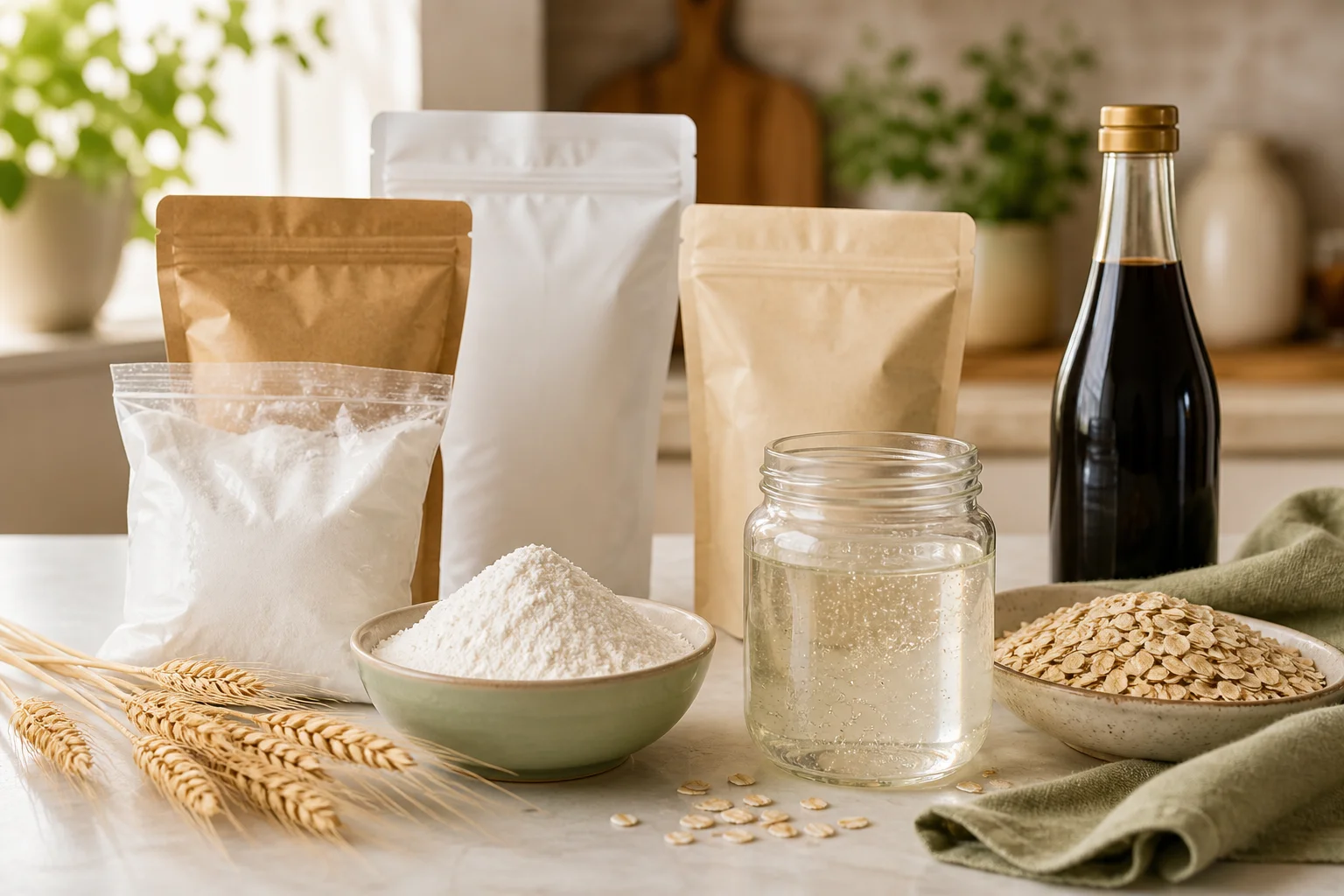
Are oats gluten-free?
Pure oats do not contain gluten, but regular oats are often contaminated with wheat, barley or rye in the field and the mill. The FDA does not treat oats as a gluten grain, so oat products can be labeled gluten-free if the food tests under 20 ppm (Beyond Celiac). The EU goes further: oats in a gluten-free food must be specially produced to avoid contamination and contain no more than 20 mg/kg (Regulation 828/2014). Australia and New Zealand do not allow oats to be labeled gluten-free at all (Coeliac Australia). A small group of people with celiac disease also react to avenin, the protein in oats (Celiac Disease Foundation). See our comparison of purity protocol vs sorted oats for how gluten-free oats are produced.
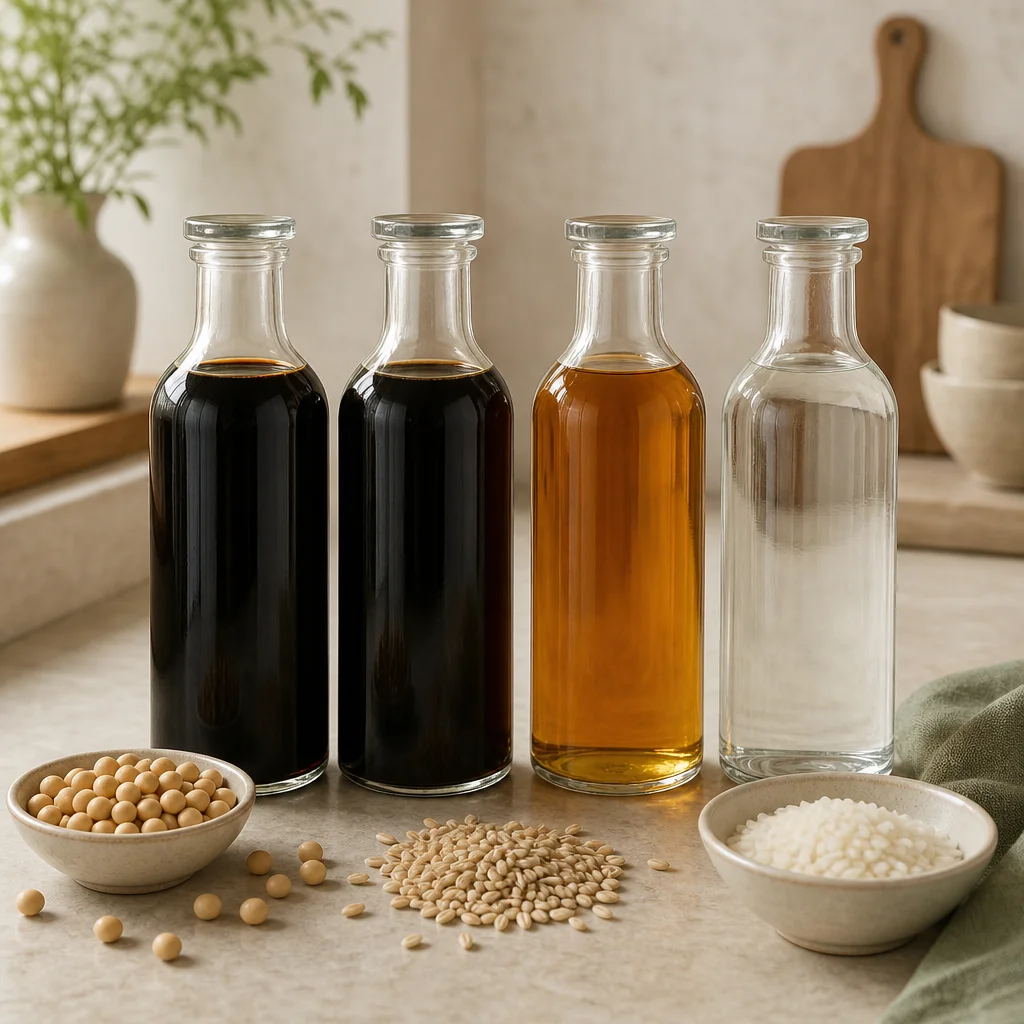
Is soy sauce gluten-free? What about tamari?
Usually not. Traditional soy sauce is brewed from soybeans and wheat, and the FDA itself notes that people with celiac disease may react to the wheat in soy sauce (FDA MSG Q&A). Tamari is often made with little or no wheat, but not always, so look for a gluten-free claim. Because soy sauce is fermented, FDA's 2020 rule requires makers of gluten-free fermented foods to keep records showing ingredients were gluten-free before fermentation, since current tests cannot reliably measure gluten afterward (FDA).
Is MSG gluten-free?
Yes. Monosodium glutamate is the sodium salt of glutamic acid, an amino acid, made today by fermenting starch, sugar beets, sugar cane or molasses. The FDA states that glutamate has nothing to do with gluten; if a product with MSG is a problem, suspect the soy sauce.
Is citric acid gluten-free?
Yes. Citric acid is a purified acid produced by fermentation. The National Celiac Association considers it gluten-free even if the fermentation feedstock came from wheat, barley or rye, because the protein is removed during processing.
Is xanthan gum gluten-free?
Yes for the vast majority of shoppers. Xanthan gum is made by fermenting sugar with the bacterium Xanthomonas campestris, and the sugar can come from corn, soy, dairy or wheat. The National Celiac Association says no protein from the original sugar source remains after processing, though people with severe wheat allergy may still want to ask about the growth medium. We cover the details in Is Xanthan Gum Safe for a Gluten-Free Diet?