Ingredient Deep Dives

Phosphates in Food Additives: Meat, Cheese, and Kidney Health

Phosphate additives show up in meats, cheese, bakery mixes, colas, and processed foods. Learn the label names and why kidney-health shoppers often flag them.

May 13, 2026|10 min read
By Sanket Patel|Updated 2026-05-13|5 sources|Editorial standards
Phosphates in Food Additives: Meat, Cheese, and Kidney Health

Phosphate additives are not one ingredient. They are a family of phosphorus-containing ingredients used to change texture, moisture, acidity, leavening, color, and shelf life in processed foods.

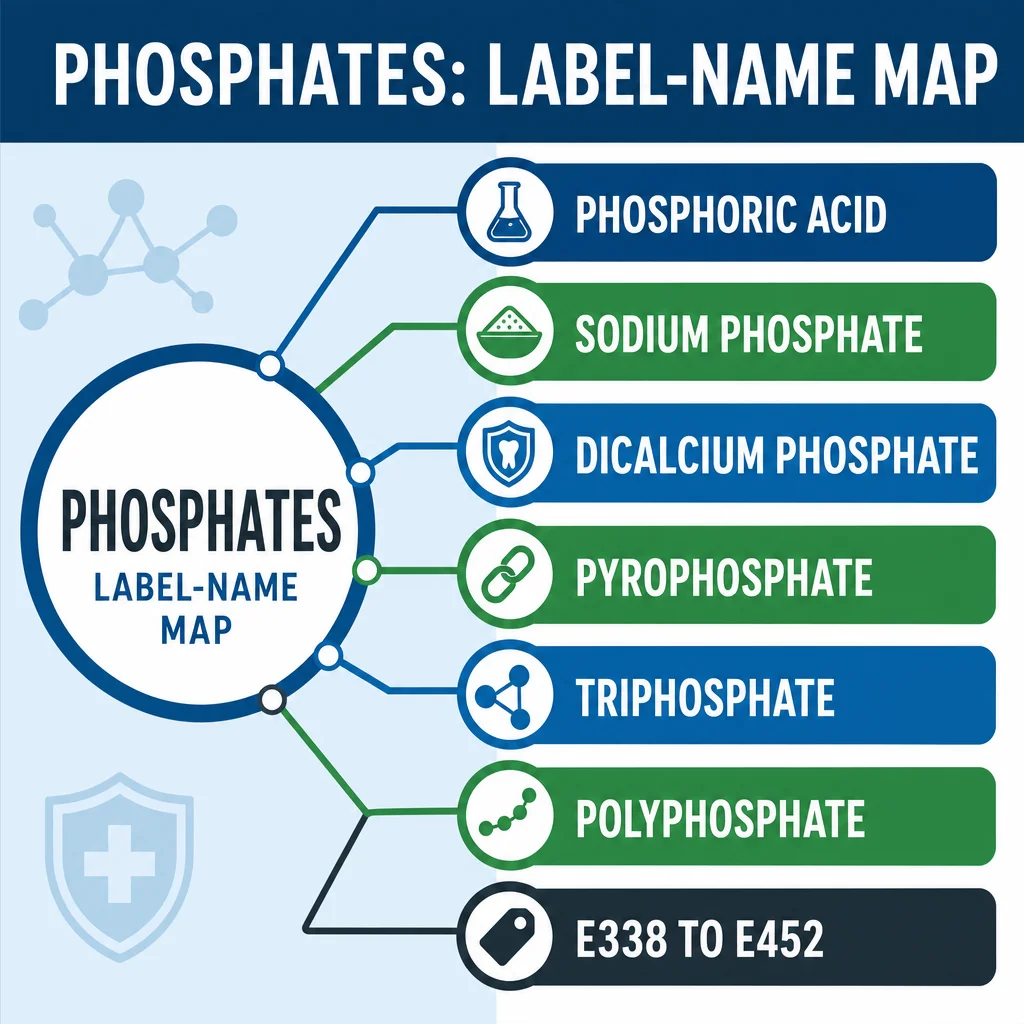
That is why shoppers miss them. A label may not say phosphate additive in plain language. It may say sodium phosphate, pyrophosphate, phosphoric acid, dicalcium phosphate, or an E number such as E450 or E452.

For most healthy people, phosphate additives are not a simple avoid-at-all-costs category. For people managing chronic kidney disease, high blood phosphorus, dialysis diets, or clinician-directed phosphorus limits, they can be much more important. The practical label task is to recognize the family of names and flag them consistently.
What Phosphate Additives Do

Phosphate additives are useful to food manufacturers because phosphorus chemistry touches many formulation problems.

They can help:

  • bind water in processed meat and poultry
  • improve tenderness and juiciness
  • emulsify processed cheese
  • stabilize sauces and dairy products
  • control acidity
  • act as leavening acids in bakery mixes
  • prevent powders from clumping
  • provide the sharp acid note in cola drinks

That is why phosphate names appear across categories that do not look related at first:

  • deli meats
  • injected or marinated poultry
  • ham and sausages
  • processed cheese
  • shelf-stable dairy drinks
  • baking powder and pancake mixes
  • instant puddings
  • frozen meals
  • powdered drink mixes
  • cola beverages
  • restaurant and fast-food meats

Phosphates are not only a junk food issue. They can appear in products that look ordinary, like sliced turkey, shredded cheese, or a baking mix.

Label Names to Save

Label Names to Save

The easiest label rule is broad: flag any ingredient containing phosphate or phosphoric.

Common terms include:

  • phosphoric acid
  • sodium phosphate
  • monosodium phosphate
  • disodium phosphate
  • trisodium phosphate
  • potassium phosphate
  • calcium phosphate
  • dicalcium phosphate
  • tricalcium phosphate
  • magnesium phosphate
  • sodium acid pyrophosphate
  • tetrasodium pyrophosphate
  • sodium tripolyphosphate
  • sodium hexametaphosphate
  • polyphosphate
  • diphosphate
  • triphosphate

In E-number markets, the National Kidney Federation lists the additive group as E338, E339, E340, E341, E343, E450, E451, and E452. U.S. labels more often use names than E numbers, but imported foods may use both.

Why Kidney-Health Shoppers Pay Attention

Phosphorus is an essential mineral. The body needs it for bones, cells, and energy metabolism. The concern is not phosphorus itself.

The concern is that damaged kidneys may not remove phosphorus from the blood as effectively. The NIDDK explains that phosphorus can build up in the blood in people with chronic kidney disease, and high levels can harm blood vessels and make bones thin, weak, and more likely to break.

That is why kidney diets often pay attention to phosphorus. Natural phosphorus in foods such as beans, nuts, dairy, meat, and whole grains is one part of the picture. Phosphate additives are another.

The National Kidney Foundation notes that the body absorbs phosphorus differently depending on the source. It reports organic phosphorus absorption around 40 to 70 percent, while phosphate additives have absorption rates greater than 90 percent.

That higher absorption is why label reading matters. A processed meat with phosphate additives may have a different phosphorus impact than an unprocessed cut of meat with natural phosphorus.

It also explains why the ingredient list matters even when a product does not show phosphorus on the Nutrition Facts panel. U.S. labels do not generally require a phosphorus line for every packaged food, so the ingredient names can be the most practical clue available in the aisle.

What the Research Says, Carefully

The peer-reviewed review Phosphate Additive Avoidance in Chronic Kidney Disease summarizes the concern: food additives are a major source of highly bioavailable dietary phosphorus, and limiting them may be a suitable target for people with chronic kidney disease. The authors also note that evidence for restricting phosphorus-based additives in early CKD is still limited.

That last sentence matters. A consumer article should not turn limited evidence into a universal rule for everyone. The stronger claim is narrower:

  • phosphate additives are common in processed foods
  • they are often easy to identify in the ingredient list
  • they are more absorbable than many natural phosphorus sources
  • people with CKD or phosphorus restrictions often have a specific reason to flag them
  • individual targets should come from a clinician or renal dietitian

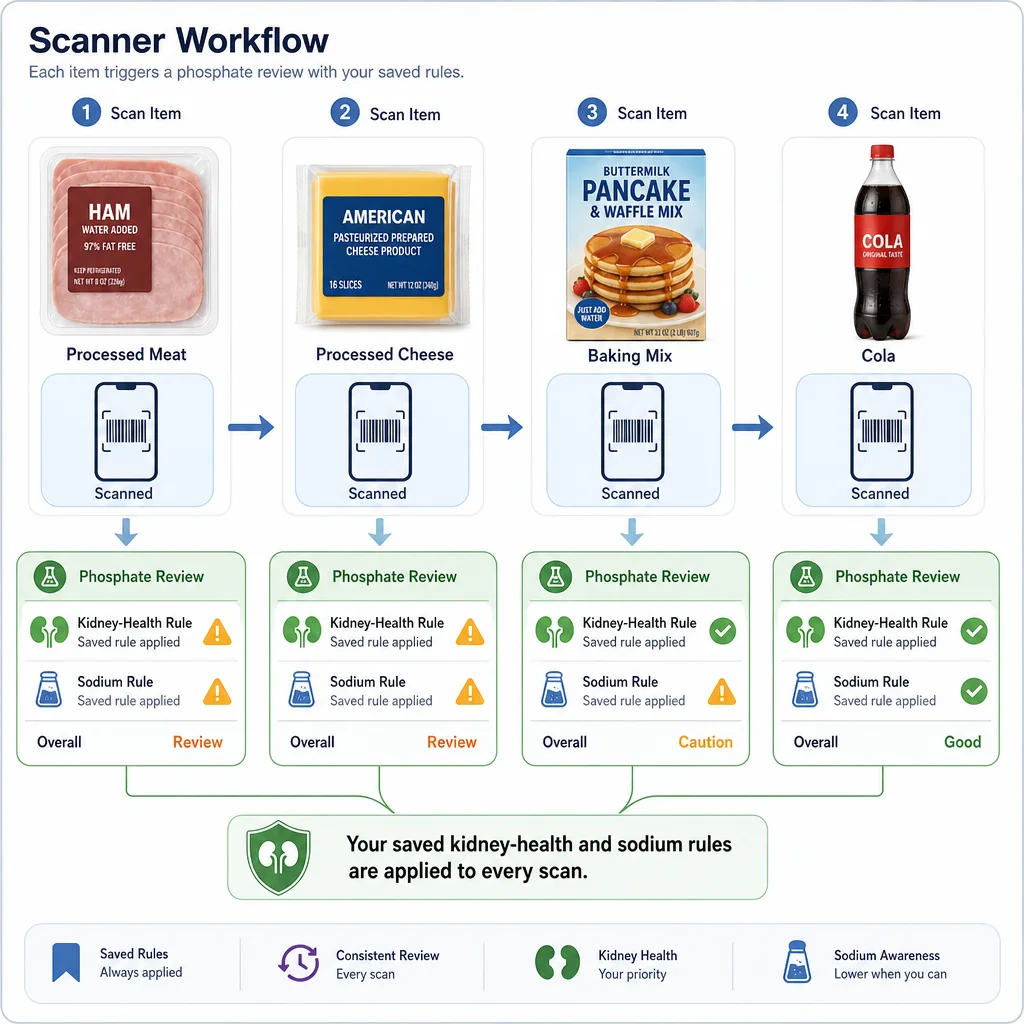
This is exactly the kind of problem a scanner can help with. The scanner does not diagnose kidney disease. It catches the label names so the shopper can follow the plan they already have.

Regulatory Status

Phosphate additives remain permitted. In the United States, phosphate ingredients are covered across multiple food additive and GRAS regulations, and 21 CFR Part 172 sets general conditions for direct food additives.

So the practical message is not phosphates are illegal. It is phosphates are allowed, but they may be relevant to your saved health or label-preference rule.

That framing keeps the article honest and useful.

It also keeps the scanner role modest. The app can identify phosphate family names and organize the finding. It should not estimate a medical phosphorus allowance unless the user has entered clinician-guided rules and serving-size context.

Where Phosphates Hide in Processed Meat

Meat is one of the most important categories because phosphates can improve water retention and texture.

Look closely at:

  • deli turkey
  • rotisserie chicken
  • ham
  • sausages
  • bacon
  • chicken nuggets
  • marinated raw chicken
  • frozen breaded meats
  • fast-food chicken products

The label may say sodium phosphate or sodium tripolyphosphate. In some raw meat products, added solution may be described in a separate statement, such as contains up to X percent solution, followed by ingredients.

If you are reducing sodium too, phosphate additives can overlap with sodium concerns because many phosphate salts contain sodium. The low-sodium food scanner is a useful companion because a product can be both high in sodium and contain phosphate additives.

Where Phosphates Hide in Cheese and Dairy

Processed cheese often uses phosphate salts to help proteins and fats stay smooth and melt evenly. That is why phosphate terms show up in cheese slices, cheese sauces, shelf-stable dips, and processed spreads.

Watch for:

  • sodium phosphate
  • sodium citrate plus phosphate blends
  • calcium phosphate
  • disodium phosphate
  • diphosphates
  • polyphosphates

Not every cheese contains phosphate additives. Plain block cheese may have a much shorter ingredient list. Comparing two labels in the same category is usually more useful than trying to memorize every additive use.

Where Phosphoric Acid Shows Up

Where Phosphoric Acid Shows Up

Phosphoric acid is best known from cola. It provides acidity and a characteristic sharpness.

For someone following a phosphorus restriction, that makes cola and dark soft drinks worth reviewing. For someone simply trying to reduce ultra-processed foods, phosphoric acid is one more processing clue alongside colors, flavors, preservatives, and sweeteners.

Pair this with High-Fructose Corn Syrup: Label Names and How to Spot It if you are reviewing soft drinks. A cola may contain both phosphoric acid and high-fructose corn syrup.

How IngrediCheck Helps

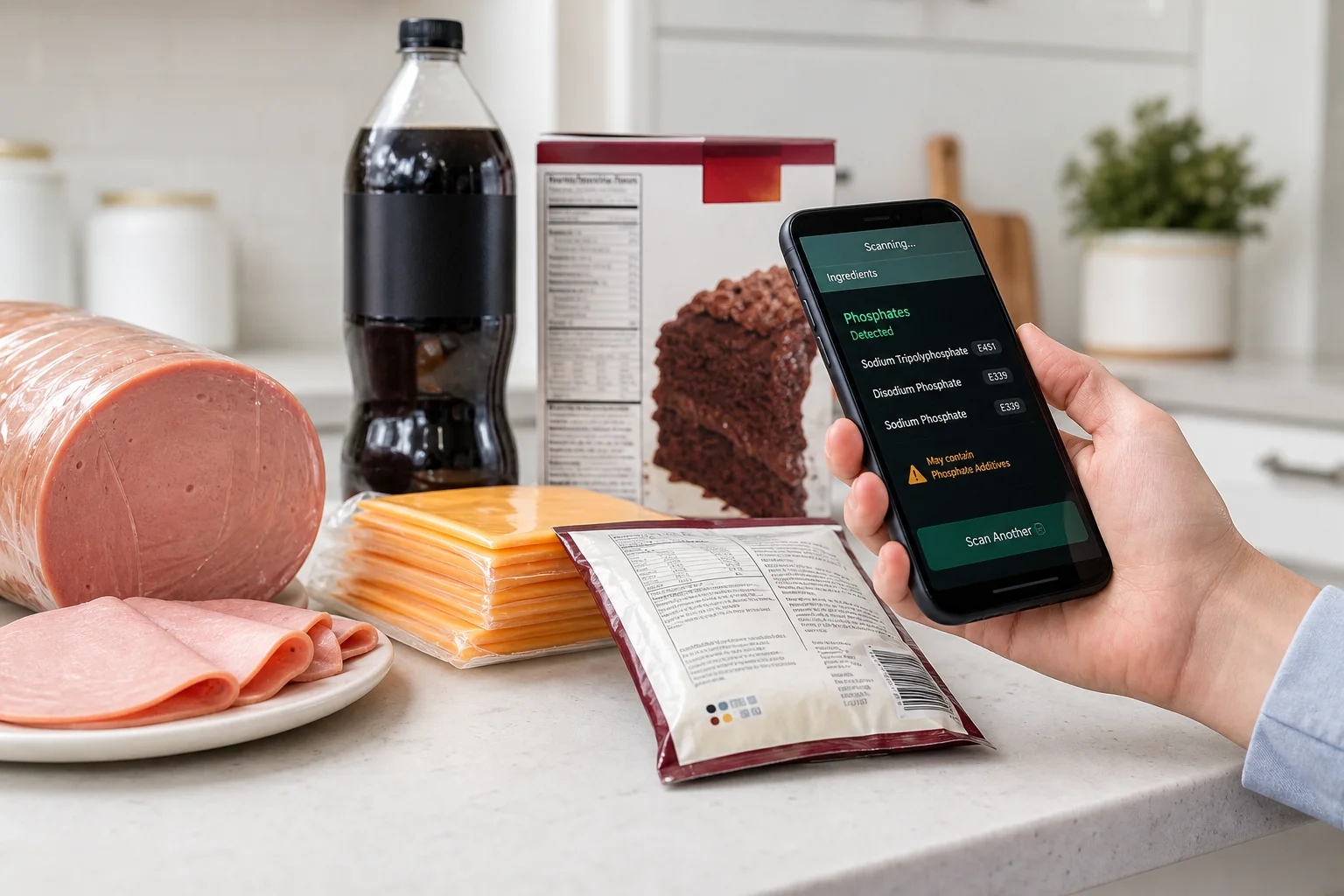
IngrediCheck helps by making phosphate terms visible before they blur into the rest of the ingredient list.

Useful saved rules might include:

  • flag phosphate
  • flag phosphoric acid
  • flag sodium phosphate
  • flag pyrophosphate and polyphosphate
  • flag E338 through E452
  • flag phosphate additives in meat and cheese
  • flag sodium phosphate for sodium and phosphorus review

Those rules can be strict or informational. A person with clinician-directed phosphorus limits may treat phosphate additives as a high-priority warning. A clean-label shopper may treat them as a comparison cue. A parent may simply want fewer additives in everyday snacks.

The app's job is to find the term and explain why it matched.

A Practical Phosphate Label Routine

Use this routine in the grocery aisle:

  1. Scan the ingredient list for phos.
  2. Check whether the product is meat, cheese, bakery mix, cola, or a powdered mix.
  3. If kidney health matters, follow your clinician or renal dietitian's guidance.
  4. If sodium matters, check the Nutrition Facts panel too.
  5. Compare a simpler product in the same category.
  6. Save phosphate terms so the scanner catches them automatically next time.

This approach is precise enough for people who need to care and calm enough for people who are only trying to understand the label.

Scan for the Whole Phosphate Family

Phosphate additives are easy to miss because they appear under many names. IngrediCheck can scan packaged foods, flag phosphate and phosphoric terms, and help you decide whether a product fits your saved kidney-health, sodium, clean-label, or additive-review rules.

Frequently Asked Questions

What phosphate additive names should I look for?

Look for phosphoric acid, sodium phosphate, dicalcium phosphate, pyrophosphate, triphosphate, polyphosphate, and E numbers E338 through E452.

Are phosphate additives banned?

No. Phosphate additives are permitted in many foods. The main label concern is exposure, especially for people managing chronic kidney disease or phosphorus intake.

Does a scanner replace a kidney dietitian?

No. A scanner can flag phosphate terms on labels, but people with kidney disease should follow their clinician or renal dietitian's phosphorus plan.

Get the app for clearer label decisions.

Scan labels, see what fits your food notes, and read the why in plain English.

IngrediCheck app