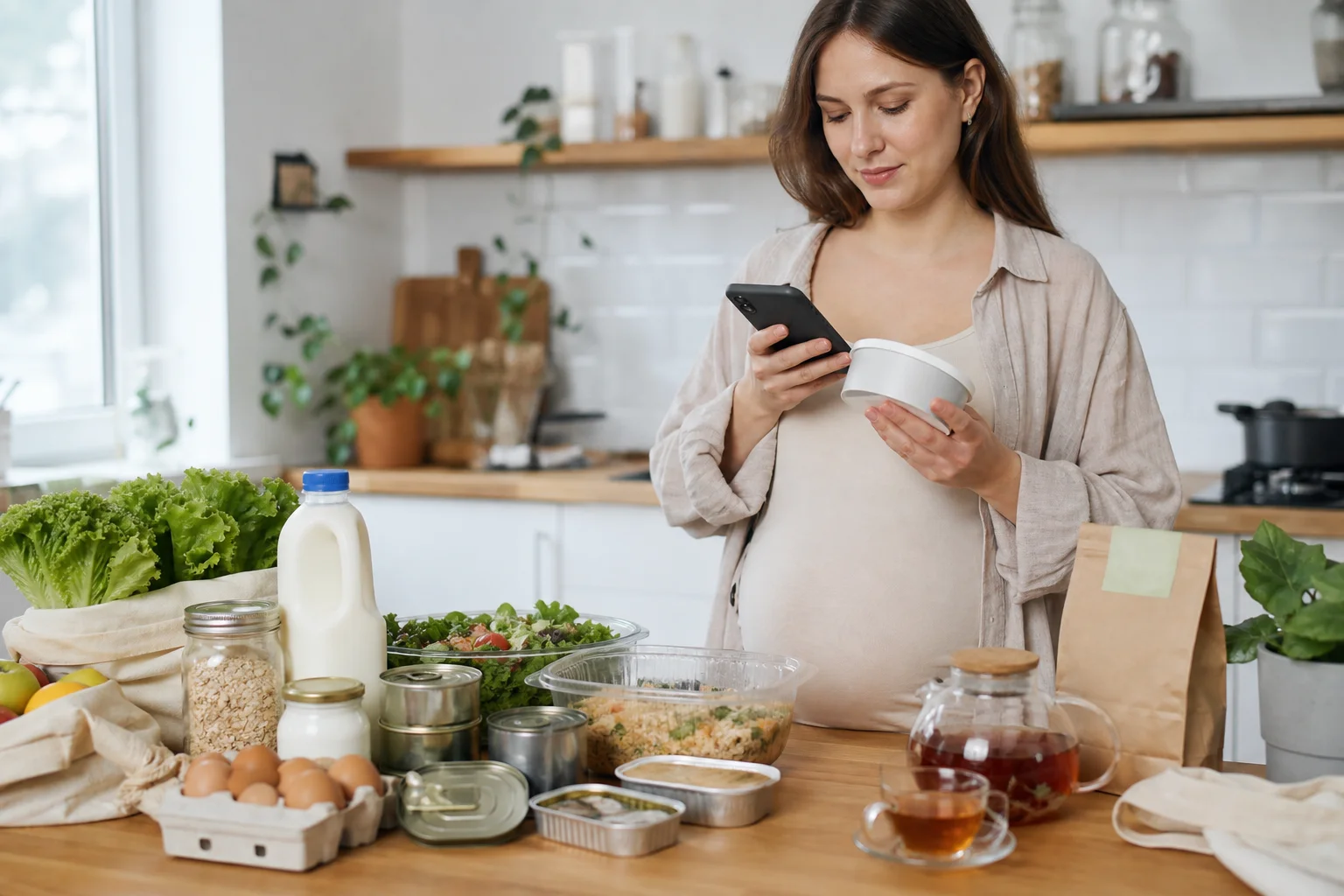
Pregnancy food advice is full of categories that sound simple until you are standing in front of a package: smoked salmon, canned tuna, queso fresco, deli turkey, kombucha, sushi, protein bars, herbal drinks, and prepared salads.
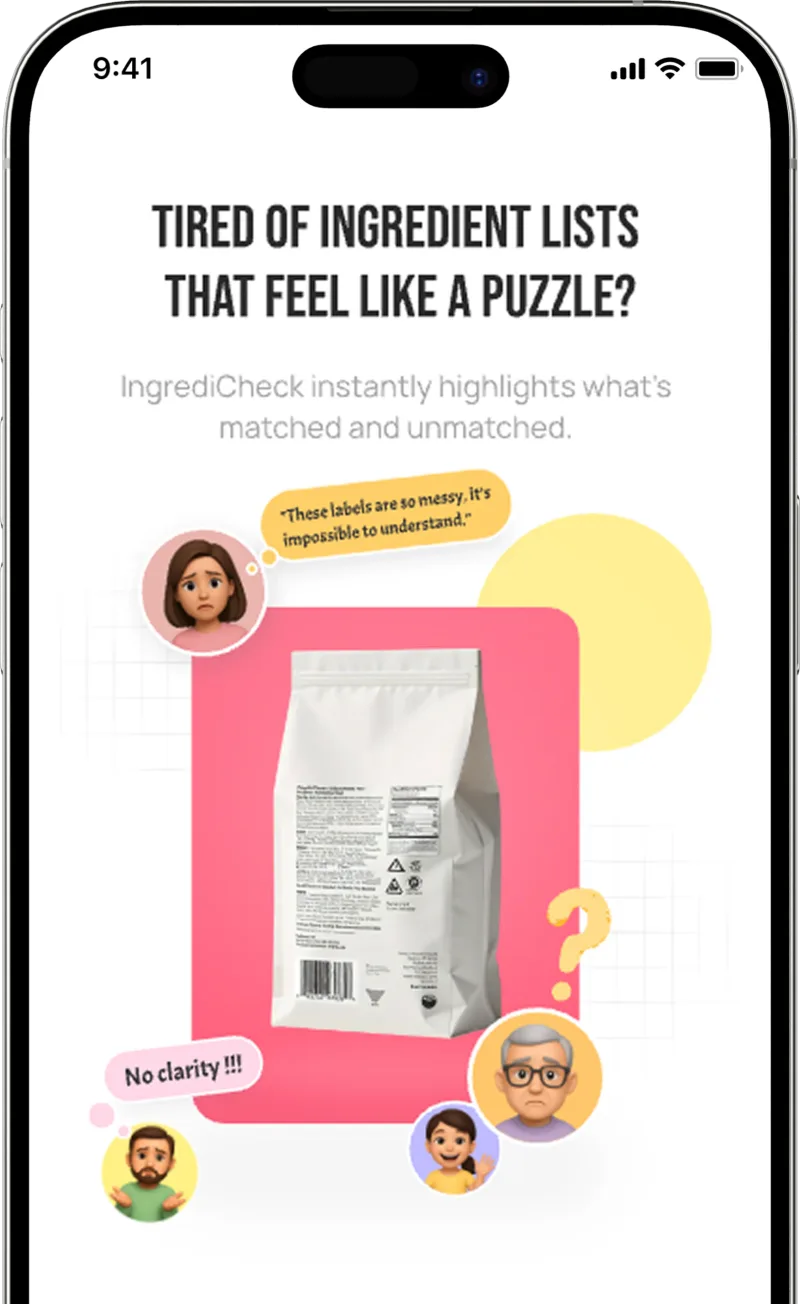
A pregnancy safe food scanner helps with the label part of that decision. It cannot replace your ob-gyn, midwife, dietitian, or local food-safety guidance. What it can do is scan a barcode or ingredient label, compare the product against saved pregnancy rules, and highlight the reasons a food deserves review before you buy it.
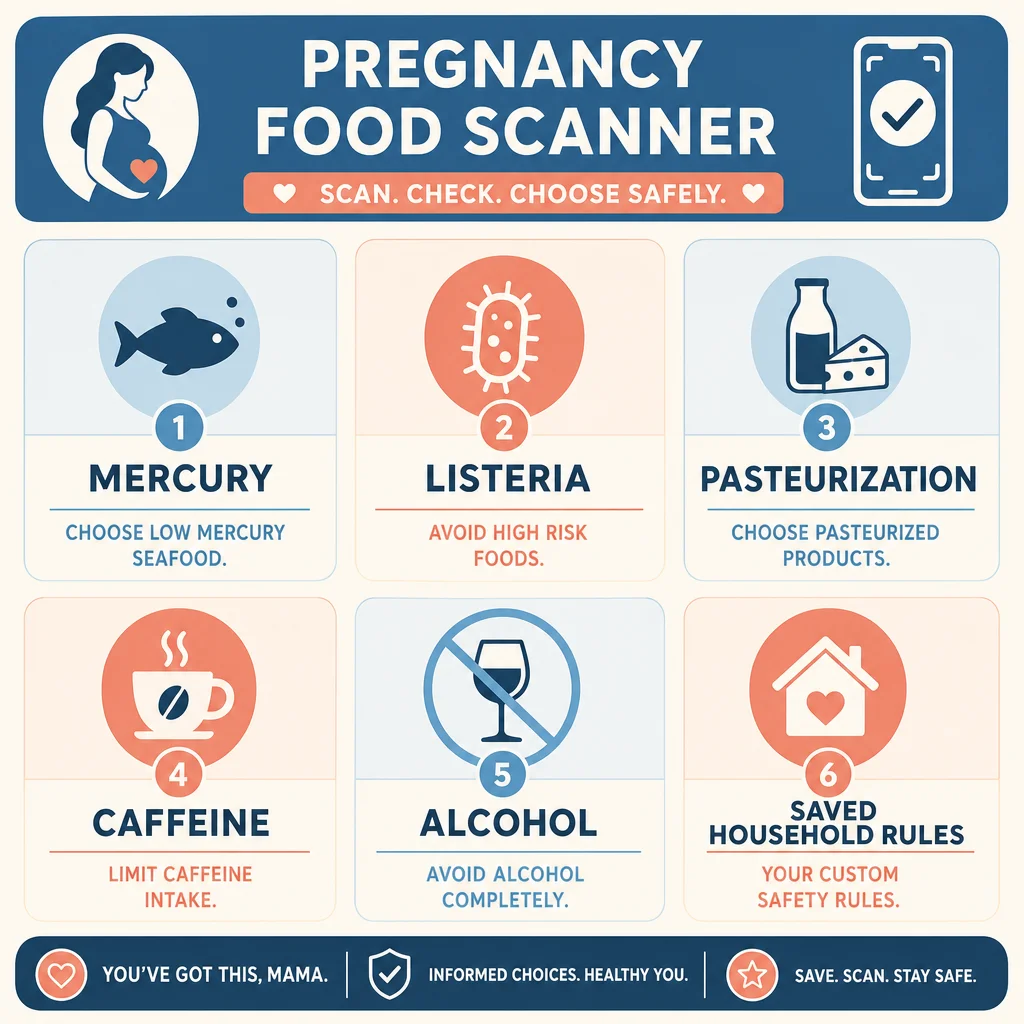
That matters because pregnancy food safety is not one avoid list. It is a mix of infection risk, mercury guidance, caffeine limits, alcohol avoidance, allergen needs, and personal medical advice.
Why Pregnancy Food Screening Is Different
The core issue is risk layering. A food may be nutritious in one context and need extra handling in another.
FoodSafety.gov's pregnancy guidance explains that immune system changes during pregnancy can put pregnant women, unborn children, and newborns at higher risk from foodborne illness. It calls out pathogens such as Listeria and Toxoplasma and gives specific advice on seafood, smoked seafood, unpasteurized juice, raw milk products, deli-style foods, and safe cooking.
That is not the same job as a general nutrition score. A pregnancy scanner should help you review:
- seafood type and mercury category
- raw, refrigerated smoked, or undercooked seafood clues
- unpasteurized milk, cheese, juice, or cider
- deli meat and hot dog instructions
- caffeine sources
- alcohol-containing foods or drinks
- household allergies and dietary rules
Fish Is Not a Simple Yes or No
Many people hear pregnancy fish advice as "avoid seafood." That is not what U.S. regulators say.
The EPA and FDA fish advice says fish provide nutrients that support a child's brain development, including DHA and EPA omega-3 fats, iron, iodine, choline, protein, vitamin B12, vitamin D, and selenium. The advice also says fish intake during pregnancy is recommended because moderate scientific evidence shows it can support the baby's cognitive development.
The practical scanner rule is not fish equals bad. It is:
- flag high-mercury fish
- show when a product is in a lower-mercury category
- flag raw or undercooked seafood terms
- flag refrigerated smoked seafood unless it will be cooked
- keep the final decision tied to the user's clinician and local guidance
The FDA's updated fish advice notes that children and people who are or might become pregnant or breastfeeding should eat a variety of fish from the Best Choices category because they are lower in mercury. A scanner can help by surfacing the fish type and prompting the shopper to compare it with the official chart.
For a deeper background, read the mercury in seafood guide.
Deli Meat, Hot Dogs, and Smoked Seafood Need Handling Context
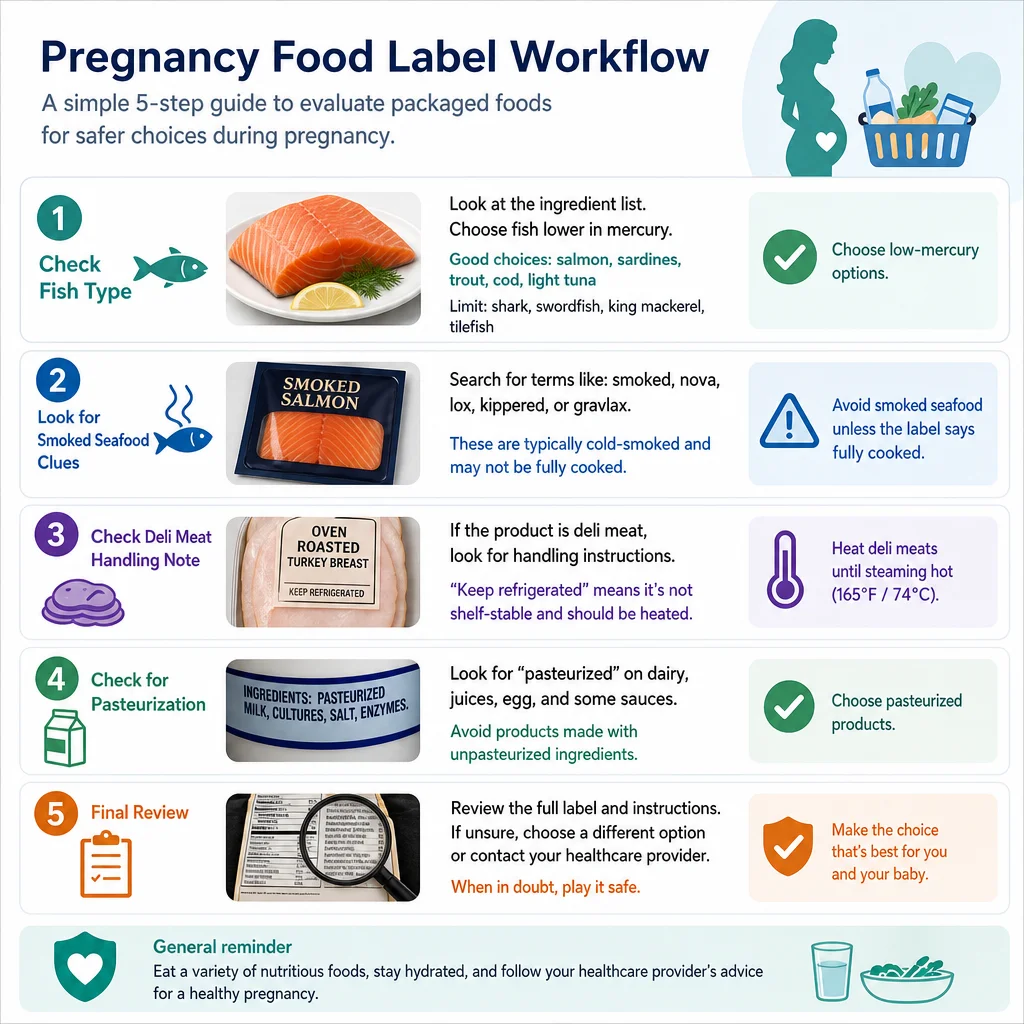
Some pregnancy food risks are not visible from the ingredient list alone. Deli meat is a good example. The label may tell you what the product contains, but the pregnancy question often depends on whether it will be heated until steaming hot and whether it has been handled safely.
FoodSafety.gov says refrigerated smoked seafood is a Listeria concern unless it is used in a cooked dish. It lists terms such as lox, kippered, smoked, nova-style, and jerky. It also tells pregnant women to cook seafood thoroughly.
The NHS pregnancy food guidance uses similar logic across raw or undercooked meat, some cured meats, and dairy products. The pattern is the same: the package tells part of the story, but preparation matters.
A scanner should therefore avoid over-claiming. The better output is not safe or unsafe. It is closer to:
refrigerated smoked seafood term found: check pregnancy food-safety guidancedeli meat: heat guidance may applyraw seafood term found: pregnancy review neededunpasteurized milk ingredient found
That language keeps the scanner honest.
Caffeine and Supplements Are Their Own Review Layer
Pregnancy shopping also includes drinks, bars, powders, and supplements. ACOG's healthy eating guidance focuses on balanced eating, key vitamins and minerals, whole grains, fruits, vegetables, protein foods, and dairy foods. It also reminds patients that supplements are not regulated by FDA in the same way as drugs and that they should talk with an ob-gyn or registered dietitian about recommendations.
That matters for scanner design because pregnancy products often contain multiple active ingredients:
- caffeine from coffee, tea, yerba mate, guarana, or energy blends
- herbal extracts
- added vitamins and minerals
- sugar alcohols or intense sweeteners
- high sodium in prepared meals
- allergens or ingredients a household already avoids
The scanner should let a pregnant user save rules that reflect their actual care plan, not a generic internet list.
What IngrediCheck Can and Cannot Do
IngrediCheck can help with the packaged-food label review. You can scan a barcode or ingredient label, save pregnancy-related food notes, and see which label clues were found.
Useful saved rules might include:
flag high-mercury fish namesflag raw seafood, sushi, sashimi, ceviche, and refrigerated smoked seafood termsflag unpasteurized milk, cheese, juice, and ciderflag deli meat and hot dog products for heating reviewflag caffeine sourcesflag alcoholflag my household allergens
IngrediCheck cannot confirm whether a deli counter handled food safely, whether a cheese was stored correctly, whether a restaurant followed safe temperatures, or whether a supplement is appropriate for your pregnancy. Those questions belong with clinicians, official guidance, and the people preparing the food.
For broader scanner context, compare this page with the parent ingredient checker app guide and the ingredient checker and food scanner guides hub. If you are also shopping for a child, the baby and toddler food scanner uses a different rule set focused on added sugar, sodium, allergens, and choking-risk clues.