How to Spot Corn Syrup: Every Name It Hides Under

High fructose corn syrup hides behind at least 12 names on ingredient lists, including some that can appear even on products labeled 'no HFCS.' Here's every alias to know.

May 29, 2026|9 min read
By Sanket Patel|Updated 2026-05-29|4 sources|Editorial standards
How to Spot Corn Syrup: Every Name It Hides Under

A survey published in August 2025 found that 42% of American grocery shoppers actively look for "no high fructose corn syrup" on food labels. That number has never been higher. And yet, the ingredient those shoppers are trying to avoid is still showing up in their carts — because it travels under names most people don't recognize.

High fructose corn syrup (HFCS) appears on ingredient lists under at least a dozen different labels, depending on where the product is made, how it was formulated, and how aggressively the manufacturer wants to avoid consumer pushback. Some of these names sound scientific. Others sound almost wholesome. One, just the word "fructose," can appear on products that carry a "no HFCS" claim on the front of the package.

This guide covers every name corn syrup uses, why it goes by so many of them, which foods contain it without advertising the fact, and what the research actually says about whether any of it matters.

Why Ingredient Lists Get Complicated

The term "high fructose corn syrup" became a consumer lightning rod. By the mid-2000s, awareness of the ingredient's ubiquity in the American food supply had grown enough that manufacturers began looking for alternatives, in formulation and in labeling language alike.

In 2010, the Corn Refiners Association petitioned the FDA to allow HFCS to be relabeled as "corn sugar." The FDA rejected the petition in May 2012, citing three problems: "sugar" is defined in food regulation as a solid, crystallized substance rather than a syrup; "corn sugar" is already the accepted name for a different ingredient, dextrose; and the change would create consumer confusion rather than resolve it.

The ingredient itself didn't disappear after that. What shifted is how it gets listed.

Every Name Corn Syrup Uses on Labels

Every Name Corn Syrup Uses on Labels

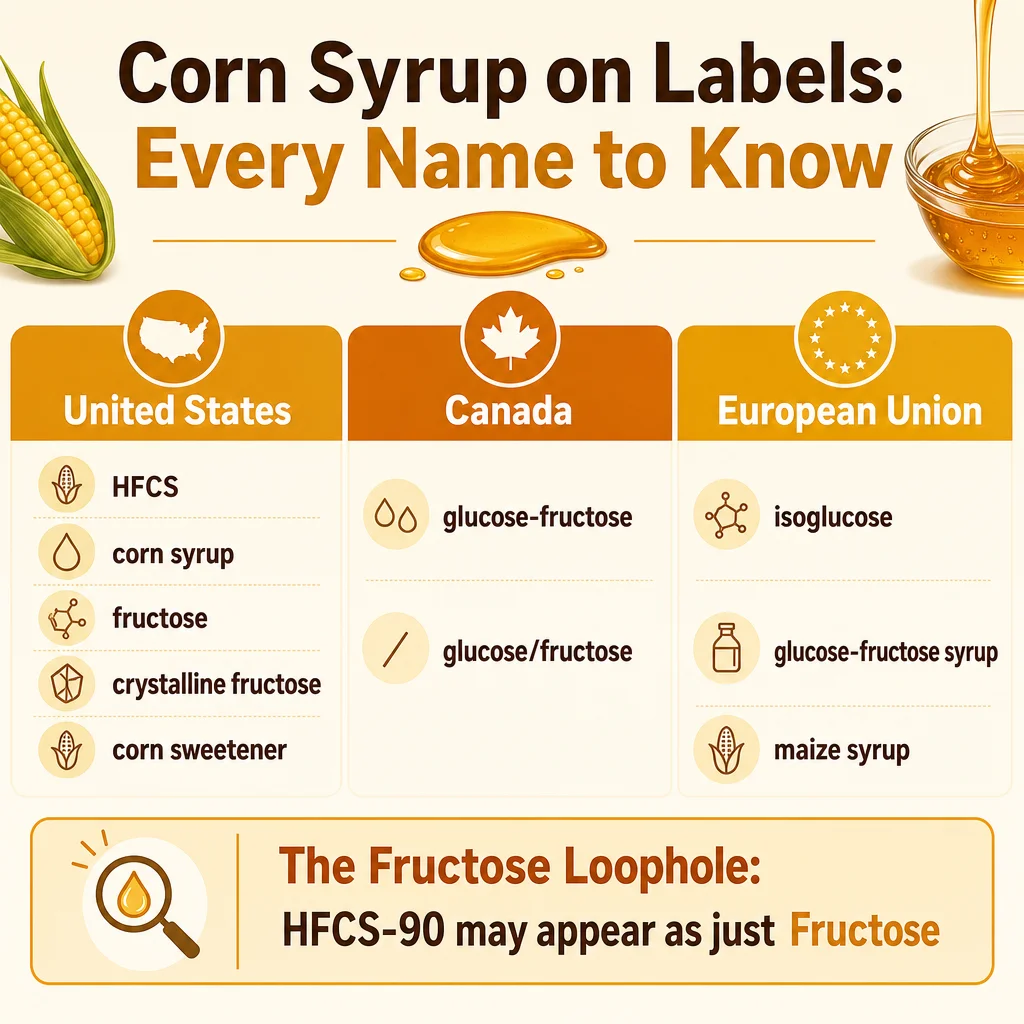
These are all the names corn-derived glucose-fructose sweeteners can legally appear under on ingredient labels in the US, Canada, and the EU. They are not identical products, but they come from the same source and serve the same functional role.

NameWhere You'll See ItNotes
High fructose corn syrup (HFCS)US packaged foodsThe standard US regulatory name
Corn syrupUS foodsLower-fructose variant; still corn-derived
Corn syrup solidsPowdered mixes, infant formula, creamersDehydrated corn syrup
Corn sweetenerUS marketing copyNo strict regulatory definition
FructoseUS — especially "no HFCS" productsCan mean HFCS-90 (see below)
Fructose syrupUS and UK productsLiquid form of high-fructose corn processing
Crystalline fructoseDiet foods, supplementsSolid, dried form from HFCS processing
Glucose-fructose syrupCanada (official), EUThe legal equivalent of HFCS on Canadian and EU labels
Glucose/fructoseCanadaAbbreviated Canadian label form
IsoglucoseEuropean UnionThe official EU term for HFCS
High-fructose maize syrupUK and CommonwealthMaize is the British English word for corn
Maize syrupUK and other marketsGeneric corn-derived syrup
Glucose syrupGlobal; often corn-derived in the USMay be wheat-derived in some EU products

The USDA's official agricultural thesaurus recognizes glucose-fructose syrup, isoglucose, and high-fructose maize syrup as accepted synonyms for the same class of ingredient.

The "Fructose" Loophole

The most important item in the table above is the most innocent-looking one: plain "fructose."

Standard HFCS comes in two main formulations. HFCS-42 contains roughly 42% fructose and shows up in processed foods and cereals. HFCS-55 contains about 55% fructose and is the sweetener in most commercial soft drinks. Both are what most consumers picture when they read the term HFCS.

There is a third formulation: HFCS-90, which contains 90% fructose.

The Corn Refiners Association's position is that because HFCS-90 is predominantly fructose, it can be listed on an ingredient label as simply "fructose." The GRAS definition in 21 CFR 184.1866 explicitly defines HFCS-42 and HFCS-55 but places HFCS-90 in a regulatory gray zone that has not been formally resolved.

The practical result: a product can display a "no high fructose corn syrup" claim on its front label while its ingredient list shows "fructose," derived from HFCS-90. This is not a hypothetical scenario. General Mills' Vanilla Chex was cited as a product that used this approach. The front label made no mention of HFCS; the ingredient list showed "fructose."

A "no HFCS" front-of-pack claim only means the product does not contain the specific formulations named HFCS-42 or HFCS-55. It says nothing about corn syrup solids, crystalline fructose, or any fructose derived from HFCS-90.

Where Corn Syrup Hides in Everyday Foods

Where Corn Syrup Hides in Everyday Foods

Corn-derived sweeteners show up across a wider range of product categories than most shoppers expect.

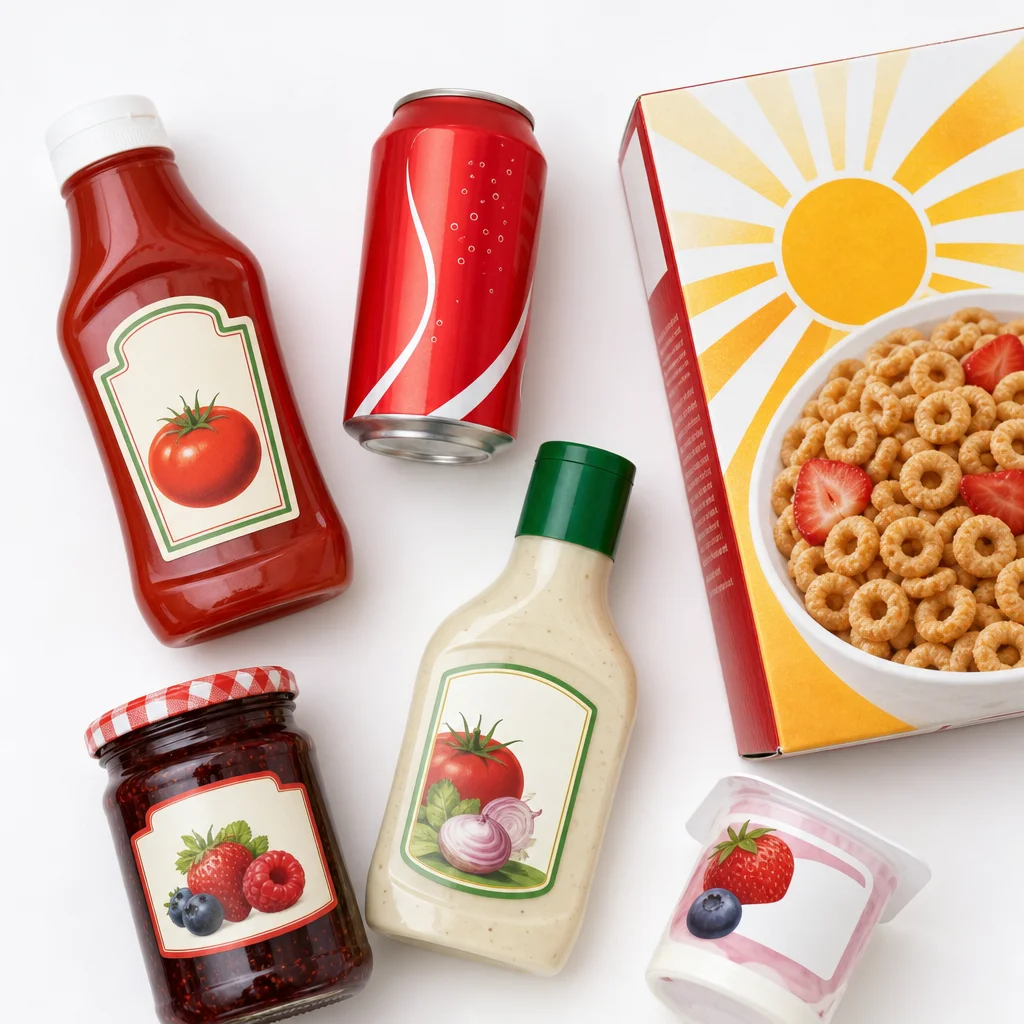
Beverages and drinks. Commercial soft drinks are the most concentrated source. A single can may contain 24 to 40 grams of HFCS-55. Juice cocktails, fruit punches, and fruit-flavored drinks labeled anything other than "100% juice" are also typically sweetened with corn syrup rather than actual fruit sugar.

Condiments and sauces. Ketchup, barbecue sauce, sweet relish, jams, and jellies are routine sources. The sweetness in standard grocery-brand versions often comes from HFCS rather than cane sugar.

Breakfast foods. Most commercial pancake syrups list corn syrup as the primary ingredient. Many breakfast cereals use HFCS-42. Granola bars and pastries frequently contain corn syrup or corn syrup solids for moisture retention and shelf stability.

Flavored dairy and dairy-adjacent products. Single-serve flavored yogurts, especially those aimed at children, commonly list corn syrup among the top ingredients. Many powdered and liquid coffee creamers use corn syrup solids as a base.

Packaged baked goods and snacks. Commercially produced cookies, snack cakes, and soft breads often contain corn syrup. The liquid form helps maintain texture over extended shelf life in ways that crystalline sugars can't replicate as cheaply.

"Health" and diet products. Protein bars, meal replacements, and low-fat packaged snacks sometimes use crystalline fructose or corn syrup solids. The reformulation that removes fat frequently adds sweetness, and corn-derived sweeteners are a low-cost way to do that.

What the Science Actually Says

The scientific picture on HFCS is more complicated than either the food industry or its harshest critics tend to acknowledge.

A 2022 meta-analysis pooling four controlled studies with 767 participants found that HFCS did not produce significantly different outcomes from regular sucrose on body weight, BMI, waist circumference, total cholesterol, LDL, HDL, triglycerides, or blood pressure. The frequently made claim that HFCS is categorically worse than sugar overstates what controlled studies have demonstrated so far.

What the same meta-analysis did find is a difference in inflammation. HFCS was associated with significantly higher C-reactive protein (CRP) levels compared to sucrose, a meaningful finding because CRP is a recognized marker of systemic inflammation and a risk factor for cardiovascular disease.

The reason may lie in how fructose is metabolized. Unlike glucose, which is processed by cells throughout the body, fructose is primarily metabolized by the liver. In large quantities, fructose can promote fat accumulation in liver tissue. A 2025 systematic review in Frontiers in Nutrition, covering more than 23,000 screened studies, found a "stark absence" of well-controlled human trials specifically studying HFCS and liver injury. The liver risk is biologically plausible, but the human evidence remains limited compared to what animal models suggest.

The FDA's official position is that it is not aware of evidence showing HFCS is less safe than sucrose or honey, and HFCS holds GRAS status. No federal ban or restriction is currently in effect.

The concern most nutrition researchers point to is not that HFCS is a uniquely dangerous compound. The concern is scale. Its liquid form, low cost, and functional properties make it easy to add to products in quantities that would be uncommon if a manufacturer were using granulated sugar. A person who would never add seven teaspoons of sugar to a glass of water might drink a soda that contains exactly that amount.

The 2016 Label Reform and What It Means for You

One change worth knowing: the FDA's 2016 Nutrition Facts label update requires all added sugars, regardless of source, to be declared as a single total on the "Added Sugars" line. This sits alongside broader state-level efforts to make ingredient disclosures more transparent — including Texas SB 25, which requires warning labels on 44 specific food additives starting in 2027, though corn syrup is not among them. This means that even when a manufacturer uses a name you don't recognize in the ingredient list, the aggregate sweetener load is always visible on the panel itself.

The added sugars total is more reliable than any front-of-pack sweetener claim, including "no HFCS."
How to Approach Label Reading

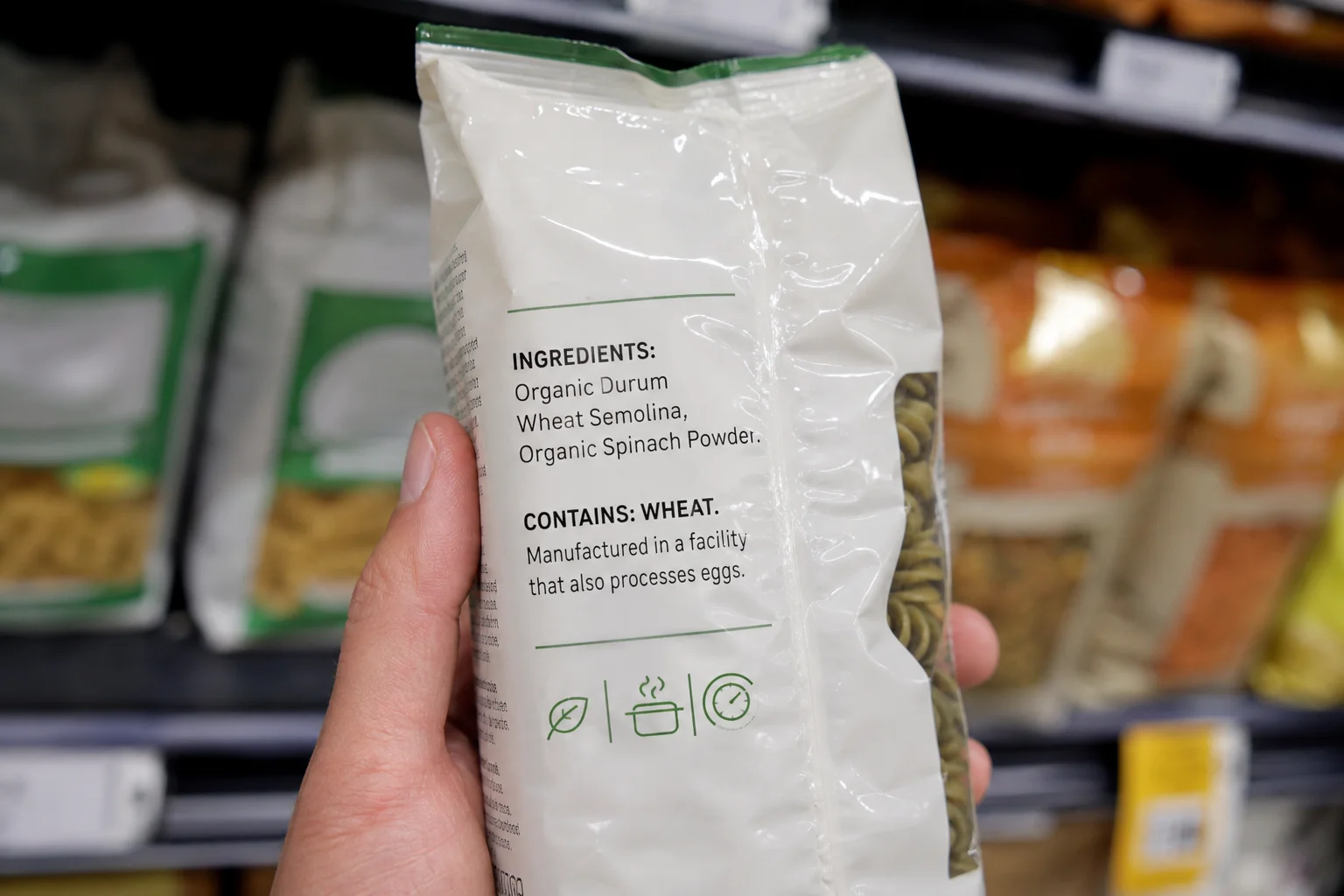
When scanning an ingredient list for corn-derived sweeteners, any of the following names should be treated as a form of corn syrup: corn syrup (any form), corn sweetener, glucose-fructose syrup, isoglucose, maize syrup, fructose syrup, crystalline fructose, and corn syrup solids. Plain "fructose" appearing without a clearly fruit-based qualifier, such as date fructose or agave fructose, may also indicate HFCS-90.

Ingredient lists are ordered by weight, with the heaviest ingredient first. A corn syrup listed in the first three ingredients represents a significant portion of the product's total weight.

Using IngrediCheck, you can scan a product's ingredient list and immediately flag any form of corn syrup regardless of the specific label name used, so you don't need to memorize a dozen aliases before your next grocery trip.

Next Label Check

Follow the scanner, hub, and ingredient paths connected to this guide

Get the app for clearer label decisions.

Scan labels, see what fits your food notes, and read the why in plain English.

IngrediCheck app