The Link Between Salicylate Sensitivity and Aspirin Intolerance

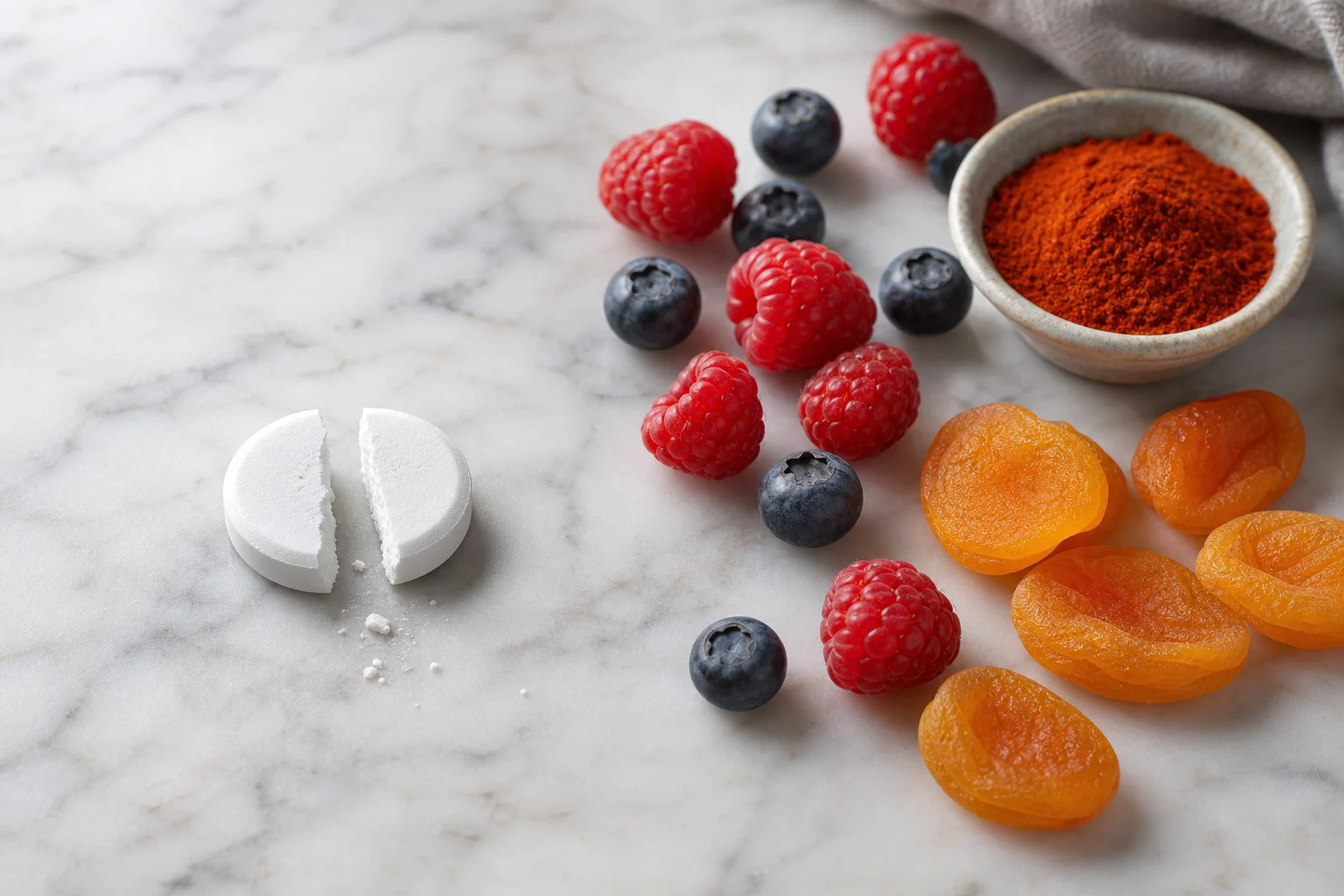
The same enzyme inhibited by aspirin is also blocked by blueberries, paprika, and wine. For millions with AERD, a plate of healthy food can trigger the same cascade as a pill.

Jun 4, 2026|11 min read
By Sanket Patel|Updated 2026-06-04|4 sources|Editorial standards
The Link Between Salicylate Sensitivity and Aspirin Intolerance

Most people who know they react to aspirin learn to avoid it. Skip the pill. The prescription is simple. What they are rarely told is that the same reaction can be provoked by blueberries, paprika, a glass of wine, or a salad dressed with tomato. Not because those foods contain aspirin, but because they carry something structurally and biochemically similar: natural salicylates.

For people with salicylate sensitivity, the line between a pharmaceutical and a food is thinner than most expect. Understanding why requires a look into eicosanoid biochemistry and a condition most doctors still underdiagnose.

What Is Aspirin-Exacerbated Respiratory Disease?

Aspirin-exacerbated respiratory disease, abbreviated AERD, is a chronic condition defined by a trio of overlapping problems: asthma, chronic rhinosinusitis with recurring nasal polyps, and sensitivity to aspirin and other NSAIDs. This combination was first characterized clinically as Samter's Triad, named after physician Max Samter who described the pattern in the 1960s.

A point that surprises many patients: AERD is not an allergic reaction in the traditional sense. There are no IgE antibodies involved and no immune memory being triggered. It is a pharmacological hypersensitivity, meaning the reaction occurs through an enzyme-pathway mechanism rather than through the immune system's recognition of a foreign protein. Antihistamines don't help. The mechanism is different entirely.

The condition is more common than its low profile suggests. AERD affects approximately 9% of all adults with asthma), according to the American Academy of Allergy, Asthma and Immunology. Among people with both asthma and nasal polyps, that figure climbs to 25–40%. The Samter's Society estimates that over one million Americans have AERD, with many going undiagnosed.

The condition typically emerges in adulthood, often in the early thirties, and tends to affect women slightly more than men. Crucially, symptoms continue even when aspirin is avoided, because the underlying inflammation persists independently of drug exposure.

The COX-1 Connection: Why Food Salicylates Behave Like Aspirin

The COX-1 Connection: Why Food Salicylates Behave Like Aspirin

The biochemical explanation begins with arachidonic acid, a fatty acid found in cell membranes throughout the body. Under normal circumstances, an enzyme called COX-1 (cyclooxygenase-1) converts arachidonic acid into prostaglandins, which serve as anti-inflammatory messengers and help keep the airway relaxed.

Both aspirin and dietary salicylates block COX-1. When COX-1 is inhibited, two things happen simultaneously. First, prostaglandin levels drop, removing a key brake on inflammatory cells including mast cells and eosinophils. Second, the arachidonic acid that would have been converted to prostaglandins is redirected into the lipoxygenase (LOX) pathway, producing cysteinyl leukotrienes: potent pro-inflammatory molecules that constrict the airways, increase mucus production, and recruit immune cells.

As Baenkler's landmark 2008 review in Deutsches Ärzteblatt International states directly: the effects of salicylates from plant foods and from synthetic COX inhibitors like aspirin are, in principle, the same. The enzyme targeted is identical. The downstream cascade is identical. The critical variable is dose.

A standard aspirin tablet delivers 325 to 650 milligrams of salicylate. A typical daily diet contains somewhere between 10 and 200 milligrams from food. That gap explains why aspirin triggers reactions more reliably than berries, but it does not protect the most sensitive individuals from dietary sources, particularly when cumulative intake is high.

High-Salicylate Foods: Which Ones Carry the Most Risk?

Salicylates are produced by plants as a defense mechanism against pathogens, insects, and physical damage. Any plant food contains some amount, but concentrations vary widely by species, part of the plant, and ripeness.

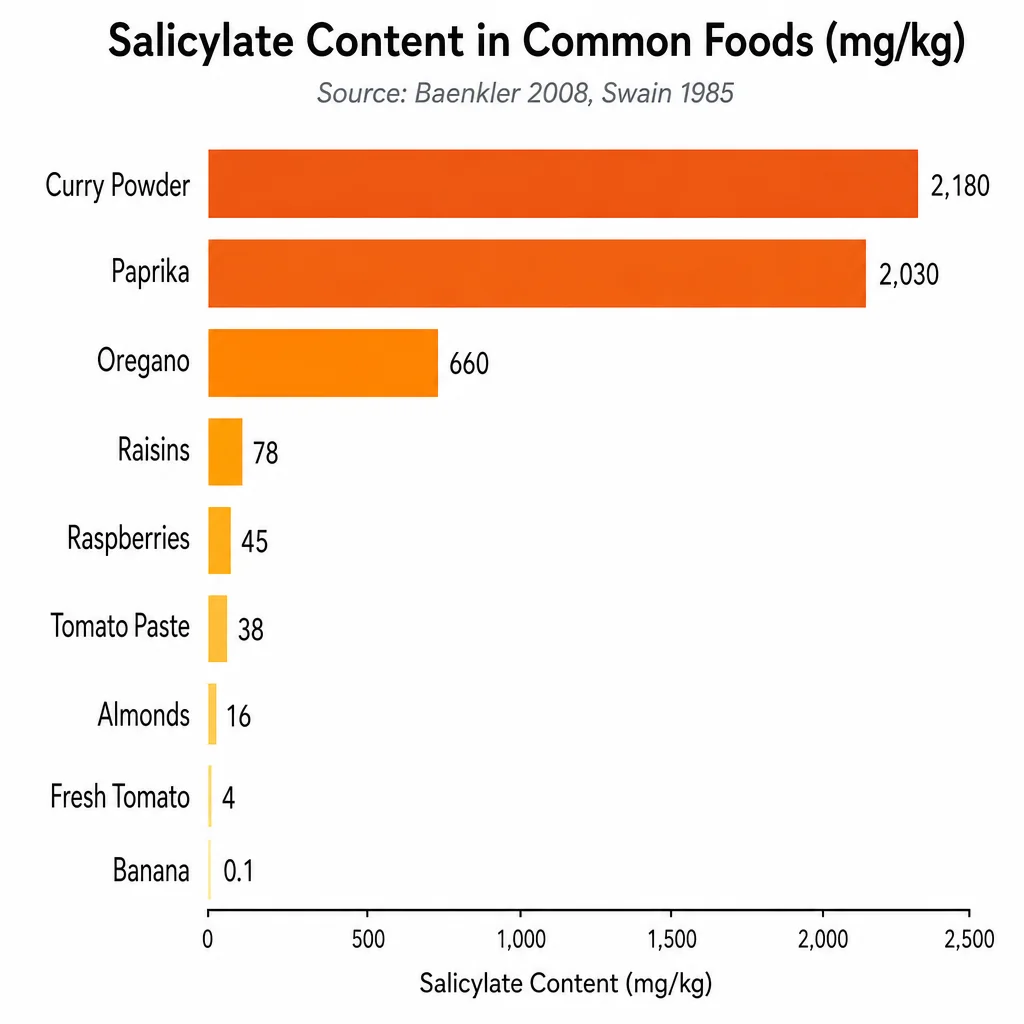
Spices carry the highest concentrations by far. Curry powder comes in at approximately 2,180 mg per kilogram. Paprika sits at 2,030 mg/kg. Oregano, cumin, cinnamon, cloves, turmeric, and rosemary all fall into the very-high category. A single gram of curry powder contains enough salicylate to matter for highly sensitive individuals.

Dried and concentrated fruit forms are next. Raisins, currants, and dried apricots are significantly higher than their fresh counterparts because salicylates concentrate when water is removed. Fresh berries, particularly blackberries, raspberries, blueberries, and strawberries, are also consistently rated high across food composition databases.

Condiments derived from concentrated plant sources carry a risk that is easy to miss. Tomato paste, Worcestershire sauce, and many commercially prepared sauces fall into the high-salicylate category even when the quantity per serving seems small.

Lower-risk foods that reliably appear safe across clinical databases include peeled potatoes, bananas, peeled pears, plain meats and fish, eggs, milk, plain rice, and most legumes. Peeling produce matters: the skin and outer leaves of most fruits and vegetables carry the highest salicylate concentrations.
NSAID Cross-Reactivity: It Is Not Just Aspirin

NSAID Cross-Reactivity: It Is Not Just Aspirin

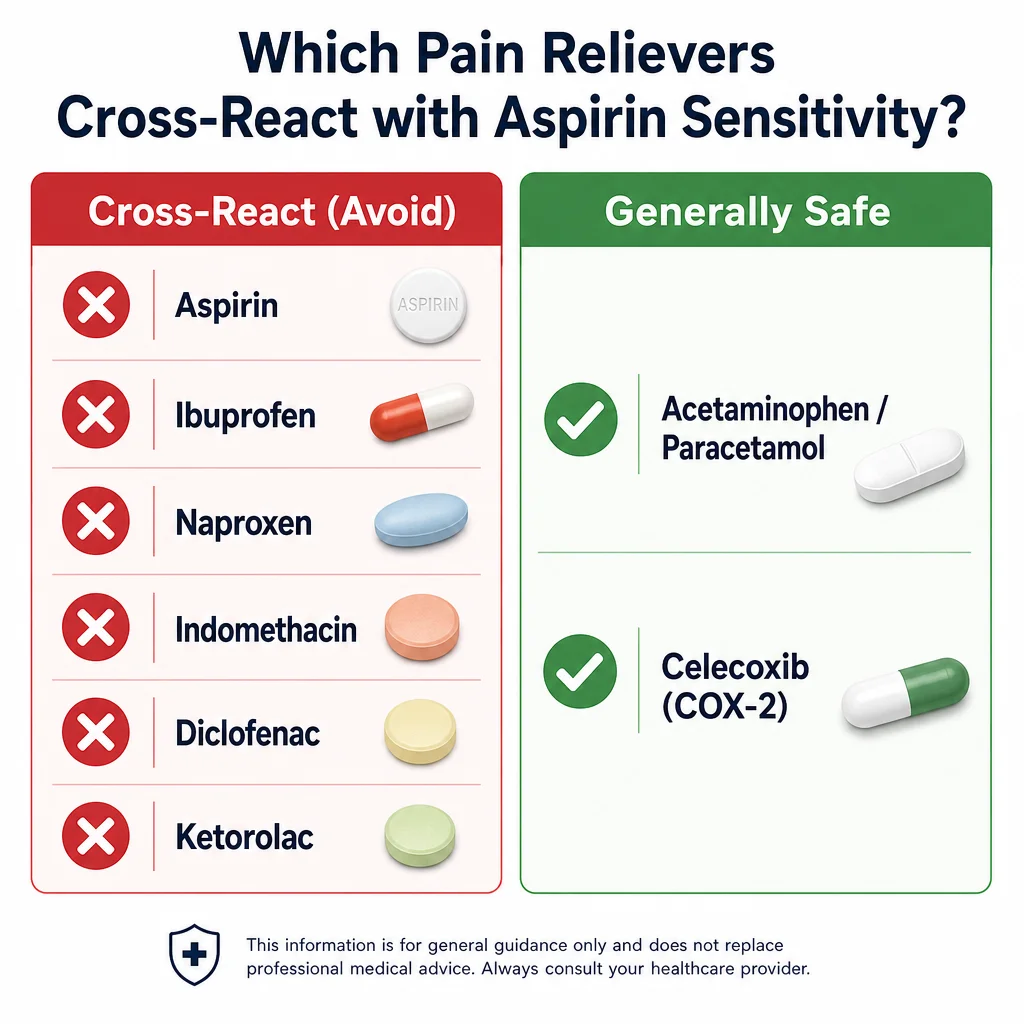
AERD is a sensitivity to COX-1 inhibition, not to acetylsalicylic acid specifically. Any NSAID that strongly inhibits COX-1 triggers the same leukotriene cascade. The list includes ibuprofen (the most commonly encountered cross-reactor given its wide over-the-counter availability), naproxen, indomethacin, diclofenac, and ketorolac.

Acetaminophen (paracetamol) is generally tolerated because it is a weak COX-1 inhibitor. At standard doses, it does not produce the arachidonic acid shunting that triggers the reaction. COX-2 selective inhibitors such as celecoxib are also generally safe: they bind a site on the COX-2 isoform that does not exist on COX-1, leaving the prostaglandin-producing enzyme intact.

This distinction matters practically. People with AERD can typically take acetaminophen for pain and fever without triggering a reaction. Over-the-counter cold and flu medications, however, frequently contain ibuprofen or aspirin. Reading the active ingredient list on combination products is essential.

What a Reaction Looks Like

Reactions to aspirin or NSAIDs typically begin within 30 to 180 minutes of ingestion, according to a 2025 clinical review in the Journal of Allergy and Clinical Immunology. The presentation spans multiple organ systems.

Upper airway symptoms tend to appear first: nasal congestion intensifies, runny nose begins, sneezing occurs, and facial pressure builds. Lower airway symptoms follow: cough, wheezing, and chest tightness that can escalate to a severe asthma attack. Skin involvement, including flushing, hives, and swelling, is common. Gastrointestinal symptoms including nausea, cramping, and diarrhea appear in a subset of patients.

An often-overlooked trigger: alcohol. About 75% of people with AERD also react to wine, beer, or cider), often with less than one full drink. The mechanism likely involves alcohol's interaction with the same prostaglandin and leukotriene balance, compounded by histamine and biogenic amines in fermented beverages.

Severity is not reliably predicted by past reactions. Patients who have had only mild reactions previously can still experience severe responses during a formal aspirin challenge.

Why This Condition Is So Frequently Missed

AERD lacks a single diagnostic blood test or biomarker. The diagnosis is clinical, assembled from patient history across three overlapping conditions that often develop years apart rather than simultaneously.

The Samter's Society notes that patients frequently spend years receiving separate treatments for rhinitis, asthma, and recurring polyps without anyone connecting the dots. The third element of the triad, NSAID sensitivity, is often absent from the history because many patients learn to avoid these drugs after an early reaction and stop reporting it as a current concern.

Confirming the diagnosis requires an oral aspirin challenge test: graduated doses administered in a hospital setting while monitoring for reactions. This must be performed with emergency equipment on hand given the risk of severe bronchospasm. It is the gold standard but is not widely available at community clinics.

For dietary salicylate sensitivity specifically, the practical diagnostic tool is an elimination trial: four weeks on a strict low-salicylate diet, monitoring symptom changes. If nasal, skin, or gastrointestinal symptoms improve significantly, reintroduction can confirm the dietary link.

Management Options

NSAID avoidance is the immediate necessity for anyone with confirmed AERD, but the Samter's Society is explicit that avoidance alone does not treat the disease. The underlying eosinophilic inflammation continues whether or not aspirin is consumed.

A low-salicylate diet is recommended for patients who experience symptoms linked to specific high-salicylate foods. A 2021 randomized crossover trial found significant self-reported improvement in nasal symptoms after just one week on a low-salicylate protocol, supporting its use as adjunctive therapy alongside pharmaceutical management. The Royal Berkshire NHS Hospital's clinical guidance recommends a minimum four-week elimination trial before drawing conclusions.

Aspirin desensitization is the most effective disease-modifying approach currently available for AERD. The procedure involves administering increasing doses of aspirin over one to three days in a hospital setting until a full dose is tolerated. Once desensitized, patients take daily aspirin indefinitely to maintain tolerance, which also confers tolerance to other NSAIDs. A 20-year outcomes study found 85% of AERD patients on continuous daily aspirin therapy found it helpful, with 68% avoiding further sinus surgery. A 2026 study in the Annals of Allergy (Herpin et al.) found that 15.8% of patients eventually discontinued the therapy, most commonly due to gastrointestinal side effects.

Biologics including dupilumab, mepolizumab, and tezepelumab are now FDA-approved for conditions that are central components of AERD: chronic rhinosinusitis with nasal polyps and severe eosinophilic asthma. These are increasingly relevant for patients who cannot tolerate aspirin desensitization or whose disease remains poorly controlled with other approaches.

Leukotriene modifiers such as montelukast and zileuton target the COX-to-LOX cascade directly. Given that leukotriene overproduction is the central mechanism of AERD, these medications are particularly well-suited and often prescribed alongside other therapies.

The Labeling Gap That Leaves Sensitive Consumers Unprotected

Neither the FDA nor the European Union requires salicylates to be declared on food labels. Unlike the major food allergens, which must be identified on packaging in both the US and EU, salicylates are considered natural plant components and fall outside mandatory disclosure frameworks. Current labeling laws do not require salicylate content to be listed, meaning identification requires checking every ingredient individually.

Benzoate preservatives (E210–E219) are an exception: these synthetic compounds are structurally related to salicylate, share metabolic pathways, and must be declared if used in a product. Natural flavors and "spices" listed without further detail can conceal high-salicylate herbs and seasonings such as paprika, oregano, and mint without any additional disclosure.

Practical habits for people managing salicylate sensitivity: scan for mint, menthol, wintergreen, and methyl salicylate in both food and personal care product ingredient lists. Check cold and flu medication labels for aspirin, ibuprofen, or naproxen. Look for tomato paste, tomato concentrate, and generic spice blends in ingredient statements, which tend to carry concentrated loads even when listed near the end.

To understand why some people's bodies are more vulnerable to salicylate accumulation in the first place, read our companion piece on the genetic and gut health roots of salicylate sensitivity.

Using IngrediCheck, you can scan packaged food labels instantly to identify benzoate preservatives, tomato concentrates, spice blend entries, and other potential salicylate contributors, giving you a practical tool where food labeling law offers no built-in protection for salicylate-sensitive consumers.

Next Label Check

Follow the scanner, hub, and ingredient paths connected to this guide

Get the app for clearer label decisions.

Scan labels, see what fits your food notes, and read the why in plain English.

IngrediCheck app