Label Reading Guides

What Does 'May Contain Traces Of' Mean on Food Labels?

Phrases like 'may contain traces of nuts' or 'made on shared equipment with milk' feel like a warning, but almost nowhere in the world are they actually regulated. Here's what these labels really mean and how allergists say to read them.

Jun 16, 2026|9 min read
By Sanket Patel|Updated 2026-06-16|4 sources|Editorial standards
What Does 'May Contain Traces Of' Mean on Food Labels?

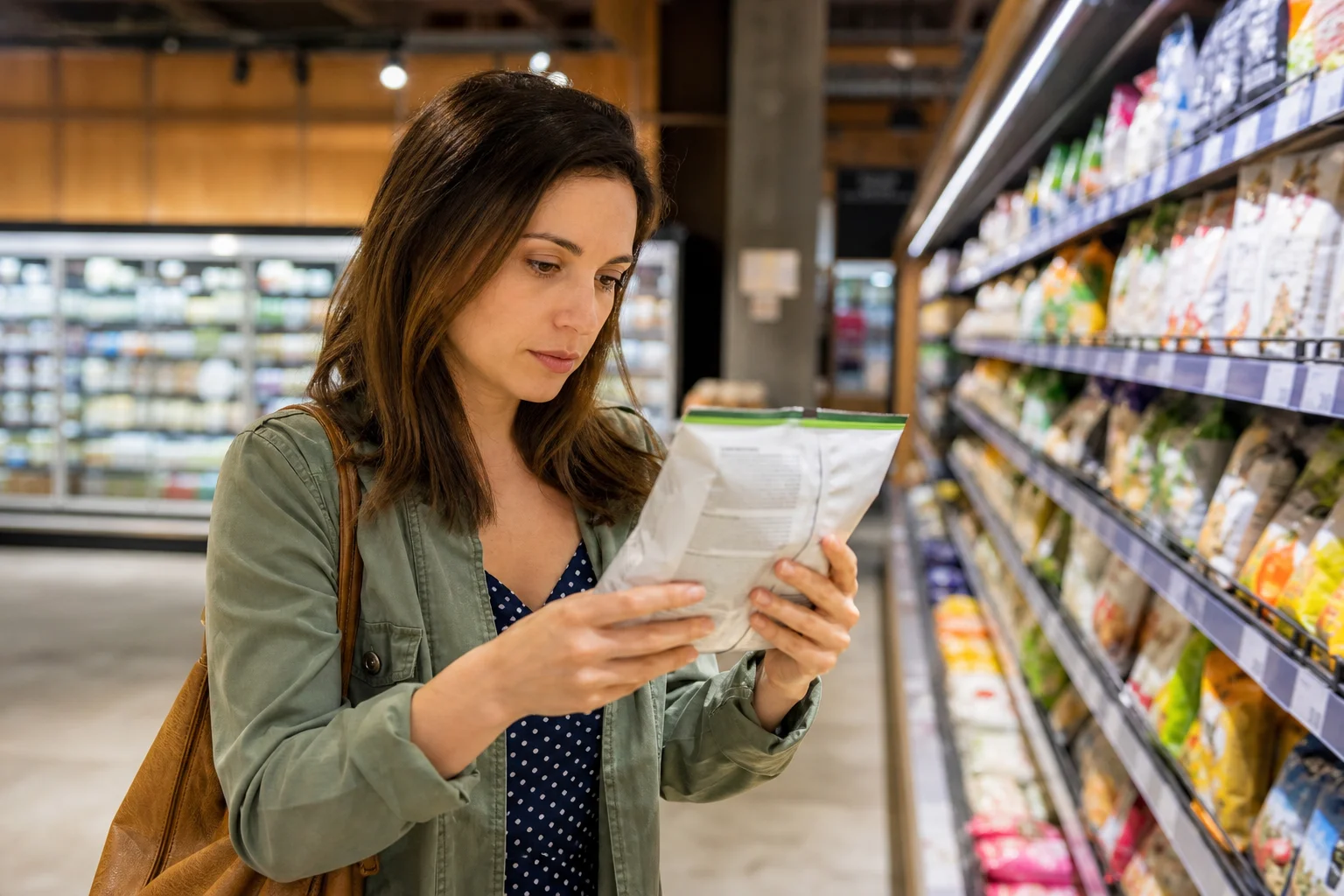
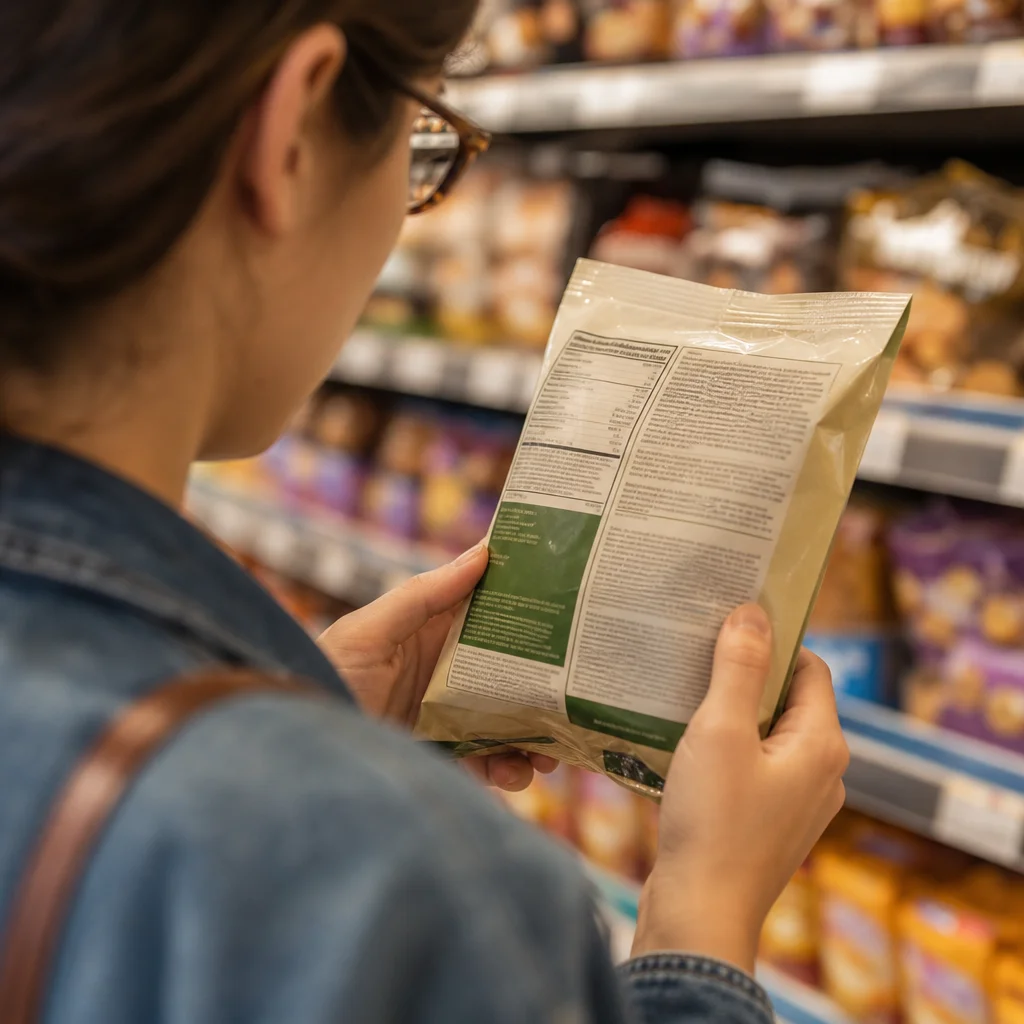
Pick up almost any packaged snack, cookie, or granola bar and flip it over. Somewhere below the ingredients list, in smaller type, you will likely find a line like "may contain traces of nuts," "made in a facility that also processes milk," or "manufactured on equipment shared with soy." These phrases look official. They read like a legal warning. Most shoppers assume some agency reviewed the product and required that specific wording.

Almost none of that is true. In the United States, the United Kingdom, and the European Union, precautionary allergen labeling, often shortened to PAL, is entirely voluntary. No regulator tells a company when to use it, what words to use, or how much risk has to exist before the label goes on. That gap between how authoritative the warning sounds and how little oversight actually sits behind it is exactly what makes it confusing for the people who need it most.
The US: FDA Requires Ingredient Disclosure, Not "May Contain" Warnings

The Food Allergen Labeling and Consumer Protection Act of 2004, later expanded by the FASTER Act in 2021 to add sesame as a ninth major allergen, requires food manufacturers to clearly declare any of the nine major allergens when they are used as an actual ingredient. That part of the law is specific and enforceable. What it does not do is say anything about advisory statements for allergens that might show up through cross-contact rather than as an ingredient.

The FDA's own guidance on the subject is telling: it notes that advisory phrases like "may contain [allergen]" should not be treated as a substitute for following current Good Manufacturing Practices. In other words, the FDA acknowledges the practice exists and even implies it shouldn't be used as a shortcut around proper cleaning and separation procedures, but it sets no format, no required wording, and no threshold for when a company must or must not add the statement. A manufacturer can print "may contain traces of tree nuts" on every product in a factory as a blanket liability hedge, or print nothing at all despite genuine cross-contact risk, and both choices are equally legal.

This distinction matters most for the allergens most likely to trigger anaphylaxis, including peanuts and sesame. FARE, the leading US food allergy advocacy organization, states this directly: "These types of precautionary labels are voluntary and unregulated." Its guidance to allergic consumers reflects that reality rather than fighting it: "If a precautionary statement lists your allergen, do not eat the food. If there is no precautionary statement, don't assume that the food is safe."

The UK and EU: The Same Gap, With Movement Toward Change

The picture in the UK and EU is nearly identical. As of the UK Food Standards Agency's own December 2025 board papers, there is still no established baseline for precautionary allergen labeling in Britain. The board's decision that month was to recommend supporting emerging international proposals and to begin work toward establishing one, language that only makes sense if no baseline currently exists. The EU has not adopted a harmonized PAL standard either. Companies selling across Europe can and do use wildly different precautionary phrasing for products with similar risk profiles.

That inconsistency is a documented problem, not a theoretical one. The American College of Allergy, Asthma and Immunology lists the range of phrases currently in circulation: "may contain," "might contain," "made on shared equipment," "made in a shared facility," among others. Each sounds like it means something slightly different. None of them is defined by regulation, so a shopper has no reliable way to know whether "may contain traces of peanuts" on one brand means the same actual risk as "processed in a facility that also handles peanuts" on another.

Australia and New Zealand Built an Actual System

Australia and New Zealand Built an Actual System

There is one place where precautionary labeling is not just an unregulated guess: Australia and New Zealand's VITAL Program, run by the Allergen Bureau. VITAL uses a risk-based methodology built around a Reference Dose, the amount of allergen protein (in milligrams) expected to trigger a reaction in the most sensitive members of the allergic population, combined with a Reference Amount representing a typical serving size. Together, these feed into an Action Level Grid measured in parts per million.

If a product's calculated allergen exposure falls at Action Level 1, no precautionary statement is required or recommended. If it reaches Action Level 2, the label must carry a standardized statement: "May be present: [allergen]." VITAL 4.0, adopted in 2024, updated its reference doses to align with FAO/WHO expert recommendations on population-level allergen thresholds. It is not a perfect system, and it does not eliminate risk for the most sensitive individuals, but it replaces guesswork with a documented, threshold-based decision process, and it uses one consistent phrase instead of a dozen variations.

Does "May Contain" Actually Reflect Real Risk?

Research on population-level allergen thresholds gives a more reassuring picture than the label's vague wording suggests. Food Allergy Research and Resource Program investigators analyzed more than 1,000 double-blind, placebo-controlled food challenges across eleven allergenic foods and found that FAO/WHO recommended reference doses would be "widely protective" for the allergic population, with reactions at those thresholds tending to be mild, self-limiting, and non-anaphylactic rather than severe. A separate modeling study from Laval University and Health Canada estimated that threshold-based precautionary labeling, applied consistently, would result in a maximum of roughly 15 allergic reactions per 10,000 eating occasions, a small but real number that underscores why "may contain" statements still deserve to be taken seriously rather than dismissed as pure liability theater.

The catch is that this protective research assumes a threshold-based system is actually being applied, the way VITAL applies it in Australia and New Zealand. In the US, UK, and EU, where no threshold or standard exists, a "may contain" statement could reflect a genuinely tested risk assessment by a careful manufacturer, or it could reflect nothing more than a company's legal team deciding to blanket-label everything to avoid liability, with no testing behind it at all. From the outside, a shopper cannot tell which situation they are looking at.

Warning Fatigue Is a Real Risk of Its Own

Overuse of precautionary statements creates a second, quieter problem: it can teach allergic consumers to stop trusting the warning altogether. Anaphylaxis UK is blunt about this: "Overusing PAL can reduce food choices for people with allergies and lead to mistrust of allergen warnings, potentially putting lives at risk." When a company slaps "may contain traces of nuts" on a product with no realistic nut exposure simply to protect itself legally, and a family member with a nut allergy learns over time that the warning rarely corresponds to an actual problem, the natural human response is to start ignoring it. The next time the warning appears on a product that genuinely does carry cross-contact risk, that learned skepticism becomes dangerous.

"These are entirely voluntary; the FDA has no regulations regarding when they should be used, how they should be worded, or where they should appear." — SnackSafely.com, on US precautionary allergen labeling

Regulatory Change Is Coming, Slowly

There is real momentum toward standardization, even if it has not arrived yet. The Codex Committee on Food Labelling has been advancing a reference-dose-based international PAL standard, with adoption targeted for consideration at the Codex Alimentarius Commission's July 2026 meeting. In December 2025, FAO and WHO recommended a specific 4 milligram gluten reference dose for precautionary labeling purposes, distinct from the existing 20 milligram-per-kilogram threshold used for "gluten-free" claims. The FDA held a three-day virtual public meeting in November 2025 specifically on food allergen thresholds, gathering input that could eventually inform a US policy shift. The UK FSA's December 2025 board recommendation to support Codex alignment suggests Britain may move in step with whatever international standard eventually emerges.

None of that has changed the label in front of you today. Until a harmonized, threshold-based standard exists in your market, the safest approach is the one FARE recommends: treat any precautionary statement that names your specific allergen as a real reason to avoid the product, and do not assume the absence of a precautionary statement means a product is free of that allergen through cross-contact. The label is doing its best within a system that has not yet decided what "may contain" is actually supposed to mean.

A Practical Way to Read These Labels at the Store

A few habits make precautionary labeling more useful even without regulatory standardization behind it. Look past the front-of-package marketing and read the full advisory statement near the ingredients list every time, since manufacturers change formulations and sourcing without necessarily changing the front label. Treat "may contain," "might contain," "produced on shared equipment," and "made in a shared facility" as functionally equivalent warnings rather than assuming any one phrasing is more or less serious than another, since none of them are legally defined differently from the others. If a specific brand consistently uses precautionary labeling in a way that seems accurate to your own experience, that consistency is more useful information than the wording itself. And if you or a family member has a history of severe, potentially anaphylactic reactions, default to avoiding any product carrying a precautionary statement for that allergen, since the research on safe thresholds only holds up when a proper testing regime is actually behind the label, and in most of the world right now, none is guaranteed.

Using IngrediCheck, you can scan a product's full ingredient and advisory statement and get a clear flag for the allergens that matter to you, whether they show up as a declared ingredient or buried in a precautionary line most shoppers skim past without a second thought.

Next Label Check

Follow the scanner, hub, and ingredient paths connected to this guide

Get the app for clearer label decisions.

Scan labels, see what fits your food notes, and read the why in plain English.

IngrediCheck app