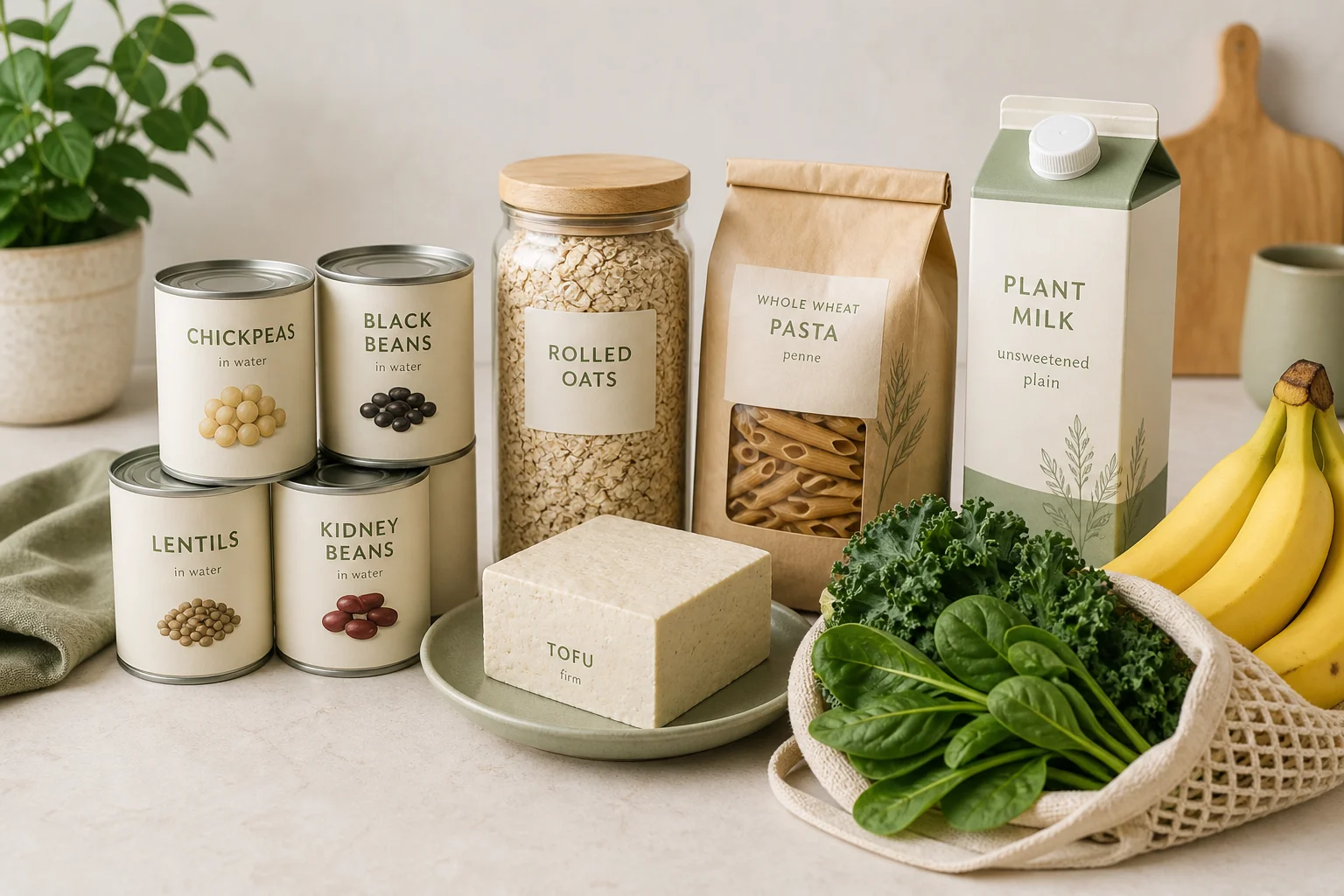
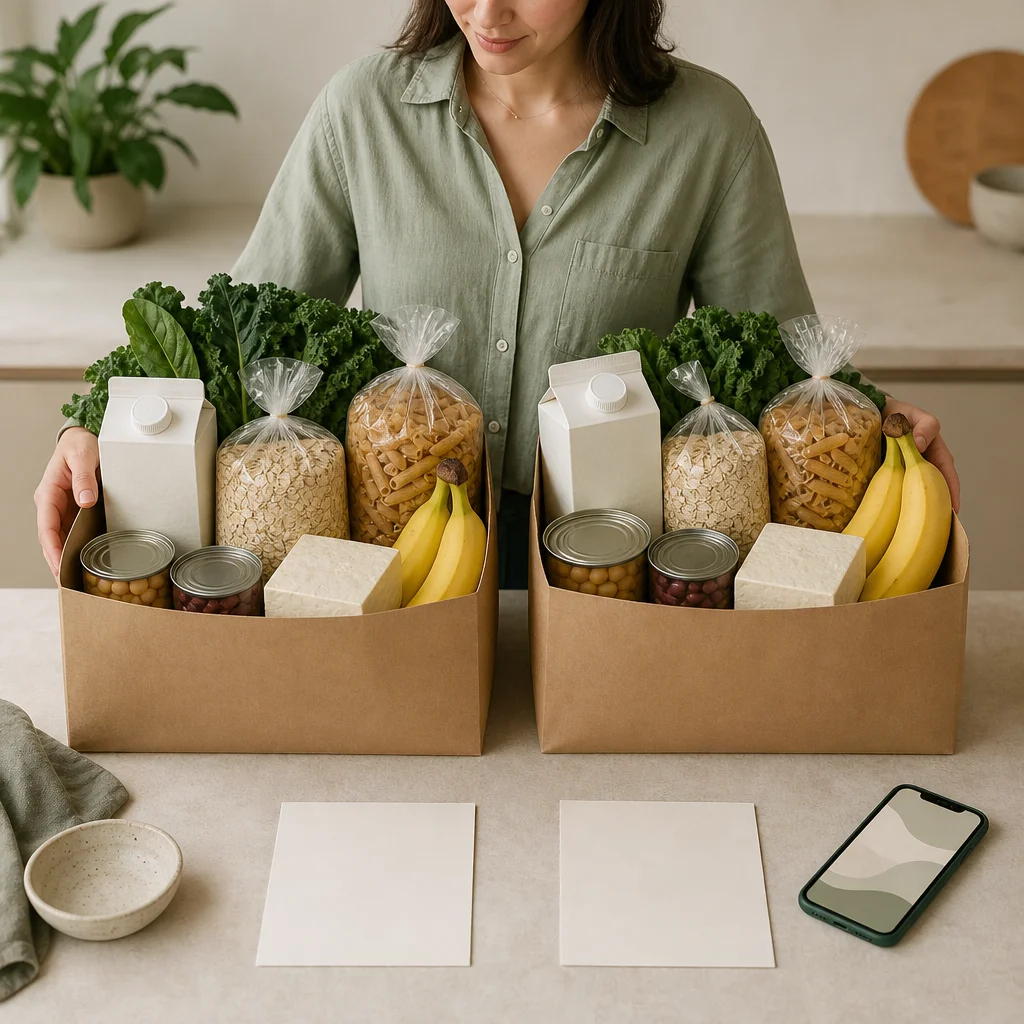
A good vegan grocery list is mostly foods that are vegan by nature (fruit, vegetables, beans, lentils, grains, nuts and seeds) plus a short set of packaged staples you check once and then rebuy. The checking is the part beginners underestimate. Animal ingredients rarely hide in a bag of lentils. They hide in bread, sauces, snacks, sweets and drinks, under names like whey, casein, gelatin, carmine and anchovy.
This list is organized by grocery aisle. Each section gives the staples to buy and the label checks that matter for that aisle. It is written for anyone starting a vegan month such as Veganuary, the January pledge that has run since 2014, and for anyone shopping for a vegan family member.
We built it from US labeling rules and vegan organizations' published standards, checked on November 25, 2026. We did not test products. Recipes change between batches and flavors, so treat every category here as a starting point and read the package in your hand.
Produce: the easy aisle
Fresh fruit, vegetables and herbs are vegan. Stock up on the ones you will actually cook, plus a few that make meals easier: onions, garlic, potatoes, sweet potatoes, carrots, leafy greens, bananas, citrus and frozen vegetables and berries for backup.
One check: some fruit is sold with a wax coating, and that coating can be shellac or beeswax rather than a plant wax. Loose produce has no ingredient list, so if this matters to you, look for a coating notice at the display or ask the store.
Bread, grains and pasta
Staples that are usually vegan: rolled oats, rice, quinoa, couscous, dried pasta made from durum wheat and water, corn tortillas and plain crackers.
Bread is where most beginners slip. Read every loaf, roll and bagel for:
- Milk, whey, butter and buttermilk, often in soft sandwich breads and brioche.
- Eggs, common in brioche, challah and many soft rolls.
- Honey, frequent in "honey wheat" and multigrain loaves.
- Mono- and diglycerides and L-cysteine, dough additives that can come from animal or plant sources. See our guides to mono- and diglycerides and L-cysteine.
Fresh pasta and egg noodles usually contain egg, while most dried pasta does not. Egg must be declared on the label, either in the ingredient list or a Contains statement, so you can tell which you are holding.
The dairy aisle, swapped
Plant milks, yogurts, butters and cheeses are the core swaps. Three checks:
Vitamin D in plant milk
Plant milks are often fortified with vitamin D. Vitamin D2 is largely human-made and added to foods, while vitamin D3 comes from animal foods or is made commercially, commonly from lanolin from sheep's wool. Vegan D3 made from lichen is also sold, as our D3 guide explains. A label that says "vitamin D3" does not say which source. Our guide to vitamin D3 sources covers how to check.
Casein in "non-dairy" products
"Non-dairy" does not mean vegan. Some non-dairy creamers and cheeses contain sodium caseinate, a milk protein. US rules require a "nondairy" food that contains caseinate to name its source, for example "sodium caseinate (a milk derivative)". Look for that parenthetical, and for casein and whey in vegan-style cheese.
Margarine and spreads
Some margarines and spreads contain whey, buttermilk or milk solids. Pick spreads labeled vegan or check the ingredient list for dairy terms. Our milk allergy guide lists the dairy names to watch for.
Make the label check faster
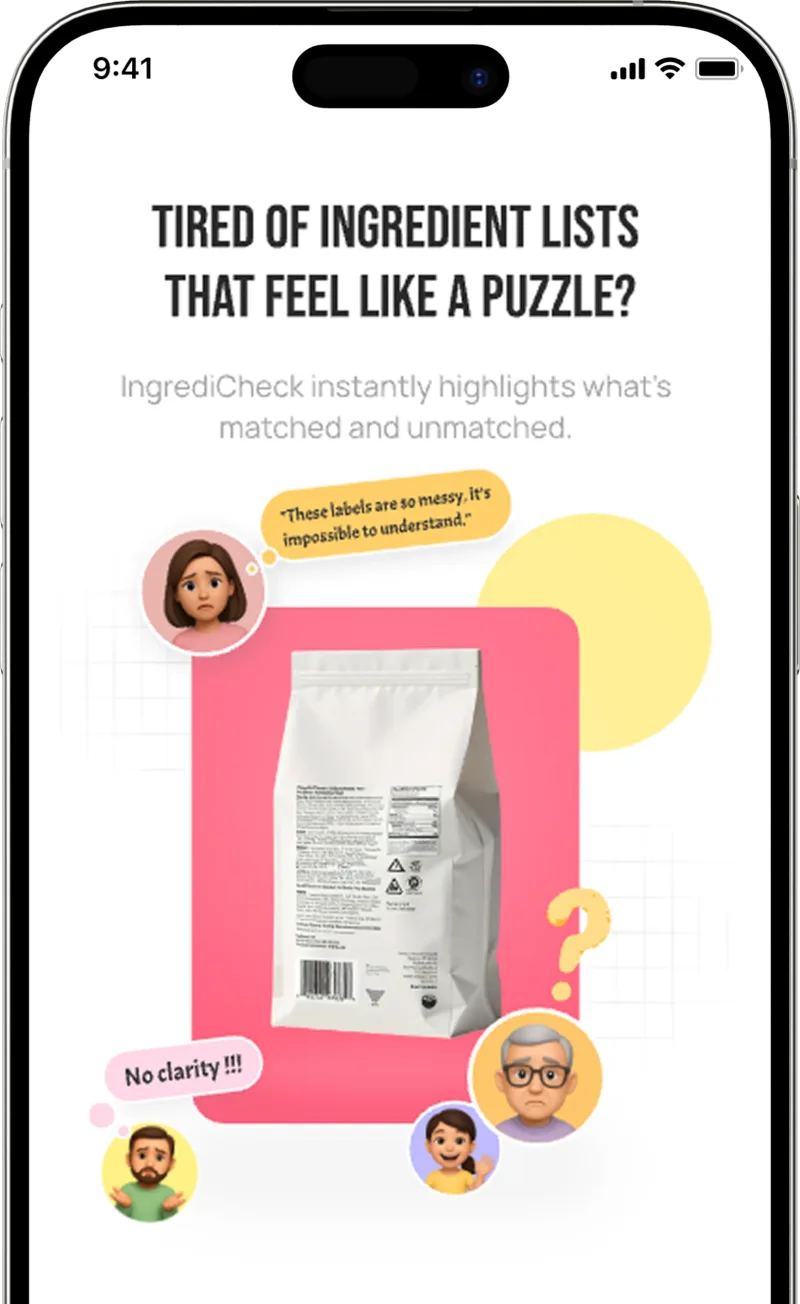
A vegan grocery list is short. The checking is what takes time: every loaf, sauce and snack has its own ingredient list, and the names that matter are easy to miss in small print.
IngrediCheck can help with that part. Save vegan as a food note, then scan a barcode or photograph the ingredient label. The app checks the available ingredient information against your notes and explains a Matched, Unmatched or Uncertain result in plain English. It cannot see processing aids that are not on the label, such as bone char or wine finings, and automated results can be incomplete, so treat Uncertain results and source-dependent ingredients as worth a closer look.